
The right SSD enclosure can turn an unused internal drive into fast, portable storage for a Windows PC, laptop, or game library. The main choice is whether you need an NVMe, SATA, or dual-protocol enclosure.
We selected 10 practical options across USB speeds, drive formats, cooling designs, and budgets to help you find a compatible enclosure without paying for features you will not use.
Best 10 SSD Enclosures for Windows Picks for 2026
Best Overall
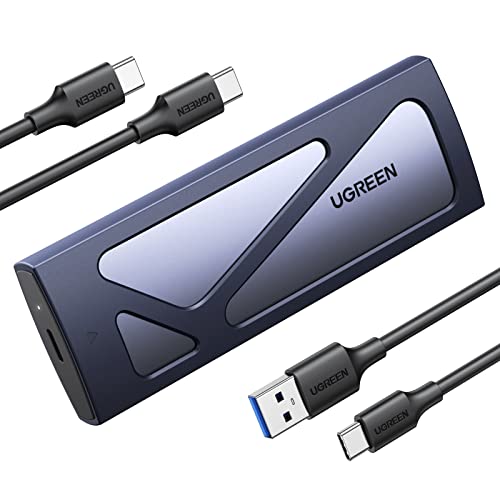
- Tool-free installation for M.2 NVMe drives
- Supports sizes 2230 through 2280 and up to 8TB
- Includes USB-C, USB-A, and silicone accessories
Best For: Portable Windows setups using M.2 NVMe SSDs
Best Budget SATA
SABRENT 2.5-Inch USB 3.0 Enclosure
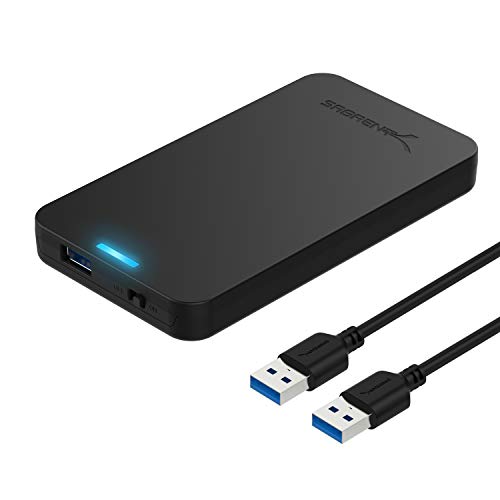
- Tool-free design for 2.5-inch SATA drives
- USB 3.0 supports speeds up to 5Gbps
- Plug-and-play support for Windows and Mac
Best For: Affordable external use of 2.5-inch SATA SSDs
Best Compact NVMe

- 10Gbps USB 3.1 Gen 2 Type-C interface
- Supports four common M.2 NVMe sizes
- Compact design includes thermal pad and cables
Best For: Portable Windows systems using PCIe NVMe M-Key drives
Best Cable Flexibility
BENFEI 2.5-Inch SATA Enclosure

- Type-C and Type-A connection options
- Supports SATA I, II, and III drives up to 6TB
- Tool-free design with UASP and plug-and-play support
Best For: 2.5-inch SATA SSD users with mixed USB-C and USB-A devices
Versatile NVMe/SATA Pick
fanxiang MD86 M.2 SSD Enclosure

- Supports NVMe and SATA M.2 drives
- Up to 10Gbps USB 3.2 Gen 2
- Includes USB-C and USB-A cables
Best For: Windows users reusing different M.2 SSD types
Simple 2.5-Inch Drive Case
ORICO 2139C3-G2 SATA Enclosure

- Fits 2.5-inch SATA SSDs and HDDs
- Tool-free installation with hot-swapping
- Includes USB-C-to-C and USB-A-to-C cables
Best For: Windows users converting 2.5-inch SATA drives
Rugged Tool-Free Choice

- Supports NVMe and SATA M.2 drives
- Quick tool-free Q-Latch installation
- IP55-rated aluminum enclosure
Best For: Frequent M.2 drive swaps and portable use
Best Budget 2.5-Inch Pick
ELUTENG USB-C SATA SSD Enclosure

- Tool-free 2.5-inch SATA drive installation
- USB 3.1 Gen 1 with UASP and up to 5Gbps
- Windows 7-11, Linux, and macOS support
Best For: Users reusing a 2.5-inch SATA SSD or HDD
Best 10Gbps M.2 Flexibility
SSK NVMe/SATA M.2 SSD Enclosure

- Supports compatible NVMe and SATA M.2 SSDs
- USB 3.2 Gen 2 connectivity up to 10Gbps
- Includes thermal pads and USB-A/C cables
Best For: Users with supported M-Key or B+M Key M.2 drives
Best Dual-Cable M.2 Option
ELUTENG NVMe/SATA SSD Enclosure

- Supports M.2 NVMe and NGFF SATA drives
- Includes USB-A and USB-C data cables
- 10Gbps USB 3.2 Gen 2 with aluminum housing
Best For: Users connecting M.2 SSDs to mixed USB-A and USB-C systems
Best Overall – UGREEN 10Gbps NVMe Enclosure
For shoppers comparing ssd enclosures for windows, the UGREEN enclosure is a versatile pick for M.2 NVMe drives. It supports USB 3.2 Gen 2 speeds up to 10Gbps, includes both USB-C and USB-A cables, and installs without tools.
Best For: Windows users who want a portable, tool-free enclosure for an M.2 NVMe SSD.
Pros:
- Supports 2230, 2242, 2260, and 2280 NVMe drives up to 8TB.
- USB 3.2 Gen 2 supports transfer speeds up to 10Gbps with a compatible cable.
- Includes thermal protection accessories, two cables, and a silicone case.
- Supports Windows, macOS, Linux, Android, and iOS systems.
Cons:
- Does not support SATA NGFF or mSATA SSDs.
- Full 10Gbps performance requires a USB-C 3.2 Gen 2 data connection.
The UGREEN stands out when you need broad M.2 NVMe size support, easy installation, and useful portability features. Confirm that your drive uses the NVMe protocol before buying.
Best Budget SATA – SABRENT 2.5-Inch USB 3.0 Enclosure
The SABRENT EC-UASP is a straightforward option among ssd enclosures for windows if you have a standard 2.5-inch SATA SSD. Its tool-free design, USB 3.0 support, and plug-and-play operation keep drive installation simple.
Best For: Windows users repurposing a 2.5-inch SATA SSD as an external drive.
Pros:
- Tool-free installation and hot-swappable plug-and-play operation.
- Supports 2.5-inch SATA and SATA II drives.
- USB 3.0 transfer rates reach up to 5Gbps with UASP support.
- Works with Windows and Mac operating systems.
Cons:
- Designed for 2.5-inch SATA drives, not M.2 NVMe SSDs.
- USB 2.0 connections reduce transfer rates to up to 480Mbps.
- Plastic construction may feel less premium than aluminum alternatives.
This enclosure is a practical, uncomplicated choice for older 2.5-inch SATA SSDs. It makes the most sense when your drive already uses the standard notebook SATA form factor.
Best Compact NVMe – ORICO M.2 NVMe Enclosure
ORICO’s M2PV is a compact choice for ssd enclosures for windows, pairing a USB 3.1 Gen 2 Type-C interface with support for PCIe NVMe M.2 drives. It includes USB-C and USB-A connectivity and supports drive sizes from 2230 through 2280.
Best For: Windows users who want a small, high-speed enclosure for a PCIe NVMe M.2 SSD.
Pros:
- USB 3.1 Gen 2 supports theoretical speeds up to 10Gbps.
- Supports NVMe M-Key SSDs in 2230, 2242, 2260, and 2280 sizes.
- Includes thermal padding and USB-C-to-C plus USB-C-to-A connectivity.
- Compact aluminum-and-plastic design is easy to carry.
Cons:
- Does not support M.2 SATA, PCIe AHCI, or Mac-specific SSDs.
- Drive installation requires using the included screwdriver and fasteners.
- New SSDs must be formatted before use.
The ORICO is a good fit when portability and 10Gbps-class connectivity matter. Check your SSD’s interface carefully, since this enclosure is limited to PCIe NVMe M-Key drives.
Best Cable Flexibility – BENFEI 2.5-Inch SATA Enclosure
For a 2.5-inch SATA drive, the BENFEI enclosure is a flexible option among ssd enclosures for windows. Its Type-C/Type-A connection design, tool-free installation, and UASP support make it suitable for moving files between computers or using an SSD as external storage.
Best For: Windows users who need broad host-device connectivity for a 2.5-inch SATA SSD.
Pros:
- Supports 2.5-inch SATA I, II, and III SSDs and HDDs up to 6TB.
- USB 3 connectivity supports transfer rates up to 5Gbps with UASP.
- Tool-free, hot-swappable, plug-and-play design requires no drivers.
- Supports Windows, Linux, and macOS and connects through Type-C or Type-A.
Cons:
- Limited to 2.5-inch SATA drives rather than M.2 SSDs.
- USB 2.0 or 1.1 ports will reduce transfer performance.
- Supports drives up to 7mm or 9.5mm thick, so thicker drives are excluded.
The BENFEI is especially useful when you switch between newer USB-C devices and older USB-A computers. It is a practical SATA enclosure, provided your drive fits the supported 2.5-inch dimensions.
Versatile NVMe/SATA Pick – fanxiang MD86 M.2 SSD Enclosure
For shoppers comparing ssd enclosures for windows, the fanxiang MD86 stands out for supporting both NVMe and SATA M.2 drives. Its USB 3.2 Gen 2 interface, included cables, and broad size compatibility make it a flexible choice for everyday file transfers and drive reuse.
Best For: Windows users who need one enclosure for multiple M.2 drive types and sizes.
Pros:
- Supports NVMe and SATA drives with M, B+M, and compatible 2230, 2242, and 2280 formats.
- USB 3.2 Gen 2 offers up to 10Gbps theoretical transfer speeds with UASP support.
- Includes USB-C and USB-A connectivity, an aluminum body, and a thermal silicone pad.
- Works with Windows 7 and later, Macs, gaming consoles, smart TVs, and select OTG smartphones.
Cons:
- The listed 10Gbps rate is theoretical and depends on the host device, drive, and connection.
- The smart display interface may require switching between Chinese and English.
- The package may contain either a combo cable or two separate cables.
The MD86 is a practical all-rounder when drive compatibility matters more than a minimalist design. Its cooling features and dual cable options add useful flexibility for Windows desktops and laptops.
Simple 2.5-Inch Drive Case – ORICO 2139C3-G2 SATA Enclosure
The ORICO 2139C3-G2 is a straightforward option among ssd enclosures for windows if you have a 2.5-inch SATA SSD or hard drive. Its tool-free installation, USB-C connection, and support for Windows 7, 8.1, and 10 make it convenient for storage expansion or drive migration.
Best For: Windows users converting a 2.5-inch SATA SSD or HDD into portable storage.
Pros:
- Supports 2.5-inch SATA SSDs and HDDs, including drives up to 7 or 9.5mm thick.
- Tool-free installation and hot-swapping simplify drive changes.
- Includes detachable USB-C-to-C and USB-A-to-C cables.
- Transparent housing lets you view the installed drive, while auto-sleep helps reduce idle energy use.
Cons:
- It is designed for 2.5-inch SATA drives and does not support M.2 SSDs.
- Actual transfer performance depends on the drive and connected system.
- The enclosure uses a polycarbonate body rather than aluminum.
Choose the ORICO when you want an uncomplicated enclosure for a standard 2.5-inch SATA drive. Its transparent shell and dual cable setup are useful, though M.2 owners will need a different format.
Rugged Tool-Free Choice – ASUS Cobble M.2 SSD Enclosure
The ASUS Cobble is a strong fit for buyers seeking ssd enclosures for windows with quick drive installation and added environmental protection. It supports both NVMe and SATA M.2 SSDs, uses USB-C at up to 10Gbps, and adds an IP55-rated aluminum enclosure for more demanding portable use.
Best For: Windows users who frequently swap M.2 drives or carry an enclosure between workspaces.
Pros:
- Dual-protocol support works with both NVMe and SATA M.2 SSDs in 2230 through 2280 sizes.
- USB 3.2 Gen 2×1 provides up to 10Gbps bandwidth for large-file transfers.
- Tool-free ASUS Q-Latch design enables quick, screwless SSD changes.
- IP55 water and dust resistance adds protection, and it supports Windows 10/11, macOS, mobile devices, and consoles.
Cons:
- The supplied connection is USB-C to USB-C, so older systems may require an adapter.
- Its 10Gbps performance depends on the host port, cable, and installed SSD.
- The enclosure is listed at 0.18 kg, making it heavier than some compact alternatives.
The ASUS Cobble is especially appealing for frequent drive swaps and travel. Its dual-protocol support and IP55 rating provide useful versatility, while Windows users should confirm they have a suitable USB-C connection.
Best Budget 2.5-Inch Pick – ELUTENG USB-C SATA SSD Enclosure
If you need a straightforward option among SSD enclosures for Windows, this ELUTENG model is designed for 2.5-inch SATA SSDs and hard drives. Its tool-free installation, USB-C connection, plug-and-play setup, and support for Windows 7 through 11 make it practical for upgrading, cloning, or reusing a laptop drive.
Best For: Windows users with a 2.5-inch 7mm or 9.5mm SATA SSD or HDD who want simple, portable external storage.
Pros:
- Tool-free design makes drive installation quick.
- USB 3.1 Gen 1 supports transfer speeds up to 5Gbps and UASP.
- Includes short-circuit, overcurrent, and multilayer protection.
- Compatible with Windows, Linux, and macOS, with dual LED status lights.
Cons:
- Limited to 2.5-inch SATA drives rather than M.2 SSDs.
- Its stated transfer rate is lower than 10Gbps M.2 enclosures.
Choose this enclosure when compatibility and easy installation matter more than maximum throughput. Confirm that your drive is a 2.5-inch SATA model before ordering.
Best 10Gbps M.2 Flexibility – SSK NVMe/SATA M.2 SSD Enclosure
For shoppers comparing SSD enclosures for Windows, the SSK M.2 enclosure offers support for both NVMe PCIe and SATA M.2 drives. Its USB 3.2 Gen 2 interface, aluminum shell, included thermal pads, and dual cables make it a versatile choice for compatible 2242, 2260, and 2280 SSDs.
Best For: Windows users who need one enclosure for supported M-Key or B+M Key NVMe and SATA M.2 drives.
Pros:
- Supports compatible NVMe PCIe and SATA M.2 SSDs.
- USB 3.2 Gen 2 provides up to 10Gbps connectivity and backward compatibility.
- Aluminum construction and thermal pads help manage heat.
- Includes USB-C and USB-A cables, a screwdriver, UASP, and TRIM support.
Cons:
- Does not support M.2 PCIe AHCI drives, mSATA SSDs, Wi-Fi cards, or capture cards.
- The SSD is not included and must be formatted before use.
This is a strong option when you want M.2 format flexibility and useful accessories in one package. Check your SSD’s key type and protocol carefully, since not every M.2 drive is supported.
Best Dual-Cable M.2 Option – ELUTENG NVMe/SATA SSD Enclosure
This ELUTENG model is a flexible choice among SSD enclosures for Windows because it supports both M.2 NVMe and NGFF SATA drives. With USB 3.2 Gen 2, USB-C-to-A and USB-C-to-C cables, and compatibility with Windows 7 through 11, it can connect to a wide range of modern and older computers.
Best For: Windows users who want one portable enclosure for supported M.2 NVMe or SATA SSDs and both USB-A and USB-C computers.
Pros:
- Supports M.2 NVMe M Key/B+M Key and NGFF SATA B+M Key drives.
- Accepts 2230, 2242, 2260, and 2280 SSD sizes up to 4TB.
- Includes both 10Gbps USB-C-to-A and USB-C-to-C cables.
- Aluminum shell, RTL9210B controller, UASP, and TRIM support aid performance and cooling.
Cons:
- NVMe and SATA drives have different stated maximum transfer rates.
- Compatibility depends on the SSD’s supported key, protocol, and USB port.
Consider this enclosure if connection flexibility is a priority, especially when your computers use a mix of USB-A and USB-C ports. Verify the SSD format and interface before installation.
How We Picked the Best SSD Enclosures for Windows
We compared these enclosures by drive compatibility, USB interface, advertised transfer speed, installation method, construction, portability, and useful extras. Compatibility comes first: an enclosure designed for M.2 NVMe drives is not automatically compatible with SATA M.2 drives, while 2.5-inch SATA enclosures use a different physical connector and mounting format.
We also considered Windows-friendly features such as UASP support, tool-free installation, included USB cables, thermal management, and broad host compatibility. Advertised speeds are theoretical maximums; real-world performance depends on the SSD, USB port, cable, file sizes, and Windows system.
Quick Comparison
| Enclosure type | Typical interface | Best for |
|---|---|---|
| M.2 NVMe | USB 3.2 Gen 2, up to 10Gbps | Fast modern SSDs and portable work drives |
| M.2 SATA/NVMe dual protocol | USB 3.2 Gen 2, up to 10Gbps | Users with uncertain or mixed M.2 drive types |
| 2.5-inch SATA | USB 3.0 or USB 3.1/3.2 | Older laptop SSDs, hard drives, and inexpensive upgrades |
Key Buying Factors for SSD Enclosures for Windows
Drive Format and Protocol
Check the SSD label or manufacturer specifications before buying. M.2 drives may use NVMe over PCIe or SATA, and their notches are not interchangeable in every enclosure. For maximum flexibility, choose a dual-protocol model that explicitly supports both NVMe and SATA. For a 2.5-inch drive, select a SATA enclosure with the correct 7mm or 9.5mm support.
USB Speed and Connector
A 10Gbps enclosure is a strong choice for current NVMe drives, but it requires a compatible USB 3.1 Gen 2 or USB 3.2 Gen 2 port and cable. A USB-C connector describes the shape, not necessarily the speed. USB 3.0 or 5Gbps models remain suitable for SATA SSDs, which generally cannot use the full bandwidth of faster interfaces.
Heat, Durability, and Installation
NVMe drives can become warm during long transfers. Aluminum shells and thermal pads help move heat away from the drive, while tool-free latches or screws affect how easily you can swap storage. If the enclosure will travel regularly, prioritize a sturdy shell, secure drive retention, and protection against dust or splashes where available.
Who Should Buy Which SSD Enclosures for Windows?
Choose an NVMe enclosure if you are reusing a modern M.2 PCIe SSD or want the best portable performance. Choose a 2.5-inch SATA enclosure for a former laptop SSD or hard drive. Select a dual-protocol M.2 model if you own several drives or are unsure whether your M.2 storage uses SATA or NVMe. For routine backups and document transfers, a 5Gbps model can save money; for large video files, application libraries, or frequent cloning, a 10Gbps enclosure is the better fit.
Before connecting the enclosure, confirm that the SSD is initialized and formatted as needed in Windows Disk Management. Safely eject it before unplugging, and use the supplied cable or a certified replacement to avoid connection and speed problems.