
The best audio mixer with built-in effects can simplify live sound, recording, streaming, and rehearsal setups by combining signal control with onboard reverb, delay, or other processing. The right model depends on your input count, connectivity needs, portability, and how much hands-on mixing control you want.
We compared 10 options ranging from compact six-channel mixers to larger USB-equipped consoles. This roundup highlights practical differences in effects, phantom power, recording features, wireless connectivity, and room to expand.
Best 10 Audio Mixer with Built in Effects Picks for 2026
Studio-Ready Pick

- USB connectivity with SPX digital effects
- D-PRE preamps, EQ, filters, and compressors
- Rugged 10-input design for compact setups
Best For: Small bands, home studios, and vocalists
Feature-Packed Value
FULUODE CT-80S 8-Channel Mixer

- Reverb, USB playback, and Bluetooth 5.0
- Eight channels with 48V phantom power
- Slim design for karaoke and live events
Best For: Karaoke, presentations, and casual live music
Extra-Input Yamaha Choice

- 12 inputs with four-bus routing
- USB interface and SPX digital effects
- D-PRE preamps with EQ, filters, and compressors
Best For: Bands, lectures, and larger live or recording setups
Compact Effects and Streaming Pick

- 16 DSP effects with reverb and delay
- Bluetooth, USB playback, and recording
- Four XLR inputs with selectable 48V phantom power
Best For: Karaoke, streaming, and small recording setups
Compact Effects Pick

- Six-channel analog mixer
- Two microphone preamps
- Built-in digital effects
Best For: Small live and stereo mixing setups
Feature-Rich Streaming Option

- Eight mic inputs
- 16 built-in DSP effects
- USB and Bluetooth connectivity
Best For: Streaming, karaoke, and home recording
High-Channel Analog Choice

- 12-channel compact mixer
- 12 integrated effects
- Dedicated RCA playback and recording I/O
Best For: Small bands and multi-source analog setups
USB Streaming Essential

- Eight-input analog mixer with USB
- Direct PC and gaming audio mixing
- XLR, TRS, and RCA outputs
Best For: Streaming, podcasting, and recording
GigFX Workhorse
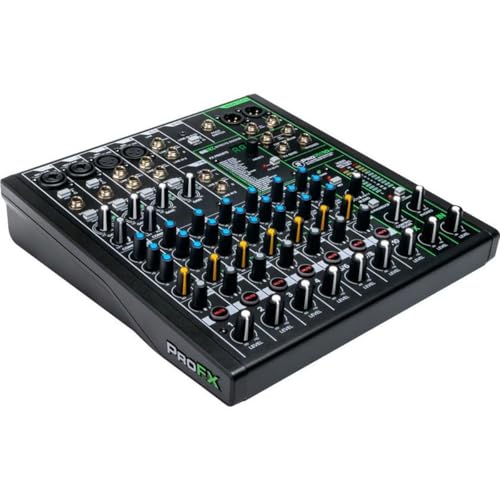
- 24 onboard GigFX effects
- 10-channel mixer with USB
- Onyx preamps for microphone inputs
Best For: Small gigs, rehearsals, streams, and recording
Wireless Effects Studio

- Built-in reverb and delay effects
- Bluetooth 5.3 and USB connectivity
- Four independent channel compressors
Best For: Musicians, streamers, and DAW-based creators
Studio-Ready Pick – Yamaha MG10XU
The Yamaha MG10XU is a strong choice if you want an audio mixer with built in effects for compact live setups, rehearsals, or recording. It combines USB connectivity, SPX digital effects, D-PRE preamps, three-band EQ, high-pass filters, and one-knob compressors in a rugged metal chassis.
Best For: Small bands, home studios, vocalists, and users who want dependable Yamaha processing in a 10-input format.
Pros:
- USB connectivity and built-in SPX digital effects
- D-PRE preamps with a three-band EQ and high-pass filters
- One-knob compressors simplify vocal and instrument control
- Rugged, impact-resistant powder-coated metal chassis
Cons:
- Only 10 inputs, which may limit larger setups
- Corded-electric operation rather than portable battery power
The MG10XU stands out for its practical combination of recording connectivity, hands-on controls, and integrated effects. It is a sensible option when build quality and straightforward operation matter more than maximum channel count.
Feature-Packed Value – FULUODE CT-80S 8-Channel Mixer
The FULUODE CT-80S is an accessible audio mixer with built in effects for karaoke, school events, home KTV, and live music. It offers eight channels, reverb, MP3/USB playback, Bluetooth 5.0, USB recording, and 48V phantom power in a slim design.
Best For: Karaoke hosts, casual performers, presenters, and users who want wireless playback and multiple connection options.
Pros:
- Built-in reverb plus MP3 and USB playback
- Bluetooth 5.0 wireless connection with song-name display
- Eight-channel layout supports microphones and instruments
- Includes 48V phantom power and USB recording
Cons:
- The supplied information specifies a 110-volt American plug
- The feature set is oriented toward general-purpose use rather than detailed studio control
With Bluetooth, playback, recording, reverb, and phantom power built in, the CT-80S prioritizes convenience. It is particularly appealing for users who need an uncomplicated mixer for events and entertainment rather than a highly specialized recording workflow.
Extra-Input Yamaha Choice – Yamaha MG12XU
The Yamaha MG12XU provides a larger format for shoppers seeking an audio mixer with built in effects and more input capacity. Its 12 channels, four-bus design, USB interface, SPX digital effects, D-PRE preamps, three-band EQ, high-pass filters, and one-knob compressors suit performances, recordings, and lectures.
Best For: Small-to-mid-sized live setups, lectures, bands, and recording users who need more inputs than the MG10XU provides.
Pros:
- 12 inputs and four-bus routing provide added flexibility
- USB interface and integrated SPX digital effects
- D-PRE preamps, three-band EQ, and high-pass filters
- One-knob compressors help shape guitars, bass, drums, and vocals
Cons:
- Larger and heavier than a compact 10-input mixer
- Corded-electric operation limits placement to powered setups
The MG12XU is the better fit when additional inputs and four-bus flexibility justify a larger mixer. Its familiar Yamaha control layout and built-in processing make it a capable all-purpose choice for live and educational applications.
Compact Effects and Streaming Pick – 6-Channel DSP Mixer
This six-channel console is a flexible audio mixer with built in effects for karaoke, streaming, recording, and small live performances. It combines Bluetooth playback, USB audio and U-disk support, 16 DSP effects, three-band EQ, four XLR inputs, and selectable 48V phantom power.
Best For: Karaoke users, streamers, home recording setups, and performers who want Bluetooth playback and built-in reverb or delay.
Pros:
- 16 built-in DSP effects, including reverb and delay
- Bluetooth and USB playback or recording support
- Four XLR inputs with selectable 48V phantom power
- Three-band EQ and independent channel, master, and effects controls
Cons:
- Six-channel capacity is limited for larger groups
- Manufacturer warranty is listed as 90 days from purchase
- Traditional analog operation may require careful setup
The mixer’s main appeal is its broad feature set in a smaller console: wireless playback, USB functions, phantom power, and numerous DSP effects. It makes sense for users who value versatility and effects access over a higher channel count or longer stated warranty.
Compact Effects Pick – Yamaha MG06X
The Yamaha MG06X is a compact audio mixer with built in effects for small setups that need straightforward analog control. It provides six channels, two microphone preamps, four dedicated stereo line channels, EQ, and digital effects in a lightweight chassis.
Best For: Small live performances, basic vocal setups, and compact stereo mixing rigs.
Pros:
- Six-channel layout with two microphone preamps and four stereo line channels.
- Built-in digital effects add flexibility for vocals and other sources.
- Compact 5.9-by-7.9-by-2.4-inch design weighs about 900 grams.
Cons:
- Six channels provide less expansion room than larger mixers.
- Its supplied features are focused on core analog mixing rather than extensive connectivity.
The MG06X is a sensible choice when portability and essential effects matter more than a large channel count. Its compact format makes it easy to fit into a small performance or recording setup.
Feature-Rich Streaming Option – 8-Channel DSP Mixer
This 8-channel audio mixer with built in effects combines 16 DSP effects with USB and Bluetooth connectivity. It also includes eight mic inputs, 48V phantom power, three-band EQ, headphone monitoring, and controls suited to recording, streaming, karaoke, and live use.
Best For: Home studios, streaming, karaoke, interviews, and small performances needing flexible connections.
Pros:
- Eight-channel design with eight mic inputs and balanced XLR and line connections.
- Built-in 16-DSP effects provide options such as reverb.
- USB, Bluetooth, RCA, TRS, and XLR connectivity support varied setups.
- 48V phantom power supports compatible condenser microphones.
Cons:
- At 3.7 kg, it is less lightweight than compact six-channel alternatives.
- The supplied notes do not specify detailed USB recording or software features.
Choose this mixer when effects and connection flexibility are priorities. Its combination of DSP processing, wireless playback, USB support, and phantom power makes it adaptable, though buyers should confirm the exact workflow they need.
High-Channel Analog Choice – Mackie Mix12FX
The Mackie Mix12FX is a 12-channel audio mixer with built in effects for users who need more input capacity in a compact analog console. It offers four mic/line inputs, four stereo 1/4-inch line inputs, 12 integrated effects, phantom power, and dedicated RCA playback and recording connections.
Best For: Small bands, rehearsals, live sound, and recording setups that need multiple line sources.
Pros:
- Twelve-channel layout provides more input capacity than smaller compact mixers.
- Includes 12 effects, including reverbs, choruses, and delays.
- Four mic/line inputs feature three-band EQ, low-cut filtering, pan, and overload indication.
- Dedicated stereo RCA inputs and outputs support playback or recording.
Cons:
- Only four inputs are identified as mic/line channels in the supplied specifications.
- Its wired design does not include Bluetooth or USB connectivity in the listed details.
- At 3.7 pounds, it is heavier than the Yamaha MG06X.
The Mix12FX is a strong fit when channel count and integrated effects outweigh wireless convenience. Its combination of stereo line inputs, mic/line controls, and RCA routing suits broader analog setups.
USB Streaming Essential – Behringer XENYX 802S
Behringer XENYX 802S Premium Analog 8-Input Mixer with USB Streaming Interface
Check Price On AmazonThe Behringer XENYX 802S is a practical choice if you need an audio mixer with built in effects alternatives handled through straightforward analog mixing and equalization. Its eight inputs, USB connectivity, and multiple output formats suit streaming, podcasting, and recording setups.
Best For: Streamers, podcasters, and home creators who prioritize low-noise analog mixing and direct computer or gaming audio integration.
Pros:
- Eight-input layout supports a range of basic mixing setups.
- Stereo USB interface connects to a computer or mobile device.
- Supports direct mixing of PC or gaming audio into the streaming output.
- Offers XLR, TRS, and RCA output connections.
Cons:
- The supplied notes do not identify built-in digital effects.
- Software update support is unspecified.
Choose this model when clean analog control and USB streaming are more important than an onboard effects engine. It is especially well matched to uncomplicated content-creation workflows.
GigFX Workhorse – Mackie ProFX10v3
The Mackie ProFX10v3 is a strong pick for shoppers seeking an audio mixer with built in effects for small gigs, rehearsals, streams, and recording. It combines 10 channels, Onyx microphone preamps, a built-in USB interface, and the GigFX engine with 24 effects.
Best For: Small live setups and streamers who want simple access to onboard effects plus USB recording or streaming.
Pros:
- GigFX engine provides 24 effects with straightforward control.
- Onyx preamps provide studio-grade gain on microphone inputs.
- Built-in USB interface supports recording and streaming.
- Handles microphones, instruments, and playback sources.
Cons:
- The supplied listing identifies the model number as ProFX16v3, despite the product title naming ProFX10v3.
- Software update support is unspecified.
Among these options, the ProFX10v3 most directly matches the built-in-effects requirement. Its combination of GigFX processing and USB connectivity makes it flexible for both live and computer-based use.
Wireless Effects Studio – Donner DAM-1000
The Donner DAM-1000 is an audio mixer with built in effects designed for flexible recording, live streaming, and DJ-style setups. It offers 10 channels, six outputs, digital effects such as reverb and delay, Bluetooth 5.3, USB connectivity, and ASIO driver compatibility.
Best For: Musicians and content creators who want onboard effects, wireless audio input, compressors, and low-latency DAW integration.
Pros:
- Built-in digital effects include reverb and delay.
- Bluetooth 5.3 enables wireless audio input.
- Four independent channel compressors support signal shaping.
- ASIO compatibility is designed for low-latency DAW use.
Cons:
- The supplied notes do not detail the number or types of available effects beyond examples.
- Software update support is unspecified.
The DAM-1000 stands out for combining onboard effects with wireless connectivity and recording-focused features. Its 10-channel design and independent compressors give creators more control over complex audio setups.
How We Picked the Best Audio Mixer with Built in Effects
We selected mixers across several common use cases, including live vocals, small bands, DJ systems, podcasting, home recording, streaming, and karaoke. We considered channel count, input variety, microphone preamps, phantom power, onboard effects, USB or computer connectivity, Bluetooth support, physical controls, and overall portability.
Because specifications and included features vary considerably, the best audio mixer with built-in effects is not necessarily the one with the most channels. We looked for practical combinations of control, flexibility, and value so buyers can match a mixer to their equipment and workflow.
Quick Comparison
| Best For | What to Prioritize | Models to Consider |
|---|---|---|
| Small live setups | Compact size, reliable effects, simple controls | Yamaha MG06X, Mackie Mix12FX |
| Home recording and streaming | USB connectivity, computer compatibility, flexible routing | Yamaha MG10XU, Mackie ProFX10v3, Behringer XENYX 802S |
| More inputs and expansion | Higher channel count, subgroup or bus flexibility | Yamaha MG12XU, FULUODE CT-80S |
| Bluetooth and casual entertainment | Wireless playback, MP3 or USB support, vocal effects | Donner DAM-1000, 8-channel DSP mixers |
Key Buying Factors for an Audio Mixer with Built-In Effects
Inputs and Channel Layout
Count the microphones, instruments, playback devices, and other sources you plan to connect at the same time. Leave at least one or two spare channels if your setup may grow. Check whether the mixer offers dedicated XLR inputs, line inputs, stereo channels, or combination jacks.
Effects and Signal Control
Built-in reverb and delay can be useful for vocals, announcements, and live performances without requiring an external effects unit. Look for adjustable effect levels and channel sends rather than assuming every onboard effect offers the same control. Equalization, gain adjustment, mute controls, and monitoring outputs are equally important for clean mixes.
USB, Bluetooth, and Recording Features
USB connectivity can make a mixer more useful for multitrack or stereo recording, playback, and streaming, but implementation varies. Confirm whether USB is intended for recording, playback, streaming, or all three. Bluetooth and MP3 playback are convenient for background music, though they should not replace the wired inputs needed for critical sources.
Phantom Power and Microphone Compatibility
If you use condenser microphones or active direct boxes, verify that the mixer provides 48V phantom power. Check how phantom power is controlled and whether your microphones and other connected equipment are compatible. Balanced XLR inputs are preferable for longer cable runs and noisier environments.
Who Should Buy Which Audio Mixer with Built in Effects?
Choose a compact Yamaha MG06X or similar small mixer if you need straightforward vocal, instrument, or presentation mixing with minimal setup. Choose the Yamaha MG10XU or Mackie ProFX10v3 if USB recording, streaming, and a broader control set matter for a home studio or content workflow.
Choose the Yamaha MG12XU or another higher-input model for small bands, rehearsal spaces, and installations that need room for several microphones and stereo sources. Choose a Bluetooth- or MP3-equipped model if casual playback, karaoke, DJ use, or event entertainment is central to your setup.
Before buying, compare the physical layout with your available desk or case space, confirm the connector types you need, and make sure the effects and USB functions match your intended workflow. A simpler mixer with dependable controls is often a better choice than a feature-heavy model you will not use.