
The right interview microphone helps voices stay clear in busy streets, event halls, studios, and remote recording setups. Dynamic models are especially useful when you need durable handling and focused speech capture.
We selected 10 options across handheld, wireless, USB, and XLR formats so you can match your microphone to your recording style, equipment, and budget.
Best 10 Dynamic Microphones for Interviews Picks for 2026
Broadcast Interview Pick

- Cardioid dynamic capsule for focused speech pickup
- Double-layer grille helps with wind protection
- Balanced long handle with low handling noise
Best For: Professional broadcast interviews and live reporting
Wireless Event Option

- Two wireless handheld dynamic microphones
- Up to 164-foot listed transmission range
- Rechargeable setup with over eight hours of use
Best For: PA-based interviews, speeches, and events
Field Reporting Classic

- Omnidirectional dynamic pickup for interviews
- Voice-tailored response for spoken content
- Includes microphone flag and zip case
Best For: Broadcast reporting and camera-based interviews
Mobile Creator Choice

- Wireless 2.4GHz system with Lightning receiver
- Includes WMX-HM handheld adapter
- Up to 10 hours of listed battery life
Best For: Portable iPhone street interviews and content creation
Proven Vocal Standard

- Cardioid pattern focuses on the speaker
- Built-in pop and wind-noise protection
- Rugged XLR design for repeated use
Best For: Professional interviews, podcasts, and broadcast-style recording
Purpose-Built Reporter Pick
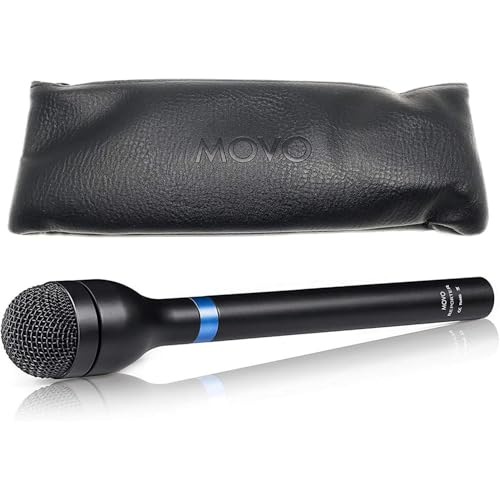
- Omnidirectional capsule for handheld interviews
- Internal pop filter reduces plosives and handling noise
- No external phantom power required
Best For: On-location reporting, camera interviews, and social video
Best Wireless Pick
ALPOWL Wireless Dynamic Microphone System

- Up to 200-foot wireless range
- Two handheld microphones for interviews
- Rechargeable USB-C design with DSP noise reduction
Best For: Mobile two-person interviews in larger rooms or event spaces
Best USB/XLR Value

- USB and XLR connectivity
- Cardioid pickup minimizes rear-room sound
- Includes stand, windscreen, cables, and headphone monitoring
Best For: Desk interviews and podcasts with flexible connection needs
Best Broadcast Handheld
Shure SM63LB Dynamic Vocal Microphone

- Speech-focused response with low-frequency roll-off
- Built-in shock mount reduces handling noise
- Rugged grille and humbucking coil for field use
Best For: Wired handheld broadcast interviews and field reporting
Broadcast Interview Pick – Sennheiser MD 46
For reporters seeking dependable dynamic microphones for interviews, the Sennheiser MD 46 combines a cardioid capsule with a double-layer grille to help focus on the speaker while reducing handling noise. Its wired XLR connection suits mixers, audio interfaces, and other professional recording setups.
Best For: Broadcast interviews, live reporting, and speech recording with professional XLR equipment.
Pros:
- Cardioid pickup helps target the interview subject.
- Double-layer grille provides added wind protection.
- Long handle is designed for balance and low handling noise.
- Metal casing supports regular field use.
Cons:
- Requires a wired XLR connection and compatible audio equipment.
- Its handheld broadcast design is less convenient for compact smartphone recording.
The MD 46 is a focused choice for journalists and production teams who prioritize controlled handling and a traditional broadcast microphone format.
Wireless Event Option – AURGIC Dual Handheld System
This AURGIC system is a practical wireless alternative among dynamic microphones for interviews when you need freedom of movement. It includes two handheld microphones, a receiver, rechargeable batteries, and adapters for 6.35mm or 3.5mm inputs.
Best For: Interviews, speeches, conferences, and events using a PA system, mixer, amplifier, or compatible speaker.
Pros:
- Wireless range is listed at up to 164 feet.
- Two handheld microphones support two-person setups.
- Rechargeable batteries provide over eight hours of use.
- Automatic pairing and included adapters simplify setup.
Cons:
- Not compatible with Bluetooth or AUX connections.
- Not compatible with mobile phones, computers, or tablets.
- Requires equipment with a compatible microphone input.
Choose this kit when wireless mobility and a two-microphone configuration matter more than direct smartphone or computer connectivity.
Field Reporting Classic – RØDE Reporter
The RØDE Reporter is an omnidirectional wired microphone built for interviews, presentations, and broadcasting. Its voice-tailored response and XLR connector make it a straightforward choice for reporters working with cameras or professional audio equipment.
Best For: Street interviews, broadcast presentations, and camera-based reporting where consistent omnidirectional pickup is useful.
Pros:
- Omnidirectional pattern captures sound from multiple directions.
- Voice-tailored frequency response suits spoken-word recording.
- Includes a detachable microphone flag and zip case.
- Aluminum enclosure and mesh basket support field use.
Cons:
- Requires a wired XLR connection.
- Omnidirectional pickup can capture more surrounding sound than a directional design.
- Designed as a microphone-only solution rather than a wireless kit.
The Reporter is a sensible fit for interviewers who want a recognizable handheld broadcast format and broad pickup without batteries or wireless pairing.
Mobile Creator Choice – Movo Wireless Mini DI
For creators recording on an iPhone, the Movo Wireless Mini DI offers a compact alternative to conventional dynamic microphones for interviews. The wireless transmitter, Lightning receiver, and included WMX-HM handheld adapter are designed for street interviews, reporting, and mobile content creation.
Best For: iPhone-based street interviews, vlogging, reporting, and portable video production.
Pros:
- Lightning receiver connects directly to compatible iPhones.
- Included handheld adapter supports interview-style use.
- Up to 10 hours of listed battery life.
- 2.4GHz transmission range is listed at up to 164 feet.
Cons:
- Designed for iPhone use rather than broad device compatibility.
- Plastic construction may be less rugged than metal broadcast microphones.
- Its lavalier-based design differs from a traditional handheld dynamic microphone.
This system is best when portability and direct iPhone recording are priorities, particularly for creators who need to move quickly during street interviews.
Proven Vocal Standard – Shure SM58
For interviewers who want dependable wired performance, the Shure SM58 is a strong choice among dynamic microphones for interviews. Its cardioid pattern focuses on the speaker while helping minimize background noise, and its rugged metal construction suits frequent field or studio use.
Best For: Professional interviews, podcasts, broadcast-style recording, and situations where a reliable XLR connection is available.
Pros:
- Cardioid pickup helps focus on the interview subject and reduce surrounding noise.
- Built-in grille and filter help reduce plosives, breath, and wind noise.
- Rugged metal construction and included stand adapter support regular professional use.
- Warm, articulate vocal response with a 50 Hz–15 kHz frequency range.
Cons:
- Requires an XLR-compatible audio interface or other suitable equipment.
- Wired operation offers less mobility than a wireless interview system.
The SM58 is a practical long-term pick when consistent voice clarity and durability matter more than cordless convenience. It is especially well suited to controlled interview setups and production workflows built around XLR audio.
Cordless Field Flexibility – Bietrun Wireless Interview Mic
The Bietrun wireless microphone system adds mobility to interviews and presentations. With a unidirectional dynamic capsule, UHF transmission, and a stated wireless range of up to 160 feet, it can suit speakers who need to move without managing an XLR cable.
Best For: Mobile interviews, events, presentations, churches, and PA systems with a microphone input.
Pros:
- Wireless UHF operation provides up to 160 feet of stated range.
- Rechargeable receiver offers about four hours of use after charging.
- Metal construction is designed to be lighter, harder, and more wear-resistant.
- Unidirectional dynamic capsule is intended for speech, conferences, and events.
Cons:
- It must connect to a microphone input, not an AUX input or Bluetooth speaker.
- The handheld microphone uses two AA batteries, which are not included.
- Channel selection or re-pairing may be needed when using multiple microphones or troubleshooting.
This system is appealing when interview movement and quick setup are priorities. Before buying, confirm that the camera, mixer, speaker, or other destination has a compatible microphone input and plan for the required batteries and cables.
Purpose-Built Reporter Pick – Movo HM-M2
Movo HM-M2 Dynamic Omnidirectional Handheld Interview Microphone with 3-Pin XLR Connector
Check Price On AmazonThe Movo HM-M2 is designed specifically for handheld reporting and voice capture. As one of the more focused dynamic microphones for interviews, it uses an omnidirectional capsule to capture speech from the interview subject while its internal pop filter helps reduce plosives and handling noise.
Best For: On-location news interviews, social media videos, podcasts, reports, and presentations recorded with a camera or XLR device.
Pros:
- Omnidirectional design is suited to handheld interview use.
- Internal pop filter helps reduce plosives and handling noise.
- Dynamic operation does not require external phantom power.
- Includes a carrying pouch and a one-year warranty with US-based support.
Cons:
- Omnidirectional pickup may capture more surrounding sound than a directional microphone.
- Requires a 3-pin XLR connection and operates only as a wired microphone.
- Its stated frequency response is limited to 15 kHz.
The HM-M2 is a straightforward choice for reporters who want a dedicated handheld interview microphone without phantom-power requirements. Its omnidirectional pattern favors practical face-to-face reporting, while the compact aluminum body and pouch support field work.
Best Wireless Pick – ALPOWL Wireless Dynamic Microphone System
If you need dynamic microphones for interviews where presenters or guests may move around, the ALPOWL system offers a cordless setup with a claimed range of up to 200 feet. Its plug-and-play receiver, DSP noise reduction, and dual handheld microphones make it practical for larger interview setups, events, and speech applications.
Best For: Interviews conducted in larger rooms or event spaces where wireless mobility matters.
Pros:
- Wireless range is listed at up to 200 feet with a more stable UHF signal.
- Two handheld microphones support interviewer-and-guest conversations.
- Rechargeable USB-C batteries provide up to 10 hours of stated operating time.
- DSP noise reduction is designed to reduce background noise and clarify voices.
Cons:
- Initial pairing may take one to three minutes, and nearby wireless devices can cause interference.
- The receiver must connect to a microphone jack and is not compatible with TV audio jacks.
- Its omnidirectional pattern may capture more surrounding sound than a directional interview microphone.
The ALPOWL is a flexible choice when a two-person, cable-free interview setup is more important than maximum isolation from room noise. Confirm that your mixer, speaker, or interface has the required microphone input before buying.
Best USB/XLR Value – Samson Q2U Dynamic Microphone
The Samson Q2U is a practical option for interviews recorded at a desk, especially if you want both computer-friendly USB and traditional XLR connectivity. Its cardioid pattern focuses on sound from in front of the microphone, while the included stand, windscreen, cables, and headphone output simplify monitoring and setup.
Best For: Desk-based interviews, podcasts, and creators who want USB convenience with an upgrade path to XLR.
Pros:
- Supports direct USB or XLR connection, with both cables included.
- Cardioid pickup helps minimize ambient noise from behind the microphone.
- 3.5mm headphone output enables monitoring of recordings and computer audio.
- Includes a desktop tripod stand, windscreen, mic clip, and extension piece.
Cons:
- It is a single microphone, so a two-person interview requires another microphone or a different setup.
- The desktop stand is better suited to seated, stationary interviews than roaming conversations.
- USB connectivity may require an appropriate adapter for some Android or iOS devices.
The Q2U is one of the most adaptable dynamic microphones for interviews when you are starting with USB but may later use an audio interface. Its front-facing cardioid pickup is particularly useful in untreated rooms, provided the speaker stays positioned in front of the capsule.
Best Broadcast Handheld – Shure SM63LB Dynamic Vocal Microphone
The Shure SM63LB is a wired handheld microphone designed for speech-oriented applications including broadcast, television, recording, and on-stage use. Its omnidirectional pickup, speech-focused frequency response, built-in shock mount, and humbucking coil make it a strong fit for reporters and interviewers who need a durable microphone they can hold while speaking with guests.
Best For: Handheld broadcast interviews, field reporting, and speech applications using an XLR connection.
Pros:
- Low-frequency roll-off and an 80–20,000 Hz response are tailored for speech intelligibility.
- Built-in shock mounting helps reduce handling noise and stand vibration.
- Humbucking construction helps resist strong electromagnetic hum fields.
- Rugged VERAFLEX grille is designed to resist damage from drops up to two meters.
Cons:
- Its wired XLR design limits movement compared with a wireless system.
- The omnidirectional pattern can pick up sound from around the microphone.
- It is supplied as a single microphone, so separate equipment is needed for a two-mic interview.
The SM63LB prioritizes dependable handheld operation and speech clarity over wireless convenience or tight directional rejection. Choose it for professional-style interview work where rugged construction, low handling noise, and XLR compatibility are central requirements.
How We Picked the Best Dynamic Microphones for Interviews
We evaluated these microphones by looking at the features that matter most for spoken-word recording: pickup pattern, handling noise, connection type, build quality, portability, power requirements, and compatibility with cameras, phones, computers, mixers, and wireless receivers. We also included both professional broadcast-style models and flexible choices for beginners, creators, and event teams.
A good interview microphone should prioritize intelligible speech over exaggerated bass or vocal effects. For field use, rugged construction and useful rejection of surrounding noise can be more important than studio-level specifications. Wireless models were considered for range, receiver design, battery convenience, and setup flexibility.
Quick Comparison
| Best For | Recommended Type | Connection | What to Prioritize |
|---|---|---|---|
| Street and event interviews | Handheld dynamic | XLR or wireless | Durability, handling noise control, speech isolation |
| Camera crews and mobile reporting | Wireless handheld | Dedicated receiver | Range, battery life, receiver compatibility |
| Phone-based interviews | Compact wireless or adapter-equipped mic | Phone receiver or adapter | Simple setup, low weight, device compatibility |
| Podcast and desk interviews | USB/XLR dynamic | USB and/or XLR | Computer compatibility, monitoring, gain control |
| Broadcast-style professional work | Omnidirectional or cardioid handheld | XLR | Consistent voice pickup and professional handling |
Key Buying Factors for Dynamic Microphones for Interviews
Pickup Pattern
Cardioid microphones focus more strongly on the person speaking into the front and can help reduce sound from behind. Omnidirectional models capture sound more evenly around the microphone, which can make them easier to share between an interviewer and guest while maintaining a consistent tone. Choose based on whether noise rejection or flexible positioning is more important.
Wired Versus Wireless Operation
Wired XLR microphones are dependable and do not require transmitter batteries, but they need a recorder, mixer, or compatible interface. Wireless systems offer freedom of movement and cleaner field setups, yet add batteries, pairing, range, and receiver considerations. Check the receiver connection before buying, especially when using a phone or camera.
Handling Noise and Construction
Interviewers often move a handheld microphone between speakers, so a solid housing and good internal isolation matter. A windscreen can reduce outdoor wind, while a balanced design helps prevent fatigue during long shoots. For regular field reporting, prioritize proven durability over unnecessary features.
Connector and Recording Workflow
XLR is the standard choice for professional recorders and mixers. USB is convenient for computers and simple podcast setups. Some microphones support both, allowing one model to work at a desk and in a portable rig. Confirm whether your device supplies the required input, adapter, or power.
Who Should Buy Which Dynamic Microphones for Interviews?
Choose a cardioid handheld if you regularly record in noisy environments and want focused speech pickup. Choose an omnidirectional interview microphone when multiple speakers need to share one mic or consistent positioning is difficult. A wireless handheld system is best for presenters, reporters, and event crews who need to move freely. Phone-focused wireless kits suit mobile creators who want a compact setup, while USB/XLR models are the most versatile choice for podcasting, streaming, and occasional interviews.
Before buying, match the microphone to your complete chain: speaker, location, recorder, connector, monitoring method, and power source. The best option is the one that fits that workflow reliably without adding unnecessary setup.