
Choosing the best audio mixer for church sound means balancing speech intelligibility, worship-band inputs, monitor control, livestream connectivity, and ease of use.
This roundup compares 10 mixers across digital, analog, compact, and feature-rich designs to help churches match their equipment to their venue, volunteers, and budget.
Best 10 Audio Mixer for Church Sound Picks for 2026
Best Digital Control
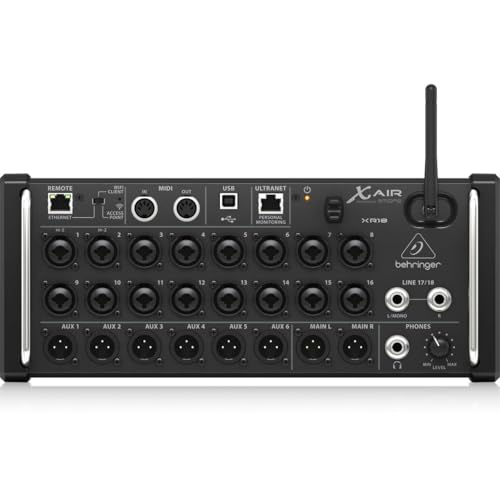
- 18-channel, 12-bus digital mixer
- 16 programmable MIDAS mic preamps
- Built-in Wi-Fi and 18 x 18 USB interface
Best For: Tablet-controlled church mixing and multichannel recording
Best Rackmount Flexibility

- Compact 3U rackmount format
- Bluetooth stereo playback
- Four mic/line inputs with phantom power
Best For: Smaller worship spaces and mobile church systems
Best Simple USB Mixer

- Eight-input analog mixer
- Stereo USB audio interface
- XLR, TRS, and RCA outputs
Best For: Small church systems using computer audio or streaming
Best All-in-One Playback

- 16 channels with 3-band EQ
- Bluetooth, USB, and MP3 playback
- Phantom power and built-in recorder
Best For: Churches needing flexible live mixing and media playback
Flexible Church Mixing
Mackie ProFX10v3+ 10-Channel Mixer

- 10 channels for mics, instruments, phones, and computers
- Bluetooth playback and USB-C recording
- 24 GigFX+ effects with Onyx mic preamps
Best For: Churches needing mixing, playback, streaming, and recording in one desk
Expandable Mic Control
Rolls RM82 8-Channel Mic/Line Mixer

- Eight XLR mic and eight 1/4-inch inputs
- Individually switchable +48V phantom power
- Prefader RCA output and aux bus for routing
Best For: Churches needing simple multi-mic mixing and flexible signal distribution
Large Worship Team Routing
W IN-MIX DX16 16-Channel Mixer

- 16 channels with 14 combo inputs and two stereo channels
- 99 DSP effects, Bluetooth, and USB recording
- 48V phantom power plus 7-band master EQ
Best For: Churches with larger worship teams and demanding live sound setups
Compact DSP Pick
6-Channel Bluetooth Audio Mixer

- Four XLR inputs with switchable 48V phantom power
- Bluetooth, USB playback, and recording support
- 16 DSP effects plus three-band channel EQ
Best For: Small worship teams and compact church sound setups
Flexible Stage Choice
8-Channel Professional Audio Mixer

- Eight XLR and 1/4-inch input channels
- USB, Bluetooth, and flash-drive playback or recording
- PFL monitoring, EQ, reverb, and delay controls
Best For: Church services with multiple microphones, instruments, and playback sources
Ultra-Thin Option
FULUODE CT-80S 8-Channel Mixer

- Eight channels for microphones and instruments
- Bluetooth 5.0, USB/MP3 playback, and song display
- Slim 1.57-inch chassis with 48V phantom power
Best For: Space-conscious church, conference, and campus sound systems
Best Digital Control – Behringer X AIR XR18
For churches seeking an audio mixer for church sound with flexible remote control, the Behringer X AIR XR18 combines 18 channels, tablet operation, programmable MIDAS preamps, and a built-in Wi-Fi router. Its USB interface also supports multichannel recording and playback workflows.
Best For: Churches that want tablet-controlled mixing, multiple microphone inputs, and integrated USB recording.
Pros:
- 18-channel, 12-bus digital mixing platform.
- 16 programmable MIDAS-designed mic preamps.
- Built-in tri-mode Wi-Fi router eliminates the need for an external router.
- 18 x 18 bidirectional USB audio interface.
Cons:
- Requires an iPad or Android tablet for its stated remote-control workflow.
- Its digital feature set may be more than a small setup needs.
The XR18 is a strong choice when a church needs substantial input capacity and remote mixing in a compact digital format. Its recording interface adds useful flexibility for services and other live applications.
Best Rackmount Flexibility – Alesis MultiMix 10 Wireless
The Alesis MultiMix 10 Wireless is a practical audio mixer for church sound when straightforward hands-on control and rackmount installation matter. It offers 10 channels, four mic/line preamps, Bluetooth playback, phantom power, and aux sends for smaller worship spaces or mobile systems.
Best For: Smaller churches, venues, and traveling systems that need a compact rackmount mixer with Bluetooth.
Pros:
- Compact 3U rackmount design with front-panel inputs.
- Bluetooth supports stereo playback from compatible devices.
- Four XLR mic/line inputs with phantom power and inserts.
- Pre-fader and post-fader aux sends plus stereo aux return.
Cons:
- Provides fewer channels than the 16- and 18-channel options here.
- Its 2-band channel EQ is less extensive than a mixer with 3-band EQ.
This mixer suits churches that prioritize accessible physical controls, rackmount convenience, and simple wireless playback. It is especially appropriate for smaller systems that do not require advanced digital mixing.
Best Simple USB Mixer – Behringer XENYX 802S
Behringer XENYX 802S Premium Analog 8-Input Mixer with USB Streaming Interface
Check Price On AmazonThe Behringer XENYX 802S is a compact option for an audio mixer for church sound when analog controls and computer connectivity are the main priorities. It provides eight inputs, analog equalization, USB audio, and outputs including XLR, TRS, and RCA.
Best For: Small church setups that need basic analog mixing with USB connectivity for streaming, recording, or computer audio.
Pros:
- Eight-input analog mixer with hands-on equalization.
- Stereo USB audio interface connects to a computer or mobile device.
- Supports direct mixing of PC or gaming audio into the streaming output.
- Offers XLR, TRS, and RCA output connections.
Cons:
- Eight inputs may limit larger worship teams or multi-microphone services.
- Its analog design does not provide the remote digital control of the XR18.
The 802S is best viewed as a straightforward, space-conscious mixer for smaller audio systems. USB integration makes it useful where computer-based streaming or recording is part of the church sound workflow.
Best All-in-One Playback – XTUGA CT160
The XTUGA CT160 is a versatile audio mixer for church sound for teams that need many inputs alongside Bluetooth, USB recording, and direct media playback. Its 16-channel layout includes balanced XLR inputs, +48V phantom power, 3-band EQ, and a built-in MP3 player/recorder.
Best For: Churches needing a 16-channel board with wireless playback, direct USB or MP3 media handling, and live or streaming flexibility.
Pros:
- 16-channel design supports multiple external audio sources.
- Bluetooth playback works with phones, computers, and other devices.
- Includes +48V phantom power, balanced XLR inputs, and 3-band EQ.
- Built-in MP3 player/recorder supports MP3, WAV, and WMA files.
Cons:
- At 6.69 kg, it is heavier than the compact Alesis mixer.
- The supplied dimensions are listed as 1.4 inches on each side, so buyers should verify the physical specifications before installation.
The CT160 stands out for combining conventional mixer controls with several playback and recording options. It can suit churches that want a broad input count without giving up Bluetooth or direct media support.
Flexible Church Mixing – Mackie ProFX10v3+ 10-Channel Mixer
For a church sound system that needs straightforward control plus playback and recording, the Mackie ProFX10v3+ combines 10 channels with Bluetooth, USB-C, and XLR connectivity. Its Onyx mic preamps and built-in effects make it a practical audio mixer for church sound teams handling services, rehearsals, streaming, or recording.
Best For: Churches needing an all-in-one mixer for microphones, instruments, wireless playback, streaming, and USB recording.
Pros:
- 10 channels support microphones, instruments, phones, and computers.
- Bluetooth playback and multi-mode USB recording add useful flexibility.
- GigFX+ provides 24 effects with tap tempo.
- Onyx preamps are included on every mic channel.
Cons:
- Its 10-channel capacity may be limiting for larger worship teams.
- The supplied notes do not specify the included USB recording modes in detail.
The ProFX10v3+ is a versatile choice when a church wants live mixing, playback, effects, and recording in one compact desk. Consider a larger mixer if your services regularly require more than 10 channels.
Expandable Mic Control – Rolls RM82 8-Channel Mic/Line Mixer
The Rolls RM82 is a focused option for church sound setups centered on multiple microphones and simple line-level routing. With eight XLR mic inputs, eight 1/4-inch inputs, switchable phantom power, and auxiliary connections, it can serve as a practical audio mixer for church sound applications that prioritize flexible signal distribution.
Best For: Churches needing an uncomplicated eight-channel mic/line mixer for services, monitoring, recording, or cascading.
Pros:
- Eight XLR microphone inputs accommodate several vocal or instrument sources.
- Individually switchable +48V phantom power supports compatible condenser microphones.
- RCA prefader output can be used for recording, monitoring, or cascading.
- Aux bus input provides cascading or a ninth unbalanced input.
Cons:
- It has eight channels, which may not suit larger worship productions.
- The supplied notes describe 1/4-inch inputs as unbalanced.
- A 90-day warranty is shorter than the warranty listed for some alternatives.
The RM82 makes sense when a church needs dedicated mic/line inputs and useful routing rather than extensive onboard effects or digital recording features. Its cascading and prefader outputs can help integrate it into a broader sound system.
Large Worship Team Routing – W IN-MIX DX16 16-Channel Mixer
For a larger worship setup with numerous microphones, instruments, and playback sources, the W IN-MIX DX16 offers 16 channels, 14 combo inputs, and two stereo channels. Its independent channel EQ, 99 DSP effects, Bluetooth, USB recording, and 7-band master EQ give church sound teams broad control for live performance, streaming, or recording.
Best For: Churches with larger bands or production teams that need extensive inputs, onboard effects, phantom power, and recording features.
Pros:
- 16 channels include 14 XLR/6.35mm combo inputs plus two stereo channels.
- Independent 3-band EQ and gain provide control over each channel.
- 99 DSP effects, Bluetooth playback, and USB recording are built in.
- 48V phantom power is available on every channel, with a 7-band master EQ.
Cons:
- Its larger 15.75-by-21.85-by-4.92-inch footprint requires more setup space.
- XLR cables are sold separately according to the supplied notes.
- The extensive feature set may be more than a small church sound team needs.
The DX16 is the most capable fit here for a church that expects a full band, multiple vocalists, and varied playback sources. Its 16-channel layout and onboard processing reduce the need for additional external gear, while the larger chassis calls for adequate rack or table space.
Compact DSP Pick – 6-Channel Bluetooth Audio Mixer
If you need an audio mixer for church sound in a compact setup, this six-channel board offers four XLR inputs, 48V phantom power, Bluetooth playback, USB connectivity, and built-in effects. Its channel count suits smaller worship teams, spoken-word events, or auxiliary music playback.
Best For: Small churches and worship setups needing Bluetooth playback, condenser-microphone support, and basic reverb or delay.
Pros:
- Four XLR inputs support dynamic and condenser microphones with switchable 48V phantom power.
- Bluetooth and USB functions allow music playback and mixing or recording.
- Three-band EQ, individual faders, and 16 DSP effects provide flexible sound shaping.
Cons:
- Six channels may be limiting for larger worship teams or multiple stage sources.
- The supplied warranty is listed as 90 days.
- Operation may require careful setup to avoid loss of audio.
This is a feature-rich choice for smaller church sound systems where simple playback and vocal processing matter more than extensive channel capacity.
Flexible Stage Choice – 8-Channel Professional Audio Mixer
For an audio mixer for church sound that needs more inputs, this eight-channel console combines XLR and 1/4-inch connectivity with USB, Bluetooth, monitoring, and onboard effects. It is suited to church services that combine several microphones, instruments, and playback sources.
Best For: Churches needing eight input channels, headphone monitoring, and flexible playback or recording connections.
Pros:
- Eight channels provide more connection capacity for microphones and instruments.
- USB, Bluetooth, computer, flash-drive, and external-device connectivity support playback and recording.
- Per-channel gain, FX, PFL, three-band EQ, faders, and peak indicators support hands-on control.
- Includes 48V phantom power, headphone monitoring, reverb, and delay effects.
Cons:
- The supplied notes do not specify the number of channels with phantom power.
- It is a corded unit and is not described as battery powered.
With its broader input count and monitoring controls, this model is a practical middle-ground option for recurring services, small live events, and church teams that need room to expand.
Ultra-Thin Option – FULUODE CT-80S 8-Channel Mixer
This FULUODE CT-80S is an audio mixer for church sound setups that prioritize a slim console with eight channels, Bluetooth, USB or MP3 playback, and microphone or instrument compatibility. Its listed 110V American plug makes it relevant for compatible U.S. installations.
Best For: Churches, conferences, and campus services that want an ultra-thin eight-channel mixer with Bluetooth and MP3 playback.
Pros:
- Eight channels support wired or wireless microphones, condenser microphones, and instruments.
- Built-in Bluetooth 5.0, USB/MP3 input, and song-name display simplify playback.
- Ultra-thin 1.57-inch design can suit space-conscious sound desks.
- Includes 48V phantom power and reverb functionality.
Cons:
- The supplied specifications list USB as the output connector type, so output requirements should be checked before purchase.
- At 3.3 kg, it is heavier than the six-channel option despite its slim profile.
- Its 110V American plug may not suit every electrical system.
The CT-80S stands out for its slim chassis and built-in playback features, making it worth considering when available desk space and straightforward media control are priorities.
How We Picked the Best Audio Mixer for Church Sound
We focused on the features that matter during services rather than judging mixers by channel count alone. The comparison considers microphone and line inputs, phantom power for condenser microphones and DI boxes, EQ and effects, monitor or auxiliary outputs, USB recording or streaming, Bluetooth convenience, and overall control.
We also considered whether each mixer suits a small worship space, a larger volunteer-led production, a livestream setup, or a portable ministry. Digital models can provide deeper routing and scene control, while analog mixers are often quicker to learn and easier to operate without a tablet or network.
Quick Comparison
| Best For | Look For | Most Suitable Mixer Type |
|---|---|---|
| Small services and speech | Simple channel layout, clean preamps, compact size | Analog mixer |
| Worship bands | Enough mic inputs, phantom power, monitor sends | Analog or digital mixer |
| Livestreaming | USB interface, flexible routing, reliable outputs | USB-equipped mixer |
| Large volunteer teams | Scenes, remote control, saved settings | Digital mixer |
| Portable events | Lightweight construction and built-in playback | Compact analog mixer |
Key Buying Factors for an Audio Mixer for Church Sound
Input Count and Future Growth
Count every vocal microphone, instrument, playback source, podium mic, and livestream feed you use at the same time. Leave spare channels for guest musicians, additional speakers, and future expansion.
Outputs and Monitoring
Check for auxiliary sends or monitor outputs if musicians need separate monitor mixes. A main stereo output may be enough for a simple sanctuary, but multiple buses are valuable for stage monitors, recording, assisted listening, and broadcast feeds.
Control and Reliability
Analog controls are immediately accessible, which can reduce mistakes during a service. Digital mixers offer deeper routing, snapshots, compression, and remote adjustment, but they require dependable power, network setup, and operator training.
Streaming, Effects, and Phantom Power
USB connectivity can simplify sermon recording and livestream integration. Built-in reverb may help vocals, while equalization and compression improve clarity when used carefully. Confirm that phantom power is available for any condenser microphones or active direct boxes you plan to connect.
Who Should Buy Which Audio Mixer for Church Sound?
Choose a compact analog model if your church runs straightforward services with a few microphones and playback sources and wants fast, hands-on operation. Select a mixer with USB if recording sermons or sending audio to a computer is part of your regular workflow.
Worship teams with several vocalists, instruments, and monitor requirements should prioritize input headroom, auxiliary buses, and phantom power over Bluetooth or built-in effects. A digital mixer is the better choice for churches that need saved configurations, remote control, detailed routing, or consistent setups across multiple services.
Before buying, confirm connector types, rack or tabletop placement, power requirements, and the skill level of the people operating the system. The best Audio Mixer for Church Sound is the one that provides enough inputs and outputs today while remaining simple enough for your team to use confidently.