
The best audio mixers for streaming make it easier to balance microphones, game audio, music, calls, and alerts without interrupting your broadcast. The right model can also improve control over monitoring, effects, routing, and recording.
These 10 picks cover compact creator setups, gaming streams, podcasting, and more advanced multi-source workflows. Use the guide below to match features and connectivity with the way you stream.
Best 10 Audio Mixers for Streaming Picks for 2026
Premium All-in-One Pick
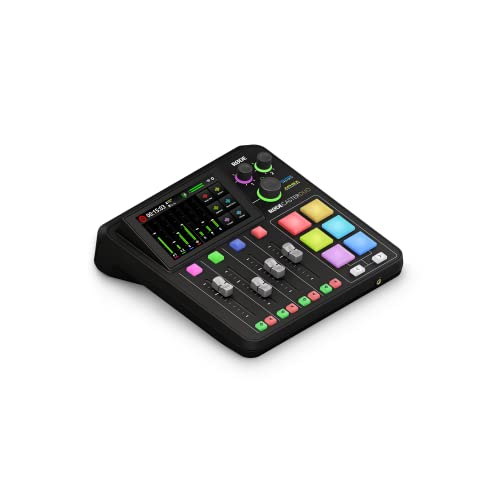
- Two combo inputs with high-gain Revolution Preamps
- Four faders, SMART pads, and touchscreen control
- APHEX processing and studio-grade effects
Best For: Streamers and creators seeking an integrated production studio
Budget Analog Streaming Pick

- Eight-input analog mixer
- USB interface for computer or mobile device
- Direct PC and gaming audio mixing
Best For: Streamers who prefer hands-on analog mixing
Software-Controlled Studio Pick

- LCD keys, touch strip, and control dials
- Customizable actions and smart profiles
- Plugin support for Wave Link, OBS, and more
Best For: Computer-based streamers needing flexible studio control
Gaming Stream Control Pick

- Four mapped faders for mic, game, music, and chat
- Three submixes for creator, audience, and teammates
- XLR input with phantom power and dual USB-C
Best For: Windows gamers and solo creators managing multiple live sources
Best All-in-One Bundle

- Two XLR inputs with up to 60dB gain
- Eight customizable sound-effect pads
- Loopback, Bluetooth, USB-C, and battery operation
Best For: Co-hosted podcasts and flexible computer or mobile streaming
Best for Gaming Control

- XLR input with 48V phantom power
- Game/chat balance and optical input
- 7.1 surround, EQ modes, and voice effects
Best For: PC and console gaming streams with team-chat control
Best for Simple Fader Control

- Single XLR input with 48V phantom power
- Independent mic, line, headphone, and output controls
- Front mute, monitor, sound pads, and RGB lighting
Best For: Beginner streamers using one XLR microphone
Best Beginner Pick

- 16 built-in sound effects and voice features
- Portable battery-powered design
- Supports two people and three devices
Best For: Entry-level podcasting and livestreaming
Best XLR Control

- Four physical faders with dedicated mute buttons
- 48V phantom power for compatible condenser mics
- Noise reduction, Bluetooth, pads, and voice effects
Best For: Gaming and streaming with XLR microphones
Best Soundboard Features

- Four programmable custom sound pads
- Adjustable reverb, noise cancellation, and voice changer
- Bluetooth input for background audio
Best For: Interactive gaming streams and content with sound effects
Premium All-in-One Pick – RØDECaster Duo
The RØDECaster Duo is a versatile choice among audio mixers for streaming, podcasting, music production, and general content creation. It combines two Neutrik combo inputs, four broadcast-quality faders, SMART pads, touchscreen control, and onboard APHEX processing in a compact desktop studio.
Best For: Streamers and creators who want an integrated production hub with strong microphone preamps, physical controls, and built-in effects.
Pros:
- Two combo inputs use high-gain, low-noise Revolution Preamps.
- Four faders, six SMART pads, and a responsive touchscreen support hands-on control.
- Includes studio-grade effects and APHEX processing such as Aural Exciter and Big Bottom.
- Supports headphone monitoring through its 3.5mm TRRS input.
Cons:
- Its feature-rich design may be more than needed for simple streaming setups.
- Provides four channels, which may limit larger multi-source configurations.
Choose the RØDECaster Duo when you want streaming controls and production features in one polished unit rather than a basic analog mixer.
Budget Analog Streaming Pick – Behringer XENYX 802S
Behringer XENYX 802S Premium Analog 8-Input Mixer with USB Streaming Interface
Check Price On AmazonThe Behringer XENYX 802S is a straightforward option among audio mixers for streaming, podcasting, and recording. Its analog mixing and equalization controls are paired with eight inputs and a stereo USB interface for connecting a computer or mobile device.
Best For: Streamers who prefer hands-on analog controls and need to blend computer or gaming audio into their streaming output.
Pros:
- Offers eight inputs for flexible source management.
- Provides analog mixing and equalization for direct sound shaping.
- Can mix PC or gaming sounds directly into the streaming output.
- Includes stereo USB connectivity for a computer or mobile device.
Cons:
- Its analog-focused design may require more manual setup than software-centered controllers.
- The supplied notes do not identify onboard effects or dedicated streaming pads.
The XENYX 802S makes sense for users who want a conventional mixer layout, multiple inputs, and USB streaming connectivity without moving to a more specialized production console.
Software-Controlled Studio Pick – Elgato Stream Deck +
The Elgato Stream Deck + takes a different approach to audio mixers for streaming by combining LCD keys, a touch strip, and dials with software-based control. It can manage audio, video, lighting, and supported applications, while plugins and smart profiles help adapt the interface to different workflows.
Best For: Mac and PC streamers who want visual, customizable control over Wave Link, OBS, streaming services, and other studio functions.
Pros:
- Combines tactile dials, a touch strip, and LCD keys with visual feedback.
- Supports customizable layouts, multi-actions, and smart profiles.
- Works with Wave Link and plugins for OBS, Twitch, YouTube, Discord, Spotify, and more.
- Compact design weighs 470 g and connects through USB-C.
Cons:
- It is a controller rather than a standalone traditional audio mixer.
- Its usefulness depends on software, plugins, and a connected computer.
Consider the Stream Deck + if you value configurable software control and visual feedback more than dedicated analog inputs and standalone mixing hardware.
Gaming Stream Control Pick – MAONO G3 Gaming Audio Mixer
The MAONO G3 is designed specifically for desktop gaming and content workflows, making it a focused choice among audio mixers for streaming. Its four faders, mute controls, XLR input, dual USB-C connectivity, source mapping, and three submixes help manage voice, game audio, music, chat, and alerts from one unit.
Best For: Windows gamers, beginner streamers, and solo creators who need hands-on control of multiple sources during live sessions.
Pros:
- Maps audio sources such as mic, game, music, chat, and alerts to four faders.
- Three submixes can provide different audio experiences for the creator, audience, and teammates.
- XLR input includes 48V phantom power, direct monitoring, and up to 57 dB of preamp gain.
- Adds dedicated mute buttons, customizable sound pads, and RGB lighting.
Cons:
- The supplied notes position it primarily for Windows-based setups.
- It may not suit highly demanding studio recording chains or very gain-hungry dynamic microphones.
- Routing capabilities may require setup in MAONO Arena before use.
The G3 is a practical fit when fast gaming-audio adjustments and separate listener mixes matter more than traditional studio mixing features.
Best All-in-One Bundle – MAONO E2 Gen2 Podcast Mixer
If you want audio mixers for streaming that also support podcasting and mobile recording, the MAONO E2 Gen2 is a versatile starting point. It combines two XLR combo inputs, up to 60dB of gain, loopback, sound pads, and phone-friendly connectivity in one setup.
Best For: Co-hosted podcasts, flexible live streams, and creators who need computer, phone, or tablet connectivity.
Pros:
- Two low-noise XLR inputs with up to 60dB of gain can support dynamic microphones without an external preamp.
- Eight customizable sound-effect buttons, pitch effects, and six preset reverbs add creative control.
- Loopback, one-touch mute, Bluetooth, USB-C, and a built-in battery support flexible streaming setups.
Cons:
- The bundle may offer more podcast-focused features than a simple one-mic streaming setup needs.
- The supplied notes do not specify the complete package contents beyond the listed audio interface and USB cable.
The E2 Gen2 stands out when you want a portable, feature-rich mixer rather than a basic audio interface. Its dual-input design and extensive effects make it especially practical for interactive podcasts and personality-driven streams.
Best for Gaming Control – FIFINE SC8 Gaming Audio Mixer
Among audio mixers for streaming, the FIFINE SC8 is designed around gaming audio control. It adds XLR microphone support, game/chat balancing, optical input, virtual 7.1 surround, and dedicated controls for managing voice, game, and background audio.
Best For: PC and console gamers who want hands-on control over team chat, game audio, and stream effects.
Pros:
- 48V phantom power and a Dynamic/Condenser toggle support a range of XLR microphones.
- Dedicated game/chat balance control and three smart knobs simplify live audio adjustments.
- Virtual 7.1 surround, three EQ modes, eight voice effects, and four customizable sound buttons add gaming-focused flexibility.
Cons:
- It is not compatible with USB microphones.
- An XLR cable is not included.
- The corded design is less convenient for creators seeking battery-powered portability.
The SC8 is a strong fit for streamers who prioritize quick, physical control during gameplay. Its inputs and effects are tailored to gaming, while the XLR connection provides a path to clearer microphone audio.
Best for Simple Fader Control – FIFINE Ampligame SC3
The FIFINE Ampligame SC3 is one of the more approachable audio mixers for streaming, with an individual fader and separate controls for microphone, line input, headphones, and line output. Its plug-and-play design supports Mac and Windows setups, including OBS, Twitch, YouTube, and TikTok workflows.
Best For: Beginner streamers using one XLR microphone who want straightforward physical volume controls and built-in effects.
Pros:
- The XLR input and built-in 48V phantom power support compatible condenser microphones.
- Independent channel controls make it easier to balance mic, line-in, headphone, and line-out audio.
- Front mute and monitor buttons, four sound-effect pads, voice changing modes, and RGB lighting add convenience and customization.
Cons:
- It is intended for one microphone and is not compatible with USB microphones.
- An XLR cable is not included.
- Its feature set is focused on streaming and gaming rather than multi-host podcast production.
The SC3 makes sense if you want tactile control without a complicated mixer layout. The individual fader and front-facing controls are useful for adjusting a live broadcast quickly, while the sound effects and RGB provide extra personality.
Best Beginner Pick – Facmogu F998 Live Sound Card
The Facmogu F998 is a compact entry-level option among audio mixers for streaming. It combines a USB audio interface with adjustable volume controls, Bluetooth accompaniment, built-in effects, and support for up to two people and three devices, making it practical for podcasts, gaming, karaoke, and live broadcasts.
Best For: Beginners who want a portable, easy-to-use mixer for podcasting, gaming, and casual livestreaming.
Pros:
- Offers seven independent volume adjustments and two fader controls.
- Includes 16 sound effects, voice-changing effects, and Bluetooth accompaniment.
- Built-in 1,200 mAh battery supports portable use.
- Works with iOS, Android, iPad, Mac, and Windows systems.
Cons:
- Its single-channel design is more limited than a larger mixer.
- The feature set is aimed primarily at beginners and may not suit advanced production.
The F998 is a convenient starter solution when simple controls, portable operation, and built-in entertainment effects matter more than extensive channel expansion.
Best XLR Control – MAILANGSHI Gaming Audio Mixer
The MAILANGSHI D1 is a hands-on choice among audio mixers for streaming, with four physical faders for microphone, accompaniment, speaker, and headset levels. It also adds XLR microphone support, 48V phantom power, one-touch noise reduction, Bluetooth input, sound pads, and voice effects for gaming and creator setups.
Best For: Streamers and gamers who want direct physical control over an XLR microphone and multiple audio sources.
Pros:
- Four dedicated faders and mute buttons simplify live audio adjustments.
- Supports dynamic and compatible condenser XLR microphones with 48V phantom power.
- Provides one-touch noise reduction, six voice effects, 12 Auto-Tune levels, reverb, and echo.
- Includes Bluetooth audio input and four customizable sound pads.
Cons:
- Connection methods and required cables or adapters may vary by device.
- It is corded rather than battery powered.
The D1 stands out for creators who prefer tactile controls and XLR flexibility, while its RGB lighting and sound effects add a gaming-oriented presentation.
Best Soundboard Features – PUPGSIS T12S Streaming Mixer
The PUPGSIS T12S is a soundboard-focused option among audio mixers for streaming, combining a 1/4-inch TRS microphone input with adjustable reverb, noise cancellation, a voice changer, and programmable sound-effect pads. Bluetooth is available for bringing in background audio, while wired monitoring is required for zero-latency listening.
Best For: Streamers who want customizable audio clips, voice effects, and reverb for gaming, podcasts, and live content.
Pros:
- Four programmable sound pads can trigger custom audio clips.
- Includes noise cancellation, adjustable reverb, and a built-in voice changer.
- Bluetooth input allows background music, backing tracks, or effects from another device.
- Provides mute controls, RGB lighting, and interactive sound effects.
Cons:
- Only supports XLR microphones through the specified 1/4-inch TRS connection and required cable arrangement.
- It is not compatible with USB microphones or 48V dynamic microphones.
- Bluetooth is input-only and cannot connect wireless headphones or a wireless microphone output.
The T12S is appealing for interactive streams where custom clips and voice processing are central, but buyers should confirm microphone compatibility and plan for wired monitoring.
How We Picked the Best Audio Mixers for Streaming
We compared these mixers by looking at input and output options, USB connectivity, monitoring controls, routing flexibility, sound-shaping features, ease of setup, and suitability for common streaming platforms. We also considered whether each model is better suited to a single-microphone gaming desk, a podcast with multiple speakers, or a more involved production setup.
Because streaming equipment varies widely, the list includes analog mixers, USB audio interfaces, gaming-focused soundboards, and integrated control surfaces. Feature count alone does not determine the best choice; compatibility with your microphone, computer, headphones, and streaming software matters just as much.
Quick Comparison
- Best overall flexibility: RØDE RØDECaster Duo for creators who need advanced routing, processing, and production controls.
- Best traditional mixer: Behringer XENYX 802S for straightforward analog mixing with USB streaming connectivity.
- Best control surface: Elgato Stream Deck + for tactile software control and customizable stream shortcuts.
- Best gaming-focused options: MAONO, FIFINE, MAILANGSHI, and PUPGSIS models with sound effects, voice tools, or quick-access controls.
- Best bundle approach: MAONO E2 Gen2 for shoppers who want an audio interface mixer with included podcast equipment.
Key Buying Factors for Audio Mixers for Streaming
Inputs and Connectivity
Count the sources you expect to use at the same time. A microphone, computer audio, phone, co-host, instrument, and console may require more inputs than a basic solo stream. Check whether the mixer supports XLR microphones, 3.5mm sources, USB audio, Bluetooth, or dedicated line inputs.
USB Routing and Software Compatibility
A USB streaming interface can send mixed audio directly to a computer, but routing capabilities differ. Look for separate channels or virtual outputs if you need to control game audio, chat, music, and microphone levels independently in OBS or similar software.
Monitoring and Microphone Support
Headphone output, direct monitoring, mute controls, and independent volume adjustment help prevent echo and clipping. If you use a condenser microphone, verify phantom-power support. Dynamic microphones may need sufficient gain, particularly when used with an inline booster.
Effects and Physical Controls
Faders, mute buttons, pads, voice effects, and equalization can make live adjustments faster. Touch displays and programmable controls are useful for complex workflows, while simple knobs may be preferable if you want minimal setup and fewer software dependencies.
Who Should Buy Which Audio Mixers for Streaming?
Solo Gamers and Beginner Streamers
Choose a compact gaming mixer with direct controls, sound effects, and simple computer connectivity. These models are convenient for one microphone and a small number of audio sources.
Podcasters and Interview Hosts
Prioritize multiple microphone inputs, headphone monitoring, independent level control, and reliable routing. A dedicated podcast mixer or bundle is usually more useful than a basic soundboard.
Established Creators and Multi-Source Broadcasters
Invest in a mixer with flexible routing, onboard processing, programmable controls, and enough inputs for future expansion. The added cost can be worthwhile if it reduces software work during live production.
Budget-Conscious Buyers
Focus on the connections you actually need rather than paying for unused effects. A simple USB mixer can provide dependable control while leaving room to upgrade microphones or headphones later.