
Choosing among the best resin printers for small businesses means balancing detail, throughput, operating costs, and ease of maintenance. The right machine can support prototypes, miniatures, jewelry masters, product samples, and other small-batch work without requiring an industrial setup.
This roundup covers compact resin printers alongside related equipment and specialty printers that may fit a broader customization or production workflow. Use the guide below to compare capabilities, costs, and practical business considerations before buying.
Best 10 Resin Printers for Small Businesses Picks for 2026
High-Detail Starter

- 9K LCD with 18μm XY resolution
- Pre-leveled platform for easier setup
- USB, WiFi, and Creality Cloud transfers
Best For: Detailed miniatures and compact models
Large-Model Post-Processing

- 305 × 165 × 300 mm washing space
- Customizable wash and cure modes
- 360° rotating curing platform
Best For: Large resin prints and production cleanup
Easy-Setup Detail Printer
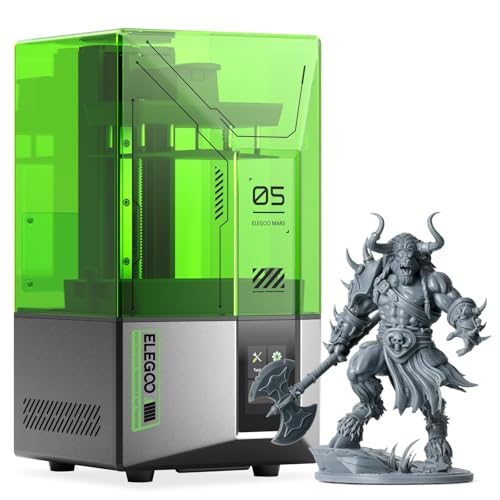
- One-click automatic leveling
- 4K mono LCD for detailed prints
- Self-check and residue detection features
Best For: Beginner-friendly small-team production
UV Transfer Production

- Integrated printer and laminator
- Dual XP600 printheads up to 2880 × 1440 dpi
- Automatic white-ink stirring and cleaning
Best For: Hard-surface transfers and custom decals
High-Detail Production Pick

- 10K LCD and 17 × 17μm pixel precision
- Moderate 153.4 × 87 × 165 mm build volume
- Power-loss recovery and one-year warranty
Best For: Detailed small-batch prototypes and custom models
Custom Apparel Companion
Brother SP1 Sublimation Printer

- Artspira design and image-import workflow
- Print speeds up to 45 seconds per sheet
- Includes 100 sublimation paper sheets
Best For: Adding sublimated apparel and fabric products
Fast-Start Detail Option
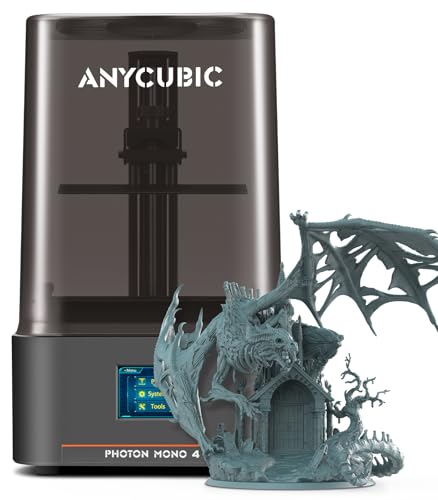
- 7-inch 10K screen for fine model detail
- 1.5-second exposures with stabilized lighting
- Factory-tested setup and power-failure recovery
Best For: Small businesses starting detailed resin production quickly
Compact Resin Pick
MALYAN S100 Mini Resin 3D Printer

- 5.5-inch 2K LCD detail
- Auto calibration and leveling
- Magnetic removable build plate
Best For: Small, detailed models and beginner workflows
Office Companion
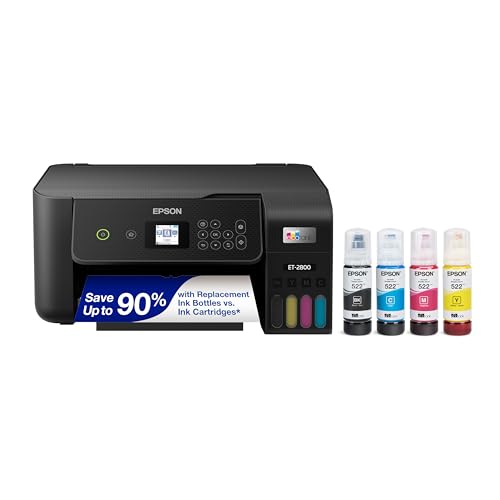
- High-capacity refillable ink tanks
- Print, scan, and copy functions
- Wi-Fi, USB, and mobile printing
Best For: Small offices handling routine color documents
High-Detail Starter – HALOT-X1 Neo
The Creality HALOT-X1 Neo is a practical choice for small businesses seeking resin printers for small businesses that can produce detailed miniatures, figurines, and intricate models. Its 9K LCD, pre-leveled platform, and flexible file-transfer options help simplify setup and daily production.
Best For: Small studios, tabletop creators, and businesses producing high-detail desktop models.
Pros:
- 9K resolution and 18μm XY pixel size support fine model details.
- Factory pre-leveling helps beginners start printing more quickly.
- USB, 2.4GHz WiFi, and Creality Cloud provide flexible file transfer.
- AI-powered 2D-to-3D generation can help develop new model concepts.
Cons:
- The 153.36 × 77.76 × 160 mm build volume is intended for relatively compact models.
- AI model generation may take up to 3.5 hours.
Choose the HALOT-X1 Neo if detailed output and approachable setup matter more than large-format capacity. Compatibility with several slicers also gives growing businesses room to refine their workflow.
Large-Model Post-Processing – Wash and Cure 3 Max
The Anycubic Wash and Cure 3 Max is a post-processing station for small businesses using resin printers for small businesses, especially those handling larger models. Its spacious chamber, customizable cycles, and dual cleaning approach are designed to make washing and curing more consistent.
Best For: Businesses and studios processing large resin prints or multiple substantial models.
Pros:
- Large 305 × 165 × 300 mm washing space accommodates sizable models.
- One-touch washing and curing includes customizable time settings.
- Spray rinsing and bottom immersion help clean multiple model surfaces.
- Dual cleaning modes can reduce detergent use compared with traditional immersion washing.
Cons:
- Its 39.5-pound weight and 20.4 × 20.4 × 25-inch footprint require substantial workspace.
- The machine is a post-processing accessory rather than a resin printer.
For operations where washing and curing are bottlenecks, the Wash and Cure 3 Max offers useful capacity and process control. It is best suited to a dedicated production area rather than a small desk.
Easy-Setup Detail Printer – ELEGOO Mars 5
The ELEGOO Mars 5 is a user-friendly option for small businesses comparing resin printers for small businesses. One-click automatic leveling, self-checks, residue detection, and a 4K mono LCD focus on reducing setup issues while maintaining detailed print output.
Best For: Beginners and small teams that value straightforward operation and dependable pre-print checks.
Pros:
- One-click automatic leveling reduces manual calibration work.
- Residue detection, resin-shortage alerts, and leveling-failure alarms can help limit waste.
- A one-click self-check verifies key functions before printing.
- 4K mono LCD and COB lighting support detailed models.
Cons:
- The supplied notes do not specify its build volume or layer-speed performance.
- Advanced safety features may pause printing when overheating is detected.
The Mars 5 makes a strong case for businesses prioritizing ease of use over extensive published specifications. Its automated checks can be especially valuable when operators have limited resin-printing experience.
UV Transfer Production – PLK A3 UV DTF Printer
The PLK A3 UV DTF Printer is not a conventional resin printer, but it may suit small businesses seeking a complementary production tool alongside resin printers for small businesses. It combines printing and laminating for ready-to-apply transfers on hard surfaces such as tumblers, glass, metal, wood, and leather.
Best For: Entrepreneurs and print shops producing UV DTF stickers, decals, and transfers for hard-surface products.
Pros:
- Integrated printing and laminating can simplify the transfer workflow.
- Dual XP600 printheads support resolutions up to 2880 × 1440 dpi.
- Automatic white-ink stirring, circulation, and cleaning help with routine maintenance.
- A3-size printing area and included starter supplies support broader production tasks.
Cons:
- At 151 pounds, it requires a sturdy, dedicated workspace.
- It is a UV DTF transfer printer, not a resin 3D printer for physical models.
- The listed print speed is 0.2 pages per minute.
Consider the PLK A3 when your business needs customized surface transfers rather than 3D-printed objects. Its all-in-one design can reduce equipment count, but its size and specialized workflow make it a different category from the other products here.
High-Detail Production Pick – Photon Mono 4
For small businesses needing detailed prototypes, miniatures, or custom parts, the ANYCUBIC Photon Mono 4 is a practical choice among resin printers for small businesses. Its 10K screen, uniform light source, and 1.5-second exposure times are designed to balance fine detail with efficient production.
Best For: Small-batch work where high resolution, dependable adhesion, and a moderate build volume matter.
Pros:
- 7-inch 10K LCD with 17 × 17μm pixel precision for highly detailed models.
- 153.4 × 87 × 165 mm build volume supports a range of daily projects.
- Power-loss recovery can help reduce wasted resin and print time.
- Factory assembly, calibration, testing, and one-year warranty support simplify setup.
Cons:
- The build volume may limit larger parts or batch runs.
- Resin printing requires appropriate handling and post-processing equipment.
Choose this model if print detail is a priority but you still want a straightforward workflow. Its compact footprint and recovery feature are useful for a small production workspace.
Custom Apparel Companion – Brother SP1 Sublimation Printer
The Brother SP1 is not a resin printer, but it may complement resin printers for small businesses that also sell customized apparel or fabric goods. Its wireless connectivity, Artspira integration, and included 100 sublimation sheets support a simple design-to-press workflow.
Best For: Businesses adding full-color sublimation projects to an existing product lineup.
Pros:
- Artspira provides designs, patterns, and image-import tools.
- Prints a sheet in up to 45 seconds according to the supplied specifications.
- Includes 100 sheets of letter-size sublimation paper.
- Supports Ethernet, USB, and Wi-Fi connectivity.
Cons:
- This is a dye-sublimation printer, not a resin 3D printer.
- A separate heat press is required to finish projects.
- Maximum media size is limited to 8.5 × 11 inches.
Consider the SP1 only if your small business needs apparel or fabric customization alongside 3D printing. It expands product options, but it does not replace a resin printer for physical 3D parts.
Fast-Start Detail Option – Photon Mono 4 10K
The ANYCUBIC Photon Mono 4 10K is suited to small businesses that want fine resin-print detail without a lengthy setup process. Its 7-inch 10K screen, stabilized LighTurbo lighting, and 1.5-second exposures support detailed models and efficient repeat work.
Best For: New or growing businesses that value quick setup, smooth surfaces, and reliable print adhesion.
Pros:
- 10K resolution and 17 × 17μm pixel precision reveal fine model details.
- LighTurbo matrix lighting supports stable curing and smoother surfaces.
- Laser-engraved build plate design improves adhesion and helps reduce warping.
- Factory-tested setup and four-point leveling check can get printing started quickly.
Cons:
- The supplied notes do not specify the printer’s build volume.
- Its 7.7-pound weight and compact dimensions may still require dedicated workspace and ventilation.
This version is a strong fit when ease of startup and detailed output are more important than documented capacity for large parts. Power-failure recovery also provides added protection during unattended jobs.
Not a Resin Printer – Epson EcoTank ET-2720
If you are comparing resin printers for small businesses, the Epson EcoTank ET-2720 serves a different purpose: it is a compact color inkjet for documents, graphics, and photos rather than a 3D printer. Its refillable tanks and all-in-one design may suit a small office that needs economical paper printing, scanning, and copying.
Best For: Small offices needing a compact wireless document, photo, and scanning setup.
Pros:
- Cartridge-free EcoTank system helps reduce cartridge waste.
- Built-in flatbed scanner and copier add everyday office functionality.
- 5760 x 1440 dpi color and black-and-white print resolution supports sharp text and graphics.
- Compact 8.8-pound design includes Wi-Fi, USB, and voice-control compatibility.
Cons:
- It is an inkjet paper printer, not a resin 3D printer.
- Simplex printing and a 100-sheet capacity may limit higher-volume workflows.
- Listed speeds are up to 10 black-and-white and 5 color pages per minute.
The ET-2720 is not appropriate for producing resin models, but it can complement a small 3D-printing business by handling labels, paperwork, color graphics, and basic copies. Choose it only if your needs include conventional paper printing.
Compact Resin Pick – MALYAN S100 Mini Resin 3D Printer
For small businesses seeking resin printers for small businesses, the MALYAN S100 is an approachable option for detailed, small-format models. Its 5.5-inch 2K LCD, automatic calibration and leveling, and removable magnetic build plate are designed to simplify setup and repeated print jobs.
Best For: Beginners and small businesses producing compact, high-detail resin models.
Pros:
- 2K 2560 x 1440 LCD is designed to reproduce fine model details and textures.
- One-click automatic calibration and leveling support easier setup.
- Magnetic build plate can simplify print removal and cleanup.
- 57W parallel LED array is intended to provide uniform exposure and reduce visible layer lines.
Cons:
- 115 x 65 x 110 mm build volume is limited to relatively small models.
- As a resin printer, it requires resin-specific preparation and cleanup.
- Different resins may require matching print parameters for better success rates.
The S100’s compact footprint and beginner-friendly leveling make it a practical entry point for prototypes, miniatures, and other small parts. Its modest build area is the main constraint for businesses that need larger products or batch production.
Office Companion – Epson EcoTank ET-2800
Although it is not among resin printers for small businesses, the Epson EcoTank ET-2800 can be useful alongside a resin-printing operation. It combines color paper printing, scanning, and copying with refillable tanks, Wi-Fi, and mobile connectivity for routine office materials.
Best For: Home offices and small businesses that need economical color documents and basic scanning.
Pros:
- Refillable tanks are rated for up to 4,500 black or 7,500 color pages per bottle set.
- Includes up to two years of ink in the box, according to the supplied notes.
- Combines color printing, flatbed scanning, and copying in one unit.
- Supports Wi-Fi, USB, and printing from computers, laptops, and smartphones.
Cons:
- It is an inkjet printer, not a resin 3D printer.
- Simplex operation and a 100-sheet capacity are better suited to basic office use.
- Print speeds are listed at up to 10 black-and-white and 5 color pages per minute.
The ET-2800 will not create physical resin models, but its low-maintenance tank design can handle invoices, instructions, labels, and color reference materials around a small 3D-printing business. It is best viewed as an office-side complement rather than a production printer.
How We Picked the Best Resin Printers for Small Businesses
We evaluated the selected products by considering print detail, build volume, workflow speed, setup requirements, connectivity, maintenance, and likely operating costs. Resolution matters for small features, but it is only one part of the decision: reliable leveling, consistent exposure, accessible replacement parts, and manageable post-processing can have a larger effect on day-to-day productivity.
The list also includes wash-and-cure equipment and adjacent printing technologies. These products are useful for businesses that combine resin prototyping with decals, sublimation, signage, or general office printing, but they are not interchangeable with resin 3D printers.
Quick Comparison
| Business Need | What to Prioritize | Best Fit |
|---|---|---|
| Highly detailed prototypes | High XY resolution and stable exposure | 10K or 9K resin models |
| Beginner-friendly production | Simple leveling and guided setup | Compact, pre-leveled, or auto-leveling models |
| Higher workflow volume | Larger build area and faster post-processing | Larger printer plus a dedicated wash-and-cure station |
| Custom transfers or apparel work | Specialized ink and media compatibility | UV DTF or sublimation equipment |
| General business documents | Low running cost and wireless convenience | EcoTank-style all-in-one printers |
Key Buying Factors for Resin Printers for Small Businesses
Resolution and Usable Build Volume
Higher pixel counts can reproduce fine lettering, facial features, textures, and small mechanical details more cleanly. However, compare XY resolution with the actual build area and Z height. A smaller high-resolution printer may be ideal for miniatures or samples, while a larger platform can reduce batch time for multiple parts.
Throughput and Post-Processing
Resin printing requires washing and UV curing after the print finishes. Factor in the time and space needed for both steps, plus gloves, ventilation, cleaning supplies, and safe resin storage. A wash-and-cure station can make production more repeatable and reduce hands-on labor.
Material, Safety, and Maintenance Costs
Calculate more than the printer’s purchase price. Include resin, replacement films, build plates, screens, cleaning alcohol, protective equipment, failed prints, and shipping or disposal requirements. Use suitable ventilation and follow the resin manufacturer’s safety instructions.
Software and Connectivity
Check slicer compatibility, file transfer options, Wi-Fi reliability, USB access, and the availability of profiles for your preferred resin. Features such as pre-leveling, auto-leveling, exposure testing, and remote monitoring can reduce setup errors, especially when several people share the equipment.
Who Should Buy Which Resin Printers for Small Businesses?
Choose a high-resolution 9K or 10K model if your business sells detailed miniatures, jewelry masters, dental-style models, or finely textured prototypes. A compact beginner model is better for occasional jobs, training, limited workspaces, and businesses still validating demand. If you expect repeated batches, pair a capable resin printer with a dedicated wash-and-cure system and keep spare consumables on hand.
Businesses producing stickers, apparel transfers, or promotional goods should consider the specialized UV DTF or sublimation options instead of treating them as resin-printer substitutes. For invoices, shipping labels, and everyday paperwork, a wireless inkjet all-in-one may be the more economical companion. Match the purchase to your revenue-generating workflow, available ventilation, staff experience, and the size of the parts you plan to sell.