
The best portable DACs with volume control can make a phone, tablet, or laptop a more capable source for wired headphones and IEMs. The right model adds convenient level control, cleaner conversion, and enough output power without adding unnecessary bulk.
This roundup compares 10 compact USB DAC/amp options, including models with 3.5mm and 4.4mm outputs, high-resolution playback, balanced connections, and useful extras such as equalization. Use the guide below to narrow the choices by device compatibility, headphones, controls, and portability.
Best 10 Portable Dacs with Volume Control Picks for 2026
Best Direct-Control Pick

- Screen and three physical buttons
- 768kHz/32-bit, DSD256, and 16X MQA support
- 3.5mm and 4.4mm outputs
Best For: Listeners wanting hands-on control and flexible connections
Best Feature-Rich Option

- 0.96-inch color screen and app control
- Ten-band lossless PEQ customization
- Desktop Mode with 560mW+560mW balanced output
Best For: Audio enthusiasts who want extensive controls and EQ
Best Compact Value

- Independent volume control
- Supports DSD512 and 32-bit/768kHz PCM
- 3.5mm and 4.4mm outputs
Best For: Everyday portable listening across phones and computers
Best Headphone-Tuning Choice

- PowerMatch and iEMatch output controls
- XBass bass-response adjustment
- Balanced 4.4mm and S-Balanced 3.5mm outputs
Best For: Listeners matching output to headphones or sensitive IEMs
Compact Hi-Fi Pick
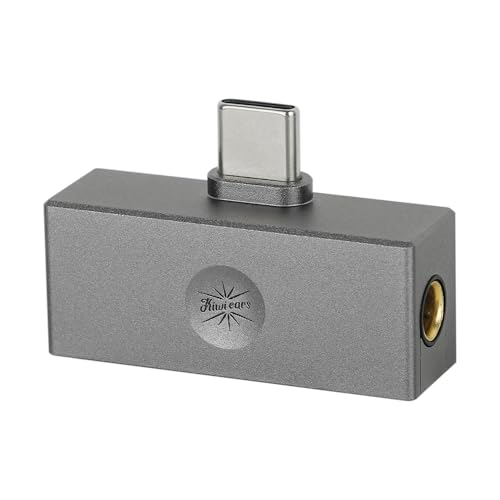
- Aluminum body with compact portable design
- 3.5mm and 4.4mm headphone outputs
- Supports 32-bit/384kHz PCM and DSD128
Best For: Android and PC listeners using IEMs
Personalized Listening Pick

- 10-band PEQ with app and web control
- 3.5mm and 4.4mm outputs
- Supports DSD256 and UAC 1.0/2.0
Best For: Listeners who want adjustable sound and tactile controls
Precision Volume Pick
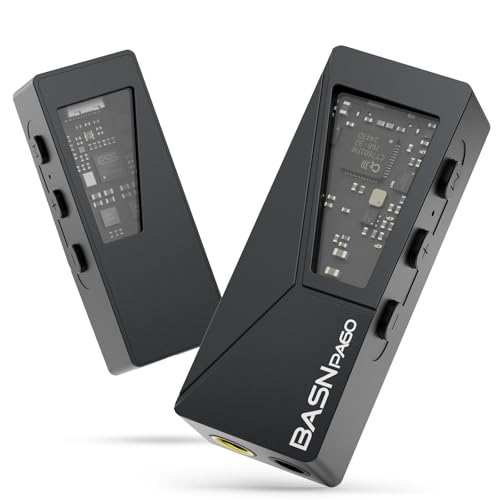
- Independent 60-step volume control
- 3.5mm and 4.4mm outputs
- Supports PCM 768kHz/32-bit and DSD512
Best For: Users prioritizing precise volume and device flexibility
Flagship Hi-Res Control
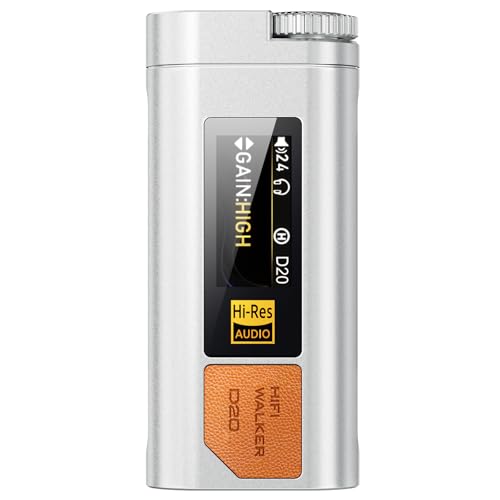
- PCM 768kHz/32-bit and native DSD512 support
- 4.4mm balanced and 3.5mm outputs
- OLED display with ALPS volume knob
Best For: Audiophiles wanting extensive format support and tactile control
Smart DSP Tuning

- 100-level DAC volume control
- Dual CS43198 chips with separate power regulation
- App-based parametric DSP customization
Best For: Listeners who want precise volume adjustment and tunable sound
Simple Button Control

- Independent 60-step volume buttons
- PCM 384kHz and DSD256 support
- 3.5mm and 4.4mm outputs
Best For: Mobile listeners wanting easy physical volume control
Best Direct-Control Pick – SHANLING UA4
For listeners seeking portable dacs with volume control and hands-on settings, the SHANLING UA4 combines a 0.87-inch display with three physical buttons. Its ES9069Q DAC supports up to 768kHz/32-bit audio and DSD256, while 3.5mm and 4.4mm outputs provide flexible headphone connectivity.
Best For: Users who want a compact dongle with a screen, physical controls, MQA support, and strong output power.
Pros:
- Display and three hardware buttons provide direct control without requiring an app.
- Supports up to 768kHz/32-bit audio, DSD256, and 16X MQA unfolding.
- Offers both 3.5mm and 4.4mm outputs with up to 237mW at 32 ohms.
- Works with Android, iOS, Windows, and Mac, with Android app adjustments available.
Cons:
- iOS devices require a special compatible cable, such as the Shanling L3 cable.
- Android app control is limited to the Android platform.
The UA4 is especially practical if physical volume and playback-related controls matter more to you than using a phone app. Its high-resolution support and balanced output make it a versatile choice for portable listening.
Best Feature-Rich Option – FiiO KA15
The FiiO KA15 is a feature-rich choice among portable dacs with volume control, pairing a 0.96-inch color screen with app-based settings and a retro-inspired interface. Its dual CS43198 DAC design, PEQ support, and optional Desktop Mode give it unusual flexibility for a compact dongle.
Best For: Enthusiasts who want screen-based controls, detailed EQ customization, and extra power for demanding headphones.
Pros:
- 0.96-inch IPS color screen displays settings in Chinese or English.
- FiiO Control offers volume, PEQ, channel balance, UAC, button, and screen settings.
- Ten-band lossless PEQ supports saving, importing, exporting, and sharing EQ curves.
- Desktop Mode provides balanced output power rated at 560mW+560mW.
Cons:
- Some advanced functions require the FiiO Control app or web interface.
- Its extensive settings may be more than casual listeners need.
The KA15 stands out when customization is a priority. Its display and app controls make it easier to manage settings, while Desktop Mode adds useful headroom for higher-demand headphones.
Best Compact Value – Fosi Audio DS1
The Fosi Audio DS1 is a straightforward option for shoppers comparing portable dacs with volume control. Its updated version uses independent volume control, supports up to 32-bit/768kHz PCM and DSD512, and includes both 3.5mm and 4.4mm headphone outputs.
Best For: Commuters and everyday listeners who want a small, broadly compatible DAC with independent volume adjustment.
Pros:
- Independent volume control separates adjustment from the audio source device.
- ESS ES9038Q2M DAC supports DSD512 and 32-bit/768kHz PCM.
- Includes both widely compatible 3.5mm and balanced 4.4mm outputs.
- Package includes USB-C and USB-A connection options and supports Android, iOS, Windows, and Mac.
Cons:
- iOS use requires an additional Lightning-to-USB-C cable for OTG functionality.
- The supplied notes do not specify a built-in display or physical playback controls beyond volume adjustment.
The DS1 focuses on core functionality rather than elaborate menus. Its independent volume control, dual outputs, compact size, and wide device compatibility make it a practical daily-use adapter.
Best Headphone-Tuning Choice – iFi Hip-dac 3
The iFi Hip-dac 3 is a portable USB DAC and headphone amplifier for listeners who want adjustable output in a sturdy aluminum design. It supports up to 32-bit/384kHz PCM, DSD256, and full MQA decoding, while PowerMatch, iEMatch, and XBass help tailor the output to different headphones and in-ear monitors.
Best For: Headphone users who need adjustable gain, sensitive-IEM matching, and selectable bass enhancement.
Pros:
- PowerMatch adjusts gain for more power-hungry headphones.
- iEMatch is designed to optimize output for sensitive in-ear monitors.
- XBass provides an adjustable way to tune bass response.
- Includes balanced 4.4mm and S-Balanced 3.5mm outputs, with separate USB-C data and charging inputs.
Cons:
- Its 0.2 kg weight is higher than that of many tiny dongle-style DACs.
- It has a 12-month warranty listed in the supplied details.
The Hip-dac 3 is a strong fit for listeners who value output matching and sound-shaping controls. Its dual-output layout and adjustable gain make it more adaptable than a basic USB audio adapter.
Compact Hi-Fi Pick – Kiwi Ears Allegro Mini
The Kiwi Ears Allegro Mini is a compact option for listeners seeking portable dacs with volume control and high-resolution playback. Its aluminum body, USB-C connection, and dual headphone outputs make it well suited to phone and PC listening, though the supplied specifications do not detail a physical volume-control feature.
Best For: Android users and IEM listeners who want a small, durable DAC with 3.5mm and 4.4mm connectivity.
Pros:
- Compact all-aluminum body designed for portability and durability.
- Offers both 3.5mm single-ended and 4.4mm outputs.
- Supports PCM up to 32-bit/384kHz and DSD128.
- USB-C plug-and-play compatibility with Android devices version 5.1 and above.
Cons:
- The supplied details do not confirm an onboard volume control.
- Compatibility details emphasize Android, phones, and PCs rather than a broader device range.
The Allegro Mini focuses on a refined, pocket-friendly design and broad output flexibility. It is a strong fit for high-resolution IEM use when compact size matters more than extensive controls or customization.
Personalized Listening Pick – FiiO/Snowsky Melody DAC
The FiiO/Snowsky Melody combines a portable DAC and headphone amplifier with tactile controls and app-based sound shaping. For shoppers comparing portable dacs with volume control, its fast or slow volume ramping and customizable button modes are especially useful, while the 10-band PEQ adds flexibility for tailoring playback.
Best For: Listeners who want a distinctive portable design, adjustable EQ, and both 3.5mm and 4.4mm outputs across phones, computers, and consoles.
Pros:
- Hand-finished walnut or maple housing with an ergonomic curved design.
- Dual CS43131 DACs support PCM up to 32-bit/384kHz and DSD256.
- 10-band PEQ supports custom presets through the FiiO Control App or web interface.
- Supports 3.5mm single-ended and 4.4mm balanced outputs, plus UAC 1.0/2.0 switching.
Cons:
- Headset controls may be restricted on iOS and some Android devices.
- The wood enclosure is not water resistant.
- Its feature-rich design may be more than users seeking a simple dongle need.
The Melody stands out for combining physical usability with software customization. Its volume behavior, PEQ tools, and console support make it a versatile choice for listeners who want more control than a basic USB DAC provides.
Precision Volume Pick – BASN PA60 USB-C DAC
The BASN PA60 is a particularly direct match for shoppers seeking portable dacs with volume control. Its independent 60-step volume adjustment, dual headphone outputs, and selectable gain modes provide practical control in a small 17-gram aluminum enclosure.
Best For: Mobile, computer, and console users who need precise independent volume adjustment and flexible headphone support.
Pros:
- Provides 60-step volume adjustment independent of the source device.
- Includes 3.5mm single-ended and 4.4mm balanced outputs.
- Supports PCM up to 32-bit/768kHz and DSD512.
- Offers eight filters, high/low gain modes, and automatic impedance detection.
Cons:
- The 3.5mm and 4.4mm outputs cannot be used simultaneously.
- Lightning devices require an additional Lightning-to-USB-C cable.
- The supplied details specify one audio channel, despite the stereo-oriented headphone outputs.
With its dedicated volume adjustment and gain management, the PA60 is the most control-focused option in this group. Its compact build and UAC switching also make it practical for users moving between mobile devices, computers, Switch, and PS5.
Flagship Hi-Res Control – HIFI WALKER D20 DAC512
For listeners seeking portable dacs with volume control, the HIFI WALKER D20 DAC512 combines an ALPS control knob, OLED display, and both 3.5mm and 4.4mm outputs. Its high-resolution support and compact aluminum build suit portable listening, desktop use, and monitoring.
Best For: Audiophiles and creators who want balanced output, extensive format support, and hands-on volume control.
Pros:
- Supports PCM up to 768kHz/32-bit and native DSD512.
- Offers 4.4mm balanced and 3.5mm single-ended outputs.
- Provides an OLED display and ALPS knob for volume and menu control.
- Works with compatible phones, tablets, Windows PCs, and Macs through USB-C.
Cons:
- Its feature-rich design may be more than casual listeners need.
- Output options require headphones or cables matching the 3.5mm or 4.4mm connections.
The D20 is a strong choice when tactile controls, high-resolution decoding, and flexible output options matter more than the smallest possible dongle.
Smart DSP Tuning – MOONDROP Dawn PRO 2
The MOONDROP Dawn PRO 2 is one of the portable dacs with volume control to consider if you want more than basic level adjustment. Its 100-level DAC volume system separates device volume management from the smartphone, while app-based DSP adds configurable tuning options.
Best For: Users who want fine volume adjustment and customizable headphone tuning in a compact USB DAC/amp.
Pros:
- Provides 100 levels of smooth DAC volume control.
- Uses dual CS43198 DAC chips and three independent LDO power chips.
- Supports 3.5mm and 4.4mm headphone connections.
- MOONDROP app supports adjustable filter, frequency, gain, and Q parameters.
Cons:
- App-based DSP may require additional setup compared with plug-and-play dongles.
- Its maximum output is listed at 124mW per channel, which may not suit every demanding headphone.
The Dawn PRO 2 stands out for listeners who value precise level changes and the ability to personalize sound through interactive DSP rather than relying on fixed tuning.
Simple Button Control – Fosi Audio DS2 USB-C DAC/AMP
The Fosi Audio DS2 is a practical pick among portable dacs with volume control, especially for phone and tablet users who prefer dedicated buttons. It offers independent 60-step volume adjustment, volume memory, dual headphone outputs, and broad USB-C compatibility.
Best For: Mobile listeners who want an easy-to-use USB-C DAC/amp with physical controls and balanced output.
Pros:
- Includes independent 60-step volume buttons and volume memory.
- Supports PCM 32-bit/384kHz and DSD256 decoding.
- Delivers up to 170mW per channel at 32 ohms.
- Works with compatible iPhones, iPads, Android devices, computers, laptops, and Macs.
Cons:
- Requires a USB-C source connection and compatible headphones or adapters.
- Its 60-step control offers fewer levels than some competing designs.
Choose the DS2 when straightforward button-based volume control and wide mobile compatibility are priorities. Its 3.5mm and 4.4mm outputs also make it adaptable to different headphone setups.
How We Picked These Portable Dacs with Volume Control
We focused on compact USB DAC/amp models that are practical for mobile and computer listening. Selection criteria included integrated volume control, output options, supported formats, connection flexibility, headphone-driving capability, portability, and useful everyday features. The list includes simple dongles as well as more powerful battery-equipped amplifiers, so different listeners can find an appropriate fit.
High sample-rate and DSD support can be useful, but they are not the only measures of performance. A DAC should also match your headphones, source device, preferred connectors, and listening habits. Compatibility with USB-C devices, iOS hardware, Windows, and macOS may vary, so confirm the manufacturer’s requirements before buying.
Quick Comparison
| What to compare | Best fit | Why it matters |
|---|---|---|
| Small USB dongle | Phone and laptop listeners | Easy to carry and usually powered by the source device |
| 3.5mm output | Most wired headphones and IEMs | Broad compatibility with standard cables |
| 4.4mm balanced output | Compatible headphones with demanding loads | Can provide greater output and channel separation |
| On-device controls | Mobile users | Allows quick volume changes without unlocking the source |
| Battery-powered design | Harder-to-drive headphones | Can offer more power while reducing phone battery drain |
Key Buying Factors for Portable Dacs with Volume Control
Output Type and Power
Choose 3.5mm for maximum cable compatibility. If your headphones support a 4.4mm balanced cable, a balanced output may provide more headroom, though it is not automatically better. Check output power and impedance guidance when pairing a DAC with full-size headphones.
Volume Control Behavior
Physical buttons, a knob, or digital controls each work differently. Hardware volume buttons are convenient for phones, while a knob can offer precise adjustment. Check whether the DAC changes source volume, its own output level, or both, and look for channel-balance performance at low listening levels.
Format Support and Real-World Compatibility
DSD and high-resolution PCM support are useful for owners of compatible files, but reliable plug-and-play operation may matter more. Confirm operating-system support, USB connector type, microphone support, and whether the model works with consoles or streaming devices you plan to use.
Size, Power, and Battery Use
Bus-powered dongles are the easiest to carry, but they draw power from a phone or laptop. Larger battery-equipped units may drive headphones more confidently and preserve source battery life. Consider cable clutter, pocketability, and whether you need a display or onboard settings.
Who Should Buy Which Portable Dacs with Volume Control?
Choose a small dongle if you mainly use efficient IEMs and want the simplest upgrade for a phone or laptop. Prioritize 4.4mm balanced output if you already own compatible cables and need additional output headroom. A model with stronger amplification is better for full-size or less-sensitive headphones, while onboard equalization suits listeners who want to tune different earphones. If you value maximum portability, select the lightest option with the connectors and controls you actually use rather than paying extra for specifications your headphones cannot benefit from.