
The best portable DACs with balanced output can give compatible headphones and IEMs more power, lower noise, and a cleaner connection than a phone or laptop’s built-in audio. They range from compact USB-C dongles to higher-output models with both 3.5mm and 4.4mm connections.
We selected these 10 options for their output flexibility, power claims, device compatibility, controls, and value. Whether you need a pocket-sized upgrade for sensitive IEMs or extra headroom for demanding headphones, this roundup helps narrow the field.
Best 10 Portable Dacs with Balanced Output Picks for 2026
Gold Edition Portability

- 4.4mm balanced and 3.5mm outputs
- 400 mW maximum amplifier output
- 6–8 hours of battery life
Best For: Battery-powered mobile listening with IEMs or over-ear headphones
Ultra-Light Balanced Dongle

- 241 mW 4.4mm balanced output
- Dual ESS Sabre DAC chips
- Weighs only 11.5 g
Best For: USB-C listeners seeking the lightest balanced-output setup
High-Power Dongle

- Up to 550 mW balanced output
- 3.5mm and 4.4mm outputs
- PCM 384kHz/32-bit and DSD256 support
Best For: Driving demanding headphones from a compact USB DAC
Current-Mode Detail

- 4.4mm balanced and 3.5mm outputs
- Manual gain adjustment
- PCM 768kHz/32-bit and DSD512 support
Best For: High-resolution listening with adjustable headphone matching
Flexible Pocket Performer

- 3.5mm and 4.4mm outputs
- Three gain levels for varied headphones
- Native DSD256 and PCM 384kHz support
Best For: Versatile phone, computer, and headphone setups
App-Tunable Hi-Fi Upgrade

- Dual CS43198 DAC architecture
- Customizable DSP through MOONDROP APP
- 4.4mm balanced and 3.5mm outputs
Best For: Listeners who want detailed EQ and volume control
High-Power Travel Dongle
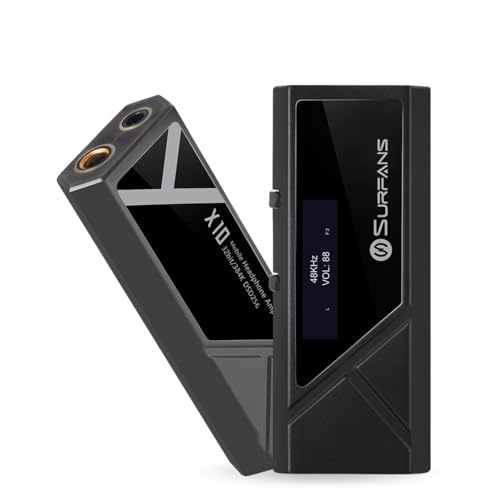
- Up to 522mW output
- 3.5mm and 4.4mm balanced ports
- USB-C compatibility with phones and computers
Best For: Travelers needing extra power for wired headphones
Balanced Pocket Power

- 4.4mm balanced output up to 241mW
- Dual ESS Sabre DAC circuit
- PCM 384kHz and DSD256 support
Best For: Portable USB-C listening with high-resolution balanced output
Tube-Warm Balanced Amp
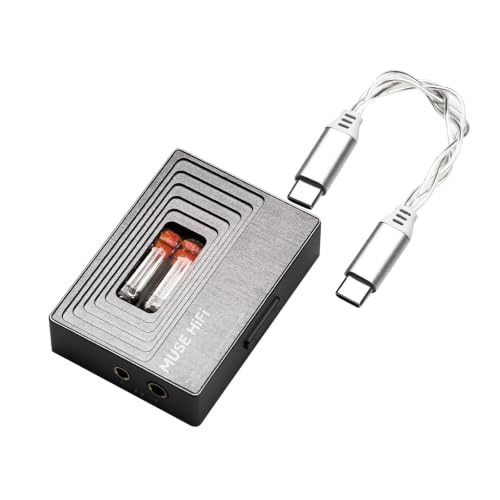
- JAN6418 tube for a warmer presentation
- 480mW rated 4.4mm balanced output
- PCM 384kHz and DSD256 support
Best For: Listeners wanting tube character and high portable output
Low-Noise Control Dongle

- 4.4mm balanced and 3.5mm outputs
- Dual CS43131 DAC chips
- 60-step volume control with memory
Best For: Everyday USB-C listening with direct volume control
Gold Edition Portability – iFi Hip-dac2
The iFi Hip-dac2 Gold Edition is a practical choice among portable dacs with balanced output if you want a pocket-friendly, battery-powered amplifier with both 3.5mm and 4.4mm headphone connections. Its USB input supports smartphones, tablets, PCs, and Macs, while the 400 mW maximum output gives it flexibility for IEMs and over-ear headphones.
Best For: Listeners who want a stylish portable DAC with rechargeable battery power, MQA decoding, and a 4.4mm balanced output.
Pros:
- 4.4mm balanced and 3.5mm S-Balanced outputs
- Up to 400 mW maximum amplifier output
- Approximately 6–8 hours of battery life
- Supports high-resolution formats, including MQA
Cons:
- USB input only, so it requires a wired source connection
- Heavier and larger than dongle-style DACs at 0.23 kg
The Hip-dac2 Gold Edition stands out when you value onboard battery power and amplifier strength more than the smallest possible footprint. It is a versatile balanced-output option for mobile and desktop listening.
Ultra-Light Balanced Dongle – iFi GO Link 2 Max
The iFi GO Link 2 Max is one of the most compact portable dacs with balanced output for USB-C devices. It uses dual ESS Sabre DAC chips in a balanced circuit and delivers up to 241 mW through its 4.4mm output, making it a convenient upgrade for phone, laptop, and PC headphone listening.
Best For: USB-C users who prioritize very low weight, a 4.4mm balanced connection, and app-based sound customization.
Pros:
- 241 mW balanced output through 4.4mm
- Very light 11.5 g design
- Dual ESS Sabre DACs and support up to PCM 384kHz/DSD256
- Customizable filtering through the iFi Nexis mobile app
Cons:
- Designed for devices with USB-C ports
- Plastic construction may feel less premium than metal-bodied alternatives
Choose the GO Link 2 Max when portability is the main priority. Its light cable-mounted design and balanced output offer a simple way to improve USB-C headphone setups without carrying a separate battery-powered amplifier.
High-Power Dongle – FiiO KA13
The FiiO/JadeAudio KA13 is a strong contender among portable dacs with balanced output for listeners who want unusually high power from a compact USB-C adapter. Its desktop mode raises balanced output power to 550 mW, and both 3.5mm and 4.4mm outputs are built into the aluminum-bodied dongle.
Best For: Headphone users who need substantial balanced power and want both common headphone output types in one small DAC.
Pros:
- Up to 550 mW balanced output in Desktop mode
- Includes both 3.5mm and 4.4mm outputs
- Dual CS43131 DACs and dual SGM8262 op-amps
- Supports PCM 384kHz/32-bit and DSD256
Cons:
- Desktop mode is needed to reach the maximum balanced power
- Compact dongle design does not include a built-in battery
The KA13 is especially appealing when driving power is more important than absolute simplicity. Its dual outputs, high-resolution support, and app connectivity make it a flexible choice for phones, PCs, and dedicated music players.
Current-Mode Detail – Questyle M15i
The Questyle M15i combines a 3.5mm single-ended output with a 4.4mm balanced output in a compact USB DAC and headphone amplifier. Its patented Current Mode Amplification, manual gain adjustment, and flagship ESS ES9281AC DAC make it a versatile option among portable dacs with balanced output for both sensitive IEMs and more demanding headphones.
Best For: Audiophiles who want adjustable gain, dual headphone outputs, broad device compatibility, and high-resolution decoding.
Pros:
- 4.4mm balanced and 3.5mm single-ended outputs
- Manual gain adjustment for sensitive IEMs and larger headphones
- Supports PCM up to 768kHz/32-bit and DSD512
- MFi certified for compatible Apple devices
Cons:
- Lightning devices require an additional compatible adapter
- No built-in battery is specified in the supplied details
The M15i is a good fit for listeners who want flexibility rather than a single-purpose dongle. Gain control and dual outputs broaden its headphone compatibility, while MFi certification simplifies use with supported Apple hardware.
Flexible Pocket Performer – TempoTec Sonata BHD
If you want portable dacs with balanced output that work across phones and computers, the TempoTec Sonata BHD is a versatile choice. It combines 3.5mm single-ended and 4.4mm balanced outputs with three gain levels, physical volume buttons, and support for high-resolution playback.
Best For: Listeners who need one compact DAC amp for IEMs, full-sized headphones, iOS, Android, Mac, and Windows devices.
Pros:
- Offers both 3.5mm and 4.4mm headphone outputs.
- Three hardware gain levels help accommodate sensitive IEMs and more demanding headphones.
- Physical volume buttons provide independent hardware volume adjustment.
- Supports native DSD256 and PCM up to 32-bit/384kHz.
Cons:
- Windows compatibility is specified for Windows 10 version 1703 and later.
- Balanced output requires headphones or IEMs with a compatible 4.4mm connection.
The Sonata BHD stands out for its broad compatibility and practical controls. Its 18 g aluminum design is easy to carry, while the gain switch and dual outputs make it adaptable to a wide range of wired listening setups.
App-Tunable Hi-Fi Upgrade – MOONDROP Dawn PRO 2
The MOONDROP Dawn PRO 2 is aimed at listeners comparing portable dacs with balanced output and wanting more control over their sound. Its dual CS43198 DAC design, 4Vrms output, smooth 100-level volume control, and app-based DSP offer a feature-rich portable setup.
Best For: Enthusiasts who want adjustable EQ and a refined aluminum DAC amp for compatible headphones and earphones.
Pros:
- Includes both 3.5mm and 4.4mm headphone outputs.
- Dual Cirrus Logic CS43198 DAC chips and three independent LDO power chips support its high-performance circuit design.
- MOONDROP APP provides adjustable filter, frequency, gain, and Q parameters.
- 100-level DAC volume control separates volume management from the smartphone.
Cons:
- Its advanced DSP features may require time to configure in the app.
- The supplied notes do not specify a broad device compatibility list.
With 124 + 124mW output, 4Vrms voltage, and an aluminum housing designed for heat dissipation, the Dawn PRO 2 balances portability with extensive tuning flexibility. It is particularly appealing if customization matters as much as amplification.
High-Power Travel Dongle – Surfans X10 Portable DAC Amp
For shoppers seeking portable dacs with balanced output and substantial power from a small USB-C device, the Surfans X10 is worth considering. It provides 3.5mm and 4.4mm connections, up to 522mW output, and compatibility with supported iPhone, Android, PC, and Mac devices.
Best For: Mobile listeners who want extra output headroom for compatible IEMs and headphones during travel, commuting, or desk use.
Pros:
- Provides both 3.5mm single-ended and 4.4mm balanced outputs.
- Up to 522mW output offers substantial power headroom in a compact device.
- Uses ES9028Q2M and ES9603 chips and supports Hi-Res audio.
- Lightweight aluminum construction and physical controls suit portable use.
Cons:
- Connectivity is through USB-C, so device compatibility should be checked before purchase.
- Its high output may be more than needed for very sensitive earphones.
The X10 focuses on power and portability rather than extensive configuration. Its dual headphone outputs, compact aluminum body, and support for phones and computers make it a practical option for upgrading wired audio on the go.
Balanced Pocket Power – iFi Audio Go Link Max
The iFi Audio Go Link Max is a compact choice for listeners comparing portable dacs with balanced output. Its USB-C connection, 4.4mm balanced port, dual ESS Sabre DAC design, and support for PCM 384kHz and DSD256 make it a versatile upgrade for compatible phones, tablets, and computers.
Best For: Listeners who want a lightweight USB-C dongle with a 4.4mm balanced connection and high-resolution format support.
Pros:
- Balanced 4.4mm output provides up to 241mW of power.
- Dual ESS Sabre DAC chips form a balanced circuit.
- Supports up to 32-bit/384kHz PCM and native DSD256.
- Flexible cable and 15g weight suit portable use.
Cons:
- Requires a device with a USB-C port unless an appropriate setup is used.
- Its output options are centered on 3.5mm and 4.4mm headphone connections.
The Go Link Max stands out when portability and balanced connectivity matter most. Dynamic Range Enhancement and THD compensation add useful processing features, while the included USB-A-to-USB-C adapter broadens connection flexibility.
Tube-Warm Balanced Amp – MUSEHiFi M3 Ultra
The MUSEHiFi M3 Ultra takes a distinctive approach to portable dacs with balanced output by combining a JAN6418 vacuum tube with a USB-C DAC and headphone amplifier. It offers both 3.5mm single-ended and 4.4mm balanced outputs, plus support for PCM 384kHz and DSD256.
Best For: Listeners who want tube-influenced warmth, strong output, and both single-ended and balanced headphone connections in a portable design.
Pros:
- JAN6418 vacuum tube is designed for rich harmonics and smoother mids.
- 4.4mm balanced output is rated at up to 480mW.
- Triple noise-reduction design addresses tube microphonics and vibration.
- Supports PCM up to 32-bit/384kHz and DSD256.
Cons:
- Its tube-based design may appeal less to listeners seeking a strictly solid-state presentation.
- Portable tube hardware can be more specialized than a conventional dongle DAC.
With its unusually high stated output and tube architecture, the M3 Ultra is aimed at buyers who want more character than a basic dongle typically provides. The 4.4mm connection offers extra flexibility for compatible headphones and IEMs.
Low-Noise Control Dongle – Fosi Audio DS2
The Fosi Audio DS2 is a practical option among portable dacs with balanced output, pairing dual CS43131 chips with 3.5mm and 4.4mm connections. It supports high-resolution playback up to PCM 32-bit/384kHz and DSD256, while its physical volume buttons provide direct control from a phone or computer.
Best For: Users seeking a metal USB-C dongle with balanced output, independent volume controls, and broad phone, tablet, and computer compatibility.
Pros:
- 4.4mm balanced and 3.5mm single-ended outputs support different headphones.
- Dual CS43131 DAC chips support PCM 384kHz and DSD256.
- Independent 60-step volume buttons include volume memory.
- Rated output reaches up to 170mW per channel at 32 ohms.
Cons:
- The supplied output rating is specified at 32 ohms, so results may vary with other headphones.
- It is a wired USB-C device rather than a wireless DAC.
The DS2 emphasizes measurable low-noise performance and everyday usability. Its CNC-machined metal body, compact weight, dual outputs, and 24-month manufacturer warranty make it a well-rounded choice for portable wired listening.
How We Picked These Portable Dacs with Balanced Output
We focused on portable USB DAC/amp models that provide a 4.4mm balanced output, or clearly support balanced listening through their listed connections. We also considered 3.5mm availability, smartphone and computer compatibility, output power, gain controls, format support, physical controls, portability, and overall use case.
Specifications are useful, but they do not guarantee better sound with every headphone. A good match depends on sensitivity, impedance, connector type, operating-system support, and whether your source device supplies enough power over USB.
Quick Comparison
- Smallest everyday dongles: iFi GO Link 2 Max, FiiO/JadeAudio KA13, and Fosi Audio DS2 are convenient choices for phones and laptops.
- More demanding headphones: iFi Hip-dac2 Gold Edition, Surfans X10, and the MUSEHiFi M3 Ultra prioritize higher output and greater headroom.
- Feature-focused options: Questyle M15i, TempoTec Sonata BHD, and MOONDROP Dawn PRO add useful controls, gain settings, or advanced decoding features.
- Flexible connection choice: Models with both 3.5mm and 4.4mm outputs work with the widest range of headphones and IEMs.
Key Buying Factors for Portable Dacs with Balanced Output
Balanced Connector and Power
A 4.4mm balanced output is not automatically louder or better, but it commonly provides more available power than a single-ended 3.5mm jack. Check the manufacturer’s power figures at the impedance of your headphones, not only the maximum rating. Sensitive IEMs may need low gain and a quiet noise floor rather than extreme power.
Device Compatibility
USB-C is the simplest choice for most modern Android phones, tablets, PCs, and Macs. iPhone compatibility varies by connector, adapter, and power requirements. MFi certification can be useful for Apple devices, while some dongles may require an optional adapter or powered connection. Confirm support for your phone before buying.
Controls, Battery, and Convenience
Dongles draw power from the source device, which keeps them light but can reduce phone battery life. Standalone models with an internal battery may be better for long sessions or power-hungry headphones. Physical volume buttons, gain settings, and playback controls also make a difference when the DAC is used on the move.
Formats and Real-World Fit
High-resolution PCM and DSD support matter only if your music source provides those files. Prioritize low noise, reliable drivers, sturdy cables, and a suitable connector over headline sample rates. Also check whether the DAC is compact enough for your case and whether its 4.4mm plug fits your headphones without an adapter.
Who Should Buy Which Portable Dacs with Balanced Output?
Phone-first listeners and IEM users should look for a compact dongle with low noise, simple plug-and-play operation, and both output types. Listeners using full-size headphones should prioritize balanced power, gain adjustment, and an internal battery or robust USB power design. Apple users should favor models with confirmed iPhone or MFi support and verify the required adapter. Travelers will usually prefer the smallest dongle, while desktop-and-mobile users may benefit from physical controls, multiple gain levels, and broader computer compatibility.