
The best portable DACs with 2.5mm balanced connections can make a meaningful difference for listeners using wired headphones or IEMs on phones, tablets, and laptops. They combine digital conversion with headphone amplification in a pocket-friendly design.
This roundup focuses on compact models with balanced-output support, including several 4.4mm options that are more common than true 2.5mm ports. We compare connectivity, output power, format support, controls, and everyday usability so you can choose the right upgrade.
Best 10 Portable Dacs with 2.5mm Balanced Picks for 2026
Best Balanced Dongle

- Dual ESS DACs in a balanced circuit
- 4.4mm balanced output up to 241mW
- PCM 384kHz and native DSD256 support
Best For: Powerful USB-C listening with 4.4mm balanced headphones
Best for Sound Tuning

- Dual CS43131 DACs with DSD256 support
- 10-band PEQ for personalized sound
- 3.5mm and 4.4mm outputs
Best For: Listeners who want app-based EQ and a distinctive wood design
Best Compact Design
- Portable all-aluminum alloy body
- 4.4mm balanced and 3.5mm outputs
- PCM 384kHz and DSD128 support
Best For: Compact IEM setups using Android devices, phones, or PCs
Best for Gain Control

- Three-level hardware gain control
- 3.5mm and 4.4mm outputs
- Physical volume buttons and DSD256 support
Best For: Mixed headphone collections needing flexible output control
Flagship Hi-Res Power
- PCM 768kHz/32-bit and DSD512 support
- 280mW 4.4mm balanced output
- OLED display and aluminum build
Best For: High-resolution listening with a display and powerful balanced output
Maximum Balanced Output

- 522mW at 32 ohms balanced
- 18g pocket-sized design
- OLED screen and hardware volume buttons
Best For: Power-focused portable listening with 4.4mm headphones
Customizable Gaming Hi-Fi

- ES9039Q2M, XMOS, and DSD512
- 32-band PEQ and spatial audio
- 16g battery-free USB-C design
Best For: Gaming and critical listening with extensive sound customization
High-Power Pick
- Up to 522mW output
- 3.5mm and 4.4mm outputs
- USB-C compatibility for phones and computers
Best For: Listeners who prioritize output power and 4.4mm balanced connectivity
Refined Hi-Res Choice

- Dual CS43131 DAC design
- DSD256 and 32-bit/384kHz support
- 60-step volume control with memory
Best For: Mobile listeners wanting detailed hi-res playback and easy controls
Feature-Packed Mini
- Dual CS43131 decoding
- Selectable low and high gain
- 18g body with physical controls
Best For: Travelers who want a lightweight, easy-to-control USB-C DAC amp
Best Balanced Dongle – iFi Audio Go Link Max
The iFi Audio Go Link Max is a strong option among portable dacs with 2.5mm balanced alternatives, although its balanced connection is 4.4mm rather than 2.5mm. Dual ESS Sabre DAC chips, up to 241mW through the balanced output, and support for PCM 384kHz and native DSD256 make it a capable USB-C upgrade for compatible phones, tablets, and computers.
Best For: Listeners who want a compact USB-C dongle with a powerful 4.4mm balanced output and high-resolution decoding.
Pros:
- Dual ESS Sabre DACs use a balanced circuit design.
- 4.4mm balanced output provides up to 241mW of power.
- Supports PCM up to 32-bit/384kHz and native DSD256.
- Plug-and-play USB-C connection with a flexible cable.
Cons:
- Does not provide a 2.5mm output.
- Designed for USB-C devices, with an adapter included for USB-A connectivity.
The Go Link Max is best suited to buyers who already use 4.4mm balanced headphones or IEMs. Its light 15g build and flexible cable make it convenient for travel, while its power and decoding specifications suit demanding portable listening.
Best for Sound Tuning – FiiO/Snowsky Melody
The FiiO/Snowsky Melody brings a distinctive walnut housing and app-based customization to the portable dacs with 2.5mm balanced category. It uses dual CS43131 DACs, offers both 3.5mm and 4.4mm outputs, and includes a 10-band PEQ for adjusting the sound across Android, iOS, Mac, and Windows devices.
Best For: Users who want a stylish portable DAC with flexible EQ controls and both single-ended and 4.4mm balanced outputs.
Pros:
- Dual CS43131 DACs support PCM 384kHz/32-bit and DSD256.
- 10-band PEQ enables custom tuning through the Fiio Control App or web interface.
- Offers 3.5mm and 4.4mm balanced headphone outputs.
- UAC 1.0/2.0 switching supports devices such as the PS5 and Switch.
Cons:
- Does not include a 2.5mm balanced output.
- Some iOS and Android devices may restrict headset controls.
- The wood enclosure is not water resistant.
Choose the Melody if sound personalization matters as much as portability. Its detachable cables and broad device compatibility add flexibility, while the wood enclosure gives it a more distinctive feel than a typical metal dongle.
Best Compact Design – Kiwi Ears Allegro Mini
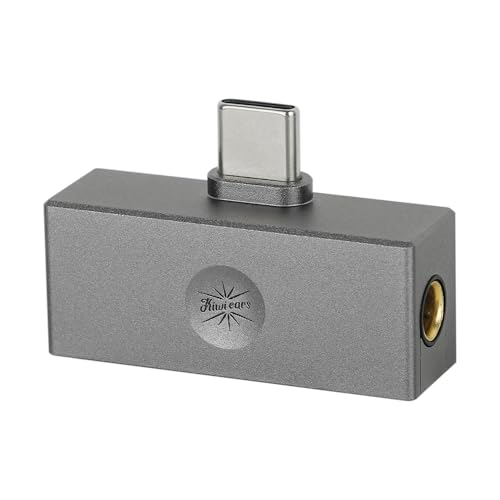
The Kiwi Ears Allegro Mini is a compact aluminum USB-C DAC/amp for listeners comparing portable dacs with 2.5mm balanced options. It uses a 4.4mm balanced output instead of 2.5mm, also includes 3.5mm single-ended connectivity, and supports PCM up to 32-bit/384kHz with DSD128 decoding.
Best For: Mobile listeners who prioritize a small, durable aluminum DAC with both 3.5mm and 4.4mm connections.
Pros:
- Compact all-aluminum alloy body suits portable use.
- Provides both 4.4mm and 3.5mm headphone outputs.
- Supports PCM up to 32-bit/384kHz and DSD128.
- Specified THD+N is 0.004% at 32 ohms.
Cons:
- Does not offer a 2.5mm balanced connection.
- Compatibility details specifically emphasize Android 5.1 and newer, phones, and PCs.
- DSD support is limited to DSD128 rather than DSD256.
The Allegro Mini makes sense when physical size and build quality are priorities. Its two output types cover common headphone connections, and its low stated distortion and high-resolution support make it a practical companion for IEM-focused portable systems.
Best for Gain Control – TempoTec Sonata BHD
The TempoTec Sonata BHD is a practical choice for shoppers considering portable dacs with 2.5mm balanced connections, though it uses the more common 4.4mm balanced format. Its three-level gain switch, physical volume buttons, and support for PCM 384kHz and native DSD256 make it adaptable to both sensitive IEMs and more demanding headphones.
Best For: Listeners who need adjustable gain and independent hardware volume control across phones, computers, and travel setups.
Pros:
- Includes 3.5mm single-ended and 4.4mm balanced outputs.
- Three hardware gain levels accommodate different headphone loads.
- Physical volume buttons provide precise independent adjustment.
- Supports native DSD256 and PCM up to 32-bit/384kHz.
Cons:
- Does not include a 2.5mm output.
- Windows compatibility is specified for Windows 10 version 1703 and later.
- Its listed dimensions are relatively large for a dongle-style portable DAC.
The Sonata BHD is a sensible pick for users who switch between sensitive IEMs and larger headphones. Its aluminum construction, gain adjustment, and physical controls provide more hands-on flexibility than a basic USB-C audio adapter.
Flagship Hi-Res Power – HIFI WALKER D20
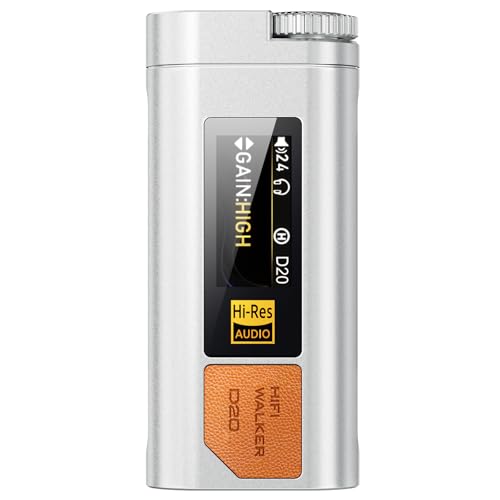
The HIFI WALKER D20 is a strong option for listeners seeking portable dacs with 2.5mm balanced alternatives, although its balanced connection is 4.4mm rather than 2.5mm. It combines an ES9038Q2M DAC, CT7601PR USB decoder, OLED display, and both balanced and single-ended outputs in a compact aluminum enclosure. Support for PCM 768kHz/32-bit and native DSD512 makes it suited to demanding high-resolution playback.
Best For: Audiophiles who want high-resolution decoding, a display, and powerful 4.4mm balanced output in a portable DAC.
Pros:
- Supports PCM up to 768kHz/32-bit and native DSD512.
- Provides up to 280mW through the 4.4mm balanced output.
- Includes an OLED display, ALPS control knob, and CNC-machined aluminum body.
- Works with Android phones, tablets, Windows PCs, and Macs.
Cons:
- Uses a 4.4mm balanced jack rather than the requested 2.5mm format.
- Its feature set may be more than casual listeners need.
Choose the D20 if maximum format support and a desktop-style control experience matter more than having a 2.5mm connector. Its 4.4mm balanced output and 280mW rating offer substantial flexibility for compatible headphones and IEMs.
Maximum Balanced Output – Joliker V6633
For shoppers comparing portable dacs with 2.5mm balanced options, the Joliker V6633 is another 4.4mm-based design to consider. It pairs an ES9028Q2M DAC with an ES9603Q amplifier and delivers up to 522mW at 32 ohms from its balanced output. The tiny 18g body, OLED screen, and hardware volume controls make it practical for phone, tablet, and computer use.
Best For: Listeners who prioritize high balanced output power and an especially lightweight USB-C DAC.
Pros:
- Offers up to 522mW at 32 ohms through the 4.4mm balanced jack.
- Supports PCM 384kHz/32-bit and DSD256 decoding.
- Weighs only 18g and measures approximately 66 × 26 × 12mm.
- Includes both 3.5mm and 4.4mm outputs plus an OLED display.
Cons:
- Does not provide a 2.5mm balanced output.
- Its listed high output power is specified at a 32-ohm load.
The V6633 stands out for output power rather than the broadest decoding ceiling. If your headphones or IEMs use 4.4mm balanced cabling and you want a very small device with independent volume controls, it is a compelling fit.
Customizable Gaming Hi-Fi – Fosi Audio DS3
The Fosi Audio DS3 is a versatile choice for buyers researching portable dacs with 2.5mm balanced connectivity, but it uses 4.4mm balanced output instead. Its ES9039Q2M and XMOS-powered architecture supports PCM 768kHz and native DSD512, while built-in spatial processing, selectable filters, and a 32-band hardware PEQ add flexibility for music, gaming, and video.
Best For: PC, PS5, and Switch users who want balanced output plus adjustable EQ and spatial audio features.
Pros:
- Supports 32-bit/768kHz PCM and native DSD512.
- Delivers 220mW at 32 ohms through the balanced output.
- Includes 7.1 spatial audio, eight digital filters, and 32-band hardware PEQ.
- Compact 16g battery-free design with USB-C plug-and-play compatibility.
Cons:
- Uses 4.4mm balanced output instead of 2.5mm.
- Does not include a built-in microphone.
- Its advanced controls may be unnecessary for users seeking a simple dongle.
The DS3 is the most feature-oriented option of the three. Its balanced output is not 2.5mm, but the combination of high-resolution support, gaming-oriented spatial processing, and hardware-level EQ gives it a broader role than a straightforward music-only DAC.
High-Power Pick – Surfans X10
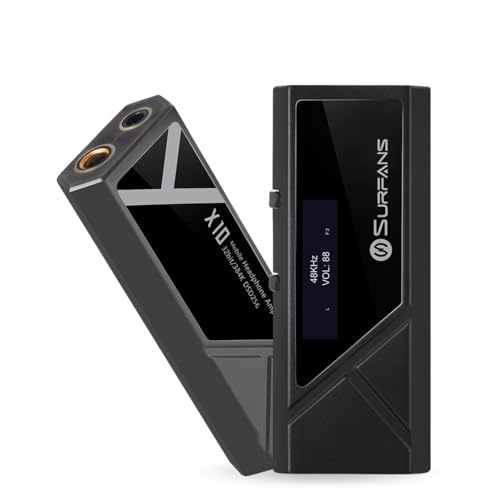
For listeners comparing portable dacs with 2.5mm balanced options, the Surfans X10 is a compact USB-C DAC and headphone amplifier with 3.5mm single-ended and 4.4mm balanced outputs. Its 522mW maximum output and aluminum build make it suited to portable listening with compatible IEMs and headphones.
Best For: Users who want substantial output power, physical controls, and both standard and 4.4mm balanced connectivity.
Pros:
- Up to 522mW of output power
- Includes 3.5mm and 4.4mm outputs
- ES9028Q2M DAC and ES9603 amplifier chips
- Works with compatible iPhone, Android, Windows, and Mac devices
Cons:
- Does not provide a 2.5mm balanced output
- USB-C compatibility is required
The X10 stands out when power and flexible output options matter more than the smallest possible dongle. Its 4.4mm balanced connection may suit newer balanced cables, but buyers specifically needing 2.5mm should plan on an appropriate adapter or choose another model.
Refined Hi-Res Choice – Fosi Audio DS2
The Fosi Audio DS2 is a practical choice for shoppers seeking portable dacs with 2.5mm balanced compatibility in mind, although its balanced connector is 4.4mm rather than 2.5mm. Dual CS43131 DAC chips, DSD256 support, and independent volume buttons give this USB-C dongle a feature-rich design for mobile and computer listening.
Best For: Hi-res listeners who want low-noise performance, broad device support, and convenient volume memory.
Pros:
- Supports DSD256 and PCM up to 32-bit/384kHz
- Provides 3.5mm and 4.4mm balanced outputs
- Independent 60-step volume controls with memory
- Compatible with iPhone, iPad, Android, Windows, Mac, and laptops
Cons:
- No native 2.5mm balanced jack
- Maximum output is specified at 170mW per channel into 32 ohms
The DS2 is a strong all-around option for users who value decoding capability and straightforward operation. Its compact CNC-machined metal body and 1.92-ounce weight also make it reasonable for carrying between devices.
Feature-Packed Mini – EYTSE HA03
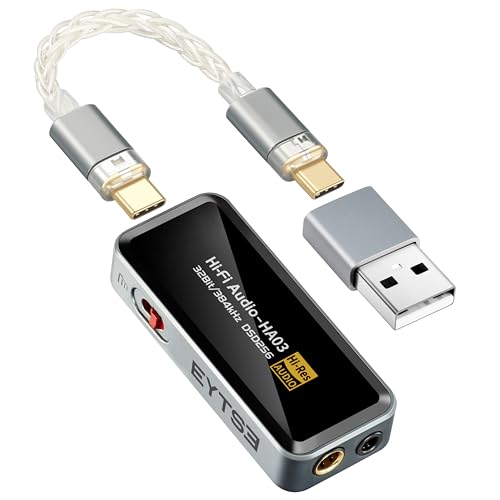
The EYTSE HA03 is a small USB-C DAC amp for shoppers researching portable dacs with 2.5mm balanced connections, but it uses a 4.4mm balanced output instead. Dual CS43131 decoding, selectable gain, physical buttons, and broad plug-and-play support make it a versatile option for phones, tablets, and computers.
Best For: Commuters who want a lightweight dongle with gain selection, onboard controls, and flexible USB accessories.
Pros:
- Offers 4.4mm balanced and 3.5mm single-ended outputs
- Low- and high-gain modes suit sensitive IEMs and demanding earphones
- Physical playback and volume buttons
- Includes USB-C cable and USB-A adapter
Cons:
- Does not include a native 2.5mm balanced output
- Requires USB connectivity from the source device
At 18g, the HA03 is easy to carry while still offering useful daily controls and gain flexibility. Its 4.4mm output is the key limitation for anyone with a 2.5mm balanced cable, but the included adapter and plug-and-play compatibility add convenience for general portable use.
How We Picked the Best Portable Dacs with 2.5mm Balanced
We selected models based on the features that matter most in daily portable listening: balanced-output compatibility, 3.5mm convenience, USB device support, amplifier power, high-resolution format handling, physical controls, and overall practicality. Because true 2.5mm outputs are increasingly uncommon, this list also includes strong 4.4mm-balanced alternatives. A 4.4mm connection is not electrically identical to 2.5mm, so confirm your cable, adapter, and headphone wiring before buying.
Specifications such as DSD and PCM support can indicate processing capability, but they do not guarantee better sound. Clean implementation, suitable output power, low noise with sensitive IEMs, and reliable device compatibility are usually more important.
Quick Comparison
- Best for maximum versatility: Choose a model with both 3.5mm and 4.4mm outputs, physical volume controls, and broad Android, iOS, Windows, and macOS support.
- Best for IEMs: Prioritize low background noise, sensible gain settings, compact size, and precise volume adjustment.
- Best for demanding headphones: Look for higher balanced output power and multiple gain levels, while checking whether your phone can supply enough power.
- Best for simple plug-and-play use: A dongle with automatic USB recognition and no required app keeps setup straightforward.
Key Buying Factors for Portable Dacs with 2.5mm Balanced
Balanced Connector and Cable Compatibility
Check whether you specifically need 2.5mm or can use 4.4mm balanced. Never connect a balanced headphone cable to an incompatible adapter or output, and avoid adapters that tie channels together. Confirm the required cable termination before ordering.
Power, Gain, and Battery Impact
More power can help full-size headphones reach comfortable volume with greater headroom, but it may increase phone battery drain. Gain switching is useful because sensitive IEMs need low-noise control, while harder-to-drive headphones benefit from additional output.
Inputs, Controls, and Compatibility
USB-C is the current standard, but iPhone users should verify cable and operating-system compatibility. Physical buttons make volume changes easier, while app-based features such as PEQ or spatial processing may appeal to listeners who want customization.
Format Support and Everyday Design
DSD256, DSD512, and 32-bit/384kHz claims are useful only if your source files and software support them. Also consider dongle size, cable durability, heat, indicator lights, and whether the unit stays securely connected to your device.
Who Should Buy Which Portable Dacs with 2.5mm Balanced?
Choose a small, low-noise dual-output dongle if you mainly use IEMs while commuting. Select a higher-powered model with gain adjustment if you alternate between IEMs and over-ear headphones. Buyers who want tuning flexibility should consider a DAC with PEQ or companion software. If your headphones already use 4.4mm, a 4.4mm-balanced model is generally the simplest choice; if they use 2.5mm, verify that a safe, correctly wired solution is available before purchasing.