
The right channel strip can turn a raw microphone signal into a controlled, mix-ready track before it ever reaches your interface. Models with optical compression are especially useful when you want smooth dynamics, added character, and straightforward front-end control.
Our 2026 roundup covers tube and solid-state designs, single-channel and multichannel units, and feature-rich processors for vocals, instruments, broadcast, and project studios.
Best 10 Channel Strip with Optical Compressor Picks for 2026
Tube-Powered All-Rounder
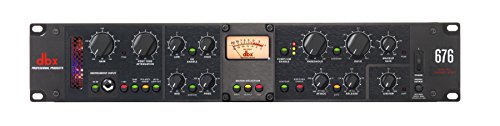
- 250-volt Class-A tube preamp
- Compressor/limiter with side-chain insert
- Sweepable-mid parametric EQ
Best For: Flexible studio and live recording setups
Classic Optical Dynamics
Warm Audio WA-2A Optical Compressor

- Single-channel tube optical compressor
- Custom optical photocell
- Cinemag transformers and discrete signal path
Best For: Dedicated optical compression
Digital-Ready Channel Strip
ART VoiceChannel Tube Channel Strip
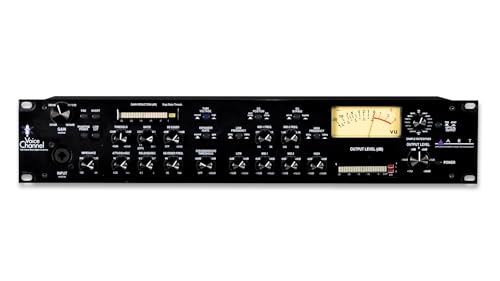
- Tube preamp with warmth and definition
- Compressor, expander, de-esser, and gate
- ADAT, AES/EBU, S/PDIF, TOSLink, and USB
Best For: Digitally connected vocal and instrument recording
Premium Transformer Channel
Rupert Neve Designs Shelford Channel
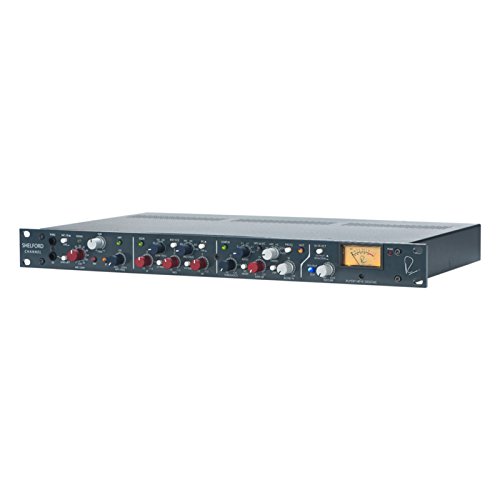
- Transformer-gain microphone preamp
- Inductor EQ and diode-bridge compressor
- Sidechain stereo-link sends and returns
Best For: High-end analog tone shaping
Tube Tone Control

- 12AX7 Class A tube preamp with tube drive
- VCA compressor with auto attack/release
- Three-band EQ with parametric mids
Best For: Flexible vocal and instrument tracking in a 1U rack unit
Multi-Channel Tracking Hub
- Four microphone preamp and compressor channels
- Tube/FET design with tone blending
- Eight-channel 24-bit/192kHz A/D conversion
Best For: Multimicrophone tracking and expanded recording setups
Neve-Style Dynamics Focus

- Class A mic/line preamp
- Custom transformer outputs with Silk enhancement
- Compressor and 8-segment LED meters
Best For: Characterful single-channel vocal and instrument recording
Best with Extra Features
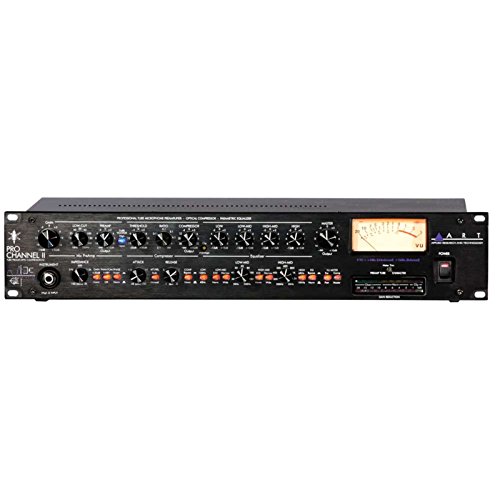
- Tube mic pre, compressor, and EQ in one channel
- Switchable optical/tube compression
- Selectable VU metering and flexible connectivity
Best For: Tube-based vocal and instrument recording
High-Voltage Valve Classic
Avalon VT-737sp Tube Channel Strip

- Four Sovtek 6922 dual-triode tubes
- High-voltage discrete Class A topology
- Balanced mic, line, and instrument connections
Best For: Professional tube-based studio recording
Flexible Voice Processor
dbx 286s Channel Strip Processor

- Compression, de-esser, enhancer, and expander/gate
- XLR mic and 1/4-inch TRS line inputs
- 1U rackmount design with insert loop
Best For: Vocal, streaming, speech, and instrument processing
Tube-Powered All-Rounder – dbx 676FX Channel Strip
The dbx 676FX is a versatile channel strip with optical compressor functionality for recording and live setups. Its high-voltage Class-A tube preamp, compressor/limiter, sweepable three-band parametric EQ, and instrument input cover a wide range of sources.
Best For: Engineers and serious hobbyists who want tube coloration, onboard dynamics control, and flexible connectivity in a rackmount format.
Pros:
- 250-volt Class-A tube design supports warm, clear, or driven tones.
- Includes compressor/limiter, side-chain insert, and sweepable-mid EQ.
- Offers front-panel instrument input plus XLR and 1/4-inch connections.
Cons:
- Its 2U rackmount chassis occupies more space than a single-channel desktop unit.
- The compressor is a dbx compressor/limiter rather than an optical design.
The 676FX is a strong choice when you need one rack unit to handle preamp tone shaping, EQ, and dynamics. It is especially practical for users who value broad routing and source flexibility over a specifically optical compressor circuit.
Classic Optical Dynamics – Warm Audio WA-2A Optical Compressor
The Warm Audio WA-2A focuses on optical compression rather than full channel-strip duties. Its single-channel tube design, custom optical photocell, Cinemag transformers, and all-discrete signal path make it a straightforward choice for adding optical dynamics control.
Best For: Users specifically seeking a dedicated one-channel optical compressor with tube circuitry and transformer-based signal handling.
Pros:
- Uses a custom optical photocell for optical compression.
- Features an all-discrete signal path and tube design.
- Includes Cinemag transformers and a two-year warranty.
Cons:
- It is a compressor rather than a complete preamp, EQ, and compressor channel strip.
- Only one channel is provided.
The WA-2A is the most direct fit here for buyers prioritizing optical compression. Choose it when dedicated dynamics processing matters more than having EQ, microphone preamp controls, or other channel-strip sections in the same unit.
Digital-Ready Channel Strip – ART VoiceChannel Tube Channel Strip
The ART VoiceChannel combines a tube preamp with a broad set of dynamics tools, making it a practical channel strip with optical compressor appeal for vocal and instrument recording. It includes compressor, expander, de-esser, and gate functions, along with extensive digital output options.
Best For: Home and project studios that need tube preamp character, multiple dynamics processors, and direct digital connectivity.
Pros:
- Tube preamp design is intended to provide warmth and definition.
- Combines compressor, expander, de-esser, and gate functions.
- Supports ADAT, AES/EBU, S/PDIF, TOSLink, and USB connections.
Cons:
- The supplied notes do not specify an optical compressor circuit.
- It is a single-channel unit.
The VoiceChannel stands out for processing breadth and digital integration. It is a sensible option when your definition of a channel strip with optical compressor includes comprehensive voice-oriented dynamics, but buyers wanting confirmed optical circuitry should verify the compressor design separately.
Premium Transformer Channel – Rupert Neve Designs Shelford Channel
Rupert Neve Designs Shelford Channel Microphone Preamp, Inductor EQ & Diode Bridge Compressor
Check Price On AmazonThe Rupert Neve Designs Shelford Channel is a premium mono channel strip built around a transformer-gain microphone preamp, inductor EQ, and diode-bridge compressor. It is designed for hands-on analog shaping rather than digital connectivity or a specifically optical compressor circuit.
Best For: Engineers seeking a high-end analog channel strip with transformer tone, musical EQ, and diode-bridge compression.
Pros:
- Combines transformer-gain mic preamp, inductor EQ, and diode-bridge compressor.
- Includes sidechain stereo-link sends and returns.
- Provides transformer output stage and double-voltage power supply.
Cons:
- The compressor is diode-bridge rather than optical.
- It is a mono channel strip.
- The supplied notes do not list digital outputs.
The Shelford Channel is best viewed as a premium analog alternative to a channel strip with optical compressor. Its transformer architecture and diode-bridge dynamics section make it compelling for tone-focused recording, but it is not the match for buyers requiring optical compression specifically.
Tube Tone Control – PreSonus StudioChannel
The PreSonus StudioChannel is a practical channel strip with optical compressor-style workflow needs covered by its built-in VCA compressor, alongside a Class A 12AX7 tube preamp and flexible three-band EQ. It accepts mic, line, and instrument sources, making it a versatile choice for project and professional studios.
Best For: Vocal, instrument, keyboard, and synth tracking where tube drive, compression, and EQ are needed in one rack unit.
Pros:
- Class A 12AX7 vacuum-tube preamp with adjustable tube drive.
- VCA compressor includes auto attack/release and soft or hard knee options.
- Three-band EQ includes a parametric mid band plus shelving or peak operation on the outer bands.
- Mic, line, and instrument inputs, plus phantom power, polarity reverse, and a high-pass filter.
Cons:
- At 10.5 pounds, it is relatively substantial for a single rack-space unit.
- Its compressor is VCA-based rather than optical.
The StudioChannel is a strong all-in-one front end when tone shaping flexibility matters more than matching a strictly optical compressor design. Its rugged 1U chassis and broad input support suit a range of recording setups.
Multi-Channel Tracking Hub – Universal Audio 4-710d
The Universal Audio 4-710d combines four microphone preamp and compressor channels in a single unit, making it a useful alternative for buyers comparing a channel strip with optical compressor options. Its tube/FET preamp design includes a tone-blending control, while onboard conversion supports multichannel recording.
Best For: Recording several microphones or sources at once when four preamp-and-compressor channels are more valuable than a single channel strip.
Pros:
- Provides four microphone preamp and compressor channels.
- Tube/FET preamp design offers a tone-blending knob.
- Includes eight-channel 24-bit/192kHz A/D conversion.
Cons:
- The supplied notes do not specify an optical compressor circuit.
- Its four-channel format may be more than needed for simple single-source recording.
The 4-710d stands out for tracking capacity rather than compact single-channel simplicity. If you regularly record multiple sources, its four-channel layout and integrated conversion can streamline the front end.
Neve-Style Dynamics Focus – Rupert Neve Designs Newton
The Rupert Neve Designs Newton is a mono channel strip built around a Class A mic/line preamp, custom transformer outputs, Silk harmonic enhancement, and a compressor. For shoppers seeking a channel strip with optical compressor characteristics, this model offers an integrated dynamics section, though the supplied specifications do not identify its compressor type.
Best For: Single-channel recording that benefits from transformer character, harmonic enhancement, metering, and onboard compression.
Pros:
- Class A microphone and line preamp.
- Custom transformer outputs and Silk harmonic enhancement provide tone-shaping options.
- Includes a compressor and 8-segment LED meters.
Cons:
- It is a mono channel strip, so multichannel recording requires additional units.
- The supplied notes do not confirm an optical compressor design.
The Newton is a focused choice for engineers who prioritize preamp character and controlled harmonic color in a single channel. Its compressor and metering add useful tracking control without expanding beyond a straightforward mono format.
Best with Extra Features – ART Pro Channel II
ART Pro Channel II Microphone Preamp/Compressor/EQ Professional Tube Based Selectable VU Metering
Check Price On AmazonIf you want a channel strip with optical compressor functionality and tube coloration, the ART Pro Channel II combines a tube microphone preamp, switchable optical/tube compression, and tube EQ in one recording channel. Its selectable VU metering helps you monitor different stages of the signal path.
Best For: Home studios and project studios seeking an all-in-one tube-based vocal or instrument recording channel.
Pros:
- Combines tube preamp, compressor, and EQ modules.
- Offers switchable optical/tube compressor operation.
- Selectable VU metering can monitor preamp, compressor, or main output.
- Provides XLR, 1/4-inch TRS, and 1/4-inch TS connectivity.
Cons:
- Its 13.4-pound weight and larger enclosure may require dedicated rack or studio space.
- It has one channel.
The Pro Channel II is a practical choice when you want tube-based tone shaping and compression without assembling separate processors. Its flexible metering and three-module layout make it particularly useful for hands-on tracking.
High-Voltage Valve Classic – Avalon VT-737sp Tube Channel Strip
The Avalon VT-737sp is a premium tube channel strip built around four dual-triode vacuum tubes and high-voltage discrete Class A circuitry. For buyers seeking a channel strip with optical compressor capability, it offers a tube-focused signal path suited to serious microphone and instrument recording.
Best For: Professional studios and engineers who prioritize tube circuitry, Class A operation, and robust microphone or instrument connectivity.
Pros:
- Uses four Sovtek 6922 dual-triode vacuum tubes.
- Features high-voltage discrete Class A circuitry.
- Supports transformer-balanced microphone input with up to +58 dB of gain.
- Includes balanced XLR line and output connections plus a front-panel instrument jack.
Cons:
- At 28.3 pounds, it is relatively heavy for a single-channel unit.
- The supplied notes do not specify detailed compressor controls or metering features.
- Its tube-based design may be more than necessary for basic home recording.
The VT-737sp is aimed at users who want a substantial tube signal path rather than a minimalist preamp. Its Class A topology and broad input options make it a strong fit for dedicated recording environments.
Flexible Voice Processor – dbx 286s Channel Strip Processor
The dbx 286s is a practical channel strip with compressor processing for microphones and instruments. Alongside its classic dbx compression, it adds de-essing, enhancement, and expander/gate controls, making it useful when you want several voice-processing stages in a rackmount unit.
Best For: Vocal recording, streaming, speech, and live setups that need compression plus focused control over sibilance, noise, and clarity.
Pros:
- Combines compression, de-esser, enhancer, and expander/gate processing.
- Accepts XLR microphone and 1/4-inch TRS line inputs.
- Includes an insert loop-out for adding external processors.
- Rackmountable 1U design with status LEDs for monitoring.
Cons:
- The supplied notes describe dbx compression rather than optical compression.
- It is a single-channel processor.
- Its 1U rack format may be less convenient for compact desktop setups.
The 286s is best viewed as a versatile voice and instrument processor rather than a tube-colored channel strip. Its multiple independent sections and insert loop make it especially adaptable for spoken-word and vocal chains.
How We Picked the Best Channel Strip with Optical Compressor
We compared these channel strips by looking at their preamp design, compression topology, EQ flexibility, metering, connectivity, and practical studio workflow. We also considered whether each unit is best suited to transparent recording, tube coloration, vocal shaping, tracking multiple sources, or adding character during mixing.
Because “optical compressor” can describe a dedicated compressor or a channel strip that uses smooth, opto-style dynamics control, check the specifications carefully. Some products in this roundup are complete channel strips, while others are optical compressors that pair naturally with a separate preamp.
Quick Comparison
| Best For | What to Look For |
|---|---|
| Vocals and voiceover | Low-noise preamp, de-esser, controllable compression, and clear metering |
| Tube character | Tube gain stage, transformer coloration, and adjustable harmonic drive |
| Flexible tracking | Parametric EQ, filters, insert points, and reliable bypass controls |
| Multiple microphones | Several preamp channels, linked compression, and digital outputs |
| Project studios | Useful processing in one rack unit without excessive complexity |
Key Buying Factors for a Channel Strip with Optical Compressor
Preamp Character and Headroom
Choose a clean preamp if you want the microphone and room to remain natural. Tube and transformer-based designs can provide thickness, harmonics, and a more forward sound, but they may require careful gain staging. Confirm that the unit supplies enough clean gain for dynamic or ribbon microphones.
Compression Controls
Optical compression is often valued for its smooth, forgiving response on vocals, bass, acoustic guitar, and spoken word. Look for useful control over threshold, ratio, attack, release, makeup gain, and mix or bypass functions. A fixed or simplified compressor can be easy to use, while more controls provide greater tracking flexibility.
EQ, Filtering, and Extra Processing
A high-pass filter can remove rumble before compression, while a sweepable mid band helps solve boxiness or harshness. De-essing, expansion, gating, enhancement, and limiting are valuable when the strip will handle voiceover, podcast, or broadcast work. Avoid paying for features you will not use.
Connections and Workflow
Check microphone input type, line and instrument inputs, insert points, balanced outputs, digital connectivity, and rack requirements. Multichannel models can save space and simplify recording several sources, but a single premium channel may offer more detailed controls and stronger build quality.
Who Should Buy Which Channel Strip with Optical Compressor?
Choose a full channel strip if you want to shape a signal while recording and prefer fewer plug-ins later. Vocalists and voiceover creators should prioritize quiet operation, de-essing, smooth compression, and easy metering. Engineers seeking classic coloration should focus on tube or transformer-based designs with adjustable drive. Studios recording drums, bands, or several microphones at once should consider a multichannel preamp/compressor. If you already own a strong preamp and mainly need gentle dynamics control, a dedicated optical compressor may be the more cost-effective choice.