
The best channel strips for recording combine several front-end tools—such as a microphone preamp, compressor, EQ, de-esser, or gate—in one streamlined unit. That can simplify tracking, improve gain staging, and help you shape a usable signal before it reaches your interface.
We selected 10 options across tube, solid-state, rackmount, 500 Series, USB, mixer, and controller formats so you can match the design to your microphones, workflow, budget, and recording goals.
Best 10 Channel Strips for Recording Picks for 2026
Best All-in-One Vocal Front End

- Mic and instrument preamp
- Compression, de-esser, enhancer, and gate
- Rackmountable with insert loop-out
Best For: Home studios and vocal recording
Best Budget Recording Mixer

- Five-channel compact mixer
- USB-B PC recording and USB playback
- 48V phantom power with Bluetooth
Best For: Podcasts, streams, and small recording setups
Best Tube Channel Strip With Digital I/O
ART VoiceChannel Tube Channel Strip
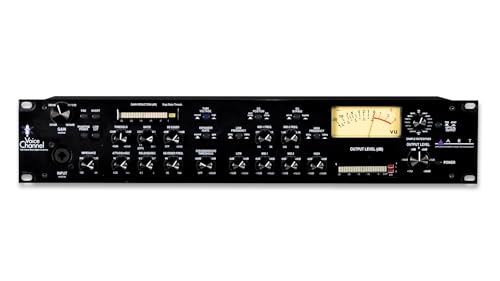
- Tube preamp for warmth and definition
- Compressor, expander, de-esser, and gate
- ADAT, AES/EBU, S/PDIF, TOSLink, and USB
Best For: Studios needing tube tone and digital routing
Best 500-Series Analog Strip
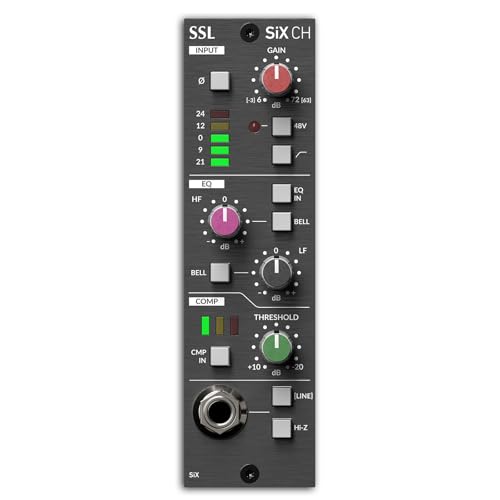
- 500-series mic pre, EQ, and compressor
- Switchable high-pass filter and shelf/bell EQ
- Front-panel Hi-Z input with phantom power
Best For: 500-series studios and streamlined analog tracking
Tube-Controlled Versatility

- Class A 12AX7 tube preamp
- VCA compressor and 3-band EQ
- Mic, line, and instrument inputs
Best For: Project and professional studios wanting tube tone and integrated processing
USB Vocal Processing Hub

- One-channel mic/line preamp
- Built-in USB audio interface
- Compressor, gate, and de-esser
Best For: Computer-based single-channel vocal recording
High-Voltage Tube Authority
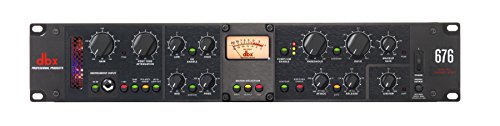
- 250-volt Class A tube preamp
- Compressor, limiter, and side-chain insert
- Sweepable-mid 3-band parametric EQ
Best For: Professional and serious hobbyist studio or live setups
Class-A Precision

- Class A mic/line preamp
- Transformer outputs with Silk enhancement
- Compressor and 8-segment LED meters
Best For: Mono recording setups needing preamp, color, and compression
Tube-Driven Character
Avalon VT-737sp Tube Channel Strip

- Four Sovtek 6922 vacuum tubes
- High-voltage discrete Class A design
- Mic, line, and instrument inputs
Best For: Tube-flavored vocal and instrument tracking
Hands-On DAW Control
Nektar Panorama CS12 Controller

- Controller for channel strip plug-ins
- Motorized fader and rotary encoders
- Works with several major DAWs
Best For: Computer-based recording with tactile plug-in control
Best All-in-One Vocal Front End – dbx 286s Channel Strip
The dbx 286s is a practical choice for recording channel strips when you want microphone or instrument preamplification plus several dedicated processing stages in one rackmount unit. Its compressor, de-esser, enhancer, and expander/gate provide useful control for vocals, instruments, and mixdown sources.
Best For: Home studios, vocal recording, podcasting, and users who want hands-on dynamics and tone processing before the signal reaches the mixer or interface.
Pros:
- Combines a mic/instrument preamp with compression, de-essing, enhancement, and gating.
- Includes XLR and 1/4-inch inputs, an insert/loop-out connection, and status metering LEDs.
- Rackmountable 1U design with classic dbx compression and official manufacturer warranty when purchased from an authorized U.S. dealer.
Cons:
- Provides one channel rather than a stereo or multichannel setup.
- Uses corded power and does not include built-in computer recording connectivity.
The 286s is especially appealing when you want a straightforward hardware signal chain with multiple independent processors. Its single-channel format makes it best suited to focused vocal or instrument recording rather than large tracking sessions.
Best Budget Recording Mixer – Aveek 5-Channel Audio Mixer
Although it is a compact mixer rather than a traditional single-channel strip, the Aveek 5-channel board can suit recording setups that need multiple inputs, basic EQ, monitoring, and direct computer recording. It is a flexible option for creators comparing channel strips for recording alongside small-format mixers.
Best For: Podcasting, live streaming, small shows, meetings, and simple multi-source recording with microphones, instruments, computers, or playback devices.
Pros:
- Offers three XLR inputs, stereo 1/4-inch and RCA inputs, and 48V phantom power for condenser microphones.
- Built-in USB-B recording chip supports plug-and-play PC recording without extra software or complicated setup.
- Adds Bluetooth streaming, USB playback/recording, two-band EQ, echo and delay, and headphone monitoring.
Cons:
- Bluetooth, USB, and 4/5-channel functions cannot be used simultaneously.
- Outputs are intended for active speakers, power amplifiers, or active sound systems rather than passive speakers directly.
- Its feature set is mixer-oriented, so it lacks the dedicated compression and de-essing stages found on a conventional vocal channel strip.
The Aveek is a useful all-purpose control center when connectivity and recording convenience matter more than specialized vocal processing. Its input variety and onboard recording features make it practical for small, mixed-source sessions.
Best Tube Channel Strip With Digital I/O – ART VoiceChannel Tube Channel Strip
The ART VoiceChannel is designed for recording channel strips applications that call for tube preamp character, dynamics control, and extensive digital connectivity. It combines a tube-based input stage with compressor, expander, de-esser, and gate functions for a more complete front-end recording path.
Best For: Studio engineers and project studios recording vocals, guitar, bass, keyboards, or drums while integrating hardware with digital audio systems.
Pros:
- Uses a proven ART tube preamp design for warmth and definition.
- Provides compressor, expander, de-esser, and gate processing in one channel.
- Supports ADAT, AES/EBU, S/PDIF, TOSLink, and USB direct connection, with sample rates up to 192 kHz.
Cons:
- It is a single-channel unit, limiting simultaneous tracking capacity.
- Its 5.5 kg weight suggests a substantial hardware footprint compared with compact interfaces.
- Digital connectivity may be more extensive than needed for a simple analog-only setup.
The VoiceChannel stands out when a tube-flavored preamp and broad digital routing options are priorities. It is a strong fit for a more developed studio workflow, particularly when external digital connections are part of the setup.
Best 500-Series Analog Strip – SSL SiX Channel Strip
Solid State Logic SiX Channel Strip 500 Series | Mic-Pre, EQ, and Single Knob Compressor
Check Price On AmazonThe Solid State Logic SiX Channel Strip is a compact 500-series module for recording setups that need a focused combination of mic preamp, EQ, filtering, and compression. Its streamlined controls make it a practical choice when you prefer a concise analog signal path over a larger standalone processor.
Best For: 500-series rack owners recording vocals or instruments who want SSL-style channel processing with a simple compressor and flexible EQ section.
Pros:
- Combines a mic preamp, EQ, and single-knob compressor in one 500-series module.
- Includes switchable 12 dB/octave, 75 Hz high-pass filtering and a shelf-to-bell EQ option.
- Provides 48V phantom power and a front-panel TRS line input with a 1 MΩ Hi-Z switch.
Cons:
- Requires a compatible 500-series chassis or rack system.
- Offers one channel and a streamlined control set rather than multiple dedicated processors.
- The supplied notes identify a 1-year warranty, shorter than the 2-year warranty listed for the ART VoiceChannel.
The SiX Channel Strip is best viewed as a focused analog module for users already invested in the 500-series format. Its high-pass filter, flexible EQ behavior, and single-knob compressor cover the essential shaping tasks without adding unnecessary complexity.
Tube-Controlled Versatility – PreSonus StudioChannel
The PreSonus StudioChannel is a flexible choice among channel strips for recording, combining a Class A 12AX7 tube preamplifier, VCA compressor, and three-band EQ in a rackmount design. Its mic, line, and instrument inputs make it suitable for shaping vocals, instruments, keyboards, and synths.
Best For: Project and professional studios seeking tube coloration plus integrated compression and EQ.
Pros:
- Class A 12AX7 tube preamp with adjustable tube drive.
- Includes VCA compression with automatic attack and release options.
- Three-band EQ features a variable-Q parametric mid band and shelving or peak low and high bands.
- Offers mic, line, and instrument inputs in a rugged 1U rackmount chassis.
Cons:
- Its 10.5-pound, 1U rackmount format may be more than needed for simple setups.
- Tube-based operation may be unnecessary if you want a strictly clean, minimal signal path.
The StudioChannel is a strong all-in-one option when you want preamp character and detailed dynamics and tone control without assembling separate processors.
USB Vocal Processing Hub – Behringer Ultravoice UV1
The Behringer Ultravoice UV1 combines a one-channel mic/line preamp with a USB audio interface, making it a practical entry in channel strips for recording when direct computer connectivity matters. It also includes compression, gating, and an experienced de-esser for focused vocal processing.
Best For: Computer-based vocal recording setups that need one channel of input and built-in voice processing.
Pros:
- Combines a mic/line preamp and USB audio interface in one unit.
- Includes compressor, gate, and de-esser processing.
- Supports USB connectivity and sample rates up to 192 kHz.
Cons:
- Provides only one channel.
- Its supplied compatibility is centered on Windows 10 and Mac OS X 10.4 or higher.
- The notes do not specify a full EQ section or rackmount construction.
The UV1 is best viewed as a streamlined one-channel recording front end, particularly for users who want processing and USB interfacing in the same device.
High-Voltage Tube Authority – dbx 676FX Tube Channel Strip
The dbx 676FX is a substantial option among channel strips for recording, pairing a 250-volt Class A tube preamp with compression, limiting, and a sweepable three-band parametric EQ. XLR and 1/4-inch connectivity, a front-panel instrument input, and a VU meter support studio and live applications.
Best For: Serious hobbyists and professional users who want extensive tube coloration and hands-on dynamics control.
Pros:
- High-voltage Class A tube preamp supports warm, clear, and driven tones.
- Includes compressor/limiter and a side-chain insert for frequency-focused control.
- Sweepable-mid three-band parametric EQ provides detailed tonal shaping.
- Front-panel instrument input, XLR and 1/4-inch connections, and VU metering improve flexibility.
Cons:
- The 2U rackmount chassis is larger and heavier than compact alternatives.
- Its extensive controls may be more than needed for basic recording chains.
- The supplied notes do not mention a USB audio interface.
Choose the 676FX when analog control, tube character, and detailed dynamics processing take priority over a compact or computer-integrated design.
Class-A Precision – Rupert Neve Designs Newton
The Rupert Neve Designs Newton is a versatile choice among channel strips for recording, combining a Class A mic/line preamp, custom transformer outputs, Silk harmonic enhancement, metering, and compression in one mono unit. It suits setups where you want core vocal or instrument processing at the tracking stage.
Best For: Engineers seeking a feature-rich mono channel strip with transformer coloration and built-in compression.
Pros:
- Class A mic/line preamp design
- Custom transformer outputs with Silk harmonic enhancement
- Built-in compressor and 8-segment LED meters
Cons:
- Mono channel strip rather than a multi-channel solution
- Supplied details do not specify the compressor controls or connectivity beyond the listed preamp functions
The Newton is a strong all-in-one tracking option when preamp character, harmonic enhancement, compression, and visual metering are more important than a larger channel count.
Tube-Driven Character – Avalon VT-737sp Tube Channel Strip
The Avalon VT-737sp brings tube circuitry and high-voltage discrete Class A operation to channel strips for recording. Its design includes four Sovtek 6922 dual-triode vacuum tubes, a microphone preamp, line connections, and a front-panel instrument input for flexible studio tracking.
Best For: Vocal and instrument recording where tube-based tone and Class A circuitry are priorities.
Pros:
- Uses four Sovtek 6922 dual-triode vacuum tubes
- High-voltage discrete Class A circuit topology
- Supports microphone, line, and front-panel instrument inputs
- Offers up to +58dB of microphone gain
Cons:
- Single-channel design
- At 28.3 pounds, it is relatively heavy for a one-channel unit
- The supplied notes do not list the strip’s specific processing sections beyond its preamp and input/output specifications
Choose the VT-737sp when tube construction and multiple input options are central to your recording workflow, particularly for a dedicated vocal or instrument channel.
Hands-On DAW Control – Nektar Panorama CS12 Controller
The Nektar Panorama CS12 takes a different approach to channel strips for recording: it is a channel strip plug-in controller rather than an analog audio processor. With DAW integration, a motorized fader, rotary encoders, transport buttons, and a 3.5-inch TFT display, it provides hands-on control from a USB-connected workstation.
Best For: DAW-based producers who want tactile control over channel strip plug-ins in compatible software.
Pros:
- Dedicated channel strip plug-in controller
- Includes motorized fader, rotary encoders, transport buttons, and TFT display
- Compatible with Cubase, Fender Studio Pro, Logic Pro, Nuendo, and Reaper
- Uses USB connectivity with a USB A-to-C cable included
Cons:
- Does not function as an analog mic preamp or audio channel strip
- Compatibility is centered on supported DAW software and Mac platform details supplied
- Single-channel control surface
The CS12 is best viewed as a workflow upgrade for software-based recording: it adds physical control and feedback without replacing an audio interface or analog preamp.
How We Picked the Best Channel Strips for Recording
We compared these channel strips by looking at their signal path, input and output options, processing controls, connectivity, format, and intended use. The list includes compact solutions for home studios, flexible rack units for project rooms, 500 Series hardware for modular setups, and premium channel strips aimed at demanding vocal and instrument tracking.
We also considered workflow. A channel strip should make recording easier, not force you to navigate unnecessary complexity. Practical controls, reliable metering, useful routing, and the ability to bypass or adjust processing all matter when recording a performance in real time.
Quick Comparison
| Best For | What to Look For |
|---|---|
| Home vocal recording | Mic preamp, compressor, de-esser, and USB or interface compatibility |
| Voice-over and spoken word | Low-noise gain, de-essing, gating, and easy monitoring |
| Tube coloration | Tube preamp design, flexible EQ, and controllable saturation |
| Modular studios | 500 Series format, balanced connections, and sufficient headroom |
| Hybrid or computer-based setups | Digital outputs, USB connectivity, or controller integration |
Key Buying Factors for Channel Strips for Recording
Preamp Character and Gain
Choose a clean solid-state preamp when you want accurate capture and plenty of flexibility. Tube designs can add harmonic color and density, which may suit vocals, bass, or instruments that benefit from extra warmth. Confirm that the unit provides enough gain for your microphones, especially low-output dynamics and passive ribbons.
Processing and Signal Order
Compression, equalization, de-essing, expansion, limiting, and enhancement can reduce the need for software processing later. Check which controls are included and whether the signal order is fixed or adjustable. An onboard compressor is useful for controlling peaks, but aggressive settings can make a recording difficult to repair.
Connections and Studio Format
Verify the available XLR, ¼-inch, insert, line, digital, and USB connections before buying. Rack units suit permanent installations, while 500 Series models require a compatible powered chassis. USB-equipped units may work as recording interfaces, but they should still fit your desired monitoring and DAW setup.
Metering, Headroom, and Ease of Use
Clear VU or peak metering helps you set levels safely. Look for sufficient headroom, accessible bypass controls, phantom power when required, and a layout that supports quick adjustments during tracking.
Who Should Buy Which Channel Strips for Recording?
Choose an affordable integrated unit if you are building a first vocal, podcast, or home-recording chain and want several essential processors without buying separate hardware. A tube channel strip is a better fit when you specifically want analog coloration and a more characterful front end. For flexible studio expansion, a 500 Series strip offers a compact path into a modular rack, provided you already own the chassis.
Users who record directly to a computer may prefer a model with USB or digital connectivity, while established studios can prioritize premium preamp quality, headroom, and routing. A channel-strip controller is best for producers who already rely on software processors and want tactile DAW control rather than another analog signal path. Before choosing, match the strip to your microphone collection, interface inputs, available rack space, and comfort level with committing processing while recording.