
Choosing among cassette recorders for podcasts depends on more than whether a unit can play and record tape. Microphone inputs, monitoring options, portability, power sources, and connections can determine whether a recorder works for interviews, voice notes, or a retro-style production workflow.
This roundup compares 10 selected models, from simple shoebox cassette recorders to feature-rich portable recorders. Use the guide below to match the right format, features, and recording setup to your podcasting needs.
Best 10 Cassette Recorders for Podcasts Picks for 2026
Best Digital Upgrade

- 32-bit float recording
- Four-track capture with XLR/TRS inputs
- USB-C recording and SD backup
Best For: Podcasters moving from cassette to flexible digital recording
Best All-in-One Cassette Radio
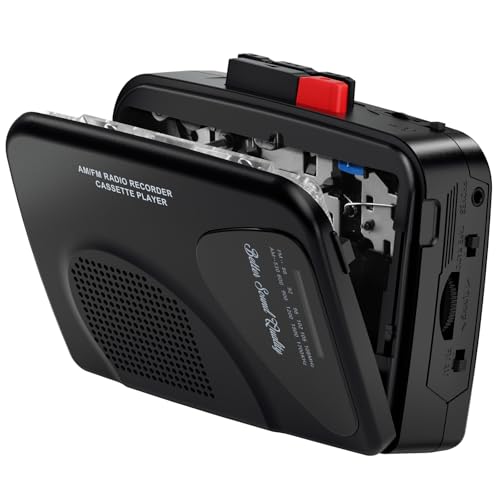
- Records broadcasts or external sound to cassette
- AM/FM radio with built-in antenna
- Battery or 5V DC operation
Best For: Simple tape recording, lectures, and radio listening
Best Bluetooth Cassette Combo

- Cassette player and recorder
- Built-in microphone
- Bluetooth audio and 3.5-inch speaker
Best For: Retro home listening with basic recording and Bluetooth
Best Cassette Voice Recorder Kit

- Includes external and built-in microphones
- Records aux audio to cassette
- AC adapter and aux cable included
Best For: Interviews and simple cassette-based voice recording
Portable Interview Pick

- One-touch cassette recording
- Built-in and external microphone options
- Portable design with automatic level control
Best For: Portable interview recording and simple cassette-based podcast work
Tape-to-Digital Choice

- Records to cassette or USB
- Converts tapes to WAV without a computer
- Includes built-in and lavalier microphones
Best For: Podcasters wanting cassette recording and direct digital conversion
Simple Everyday Recorder

- Built-in microphone for voice recording
- Battery or AC powered
- Simple controls with headphone and AUX connections
Best For: Beginners, voice notes, and basic cassette interviews
Best Hybrid Cassette Recorder

- Cassette recording with built-in mono microphone
- Saves audio as MP3 to USB drives
- Bluetooth, FM, line-in/out, and battery power
Best For: Voice recording and flexible analog-digital playback
Best Stereo Cassette Boombox
KLIM Portable Cassette Recorder

- Records USB, microphone, or radio audio to cassette
- Stereo 3W speaker with Bluetooth and USB playback
- AC or battery powered with included 8GB USB drive
Best For: Casual spoken recordings and versatile home playback
Best Simple Voice Recorder

- One-touch cassette recording with automatic level control
- Built-in condenser mic plus external mic jack
- Auxiliary input and headphone output for flexible use
Best For: Beginner-friendly voice notes, lectures, and basic podcast recording
Best Digital Upgrade – Zoom H4 Essential
If you are comparing cassette recorders for podcasts but want modern, flexible audio capture, the Zoom H4 Essential is a stronger digital alternative. It records up to four tracks, includes stereo microphones, accepts external microphones or instruments, and can connect to a phone, tablet, or computer over USB-C.
Best For: Podcasters, interviewers, musicians, and filmmakers who want portable digital recording rather than cassette media.
Pros:
- 32-bit float recording helps avoid distorted takes.
- Built-in stereo microphones plus two XLR/TRS inputs.
- Can record or stream over USB-C while saving a backup to an SD card.
- Spoken menu guidance supports more accessible operation.
Cons:
- It is a digital recorder, not a cassette player or cassette recorder.
- Requires two AA batteries for portable use.
The H4 Essential is the most capable choice here for current podcast workflows, especially when clean, adaptable recording matters more than the retro cassette format.
Best All-in-One Cassette Radio – Mersoco Portable Recorder
For shoppers specifically seeking cassette recorders for podcasts, this Mersoco model offers basic tape recording alongside AM/FM radio and portable operation. It can record broadcasts or external sounds to cassette, includes voice activation, and runs on two AA batteries or a 5V DC connection.
Best For: Casual voice notes, lectures, seminars, mixtapes, and listeners who also want AM/FM radio.
Pros:
- Records external sounds and AM/FM broadcasts to cassette.
- Voice activation can help start recording when sound is detected.
- Includes a built-in speaker, 3.5mm headphones, and a USB-to-DC cable.
- Compact design supports portable use with two AA batteries.
Cons:
- Its listed frequency response is 125 Hz–6.3 kHz, so it is a basic option for spoken audio.
- It does not provide the multitrack or computer-focused features of a digital podcast recorder.
This is a practical pick for simple cassette-based recording and radio listening, but podcasters needing easy editing or digital file transfer should look elsewhere.
Best Bluetooth Cassette Combo – QFX RETRO-40
The QFX RETRO-40 combines a cassette player and recorder with Bluetooth audio, making it a convenient choice for buyers who want a vintage-style unit with one modern connection. Its built-in microphone supports basic voice recording, while the integrated 3.5-inch speaker handles playback.
Best For: Home users who want cassette playback and recording with Bluetooth audio in a retro-style device.
Pros:
- Combines cassette playback and recording.
- Built-in microphone supports simple recording.
- Bluetooth adds wireless audio capability.
- Built-in 3.5-inch speaker is included for playback.
Cons:
- The supplied details do not specify podcast-focused digital recording features.
- The included feature list does not mention an external microphone input or computer recording.
The RETRO-40 is appealing when Bluetooth convenience matters alongside cassette functionality, though it is better suited to casual recording than a full podcast production setup.
Best Cassette Voice Recorder Kit – Deluxe Products DP-CASR-101
This Deluxe Products recorder is a straightforward option for cassette-based voice recording, with both a built-in condenser microphone and an included external microphone. It can also record audio from a smartphone, laptop, or tablet through the aux input, and the carrying handle makes the unit easier to move.
Best For: Interviews, voice notes, home recording, and users who want included accessories for cassette recording.
Pros:
- Includes an external microphone and built-in condenser microphone.
- Aux input can record audio from compatible phones, laptops, or tablets to cassette.
- Includes an AC adapter and aux-in cable.
- Built-in speaker and carrying handle support convenient playback and transport.
Cons:
- Portable battery use requires four batteries, which are not included.
- The connected device must have a headphone-out jack for aux recording.
- It records to cassette rather than directly creating digital podcast files.
With its external microphone and aux cable included, the DP-CASR-101 is one of the more practical cassette choices for simple interviews or archival recordings, provided you are comfortable transferring audio later.
Portable Interview Pick – PROSCAN Cassette Recorder
PROSCAN Cassette Player & Recorder with Microphone, Headphone Jack, Aux in, Black
Check Price On AmazonFor shoppers comparing cassette recorders for podcasts, the PROSCAN offers straightforward voice recording in a portable, easy-to-carry design. Its built-in microphone, external microphone jack, one-touch recording, and automatic level control make it practical for interviews, classes, and other spoken-word recordings.
Best For: Portable interview recording and simple cassette-based podcast work.
Pros:
- One-touch recording simplifies capturing interviews, classes, and conferences.
- Includes a built-in free-standing microphone and an external microphone jack.
- Automatic level control is designed to help produce clear recordings.
- Lightweight 1.8-pound design includes a carry handle, headphone jack, and AUX input.
Cons:
- Recording is cassette-based, so it does not offer the USB-to-WAV conversion featured by some newer models.
- The supplied notes do not indicate a dedicated podcast-focused digital recording workflow.
The PROSCAN is a sensible choice when ease of use and portability matter more than advanced digital features. Its microphone options and automatic level control give it useful flexibility for basic spoken-word recording.
Tape-to-Digital Choice – Portable Cassette Recorder
Among cassette recorders for podcasts, this portable model stands out for combining cassette recording with USB recording and tape conversion. Its built-in and lavalier microphones, WAV support, and direct USB workflow give spoken-word creators more ways to capture and preserve audio.
Best For: Podcasters who want cassette recording plus direct USB and WAV conversion.
Pros:
- Records to cassette or directly to a plugged-in USB drive.
- Converts cassette content to WAV files without requiring a computer, app, or driver installation.
- Includes a built-in microphone, additional lavalier microphone, and support for external microphones.
- Portable retractable-handle design includes tape play, USB play, and a headphone jack.
Cons:
- USB recording and conversion require a compatible USB flash drive.
- The supplied information does not specify detailed controls for editing or mixing podcast audio.
This is the most feature-rich option of the three for creators who want both analog recording and digital preservation. Its one-touch operation and multiple microphone options also suit quick interviews and field recordings.
Simple Everyday Recorder – Coby Cassette Player
The Coby is a straightforward option for shoppers seeking cassette recorders for podcasts without a complicated control layout. It combines cassette playback and recording with a built-in microphone, flexible battery or AC power, and headphone and AUX connections for convenient everyday use.
Best For: Beginners, voice notes, and basic interviews recorded to cassette.
Pros:
- Built-in microphone records voice notes, lectures, and interviews without extra equipment.
- Simple buttons and clear labels make operation accessible for many users.
- Runs on AC power or four C batteries for desk or portable use.
- Offers private headphone listening plus AUX and external-speaker connectivity.
Cons:
- It does not list USB or WAV conversion capabilities.
- Four C batteries are required for battery-powered operation.
- The built-in microphone is the primary included recording solution.
The Coby favors simplicity over modern production features. It is a practical fit for basic spoken-word capture and cassette playback, especially when clear controls and flexible power options are priorities.
Best Hybrid Cassette Recorder – QFX RETRO-39BT
If you want cassette recorders for podcasts that can also handle modern audio sources, the QFX RETRO-39BT offers cassette recording alongside Bluetooth, FM, USB, and line-in options. Its built-in mono microphone and one-touch recording make it practical for voice notes, interviews, lectures, and simple podcast-related recording tasks, though its single speaker is designed for personal listening rather than polished monitoring.
Best For: Voice-focused recording, lectures, casual podcast planning, and users who want cassette, USB, Bluetooth, and FM features in one portable unit.
Pros:
- Records to cassette with the built-in microphone and one-touch REC control.
- Can save cassette, Bluetooth, FM, mic, or line-in audio as MP3 to a USB drive.
- Offers Bluetooth, FM radio, USB playback, line-in/out, and AC or battery operation.
- Compact 1.7-pound design includes a pull-out carry handle.
Cons:
- Mono speaker is intended for voice and personal listening, not room-filling sound.
- USB recording requires a USB drive; there is no SD card slot.
- Tape recordings may include natural hiss.
The RETRO-39BT is a flexible choice when analog cassette recording and basic digital file handling matter more than studio-quality monitoring. For a simple, portable setup, its broad input and playback options make it one of the more versatile cassette recorders for podcasts.
Best Stereo Cassette Boombox – KLIM Portable Cassette Recorder
For shoppers comparing cassette recorders for podcasts, the KLIM portable model is a boombox-style option with cassette recording, a built-in microphone, radio recording, USB playback, and Bluetooth streaming. Its 3W stereo speaker and large controls suit casual recording and playback, while the included 8GB USB drive adds convenience for handling compatible media.
Best For: Casual podcast practice, spoken recordings, radio-based projects, and listeners who prefer stereo boombox playback with straightforward controls.
Pros:
- Records from the built-in microphone, USB, or AM/FM radio onto cassette tapes.
- Provides Bluetooth streaming, USB playback, and AM/FM radio reception.
- 3W stereo speaker, large buttons, easy-to-read dial, handle, and earphone jack support accessible use.
- Runs from AC power or four C-cell batteries and includes an 8GB USB drive.
Cons:
- The supplied information does not describe dedicated podcast-focused monitoring or editing features.
- Four C-cell batteries are not included.
- Its boombox format is less compact than a small shoebox-style recorder.
The KLIM stands out as a feature-rich cassette boombox rather than a specialized podcast recorder. It is a sensible pick for basic voice capture and mixed-source recording when stereo playback, Bluetooth, and radio functions are useful priorities.
Best Simple Voice Recorder – JENSEN MCR-100
The JENSEN MCR-100 is a straightforward choice among cassette recorders for podcasts when ease of use is more important than extensive connectivity. It combines one-touch cassette recording, a built-in condenser microphone, automatic level control, an auxiliary input, and headphone and external microphone connections in a classic portable design.
Best For: Students, personal notes, lectures, basic voice recording, and beginners who want simple cassette operation with auxiliary and microphone inputs.
Pros:
- One-touch recording makes it easy to capture lectures, music, or personal notes.
- Automatic level control helps maintain consistent recording volume.
- Auxiliary input supports smartphones, tablets, and other audio sources.
- Includes a built-in microphone, headphone jack, external microphone jack, and retractable handle.
Cons:
- Its mono microphone operation is better suited to voice than stereo production.
- The supplied notes do not list Bluetooth, radio, or USB audio recording features.
- It has a relatively short 90-day limited warranty.
The MCR-100 favors uncomplicated operation and basic voice capture. It can work for podcast preparation, interviews, or archival spoken recordings, but users seeking wireless connectivity or broader digital workflows may prefer one of the more feature-heavy alternatives.
How We Picked the Best Cassette Recorders for Podcasts
We evaluated these models by looking at the features that matter most in practical podcasting setups: recording method, microphone support, input and output connections, monitoring, portability, power flexibility, and ease of use. The selection includes traditional cassette machines for creators who specifically want tape, as well as a modern handheld recorder that may better suit digital-first production.
Because product specifications and included accessories can vary, confirm the current listing before buying. Pay particular attention to whether a microphone, cassette, batteries, power adapter, or USB storage is included.
Quick Comparison
- Best for modern digital recording: Zoom H4 Essential, with a more capable handheld format for musicians, podcasters, and filmmakers.
- Best for simple tape recording: Basic portable cassette players with built-in microphones and speakers.
- Best for connectivity: Bluetooth- and AUX-equipped models, which can expand playback and recording options.
- Best for flexible power: Models that support both batteries and AC or USB power.
- Best for portability: Compact shoebox-style and handheld cassette recorders with integrated speakers.
Key Buying Factors for Cassette Recorders for Podcasts
Recording Format and Audio Quality
Decide whether you truly need cassette tape. Tape creates a distinctive workflow and sound, but it is less convenient to edit, copy, and distribute than digital audio. A handheld digital recorder is generally easier for multitrack work, file transfer, and cleaner production. Traditional cassette models are better suited to analog projects, spoken-word experiments, archival recordings, or retro content.
Microphone and Input Options
A built-in microphone is convenient for quick recordings, but an external microphone or AUX input can improve placement and consistency. Check the connector type and whether the recorder supports the microphone you plan to use. For interviews, a headphone jack is also valuable for monitoring levels and catching unwanted noise.
Power, Portability, and Controls
Battery operation helps with field recording, while AC or USB power is useful for desk-based podcasting. Look for clearly labeled buttons, a sturdy handle, and a speaker that is loud enough for playback checks. Simple controls can be an advantage when recording on location.
Playback and Connectivity
Bluetooth, AM/FM radio, USB, and AUX features may be useful, but they do not automatically improve recorded speech. Treat them as convenience features and prioritize reliable recording controls, input compatibility, and monitoring instead.
Who Should Buy Which Cassette Recorders for Podcasts?
Choose a traditional compact cassette recorder if you want an uncomplicated tape-based workflow, built-in playback, and a low-cost option for voice memos or creative projects. Select a Bluetooth or AUX-equipped model if you want to connect modern audio sources while retaining cassette playback and recording.
For users recording interviews or podcasts regularly, prioritize a model with external input and headphone monitoring. If editing, file transfer, and consistent audio quality are central to your workflow, the modern handheld recorder in this roundup is likely the more practical choice than a cassette-only machine. Finally, compare power requirements and included accessories before ordering, especially if you plan to record away from home.