
The best cassette recorders with external microphone input give you more control than basic tape players, whether you are capturing voice notes, interviews, music ideas, or archival audio. The right model depends on the input connection, recording format, portability, and how much control you need.
Our roundup includes compact cassette recorders, classic tape decks, USB-capable converters, and versatile digital field recorders. Use the guide below to match each type to your recording setup and budget.
Best 10 Cassette Recorders with External Microphone Input Picks for 2026
Best Retro Cassette Recorder
Portable Cassette Player Tape Recorder

- External microphone and auxiliary input included
- Records voice or device audio to cassette
- Built-in speaker, handle, and AC adapter
Best For: Simple home recording, playback, and retro use
Best Professional Input Flexibility
Zoom H1 XLR 2-Channel Recorder

- Two XLR/TRS combo microphone inputs
- 32-bit/96kHz WAV recording support
- 3.5mm input, headphone output, and SDXC support
Best For: Filmmaking, music, podcasting, and digital recording
Best Simple Tape Recording
PROSCAN Cassette Player & Recorder

- External microphone jack and free-standing microphone
- One-touch recording with automatic level control
- AUX input, headphone jack, and AC/DC operation
Best For: Interviews, classes, conferences, and basic tape use
Best Multichannel Production Recorder
TASCAM DR-70D 4-Channel Recorder
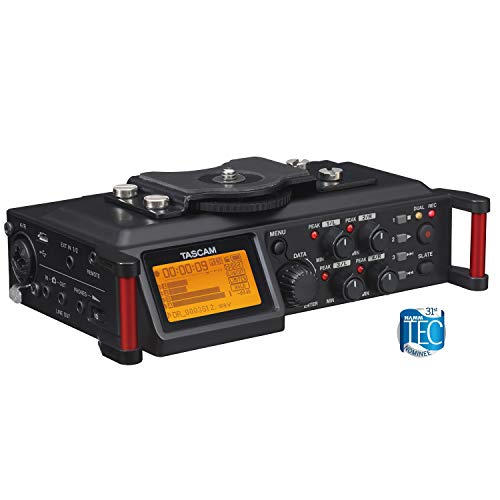
- Four balanced XLR inputs with phantom power
- Individual gain controls and dual safety recording
- Built-in mics and SD-card WAV recording
Best For: Multimicrophone video and location production
Best Portable Standing-Mic Option
Coby CVR42BK Cassette Recorder
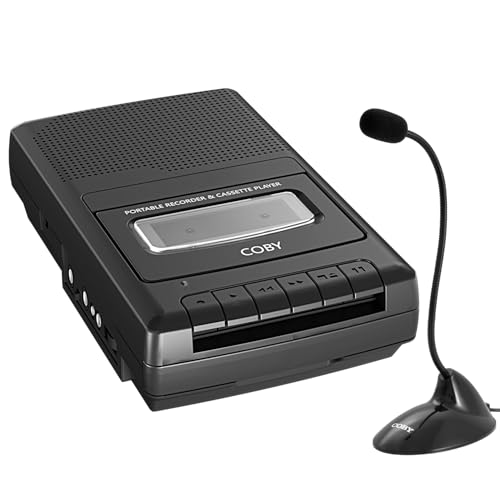
- Detachable tabletop microphone
- AC or four-C battery power
- Built-in speaker, headphone jack, and aux input
Best For: Students, teachers, seniors, and voice recording
Best Double-Deck Recording Setup

- Dual cassette deck design
- USB connectivity
- Home audio component format
Best For: Tape duplication and home cassette systems
Best Feature-Rich Portable Recorder
QFX RETRO-39BT Shoebox Recorder

- Records audio to USB as MP3
- Bluetooth, FM, USB, and cassette playback
- AC or four-C-battery operation
Best For: Portable recording, casual mixtapes, and USB conversion
Best Multitrack Option

- Four XLR inputs with phantom power
- Four headphone outputs with individual volume
- Portable multitrack digital recording
Best For: Podcasts, interviews, and multi-microphone sessions
Best Simple Cassette Recorder

- External microphone jack and built-in microphone
- One-touch recording with automatic level control
- Portable shoebox design with retractable handle
Best For: Basic lectures, notes, music, and classroom recording
Best Tape-to-USB Choice

- Converts tapes to WAV on a USB flash drive
- Records external audio to tape or USB
- Includes dedicated and built-in microphones
Best For: Cassette recording with convenient digital archiving
Best Retro Cassette Recorder – Portable Cassette Player Tape Recorder
For shoppers seeking cassette recorders with external microphone input, this portable model offers a straightforward way to record voice, interviews, or music to tape. It includes an external microphone, an auxiliary cable for recording from compatible devices, a built-in speaker, and a carrying handle.
Best For: Home use, simple voice recording, cassette playback, and users who want auxiliary recording from a smartphone, laptop, or tablet with a headphone output.
Pros:
- Includes an external microphone and 3.5mm auxiliary cable.
- Can record voice through the external or built-in microphone.
- Built-in speaker, headphone jack, carrying handle, and AC adapter support convenient use.
Cons:
- Requires four batteries, which are not included, for portable battery operation.
- Auxiliary recording requires a compatible device with a headphone output.
- The feature set is focused on basic cassette recording rather than advanced audio control.
This is a practical pick for casual cassette recording and playback, particularly if you value included accessories and simple controls over professional recording features.
Best Professional Input Flexibility – Zoom H1 XLR 2-Channel Recorder
Although it records digitally rather than to cassette, the Zoom H1 XLR is worth considering when comparing cassette recorders with external microphone input because it provides substantially more microphone connectivity. Its two XLR/TRS combo inputs, 3.5mm stereo input, and headphone output support microphones, instruments, and other audio sources.
Best For: Filmmakers, musicians, podcasters, and users who need detailed digital recordings with external microphones and flexible input options.
Pros:
- Two XLR/TRS combo inputs accommodate microphones, instruments, and other sources.
- Supports 32-bit/96kHz recording and includes an OLED waveform display for monitoring levels.
- Offers 3.5mm stereo input, headphone output, and SDXC support up to 1TB.
Cons:
- It is a digital WAV recorder, not a cassette recorder.
- Requires two AA batteries, and the supplied notes do not indicate that they are included.
- Its advanced connections may be more than needed for basic voice recording.
The H1 XLR is a strong alternative when external microphone capability matters more than tape format, delivering a modern two-channel workflow for demanding recording setups.
Best Simple Tape Recording – PROSCAN Cassette Player & Recorder
PROSCAN Cassette Player & Recorder with Microphone, Headphone Jack, Aux in, Black
Check Price On AmazonThe PROSCAN is a practical cassette option for shoppers looking for cassette recorders with external microphone input. It combines cassette playback and recording with a free-standing microphone, an external microphone jack, automatic level control, an AUX input, and a headphone jack.
Best For: Recording interviews, classes, conferences, and everyday voice notes while retaining easy cassette playback.
Pros:
- Provides both a free-standing microphone and an external microphone jack.
- One-touch recording is convenient for interviews, classes, and conferences.
- Includes automatic level control, AUX input, headphone jack, and AC/DC operation.
Cons:
- At 1.74 pounds, it is less lightweight than some compact cassette recorders.
- The supplied notes do not specify whether an external microphone is included.
- Its listed features emphasize basic recording rather than advanced audio adjustments.
With one-touch operation and two microphone connection options, the PROSCAN is a sensible choice for straightforward tape recording where ease of use is the priority.
Best Multichannel Production Recorder – TASCAM DR-70D 4-Channel Recorder
The TASCAM DR-70D is another digital alternative to cassette recorders with external microphone input, designed for users who need several external microphones at once. Four balanced XLR inputs with phantom power, individual gain controls, built-in microphones, and dual recording make it suitable for production sound workflows.
Best For: Videographers, documentarians, television producers, and DSLR shooters recording multiple microphones on location.
Pros:
- Four balanced XLR microphone inputs include phantom power and individual gain controls.
- Built-in microphones can capture on-set sound, while dual recording creates a lower-level safety copy.
- Records WAV files to SD, SDHC, or SDXC cards up to 128GB and can mount above or below a camera.
Cons:
- It is a digital WAV recorder, not a cassette-based device.
- Its four-input production design may be excessive for simple single-microphone recording.
- The supplied notes specify a 3.5mm headphone jack but do not list a dedicated 3.5mm microphone input.
The DR-70D makes the most sense when multichannel capture and production safeguards are more important than cassette compatibility or pocket-sized simplicity.
Best Portable Standing-Mic Option – Coby CVR42BK Cassette Recorder
If you want cassette recorders with external microphone input for lectures, interviews, or voice notes, the Coby CVR42BK is a practical, easy-to-use choice. Its detachable tabletop microphone supports hands-free recording, while the built-in speaker, headphone jack, aux input, and AC or battery power add everyday flexibility.
Best For: Students, teachers, seniors, interviews, and home voice recording.
Pros:
- Includes a detachable standing microphone for hands-free recording.
- Supports cassette playback and recording with simple large controls.
- Offers a built-in speaker, 3.5mm headphone jack, and aux input.
- Runs on four C batteries or the included AC adapter.
Cons:
- The recording operation is listed as mono and stereo, so users seeking advanced multitrack features may need more specialized equipment.
- Its compact shoebox design is focused on basic portability rather than professional studio recording.
The CVR42BK stands out when an included external standing microphone matters more than advanced connectivity. It is a straightforward option for spoken-word recording and casual cassette use at home, school, or work.
Best Double-Deck Recording Setup – Tascam 202MKVII Cassette Deck
Tascam 202MKVII Double Cassette Deck Recorder with USB Port, Dual Cassette Deck
Check Price On AmazonThe Tascam 202MKVII is a full-size double cassette deck for users who want a more traditional home audio component. It includes dual cassette decks and a USB port, making it better suited to organized tape playback and recording setups than portable cassette recorders with external microphone input.
Best For: Home audio systems, tape duplication, and users who prefer a dual-deck cassette component.
Pros:
- Uses a dual cassette deck design.
- Includes a USB port for compatible digital connectivity.
- Provides a substantial home-oriented recording component from Tascam.
Cons:
- The supplied details do not list an external microphone input.
- At 14.5 pounds, it is considerably less portable than shoebox-style recorders.
- The notes identify it as a cassette deck rather than a battery-powered portable recorder.
The 202MKVII is the strongest fit here for a dedicated double-deck setup, but it is not the most direct match for shoppers specifically prioritizing an external microphone input. Consider it when dual-cassette functionality and USB connectivity matter more.
Best Feature-Rich Portable Recorder – QFX RETRO-39BT Shoebox Recorder
The QFX RETRO-39BT combines cassette recording with USB, Bluetooth, FM radio, and line-in functions. While its microphone is built in rather than external, it is a versatile portable alternative for shoppers comparing cassette recorders with external microphone input and wanting broader media playback and recording options.
Best For: Portable voice recording, casual mixtapes, USB conversion, and everyday playback.
Pros:
- Records cassette, Bluetooth, FM, microphone, or line-in audio to USB as MP3.
- Plays standard cassettes, USB MP3 files, Bluetooth audio, and FM radio.
- Offers AC or four-C-battery operation with a pull-out carry handle.
- Includes a 3.5mm headphone jack and line-out connection.
Cons:
- Uses a built-in mono microphone rather than an external microphone input.
- The single mono speaker is intended for voice and personal listening, not party-level sound.
- USB recording supports USB drives, with no SD card slot listed.
The RETRO-39BT is a flexible portable recorder with more modern source options than a basic cassette unit. Choose it for USB conversion and Bluetooth convenience, but select a model with a dedicated microphone connection if external mic placement is essential.
Best Multitrack Option – Zoom PodTrak P4
Although it is not a cassette deck, the Zoom PodTrak P4 is worth considering if your priority is modern recording with external microphone input capability. It provides four XLR microphone inputs with phantom power, making it better suited to interviews, podcasts, and multi-person recordings than a traditional cassette recorder.
Best For: Podcasters and interviewers who need multiple microphones, separate headphone monitoring, and portable digital recording.
Pros:
- Four XLR microphone inputs with phantom power
- Four headphone outputs with individual volume controls
- Supports multitrack WAV recording, sound pads, and phone or USB interviews
- Runs for up to 3.5 hours on two AA batteries
Cons:
- Records digitally rather than to cassette tape
- Its feature set may be excessive for simple voice notes
The PodTrak P4 is the strongest choice here for flexible external-microphone recording, but shoppers specifically seeking cassette playback or tape recording should choose one of the cassette-based alternatives instead.
Best Simple Cassette Recorder – Jensen MCR-100
The Jensen MCR-100 is a straightforward cassette recorder with an external microphone jack, built-in condenser microphone, and one-touch recording. Its automatic level control helps maintain consistent recording volume, while the auxiliary input adds flexibility for recording audio from compatible external sources.
Best For: Students, casual users, and anyone wanting a portable shoebox-style cassette recorder for lectures, notes, music, or basic external-microphone recording.
Pros:
- Includes an external microphone jack and built-in microphone
- One-touch recording is simple to operate
- Automatic level control helps keep recording volume consistent
- Retractable handle and headphone jack support portable or private use
Cons:
- Only mono microphone operation is listed
- The warranty is limited to 90 days
For buyers who specifically want a conventional cassette player and recorder with external microphone input, the MCR-100 offers a practical, uncomplicated design without the complexity of a digital multitrack unit.
Best Tape-to-USB Choice – T300-N3 Cassette Recorder
This cassette recorder combines an integrated microphone and dedicated microphone support with USB recording and tape conversion. It can record external audio to cassette or a USB flash drive, and it converts tape content to WAV files without requiring a computer or additional software.
Best For: Users who want cassette recording with external microphone use plus a direct way to archive tapes as WAV files on a USB drive.
Pros:
- Converts cassette tapes to WAV files directly on a USB flash drive
- Can record external audio to either cassette or USB
- Includes a dedicated microphone and built-in microphone
- Offers cassette and USB playback, a 3.5mm headphone jack, and dual power options
Cons:
- Four C batteries and an AC adapter are not included
- At approximately 2 pounds, it is heavier than the Jensen model
- External microphone connection details are less specific than the dedicated microphone feature
The T300-N3 is the most versatile cassette-focused option in this group for users balancing analog recording with digital archiving. Its direct WAV conversion is particularly useful for preserving tape recordings without a computer.
How We Picked the Best Cassette Recorders with External Microphone Input
We compared these 10 products by looking at recording versatility, microphone connectivity, portability, playback options, power requirements, and ease of use. We also considered whether each device records directly to cassette, captures digital audio, converts tapes through USB, or serves a specialized role such as podcasting or multitrack field recording.
Because product designs vary widely, confirm the exact input type before buying. A cassette machine with a 3.5mm microphone or auxiliary input is not equivalent to a recorder with balanced XLR inputs, phantom power, or multitrack capabilities.
Quick Comparison
- For simple cassette recording: Choose a compact cassette player-recorder with a microphone or auxiliary input.
- For portable voice notes: Look for a lightweight model with a built-in speaker, straightforward controls, and one-touch recording.
- For tape duplication or home use: A double cassette deck offers more convenient playback and recording between cassettes.
- For USB tape conversion: Select a model that explicitly supports WAV or USB recording, rather than assuming every cassette deck can digitize audio.
- For serious audio work: Digital recorders with XLR inputs provide better microphone compatibility and production features than consumer cassette units.
Key Buying Factors for Cassette Recorders with External Microphone Input
Input Type and Compatibility
Check whether the recorder accepts a 3.5mm microphone plug, line-level auxiliary input, USB audio, or XLR/TRS connections. Some auxiliary inputs are intended for playback sources and may not supply the right gain for a passive microphone. If you plan to use a condenser microphone, verify whether the device provides plug-in power or phantom power.
Recording Medium and Quality
Analog cassette recording has a distinctive character but introduces tape hiss, wear, and limited editing flexibility. Digital field recorders generally deliver cleaner recordings and easier file transfer. If your goal is nostalgia or recording directly onto physical tape, prioritize cassette compatibility; if clarity and editing matter most, consider a digital alternative.
Controls, Monitoring, and Power
Useful features include input-level controls, headphone monitoring, an automatic level limiter, built-in speakers, and reliable transport controls. Battery operation is important for mobile recording, while an AC adapter is more convenient for a fixed setup. Also check whether batteries, microphones, cables, or a power supply are included.
Who Should Buy Which Cassette Recorders with External Microphone Input?
Choose a basic portable cassette recorder if you want an inexpensive device for voice memos, casual recording, or playing and recording tapes. These are generally the simplest options for external microphones with a 3.5mm connection.
Choose a cassette deck or USB converter if you are digitizing a tape collection, making cassette copies, or using a home audio system. Verify the supported USB workflow and file format before purchasing.
Choose a Zoom or TASCAM digital recorder if you need dependable microphone preamps, multiple inputs, headphone monitoring, or better results for filmmaking, music, interviews, and podcasts. They do not replace a cassette deck, but they are often the stronger choice when recording quality and flexibility take priority.