
The best cassette recorders for interviews make it easy to capture conversations without relying on a phone, complicated software, or a bulky studio setup. Portable designs with built-in microphones, speakers, headphone jacks, and one-touch controls are especially useful for reporters, students, researchers, and oral-history projects.
This roundup includes traditional cassette recorders alongside compact digital voice recorders. Before choosing, consider whether you need physical tape recording, digital file storage, external microphone support, playback flexibility, or the simplest possible controls.
Best 10 Cassette Recorders for Interviews Picks for 2026
Best Analog Starter
Jensen MCR-100 Cassette Recorder

- One-touch cassette recording
- Automatic level control
- Aux input and external mic jack
Best For: Traditional cassette recording and simple spoken-audio capture
Best Compact Digital Value

- One-button recording
- Noise reduction for spoken audio
- USB file transfer and voice activation
Best For: Portable digital interviews, lectures, and meetings
Best Cassette-and-Radio Combo
Mersoco T201BUS Cassette Recorder
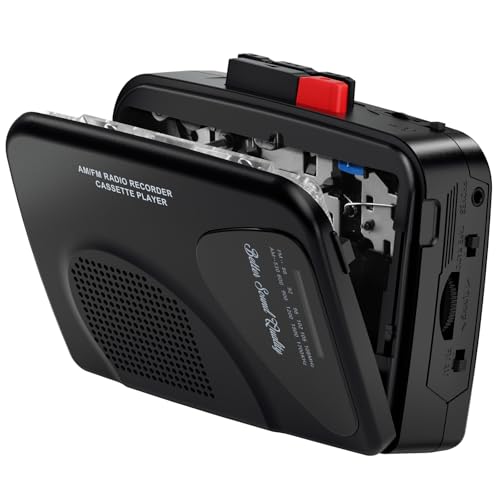
- Cassette recording and playback
- AM/FM radio included
- AA battery or 5V DC power
Best For: Portable cassette recording with radio listening
Best High-Capacity Digital Pick
EVISTR L357 64GB Voice Recorder

- 64GB storage capacity
- Adjustable gain and noise reduction
- Voice activation and Type-C transfer
Best For: Frequent or long digital interview recordings
Best Portable Interview Recorder

- One-touch recording for interviews and lectures
- Standing mic and external mic jack
- AC/DC operation with carry handle
Best For: Simple portable cassette interviews
Best Multifunction Cassette Recorder

- Records cassette, Bluetooth, FM, or line-in to USB
- Built-in mic with one-touch REC
- AC or four-C-battery operation
Best For: Interviews plus USB and Bluetooth features
Best Easy-to-Use Cassette Recorder

- Built-in mic for voice notes and interviews
- Simple buttons and clear labels
- AC or four-C-battery power
Best For: Simple recording for seniors and students
Best All-in-One Option
USB Cassette Recorder for Interviews

- Records to cassette or USB
- Includes built-in and lavalier microphones
- Converts tapes to WAV without a computer
Best For: Interviewers needing recording and tape digitization flexibility
Best Compact Pick
Small Portable Cassette Recorder

- Compact 180 g design
- Built-in microphone and speaker
- Automatic stop protects tapes
Best For: Portable, occasional voice interviews and recording
Best Included Accessories
Cassette Interview Recorder with Mic

- Includes external microphone
- Comes with AC adapter and Aux-In cable
- Records from mobile and laptop headphone outputs
Best For: Home interview setups with bundled accessories
Best Analog Starter – Jensen MCR-100 Cassette Recorder
For shoppers comparing cassette recorders for interviews, the Jensen MCR-100 offers straightforward analog recording in a portable shoebox-style design. Its built-in condenser microphone, one-touch recording, and automatic level control make it practical for capturing spoken notes, lectures, or informal conversations to cassette.
Best For: Buyers who specifically want cassette recording with simple controls and flexible playback options.
Pros:
- One-touch recording with a built-in condenser microphone
- Automatic level control helps maintain consistent recording volume
- Auxiliary input supports smartphones, tablets, and other audio sources
- Retractable handle, headphone jack, and external microphone jack add flexibility
Cons:
- Analog cassette recording is less convenient for transferring and searching files
- Built-in microphone operation is mono
- Limited 90-day warranty
This is a sensible choice for traditional cassette workflows and simple field use. Choose it when physical tapes and accessible controls matter more than digital file management.
Best Compact Digital Value – Sunlan 16GB Voice Recorder
Although marketed as a small tape recorder, this Sunlan device is a digital voice recorder suited to shoppers seeking cassette recorders for interviews without the storage and playback limitations of tape. Its sensitive built-in microphone, noise-reduction processing, and one-button recording make interview capture uncomplicated.
Best For: Students and interviewers who want a compact digital recorder with simple controls and USB file transfer.
Pros:
- One-button start and stop recording with easy playback
- Noise-reduction technology and a sensitive microphone target clearer voice capture
- Voice activation can reduce silent sections and conserve storage
- 16GB storage and USB connectivity support computer file transfer
Cons:
- Records in mono rather than stereo
- Continuous recording time is listed at more than 30 hours, with about 7 hours of playback
- It is a digital recorder, not a cassette-based recorder
Its compact size and direct USB workflow are useful for routine interviews and lectures. It is a better fit than a tape machine if quick file access and digital storage are priorities.
Best Cassette-and-Radio Combo – Mersoco T201BUS Cassette Recorder
For buyers specifically seeking cassette recorders for interviews, the Mersoco T201BUS combines cassette playback and recording with AM/FM radio in a lightweight portable unit. It can record external sounds or broadcasts to tape, while its simple physical controls keep basic recording tasks easy to operate.
Best For: Users who want an inexpensive cassette recorder with radio listening and flexible battery or DC power.
Pros:
- Records external audio or AM/FM broadcasts to cassette
- Voice activation system is available for recording
- Supports two AA batteries or a 5V DC supply
- Includes 3.5mm earphones and a USB-to-DC power cable
Cons:
- Battery-powered operation requires two AA batteries, which are not included
- 5V adapter is not included
- Analog cassette files are not as convenient to transfer or organize as digital recordings
This model is appealing when cassette functionality, radio reception, and portability are all important. Its recording approach is best suited to casual interviews, notes, lectures, or other situations where tape is the intended format.
Best High-Capacity Digital Pick – EVISTR L357 64GB Voice Recorder
For shoppers researching cassette recorders for interviews but open to digital convenience, the EVISTR L357 provides high-capacity recording, adjustable gain, and noise-reduction processing. Its voice activation, timestamped filenames, and Type-C transfer make it particularly practical for organizing longer interview sessions.
Best For: Frequent interviewers, students, and professionals who need extended digital recording and easier file management.
Pros:
- 64GB storage supports up to 4,660 hours at 32Kbps
- Adjustable seven-level gain and noise-reduction technology support voice capture
- Voice activation can reduce silent sections and save storage
- Type-C transfer works with Windows and Mac computers
Cons:
- It is a digital voice recorder rather than a cassette recorder
- Advanced settings may take more time to learn than a basic tape machine
- Battery life varies by use, with up to 32 hours of continuous recording listed
The L357 is the strongest option here for repeated interviews and large recording libraries. Its storage capacity, adjustable sensitivity, and timestamped files make review and archiving substantially easier than working with physical tapes.
Best Portable Interview Recorder – PROSCAN Cassette Recorder
PROSCAN Cassette Player & Recorder with Microphone, Headphone Jack, Aux in, Black
Check Price On AmazonFor shoppers comparing cassette recorders for interviews, the PROSCAN combines cassette playback and recording with a built-in standing microphone and an external microphone jack. Its one-touch recording button, automatic level control, and carry handle make it practical for recording conversations, classes, and conferences.
Best For: Interviewers who want a straightforward, portable cassette recorder with microphone flexibility.
Pros:
- One-touch recording is convenient for interviews, classes, and conferences.
- Includes a standing microphone plus an external microphone jack.
- Automatic level control is designed to support clear recordings.
- Supports AC/DC power and weighs about 1.8 pounds with a carry handle.
Cons:
- Uses cassette recording rather than built-in digital storage.
- The external microphone is not included in the supplied product notes.
The PROSCAN is a sensible choice when simple controls, flexible microphone options, and portable cassette recording matter more than digital features.
Best Multifunction Cassette Recorder – QFX RETRO-39BT
The QFX RETRO-39BT stands out among cassette recorders for interviews by adding USB recording, Bluetooth, FM radio, and line-in support to a compact shoebox-style design. Its built-in mono microphone and one-touch REC button are suited to voice recording, lectures, and casual interviews.
Best For: Users who want a cassette recorder for interviews plus USB, Bluetooth, FM, and MP3 features.
Pros:
- Built-in microphone and one-touch recording support voice capture.
- Can record cassette, Bluetooth, FM, or line-in audio to a USB drive.
- Offers cassette playback, USB MP3 playback, Bluetooth, FM, and line-in/out.
- Runs from the included AC adapter or four C batteries.
Cons:
- Its single mono speaker is intended for voice and personal listening, not room-filling sound.
- Tape recordings may include natural hiss.
- USB recording supports USB drives, but there is no SD card slot.
The RETRO-39BT is the most versatile option here, particularly if you want to preserve or play audio through USB while still recording voices to cassette.
Best Easy-to-Use Cassette Recorder – Coby CVR-22
The Coby CVR-22 is a compact choice for cassette recorders for interviews, with a built-in microphone for capturing voice notes, lectures, and conversations. Simple buttons and clear labels make it accessible, while battery or AC operation supports use at a desk or away from an outlet.
Best For: Seniors, students, and anyone seeking simple cassette-based interview recording.
Pros:
- Built-in microphone records voice without extra equipment.
- Simple controls and clear labels are easy to operate.
- Works from AC power or four C batteries.
- Includes a headphone jack and aux input for flexible listening.
Cons:
- The supplied notes do not specify an external microphone jack.
- Uses cassette recording rather than dedicated digital recording features.
- Four C batteries are required for battery-powered use.
The Coby is a practical pick for straightforward voice recording, especially when ease of use and flexible power are more important than advanced connectivity.
Best All-in-One Option – USB Cassette Recorder for Interviews
For shoppers comparing cassette recorders for interviews, the voijump T300 stands out for its built-in microphone, included lavalier microphone, and ability to record either to cassette or a USB drive. It also supports converting tapes to WAV files without requiring a computer, app, or driver.
Best For: Interviewers who want cassette recording, USB recording, and tape digitization in one portable unit.
Pros:
- Records through the built-in or external lavalier microphone.
- Can save recordings to cassette or USB in digital format.
- Converts cassette contents to WAV files on a USB flash drive.
- Includes a retractable carrying handle and headphone jack.
Cons:
- The notes do not specify battery or wall-power options.
- USB recording requires a plugged-in USB drive.
The T300 is the most flexible choice here for interview work, especially if you want a straightforward path from physical tape to digital files. Its external microphone support adds useful recording flexibility beyond the built-in mic.
Best Compact Pick – Small Portable Cassette Recorder
If portability is your priority when choosing cassette recorders for interviews, this TOMASHI model has a compact 4.57-by-3.54-by-1.38-inch design, a built-in microphone, and simple physical controls for recording and playback. You can monitor audio through its speaker or headphones.
Best For: Buyers who want a small, straightforward cassette recorder for occasional interviews, lessons, or voice recording.
Pros:
- Compact and lightweight at approximately 180 g.
- Built-in microphone supports voice recording.
- Offers both a built-in speaker and headphone listening.
- Automatic stop helps reduce unnecessary cassette wear.
Cons:
- Two AA batteries and USB power supply are not included.
- Its single built-in speaker is mono.
- The notes do not mention digital recording or USB conversion.
This is a practical basic recorder for mobile use, but it is less suited to workflows that require digital file storage or advanced microphone connectivity. Its compact size and automatic stop function are the main advantages.
Best Included Accessories – Cassette Interview Recorder with Mic
This Deluxe Products recorder is a useful option among cassette recorders for interviews because it includes an external microphone, AC adapter, and auxiliary cable. The built-in carrying handle makes the larger shoebox-style unit easier to move between rooms or recording locations.
Best For: Home interview setups and users who want an external mic, wall-power adapter, and auxiliary recording accessories included.
Pros:
- Includes an external microphone for voice recording.
- Also provides a built-in condenser microphone.
- Records audio from a smartphone, laptop, or tablet through Aux-In.
- Includes an AC adapter and carrying handle.
Cons:
- It is larger and heavier than the compact TOMASHI recorder.
- Four C batteries are required for battery use and are not included.
- The notes specify cassette recording but not USB or computer file recording.
With its included accessories and auxiliary input, this model is well suited to a simple home or vehicle-based setup. Choose it when convenience and bundled recording connections matter more than pocket-sized portability.
How We Picked the Best Cassette Recorders for Interviews
We focused on features that matter during real interviews: microphone access, recording controls, playback options, portability, power flexibility, and ease of transferring or reviewing recordings. The selection includes traditional cassette models for users who need analog tapes, as well as digital voice recorders for shoppers who prefer longer runtimes, internal storage, and easier file management.
We also considered practical details such as built-in speakers, headphone outputs, USB charging, battery operation, auxiliary inputs, and whether a recorder is suitable for quick field use. Product descriptions and feature sets can vary by seller, so verify included accessories, storage capacity, and power requirements before ordering.
Quick Comparison
- Best for physical cassette recording: Choose a traditional cassette player-recorder with a built-in microphone and simple record controls.
- Best for digital storage: A digital voice recorder with internal memory is more convenient for many interviews and easier to back up.
- Best for flexible power: Look for models that support both batteries and AC or USB power.
- Best for private playback: A headphone jack lets you review recordings without disturbing people nearby.
- Best for connecting another source: An auxiliary input can support recording from compatible external audio equipment.
Key Buying Factors for Cassette Recorders for Interviews
Recording Format and Storage
Traditional cassette recorders are a good fit when you need a tangible tape, archival analog workflow, or compatibility with existing cassette equipment. Digital recorders are generally better for repeated interviews because they avoid tape changes and make copying files simpler. Check the stated recording capacity and file-transfer method for digital models.
Microphone Performance and Placement
A built-in microphone is convenient, but interview clarity depends heavily on distance, room noise, and speaker direction. For important conversations, choose a recorder that can be positioned close to both speakers or supports a suitable external microphone. Avoid placing it directly beside a noisy power source or on a surface that transfers handling noise.
Playback and Monitoring
Built-in speakers are useful for quick checks, while a headphone jack is preferable for hearing quiet speech and reviewing details. If transcription matters, prioritize clear playback and controls that make it easy to pause, rewind, and replay sections.
Power and Portability
Battery-powered cassette recorders are convenient outdoors, while AC, DC, or USB options are useful for longer sessions. Consider the recorder’s size, handle design, button layout, and whether you can operate it quickly without looking away from the interview.
Who Should Buy Which Cassette Recorders for Interviews?
Choose a traditional cassette recorder if you specifically need analog tapes, straightforward physical controls, or playback of existing recordings. These models suit casual interviews, oral-history work, classroom activities, and users who value a familiar tape-based workflow.
Choose a digital voice recorder if you expect lengthy sessions, frequent interviews, or regular file transfers. Digital storage is typically more convenient for organizing, duplicating, and sending recordings, but confirm that the device offers the storage and charging setup you need.
Choose a model with both built-in speakers and headphones if you will review recordings in different environments. For the most demanding interviews, test microphone placement in advance and consider making a backup recording whenever the conversation is especially important.