
Finding the best cassette recorders for field recording means balancing portability, recording controls, microphone performance, power options, and the practical limits of analog tape. The right choice depends on whether you want authentic cassette sound, simple voice notes, or a modern recorder for higher-quality location audio.
We compared 10 portable tape recorders and compact digital alternatives for travel, interviews, music sketches, ambient sound, and everyday documentation. Use the guide below to narrow the list by recording format, ease of use, and intended setting.
Best 10 Cassette Recorders for Field Recording Picks for 2026
Best Digital Upgrade

- 32-bit float recording for clip-free capture
- Stereo mics and two XLR/TRS inputs
- USB-C connectivity with SD card backup
Best For: Digital field recording and multi-source audio capture
Best Simple Cassette Recorder

- One-touch cassette recording
- Built-in mic with automatic level control
- Retractable handle and external mic jack
Best For: Simple voice notes, lectures, and portable cassette recording
Best Long-Running Voice Recorder

- Up to 45 hours of continuous recording
- Dual-mic PCM recording up to 1536Kbps
- Voice activation and password protection
Best For: Extended digital voice notes, lectures, and interviews
Best Cassette-to-USB Combo

- Records and plays standard cassettes
- Converts audio to MP3 on a USB drive
- Bluetooth, FM, USB, and line-in support
Best For: Cassette recording with basic digital conversion and playback
Best Portable Interview Recorder
PROSCAN Cassette Player & Recorder

- One-touch recording for interviews and classes
- Built-in and external microphone options
- Portable design with AC/DC operation
Best For: Interviews, classes, and conference recording
Best Battery-and-USB-C Cassette Recorder
Reshow Portable Cassette Player
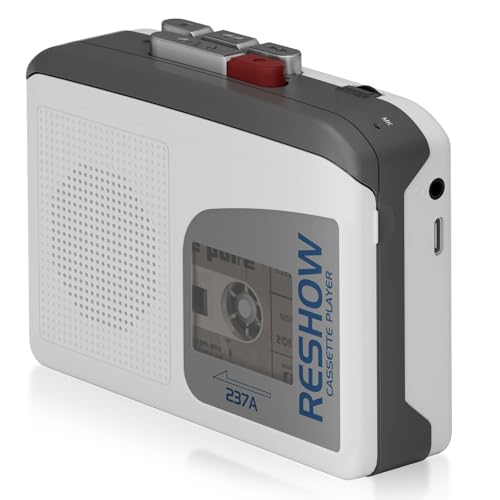
- Built-in microphone for direct tape recording
- USB-C or two-AA power options
- Built-in speaker plus headphone listening
Best For: Students, travel, and quick voice memos
Best Easy-to-Use Cassette Recorder
Coby CVR-22 Cassette Player and Recorder

- Built-in microphone for voice notes
- Battery or AC power for flexible placement
- Simple controls with headphone and AUX inputs
Best For: Simple lectures, interviews, and home recording
Most Versatile Converter
Portable Cassette Recorder with USB Capture

- Records to tape or USB
- Converts tapes to WAV without a computer
- Includes built-in and lavalier microphones
Best For: Flexible recording and tape digitization on the go
Best Power Flexibility
Portable Cassette Recorder with USB and Mic

- Runs on four C batteries or AC power
- Records to cassette or USB
- Converts tapes to WAV files
Best For: Outdoor and indoor recording with adaptable power
Best Compact Option
TOMASHI Personal Cassette Recorder

- Compact and lightweight design
- Built-in speaker, microphone, and headphone jack
- Supports AA batteries or USB power
Best For: Simple personal recording and portable cassette playback
Best Digital Upgrade – Zoom H4 Essential
For shoppers comparing cassette recorders for field recording, the Zoom H4 Essential is a modern digital alternative built for flexible, higher-quality capture. Its built-in stereo microphones, two XLR/TRS inputs, 32-bit float recording, and USB-C connectivity suit projects ranging from interviews to live performances.
Best For: Musicians, filmmakers, podcasters, and field recordists who want flexible digital recording rather than cassette tape.
Pros:
- 32-bit float recording helps capture audio without worrying about distorted takes.
- Built-in stereo microphones plus two XLR/TRS inputs support varied setups.
- Can record to a phone, tablet, or computer while saving a backup to an SD card.
- Spoken menu guidance can make operation more accessible.
Cons:
- It is a digital handheld recorder, not a cassette-based device.
- Requires two AA batteries for portable use.
The H4 Essential is the strongest choice here for creators prioritizing recording flexibility, clean capture, and computer-friendly workflows. Choose it over a tape recorder when modern digital features matter most.
Best Simple Cassette Recorder – JENSEN MCR-100
The JENSEN MCR-100 is a straightforward option for shoppers seeking cassette recorders for field recording, classroom use, or personal notes. Its one-touch recording, built-in condenser microphone, retractable handle, and automatic level control keep the operation simple and portable.
Best For: Students, casual users, and anyone who wants a basic shoebox-style cassette recorder for voice notes or lectures.
Pros:
- One-touch recording makes it easy to start capturing audio.
- Built-in condenser microphone and automatic level control simplify recording.
- Retractable handle supports portable use indoors or outdoors.
- Includes a headphone jack and external microphone jack.
Cons:
- Its mono microphone operation is less suitable for spacious environmental recordings.
- It is designed around cassette recording rather than modern digital file workflows.
- The listed warranty is limited to 90 days.
The MCR-100 fits buyers who value physical tapes and uncomplicated controls over advanced field-recording features. Its compact shoebox design makes it practical for basic voice capture on the move.
Best Long-Running Voice Recorder – Aiworth E36 Voice Recorder
Although it is not a cassette recorder, the Aiworth E36 is worth considering alongside cassette recorders for field recording when extended battery life and digital storage are priorities. It offers dual-mic PCM recording up to 1536Kbps, voice activation, a rechargeable battery rated for up to 45 hours, and substantial listed storage.
Best For: Students, journalists, office workers, and creators who need long-duration digital voice recording with playback controls.
Pros:
- Dual microphones support stereo and music recording modes.
- Up to 45 hours of continuous recording is useful for extended sessions.
- Voice activation can help conserve storage during pauses.
- Password protection and variable playback speed add practical playback control.
Cons:
- It records digital MP3 audio rather than cassette tape.
- Its feature set is focused on voice recording instead of tape playback or analog workflows.
The E36 is a practical digital alternative for users who need lots of recording time and easy file playback. It is better suited to lectures, meetings, and spoken field notes than to cassette-based recording.
Best Cassette-to-USB Combo – QFX RETRO-39BT
The QFX RETRO-39BT stands out among cassette recorders for field recording because it combines cassette recording with USB MP3 conversion, Bluetooth, FM radio, and line-in recording. Its built-in microphone and AC-or-battery operation give it the familiar portable shoebox format, while USB recording adds a convenient digital transfer option.
Best For: Users who want cassette playback and recording with USB conversion, Bluetooth playback, and simple mono voice capture.
Pros:
- Records to cassette with the built-in microphone.
- Can save cassette, Bluetooth, FM, mic, or line-in audio as MP3 to a USB drive.
- Offers Bluetooth, FM radio, USB playback, and line-in/line-out connections.
- Runs from the included AC adapter or four C batteries.
Cons:
- Its mono speaker and microphone are intended for voice and personal listening, not high-fidelity recording.
- USB recording supports USB drives, but there is no SD card slot.
- The unit weighs 1.7 pounds, making it less convenient than smaller handheld recorders.
The RETRO-39BT is the most versatile cassette-focused option in this group. It makes sense for buyers who want physical tape recording plus a way to convert or play audio through USB and Bluetooth.
Best Portable Interview Recorder – PROSCAN Cassette Player & Recorder
PROSCAN Cassette Player & Recorder with Microphone, Headphone Jack, Aux in, Black
Check Price On AmazonFor shoppers comparing cassette recorders for field recording, the PROSCAN offers a practical balance of portability and straightforward operation. Its one-touch recording button, built-in standing microphone, external microphone jack, and automatic level control support interviews, classes, and conferences.
Best For: Portable voice recording, interviews, classes, and conferences.
Pros:
- One-touch recording simplifies capturing spoken audio.
- Includes a standing microphone and an external microphone jack.
- Automatic level control is designed to help produce crisp, clear recordings.
- Lightweight 1.8-pound design includes a carry handle, headphone jack, AUX input, and AC/DC operation.
Cons:
- Its 1.8-pound body may be less convenient than smaller pocket-sized recorders.
- The supplied notes do not specify battery requirements or recording-duration details.
The PROSCAN is a solid fit when simple controls and flexible microphone options matter more than a highly compact form factor. It also works for casual cassette playback through headphones or the AUX input.
Best Battery-and-USB-C Cassette Recorder – Reshow Portable Cassette Player
Among cassette recorders for field recording, this Reshow model stands out for its built-in microphone, built-in speaker, and flexible power options. It records voice memos, lectures, interviews, and musical ideas directly to cassette while supporting either two AA batteries or USB-C power.
Best For: Students, travelers, journalists, and casual analog voice recording.
Pros:
- Built-in microphone records directly to cassette without extra equipment.
- Built-in speaker supports convenient playback, with headphone compatibility for private listening.
- Runs on two AA batteries or a USB-C cable for flexible use at home or on the go.
- Simple grey-white design and controls are intended to be accessible for different age groups.
Cons:
- Two AA batteries are required but are not included.
- The supplied notes do not list an external microphone input.
- Recording is limited to the capabilities of cassette tape and the built-in microphone.
This is a convenient choice for buyers who want a modern power connection alongside a traditional cassette workflow. Its built-in speaker and microphone make it especially easy to use for quick recordings and immediate playback.
Best Easy-to-Use Cassette Recorder – Coby CVR-22 Cassette Player and Recorder
The Coby CVR-22 is a straightforward option for shoppers seeking cassette recorders for field recording without complicated controls. It combines cassette playback and recording with a built-in microphone, battery or AC power, a headphone jack, and an AUX input.
Best For: Voice notes, lectures, interviews, and users who prefer simple physical controls.
Pros:
- Built-in microphone enables self-contained voice recording.
- Battery or AC operation supports desk use and portable recording.
- Simple buttons and clear labels make operation accessible.
- Headphone jack and AUX input provide flexible listening options.
Cons:
- Requires four C batteries for battery-powered operation.
- At 1.4 pounds, it may be less compact than ultra-portable cassette players.
- The supplied notes do not specify an external microphone jack.
The Coby is a sensible pick for users who value uncomplicated operation and multiple power choices. Its built-in microphone covers basic spoken recording, while the headphone and AUX connections add flexibility for playback.
Most Versatile Converter – Portable Cassette Recorder with USB Capture
For cassette recorders for field recording, this voijump model stands out for combining tape recording, USB recording, and tape-to-WAV conversion in a portable body. Its built-in and lavalier microphones give you flexible options for interviews, meetings, conversations, and ambient sound capture.
Best For: Users who want one portable recorder for cassette playback, voice recording, and computer-free tape digitization.
Pros:
- Records to cassette or directly to a USB flash drive.
- Converts cassette content to WAV files without a computer or additional software.
- Includes a built-in microphone, lavalier microphone, headphone jack, and retractable handle.
- Offers one-touch recording and supports up to 32 GB of storage.
Cons:
- A USB flash drive is needed for digital recording and conversion.
- The supplied notes do not specify weather resistance or advanced field-monitoring features.
This is a practical choice when portability and flexible recording formats matter more than specialized professional field-recording controls. The retractable handle and multiple microphone options make it adaptable for everyday mobile use.
Best Power Flexibility – Portable Cassette Recorder with USB and Mic
This cassette recorder for field recording offers cassette and USB modes, a built-in microphone, and a dedicated collar microphone for voice capture. It can run from four C batteries or a separately sold AC adapter through the included USB-to-DC cable, making it useful in both indoor and outdoor settings.
Best For: Field users who need flexible power, direct WAV conversion, and straightforward recording for lectures, dictation, interviews, or personal audio.
Pros:
- Supports recording external audio to cassette or USB.
- Converts tapes to WAV files directly to a USB flash drive.
- Offers battery or AC-adapter power options and includes a retractable carrying handle.
- Provides a built-in 3W speaker, 3.5mm headphone jack, and REM port.
Cons:
- Four C batteries and the AC adapter are not included.
- For improved recording results, the sound source should be placed close to the microphone.
- At about 2 pounds, it is less compact than a small personal cassette player.
Its dual power approach and USB conversion make it a well-rounded option for portable recording where access to wall power may vary. The larger body trades some convenience in carrying for added connectivity and speaker output.
Best Compact Option – TOMASHI Personal Cassette Recorder
For shoppers seeking a small cassette recorder for field recording, the TOMASHI F-119F-318F keeps the controls simple and the body highly portable. It includes a built-in speaker, microphone, headphone support, and a dedicated record button for basic voice capture and cassette playback.
Best For: Lightweight personal recording, language practice, music playback, and users who prioritize a compact cassette player with basic recording functions.
Pros:
- Compact 4.57-by-3.54-by-1.38-inch design weighing about 180 grams.
- Includes built-in speaker, microphone, headphone jack, and easy physical controls.
- Automatic stop helps reduce unnecessary cassette and mechanism wear.
- Supports two AA batteries or USB power.
Cons:
- Two AA batteries and the USB power supply are not included.
- Uses a single built-in speaker, so speaker playback is mono.
- Does not list USB recording or tape-to-digital conversion.
This is the simplest and lightest option in the group, making it convenient for basic mobile use. It is better suited to casual voice recording and cassette listening than to digital archiving or more involved field-audio workflows.
How We Picked the Best Cassette Recorders for Field Recording
We evaluated these products for the features that matter most outside the studio: portability, built-in microphone access, recording simplicity, playback options, power flexibility, and durability for travel. We also considered whether each model is a true cassette recorder or a digital voice recorder that may better suit users who prioritize clean, easily managed files.
Because compact cassette machines vary widely, the list includes basic voice-recording models, shoebox-style players, tape-to-USB converters, and the Zoom H4 Essential as a modern digital alternative. Product descriptions and listed features were weighed more heavily than appearance or nostalgia.
Quick Comparison
| Type | Best For | Main Advantage |
|---|---|---|
| Compact cassette recorder | Voice notes and simple interviews | Low-cost, tactile operation |
| Shoebox cassette recorder | Home use and playback | Larger controls and built-in speaker |
| Cassette-to-USB model | Archiving or digitizing tapes | Transfers analog recordings to digital files |
| Digital handheld recorder | Music, film, and serious field work | Higher-quality recording and easier file management |
Key Buying Factors for Cassette Recorders for Field Recording
Recording Format and Sound Quality
Choose cassette if the medium itself is important, such as for lo-fi music, archival work, or an intentionally analog workflow. Tape introduces hiss, limited dynamic range, and possible speed variation. For detailed environmental recordings, music, or video production, a digital handheld recorder is usually more practical and consistent.
Microphone and Input Design
A built-in microphone is convenient for speech and quick notes, but it may capture handling noise and surrounding distractions. Look for a clear microphone position and accessible recording controls. If you plan to connect an external microphone, verify that the product has a suitable input; many inexpensive cassette players only support their built-in mic.
Portability and Power
Check dimensions, weight, handle design, and whether the recorder uses replaceable batteries, AC power, or both. Battery availability matters during hikes, interviews, and travel. A built-in speaker is useful for checking recordings without headphones, while a headphone jack allows more discreet monitoring.
Controls, Storage, and Transfer
One-touch recording and simple transport buttons reduce setup time. Digital recorders should offer sufficient storage and straightforward file transfer. If you need to preserve existing tapes, select a model that explicitly supports USB conversion rather than assuming every cassette recorder can digitize audio.
Who Should Buy Which Cassette Recorders for Field Recording?
Choose a compact cassette recorder for inexpensive voice memos, classroom notes, interviews, or a deliberately vintage workflow. These models are straightforward but generally offer limited control over sound quality.
Choose a shoebox-style recorder if you mainly record and play tapes at home and prefer larger controls and a stronger built-in speaker. These are less discreet for serious mobile work but convenient for basic use.
Choose a cassette-to-USB model if your priority is transferring old recordings to a computer or USB drive. Confirm the supported output format and connection method before buying.
Choose the Zoom H4 Essential if you need reliable digital files for music, podcasts, filmmaking, interviews, or detailed field recordings. It is the strongest fit when sound quality, flexibility, and post-production matter more than using physical tape.