
Choosing among power amplifiers with XLR inputs can be difficult because specifications span compact desktop systems, home theaters, DJ rigs, and professional rack installations. The right model depends on more than headline wattage: input compatibility, speaker impedance, cooling, controls, and intended use all matter.
This roundup compares 10 options across those categories, including stereo and multi-channel designs, Class D models, bridgeable amplifiers, and compact balanced systems. Use the guide below to narrow the list based on your speakers, room, source equipment, and performance goals.
Best 10 Power Amplifiers with Xlr Inputs Picks for 2026
Best Professional Rack Amp

- 350W per channel at 4 ohms
- Balanced XLR, TRS, and RCA inputs
- Lightweight Class D design with DSP
Best For: Professional rack systems and live sound setups
Best Compact Balanced Amp

- XLR/TRS combo balanced input
- Up to 180W stereo or 235W mono
- Compact design with 12V trigger input
Best For: Desktop, bookshelf, and home theater systems
Best Feature-Packed Budget Amp

- XLR and TRS inputs with bridge mode
- Bluetooth and USB MP3 playback
- Up to 2000W maximum bridged power
Best For: Mobile DJs and multi-source PA systems
Best High-Power Gig Amp
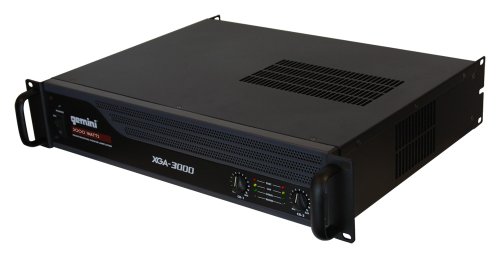
- Up to 3000W with stereo and bridge modes
- Balanced XLR, 1/4-inch, and RCA inputs
- Speakon and binding-post outputs
Best For: Live sound, DJ rigs, and venue PA systems
Best High-Power Pick

- 1400W RMS at 4 ohms
- Stereo, parallel, and bridged modes
- LCD monitoring with crossover control
Best For: DJs, live events, and flexible passive-speaker systems
Best Home Theater Option

- 2x90 watts per channel
- RCA and XLR inputs
- Two-channel home theater design
Best For: Home theater systems needing flexible input connectivity
Best Professional Value

- 5000W peak and 1400W RMS ratings
- Bridgeable two-channel operation
- Crossover, limiter, and LCD included
Best For: PA, DJ, club, and event speaker systems
High-Output Choice

- 2000W RMS stereo output
- Stereo, parallel, and bridged modes
- LCD, limiter, and protection circuitry
Best For: High-powered DJ and live sound systems
Compact Versatility Pick
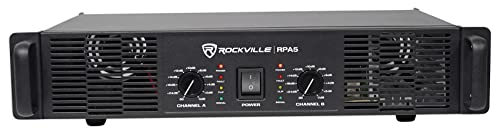
- 200W RMS per channel
- XLR, 1/4-inch, and RCA inputs
- Stereo, mono, and crossover operation
Best For: Moderate-power DJ and passive speaker systems
Balanced Venue Performer
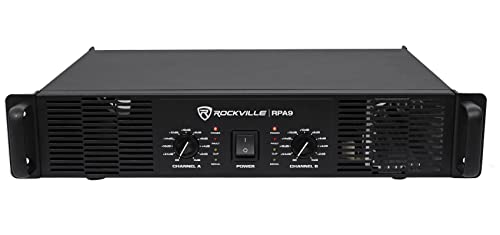
- 800W RMS and 3000W peak output
- XLR, 1/4-inch, and RCA inputs
- Crossover and stereo/bridged modes
Best For: Large DJ rigs and live event systems
Best Professional Rack Amp – Crown XLS1002
The Crown XLS1002 is a lightweight choice for buyers comparing power amplifiers with XLR inputs for live sound, installed audio, or studio use. Its two channels, Class D DriveCore design, DSP features, and multiple input options provide flexible system integration.
Best For: Professional users who need a rack-mountable two-channel amplifier with efficient operation, speaker protection, and flexible crossover controls.
Pros:
- Balanced XLR inputs plus TRS and RCA connectivity.
- Delivers 350W per channel at 4 ohms and up to 1100W bridged at 4 ohms.
- Peakx Limiters, PureBand crossover, and forced-air cooling support reliable operation.
- Weighs under 11 pounds and includes sleep mode for energy savings.
Cons:
- Its official warranty applies to purchases from authorized Crown North American dealers in the United States.
- DSP and crossover features may be more than a basic home setup requires.
The XLS1002 stands out when low weight, professional connectivity, and configurable output protection matter. Its broad input selection also makes it easier to connect with existing mixers and sources.
Best Compact Balanced Amp – Fosi Audio ZA3
The Fosi Audio ZA3 is a compact option for home listeners seeking power amplifiers with XLR inputs for passive speakers, desktop systems, or home theater. Its balanced combo input accepts either XLR or 1/4-inch TRS connections while the amplifier can operate in stereo or mono mode.
Best For: Home audio users who want a small, flexible amplifier with balanced input connectivity and selectable stereo or mono operation.
Pros:
- Combo balanced input supports both XLR and 1/4-inch TRS plugs.
- Provides up to 180W in stereo mode or 235W in mono mode.
- 12V trigger input supports synchronized system power control.
- Includes a 48V power adapter and offers replaceable op-amps for customization.
Cons:
- Its 48V external power adapter adds a separate component to the installation.
- Output ratings and compact format are aimed at home audio rather than large professional PA systems.
The ZA3 is a versatile pick when balanced connectivity is important but rack-sized equipment is unnecessary. Stereo/mono switching and its small chassis make it especially adaptable for evolving home systems.
Best Feature-Packed Budget Amp – Pyle PTA1000BT
The Pyle PTA1000BT combines XLR and TRS inputs with Bluetooth, USB playback, and bridgeable two-channel amplification. For shoppers comparing power amplifiers with XLR inputs, it offers a broad set of connection and monitoring features in a rack-mountable design.
Best For: DJ rigs, small events, and multi-source PA setups that benefit from Bluetooth and USB playback alongside wired XLR connections.
Pros:
- Includes two XLR inputs and two 1/4-inch TRS inputs.
- Supports stereo or bridged operation with up to 2000W maximum bridged power.
- Offers Bluetooth streaming and a USB-A MP3 player.
- Speakon outputs, binding posts, LED meters, and built-in cooling fans support practical live use.
Cons:
- The supplied 2000W figure is maximum bridged power, not per-channel stereo output.
- At about 6.94 kg, it is less portable than lightweight Class D alternatives.
- Its feature set may be unnecessary for systems that only need wired amplification.
The PTA1000BT is appealing when convenience features are as important as amplification. Its wireless and USB playback options can simplify a mobile setup, while the rack format and bridge mode support larger speaker configurations.
Best High-Power Gig Amp – Gemini XGA-3000
The Gemini XGA-3000 targets demanding live sound and DJ applications with balanced XLR inputs, 1/4-inch inputs, RCA connectivity, and bridgeable two-channel output. It is a strong candidate for buyers seeking power amplifiers with XLR inputs and substantial headroom for gigs or venue installations.
Best For: DJs, PA operators, and live venues needing a high-output, bridgeable amplifier with flexible source and speaker connections.
Pros:
- Provides balanced XLR, 1/4-inch, and unbalanced RCA inputs.
- Rated for up to 3000W and supports 4/8-ohm operation with stereo and bridge modes.
- Includes three Speakon outputs and five-way binding posts.
- Protection circuits, variable-speed cooling, and front-panel status LEDs support extended use.
Cons:
- Its 2U rack chassis is larger and heavier than compact home audio amplifiers.
- The supplied notes specify a one-year warranty.
- High output capability may be excessive for modest bookshelf or desktop systems.
The XGA-3000 is built around output capacity and touring-friendly connectivity. Its protection features and bridge mode make it practical for systems where sustained power and flexible speaker wiring are priorities.
Best High-Power Pick – Rockville D12
For shoppers comparing power amplifiers with XLR inputs, the Rockville D12 stands out as a lightweight, rack-mountable two-channel option with substantial rated output. Its stereo, parallel, and bridged modes make it adaptable for DJ rigs, live events, passive speakers, and subwoofers.
Best For: DJs, live-event setups, and users needing flexible two-channel power with LCD monitoring.
Pros:
- Offers 1400W RMS at 4 ohms and 700W RMS at 8 ohms.
- Includes XLR and 1/4-inch inputs plus SpeakON and binding-post outputs.
- Provides selectable bypass, 80Hz, and 160Hz crossover settings.
- Lightweight 1.5U chassis includes LCD monitoring and cooling fans.
Cons:
- The supplied notes do not specify detailed performance measurements beyond the listed power ratings.
- Its professional rack-mount design may be more than needed for simple home setups.
The D12 is a practical choice when input flexibility, installation options, and high output matter. The LCD temperature and volume readouts add useful visibility during operation.
Best Home Theater Option – Monolith M2100X
The Monolith M2100X is a straightforward choice for shoppers seeking power amplifiers with XLR inputs in a home theater-focused format. It provides two channels rated at 90 watts per channel and also accepts RCA connections, giving systems more than one input option.
Best For: Home theater users who want a compact two-channel amplifier with both RCA and XLR inputs.
Pros:
- Delivers 2×90 watts per channel.
- Supports both RCA and XLR inputs.
- Designed as a multi-channel home theater power amplifier.
Cons:
- The supplied notes provide limited information about outputs, controls, and installation features.
- The listed product dimensions and weight should be verified before planning placement.
With its modest two-channel output and dual input formats, the M2100X is best considered for home audio rather than high-output PA applications. Its main advantage is simple connectivity for compatible theater systems.
Best Professional Value – Rockville RPA12
The Rockville RPA12 is a professional two-channel amplifier for buyers comparing power amplifiers with XLR inputs for PA and DJ use. It combines high listed output with bridgeable operation, crossover settings, a limiter, and a rack-mount steel chassis.
Best For: Concerts, clubs, events, and other professional setups driving large passive speaker systems.
Pros:
- Provides 5000W peak and 1400W RMS power ratings.
- Includes XLR and 1/4-inch inputs with SpeakON and banana outputs.
- Supports stereo, parallel, and bridged operating modes.
- Built-in crossover, limiter, LCD, and cooling fans support flexible operation.
Cons:
- At 26 pounds and 2U high, it is less portable than a lightweight Class D alternative.
- The supplied notes do not identify the exact output rating for each impedance and operating mode.
The RPA12 fits buyers who prioritize professional connectivity and robust installation features. Its bridgeable design and crossover make it useful across full-range and subwoofer-oriented configurations.
High-Output Choice – Rockville D14
The Rockville D14 is a powerful option for buyers comparing power amplifiers with XLR inputs for DJ systems, live sound, and passive speakers or subwoofers. Its Class D design combines high output with a lightweight 1.5U rack-mount chassis.
Best For: DJs, mobile entertainers, and live sound setups needing high power, flexible operating modes, and compact rack integration.
Pros:
- Up to 2000W RMS output, rated at 1000W per channel at 4 ohms.
- Combo XLR/1/4-inch inputs, SpeakON outputs, and binding posts support varied setups.
- Stereo, parallel, and bridged mono modes plus an adjustable crossover add flexibility.
- LCD monitoring, limiter, and thermal, short-circuit, and DC protection support reliable operation.
Cons:
- Its very high output may be more than needed for smaller systems.
- The 1-year warranty is relatively limited for professional equipment.
Choose the D14 when maximum output and configuration flexibility matter more than minimizing amplifier size or capacity. The lightweight chassis and built-in monitoring make it especially practical for mobile rigs.
Compact Versatility Pick – Rockville RPA5
The Rockville RPA5 is a practical choice among power amplifiers with XLR inputs for smaller DJ, installation, and live audio systems. It offers 200W RMS per channel at 4 ohms, with stereo and bridged operation in a rack-ready 2U chassis.
Best For: Buyers who need a versatile amplifier with multiple input and output formats for moderate-power passive speaker setups.
Pros:
- Provides 200W RMS per channel at 4 ohms or 400W RMS bridged at 8 ohms.
- Combo XLR/1/4-inch and RCA inputs accommodate professional and consumer sources.
- Built-in crossover and stereo/mono switching support full-range or subwoofer applications.
- Dual quiet fans, clipping LEDs, and protection circuitry aid extended use.
Cons:
- Its output is lower than the other amplifiers in this roundup.
- The 2U chassis is less compact than a 1.5U design.
The RPA5 makes sense when connection flexibility and moderate output are the priorities. Its crossover, multiple outputs, and rack-mount design provide useful system-building options without targeting the highest power levels.
Balanced Venue Performer – Rockville RPA9
The Rockville RPA9 is designed for buyers seeking power amplifiers with XLR inputs for DJs, live events, and larger audio setups. It delivers 800W RMS and supports stereo or bridged operation, with XLR, 1/4-inch, and RCA connectivity.
Best For: Touring DJs, mobile entertainers, and venues that need substantial output in a rugged rack-mount amplifier.
Pros:
- 800W RMS and 3000W peak output provide robust system power.
- XLR, 1/4-inch, and RCA inputs work with mixers and other pro audio sources.
- Built-in crossover and stereo/bridged modes support different speaker configurations.
- Dual fans, heat-sink cooling, and LED monitoring are useful for extended events.
Cons:
- Its 2U rack format takes more space than the D14’s 1.5U chassis.
- It lacks the D14’s listed LCD monitoring and parallel mode.
The RPA9 is a middle-ground option for users who want considerably more output than the RPA5 without moving to the D14’s much higher power class. Its connectivity and cooling suit demanding mobile or venue applications.
How We Picked the Best Power Amplifiers with Xlr Inputs
We selected these amplifiers by comparing their input options, channel configuration, rated power, impedance compatibility, physical format, and intended audience. Because amplifier power ratings are not always measured under identical conditions, we treat wattage as one part of the decision rather than a direct ranking. We also considered useful features such as DSP, limiters, bridge mode, balanced connectivity, rack compatibility, and compact installation options.
For Power Amplifiers with Xlr Inputs, balanced connectivity was a central consideration. XLR inputs can help reduce hum and interference over longer cable runs, but the amplifier should still match the output level and connector type of the source device.
Quick Comparison
| Best For | What to Prioritize | Models to Consider |
|---|---|---|
| Home theater and hi-fi | Low noise, appropriate power, RCA/XLR flexibility | Monolith M2100X, Fosi Audio ZA3 |
| Portable or compact systems | Small footprint, efficient Class D design, simple controls | Fosi Audio ZA3, Crown XLS1002 |
| DJ and live sound | Cooling, durable chassis, bridge capability, high output | Rockville, Pyle, and Gemini models |
| Rack installations | Rack format, ventilation, balanced inputs, protection features | Crown XLS1002 and Rockville rack amplifiers |
Key Buying Factors for Power Amplifiers with Xlr Inputs
Power and Speaker Impedance
Check the amplifier’s output at the impedance your speakers actually use, commonly 4 or 8 ohms. Avoid choosing solely by the largest advertised number, and confirm that the amplifier remains stable with your speaker load. An amplifier with too little headroom may clip, while excessive power can damage speakers when used carelessly.
Inputs, Outputs, and System Matching
Confirm whether you need XLR, TRS, RCA, or a combination. XLR does not automatically mean every source will connect directly without an adapter or the correct cable. Also check speaker outputs, including binding posts, Speakon connectors, or other required connections. Bridge mode can increase output, but it usually changes the minimum impedance and limits normal stereo operation.
DSP, Protection, and Cooling
DSP, band-pass filters, limiters, and protection circuits can make an amplifier easier to integrate and safer to operate. For sustained high-volume use, examine the cooling design and leave adequate ventilation around rack-mounted equipment. Fan noise may also matter in a quiet listening room.
Size and Installation
Rack amplifiers suit permanent or touring systems, while compact models are easier to place on a desk or in a small home setup. Measure available rack depth and allow room for cables, airflow, and service access before buying.
Who Should Buy Which Power Amplifiers with Xlr Inputs?
Choose a compact balanced stereo amplifier for desktop audio or a small passive-speaker system. A home theater buyer should prioritize clean operation, manageable power, and flexible RCA/XLR connectivity. DJs and live performers generally benefit from rugged rack construction, strong cooling, bridge options, and protective features. For installed or larger systems, select the model whose continuous power rating and impedance range best match the speakers rather than simply choosing the highest advertised wattage.