
The best power amplifier for audiophiles delivers clean, controlled sound while matching your speakers, room, and listening habits. This roundup compares 10 standout options, including compact desktop amps, integrated systems, streaming amplifiers, and dedicated stereo power amplifiers.
Whether you want more headroom for demanding speakers, a simpler all-in-one setup, or a low-cost upgrade, the right choice depends on power requirements, connectivity, amplifier design, and everyday usability.
Best 10 Power Amplifier for Audiophiles Picks for 2026
Flexible Audiophile Power

- Stereo or mono operation with up to 235W mono output
- Balanced XLR/TRS input and 12V trigger-in
- Swappable op-amps and upgraded cooling
Best For: Customizable desktop, stereo, and home theater systems
Natural Sound Classic
Yamaha A-S501BL Integrated Stereo Amplifier
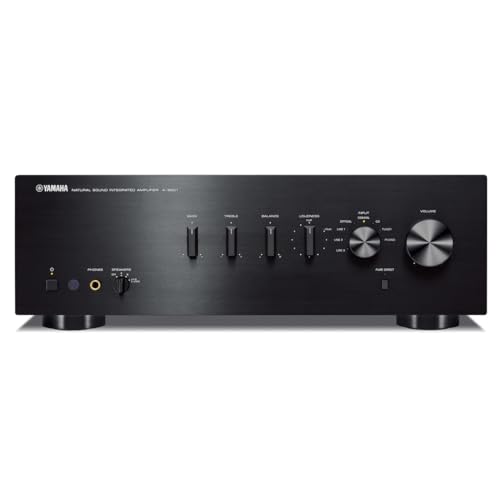
- 85W per channel from 20Hz to 20kHz
- Includes phono, optical, coaxial, and analog inputs
- Supports Speakers A, B, and A+B
Best For: Traditional two-channel stereo and vinyl systems
Monoblock Hi-Fi Power

- Up to 240W at 4 ohms per monoblock
- Balanced XLR/TRS and RCA inputs
- PFFB design with claimed 0.006% THD
Best For: Scalable stereo and multichannel home theater systems
Smart Streaming Power
WiiM Amp Ultra Streaming Amplifier
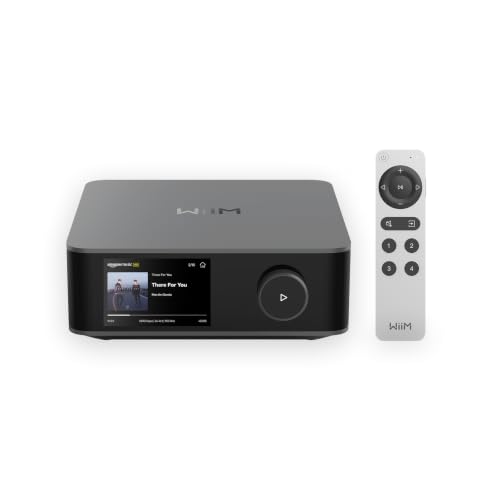
- 100W amplification for up to four speakers
- HDMI ARC, Wi-Fi 6, and Bluetooth 5.3
- RoomFit correction and up to 24-bit/192kHz streaming
Best For: Modern music, TV, and multi-room audio systems
Powerhouse Stereo Control
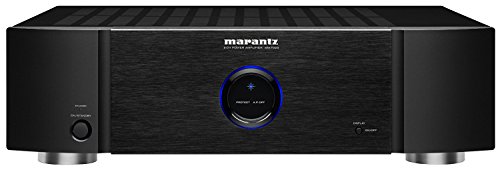
- 140 watts per channel at 8 ohms
- Balanced XLR and RCA inputs
- Supports stereo or two-zone use
Best For: Dedicated stereo and home theater systems needing substantial two-channel power
Warm Hybrid Versatility
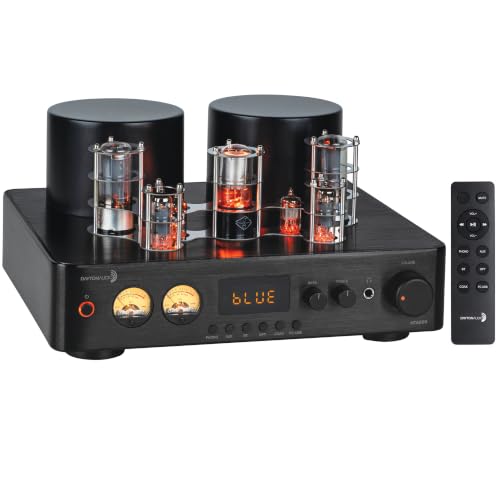
- Tube preamp with Class A/B amplification
- 100 watts per channel RMS at 4 ohms
- Bluetooth, USB DAC, phono, and digital inputs
Best For: Flexible stereo setups combining vinyl, streaming, and digital audio
Digital Detail and Connectivity

- ESS9038Q2M DAC with TPA3255 Class D amp
- Supports DSD256 and PCM hi-res audio
- Balanced TRS, Bluetooth, USB, optical, and coaxial inputs
Best For: Modern 2.0 or 2.1 systems built around digital and wireless sources
Warm Class-A Detail

- 20W x2 at 8 ohms, 25W x2 at 4 ohms
- Smooth, warm Class A presentation
- Designed for desktop and bookshelf speakers
Best For: Listeners wanting classic Class A warmth from a compact stereo amp
Compact High-Power Choice
Fosi Audio V3 Stereo Amplifier

- Up to 300W x2 from a Class D design
- Supports 2- to 8-ohm passive speakers
- Swappable op-amps and adjustable pre-out
Best For: Compact systems needing substantial power and tuning flexibility
Flexible Tone Control

- 300W per channel with TPA3255 Class D
- Bass and treble controls for easy tuning
- Compact RCA-based system connectivity
Best For: Listeners wanting powerful, adjustable sound for passive speakers
Flexible Audiophile Power – Fosi Audio ZA3
If you want a compact power amplifier for audiophiles with room to experiment, the Fosi Audio ZA3 combines stereo and mono operation, balanced connectivity, and a 48V power supply. It can deliver up to 180W in stereo mode or 235W in mono mode, making it adaptable for bookshelf, tower, home theater, or subwoofer applications.
Best For: Audiophiles seeking a flexible desktop or home audio amplifier with op-amp rolling and scalable mono operation.
Pros:
- Switches between stereo and mono modes, with up to 235W in mono configuration.
- Supports balanced XLR and 1/4-inch TRS inputs, RCA connectivity, and 12V trigger-in.
- Uses a TPA3255 Class-D chip and premium capacitors and inductors, with a claimed SINAD of up to 89dB.
- Includes swappable DIP8 op-amps and an upgraded cooling design.
Cons:
- Its compact component format may require additional equipment for a complete system.
- Op-amp rolling is best suited to listeners comfortable with system experimentation.
The ZA3 stands out when flexibility matters as much as power. Its balanced input, trigger control, mono-pairing potential, and customizable op-amp design make it a strong fit for evolving audiophile setups.
Natural Sound Classic – Yamaha A-S501BL Integrated Stereo Amplifier
The Yamaha A-S501BL is a straightforward integrated power amplifier for audiophiles who want familiar stereo operation and broad source compatibility. It supplies 85W per channel from 20Hz to 20kHz at 0.019% THD and includes both digital and analog inputs, including a phono connection.
Best For: Traditional two-channel listeners who want an integrated amplifier with phono and digital inputs.
Pros:
- Provides 85W plus 85W across the 20Hz–20kHz range at 0.019% THD.
- Includes gold-plated coaxial, optical, analog, and phono inputs.
- Supports Speakers A, B, or A+B for flexible speaker connection.
- Uses only 0.5W in standby and includes auto standby after eight hours.
Cons:
- Heavier and less compact than the mini amplifier options in this roundup.
- Its supplied specifications focus on conventional stereo amplification rather than streaming features.
The A-S501BL is a practical choice for a classic hi-fi system. Its useful input selection, phono support, and dedicated A/B speaker functionality make it well suited to a conventional living-room setup.
Monoblock Hi-Fi Power – Fosi Audio V3 Mono
The Fosi Audio V3 Mono is a dedicated power amplifier for audiophiles building a modular stereo or multichannel system. Each monoblock can deliver up to 240W at 4 ohms, and a two-pack can be used to drive separate passive speakers or add power to a home theater AVR.
Best For: Audiophiles and home theater users who want scalable monoblock amplification for demanding passive speakers.
Pros:
- Delivers up to 240W at 4 ohms per amplifier for flexible system expansion.
- Offers RCA single-ended and XLR/1/4-inch TRS balanced inputs with gain selection.
- Uses PFFB technology and a TPA3255 chip, with claimed THD as low as 0.006% and SINAD of 101dB.
- Includes auto power/signal sensing, efficient cooling, and replaceable DIP8 op-amps.
Cons:
- Mono operation requires separate amplifiers for conventional stereo playback.
- Its modular design can involve more equipment and setup than an integrated amplifier.
The V3 Mono is particularly compelling for systems that may grow over time. Its balanced inputs, high output rating, and compatibility with AVR-based setups give listeners several practical paths to more amplification.
Smart Streaming Power – WiiM Amp Ultra Streaming Amplifier
The WiiM Amp Ultra combines streaming, amplification, and room correction in one compact component. For listeners looking for a modern power amplifier for audiophiles, it adds a 100W hi-fi amplifier, HDMI ARC, Wi-Fi 6, Bluetooth 5.3, and support for major streaming services up to 24-bit/192kHz.
Best For: Connected music and TV systems that benefit from room correction, app control, and built-in streaming.
Pros:
- Provides 100W of amplification and can power up to four speakers.
- Combines an ESS SABRE DAC, dual TI TPA3255 amplifiers, and PFFB technology.
- Includes HDMI ARC, Wi-Fi 6, Bluetooth 5.3 with LE Audio, and multi-room control.
- Built-in RoomFit automatically calibrates sound for the room and speakers.
Cons:
- It is incompatible with AirPlay and cannot act as an AirPlay receiver.
- Listeners seeking a purely analog amplifier may not need its streaming and touchscreen features.
The Amp Ultra is a strong all-in-one option for contemporary systems. Its combination of room correction, TV integration, high-resolution streaming, and compact design reduces the need for separate source components.
Powerhouse Stereo Control – Marantz MM7025
The Marantz MM7025 is a strong choice for audiophiles who want a dedicated power amplifier for audiophiles with substantial two-channel output. Its 140 watts per channel at 8 ohms, balanced XLR and RCA inputs, and flexible two-zone configuration suit both focused stereo systems and larger home theater setups.
Best For: Home theater owners and stereo listeners who need high-current, two-channel amplification with flexible installation options.
Pros:
- Provides 140 watts per channel at 8 ohms for demanding speaker setups.
- Offers both balanced XLR and single-ended RCA inputs.
- Can support a dedicated two-channel system or two listening zones.
- Uses a quiet cooling fan and a relatively compact chassis.
Cons:
- It is a power amplifier rather than an all-in-one source and control component.
- Its 23.8-pound chassis may require a sturdy shelf or cabinet.
The MM7025 is best suited to buyers who already have a preamp or AV receiver and want more authority from their speakers. Its balanced connectivity and quiet cooling design add useful flexibility without making the unit difficult to place.
Warm Hybrid Versatility – Dayton Audio HTA200
The Dayton Audio HTA200 combines tube warmth with modern Class A/B amplification, making it an appealing power amplifier for audiophiles who also want built-in source options. It delivers 100 watts per channel RMS at 4 ohms and includes Bluetooth, USB, phono, optical, and coaxial connectivity.
Best For: Listeners building a flexible stereo system around passive speakers, a turntable, digital sources, and optional subwoofer support.
Pros:
- Combines amber-toned vacuum tubes with a Class A/B amplifier design.
- Delivers 100 watts per channel RMS at 4 ohms.
- Includes Bluetooth 5.0, USB DAC, phono, optical, coaxial, and AUX inputs.
- Supports a powered subwoofer through its full-range preamp output.
Cons:
- Its large 15.91-by-15.51-by-9.61-inch dimensions require considerable shelf space.
- As an integrated amplifier, it may offer more features than buyers seeking only a standalone power amp need.
The HTA200 is a practical match for audiophiles who want a single component to handle streaming, vinyl, computer audio, and traditional digital sources. Bass and treble controls, a headphone output, remote control, and motorized volume add everyday convenience.
Digital Detail and Connectivity – AIYIMA A80 DAC Amplifier
The AIYIMA A80 targets audiophiles who want a compact power amplifier with integrated high-resolution digital conversion and broad connectivity. Its ESS9038Q2M DAC, TPA3255 Class D amplification, balanced TRS input, Bluetooth, USB, optical, and coaxial inputs make it a versatile centerpiece for modern stereo systems.
Best For: Desktop and home audio listeners who want high-resolution digital playback, powerful Class D amplification, and flexible 2.0 or 2.1 configurations.
Pros:
- Combines an ESS9038Q2M DAC with TPA3255 Class D amplification.
- Supports DSD256 and PCM high-resolution audio.
- Offers balanced TRS, Bluetooth, USB, optical, and coaxial inputs.
- Includes a subwoofer pre-out, 12V trigger, tone controls, remote, and digital VU display.
Cons:
- The advertised 300-watt-per-channel maximum output may depend on system and speaker conditions.
- Its extensive feature set may be unnecessary for listeners using a simple analog-only setup.
The A80 is a strong fit when connectivity and compact functionality matter as much as amplification. PFFB technology, balanced input support, and the integrated DAC make it especially appealing for computer audio, TV, Bluetooth, and mixed-source systems.
Warm Class-A Detail – A1S Pure Class A Amplifier
If you want a power amplifier for audiophiles with a smooth, traditional presentation, the A1S emphasizes pure Class A operation, substantial filtering, and a toroidal transformer. Its 20W-per-channel output at 8 ohms makes it a natural fit for compatible desktop and bookshelf speakers.
Best For: Audiophiles seeking a warm, smooth stereo amplifier for efficient bookshelf or desktop speakers.
Pros:
- Pure Class A design with 20W x2 at 8 ohms and 25W x2 at 4 ohms.
- Large filter-capacitor array and toroidal transformer support dynamic response.
- Omron relay provides switch-on/off shock and DC-output protection.
- Includes RCA cable, power cable, and a one-year manufacturer warranty.
Cons:
- Its 20W-per-channel 8-ohm output is less suitable for demanding or inefficient speakers.
- Pure Class A operation may be less practical for listeners prioritizing maximum power in a compact amplifier.
- Specified for 110V AC operation.
The A1S is most compelling when tonal smoothness and classic Class A character matter more than high wattage. Check your speaker sensitivity and impedance before choosing it for a larger room.
Compact High-Power Choice – Fosi Audio V3 Stereo Amplifier
The Fosi Audio V3 is a strong option for buyers comparing a power amplifier for audiophiles in a small enclosure. Its TPA3255 Class D platform is rated up to 300W per channel, while the supplied 48V power supply supports speakers rated from 2 to 8 ohms.
Best For: Desktop, bookshelf, tower-speaker, and home-theater setups that need substantial power in a compact chassis.
Pros:
- Up to 300W per channel with 2- to 8-ohm speaker compatibility.
- Uses premium NCC, ELNA, WIMA, and Sumida components.
- Low-noise specifications include up to 110dB SNR and 140uV noise floor.
- Swappable NE5532 op-amps and volume-controlled pre-out add flexibility.
Cons:
- It is a power amplifier component rather than a full-featured source-equipped receiver.
- Op-amp rolling requires separately sourced compatible parts.
- Actual output depends on speaker impedance and system conditions.
The V3 stands out for combining a small footprint with unusually high claimed output and upgrade potential. It suits listeners who want a clean, configurable amplifier for a variety of passive-speaker systems.
Flexible Tone Control – Fosi Audio TB10D Amplifier
For shoppers seeking a versatile power amplifier for audiophiles, the Fosi Audio TB10D combines a TPA3255 Class D circuit with bass and treble controls. Its 300W-per-channel rating and 2- to 8-ohm compatibility make it suitable for passive speakers, while RCA input keeps connections straightforward.
Best For: Desktop, living-room, gaming, and personal-studio systems where adjustable tone and compact size are priorities.
Pros:
- Rated at 300W per channel for a claimed 600W total output.
- Drives compatible 2- to 8-ohm bookshelf speakers and passive speakers.
- Bass and treble knobs allow simple sound adjustment.
- Works with sources including phones, computers, CD players, TVs, and turntable setups with a phono preamp.
Cons:
- Connectivity is centered on RCA input and passive-speaker output.
- It does not include a built-in phono preamp, so turntables may need an external one.
- Its advertised maximum output depends on the connected speakers and operating conditions.
The TB10D is a practical choice when you want high claimed power and hands-on tone shaping without a bulky receiver. Its built-in protection circuits add reassurance for everyday desktop or home-audio use.
How We Picked the Best Power Amplifier for Audiophiles
We selected these amplifiers by comparing their power ratings, amplifier topology, input options, speaker compatibility, size, and intended use. The lineup includes Class D models based on the TPA3255 platform, traditional integrated stereo amplifiers, hybrid tube designs, a pure Class A option, and a network-ready streaming amplifier.
Specifications such as wattage are useful starting points, but they do not tell the entire story. A well-matched amplifier should provide enough clean headroom for your speakers without adding unnecessary complexity or cost. We also considered practical features such as balanced inputs, HDMI ARC, Bluetooth, DAC functionality, subwoofer support, and room correction.
Quick Comparison
- Best for compact systems: Fosi Audio ZA3, Fosi Audio V3, and AIYIMA A80.
- Best traditional integrated amplifier: Yamaha A-S501BL.
- Best streaming-focused option: WiiM Amp Ultra.
- Best dedicated power amplifier: Marantz MM7025.
- Best tube-flavored option: Dayton Audio HTA200.
- Best value for high output: Fosi Audio V3 or TB10D, depending on your connectivity needs.
Key Buying Factors for a Power Amplifier for Audiophiles
Power and Speaker Matching
Check your speakers’ nominal impedance, sensitivity, and recommended amplifier range before buying. Low-sensitivity or large floorstanding speakers generally benefit from stronger current delivery and additional headroom. Compact, sensitive bookshelf speakers may perform well with a smaller amplifier, especially in a nearfield or modest-sized room.
Amplifier Type
Class D amplifiers are usually compact, efficient, and powerful, making them a practical choice for desktop and modern home audio systems. Class A designs can appeal to listeners who prefer their particular operating style and presentation but typically run hotter and use more power. Hybrid tube amplifiers offer tube circuitry alongside solid-state output stages, while conventional integrated amplifiers prioritize familiar controls and broad connectivity.
Inputs and System Features
Choose inputs that match your sources. RCA is common for CD players and streamers, XLR can help integrate balanced components, and HDMI ARC is useful for television-based systems. Bluetooth, USB or digital inputs, built-in DACs, subwoofer outputs, and room correction can reduce the need for separate equipment.
Size, Heat, and Controls
Measure your shelf or rack and leave ventilation space around the amplifier. Compact models are easy to place but may rely on external power supplies. Larger units often provide more comprehensive controls and connections. Consider whether you prefer a physical volume knob, remote control, app-based operation, or a minimalist power-amplifier design.
Who Should Buy Which Power Amplifier for Audiophiles?
Choose a compact Fosi Audio or AIYIMA model for a desktop system, secondary room, or affordable passive-speaker upgrade. The Yamaha A-S501BL suits listeners who want a conventional integrated amplifier with straightforward controls and established stereo functionality. The WiiM Amp Ultra is a strong fit for buyers who want streaming and television integration in one component.
Pick the Marantz MM7025 when you already own a preamp or processor and need a dedicated two-channel power stage. The Dayton Audio HTA200 is worth considering if you want hybrid tube styling and Bluetooth convenience. For listeners specifically seeking a Power Amplifier for Audiophiles with a distinctive Class A approach, the A1S model offers a compact alternative, provided its output is appropriate for your speakers and room.