
The right channel strip can turn a raw microphone signal into a cleaner, more controlled track before it reaches your interface. These microphone preamps with compressor and EQ combine essential front-end processing in a single unit.
We selected 10 options ranging from compact budget processors to tube-driven and multi-channel studio hardware, with choices for recording vocals, instruments, broadcast work, and professional tracking.
Best 10 Microphone Preamp with Compressor and Eq Picks for 2026
Premium Transformer Tone
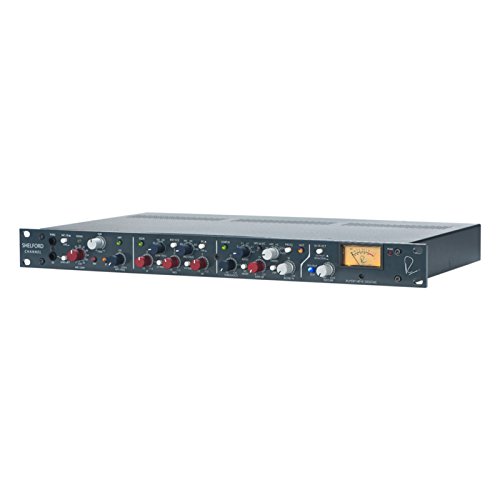
- Transformer-gain mic preamp with analog output stage
- Diode-bridge compressor and inductor EQ
- Sidechain link plus sends and returns
Best For: Premium studio recording and analog channel processing
Classic Tube Channel Strip

- Vacuum-tube mic, instrument, and line preamp
- Optical compressor in the same channel strip
- Single-channel design for focused processing
Best For: Tube-flavored studio recording and source shaping
Compact Desktop Control

- Three-band low, mid, and high EQ
- Dedicated gain and level controls
- 48V phantom power in a metal desktop enclosure
Best For: Desktop recording, streaming, and basic mic tone control
Flexible Tube Processing

- Class A 12AX7 tube preamplifier
- Variable VCA compressor with auto attack/release
- Three-band EQ with parametric mid band
Best For: Project and professional studios needing versatile rack processing
Best Multi-Channel Pick
- Four preamp channels
- Tube/FET tone blending
- 8-channel 24-bit/192kHz A/D conversion
Best For: Multi-microphone recording setups
Best 500-Series Channel Strip
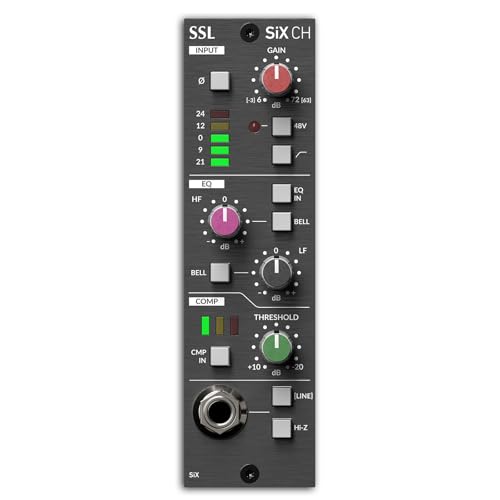
- Mic pre, EQ, and compressor
- Switchable 75 Hz high-pass filter
- 500-series single-channel format
Best For: Compact 500-series recording rigs
Best Tube Channel Strip
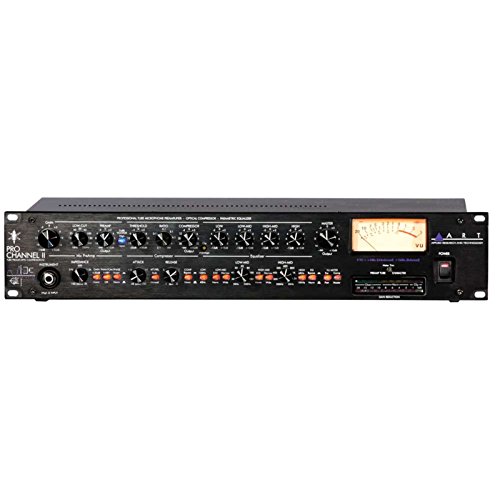
- Tube preamp, compressor, and EQ
- Switchable optical/tube compression
- Selectable VU metering
Best For: Tube-based vocal and instrument recording
Flexible Tube Control

- Mono tube channel strip
- Opto/FET compression voicings
- Four-band semi-parametric EQ
Best For: Project studios seeking flexible tube-based mic processing
High-Voltage Tube Tone
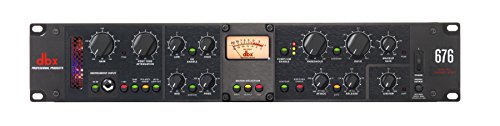
- 250-volt Class-A tube preamp
- Compressor/limiter with side-chain insert
- Three-band parametric EQ
Best For: Rack-based recording and live setups needing tube coloration
All-in-One Voice Processing
dbx 286s Mic Preamp & Channel Strip

- Classic dbx compression
- De-esser, enhancer, and expander/gate
- 1U rackmount design with loop-out
Best For: Voice recording, streaming, and live vocal processing
Premium Transformer Tone – Shelford Channel
Rupert Neve Designs Shelford Channel Microphone Preamp, Inductor EQ & Diode Bridge Compressor
Check Price On AmazonThe Rupert Neve Designs Shelford Channel is a high-end microphone preamp with compressor and EQ, built as a mono channel strip for detailed recording and tone shaping. Its transformer-gain preamp, diode-bridge compressor, and inductor EQ provide a complete analog processing path for a microphone signal.
Best For: Engineers and studios seeking a premium analog channel strip with transformer-based preamp tone, compression, and EQ.
Pros:
- Combines a transformer-gain mic preamp, diode-bridge compressor, and inductor EQ.
- Includes sidechain stereo link and sends/returns for expanded routing.
- Uses XLR and 1/4-inch TRS connectivity with a transformer output stage.
Cons:
- Its single-channel design may not suit users needing multiple channels.
- At 12 pounds, it is less convenient for highly portable setups.
- It is a specialized, premium-format unit rather than a compact desktop preamp.
The Shelford Channel is the most feature-focused choice here for a studio that values analog signal shaping and flexible channel-strip routing in one mono unit.
Classic Tube Channel Strip – LA-610 Mk II
The Universal Audio LA-610 Mk II is a tube microphone preamp with compressor and EQ in a single-channel format. It combines a vacuum-tube mic, instrument, and line preamp with an optical compressor, making it suitable for shaping sources before they reach the rest of a recording chain.
Best For: Studio users who want a vacuum-tube preamp with optical compression for microphone, instrument, or line signals.
Pros:
- Integrates vacuum-tube preamplification, EQ, and optical compression.
- Accepts microphone, instrument, and line sources.
- Provides a one-channel solution for front-end recording and tone control.
Cons:
- Only one channel is provided.
- The supplied notes do not specify detailed EQ bands or compressor controls.
- Its 15.7-pound weight may be substantial for portable use.
The LA-610 Mk II is a focused choice when tube-based preamplification and optical compression are more important than extensive routing or multi-channel operation.
Compact Desktop Control – MIC-60 Preamp
The MIC-60 is a compact microphone preamp with compressor and EQ keyword relevance centered on practical gain and tone control, although the supplied notes specify gain, level, and three-band EQ rather than a compressor. It adds 48V phantom power for compatible condenser microphones and uses a metal desktop enclosure for accessible adjustments.
Best For: Home studios, streaming, and desktop microphone setups that need basic gain, EQ, and phantom power.
Pros:
- Offers dedicated gain and level controls for setting microphone signal strength.
- Provides three-band low, mid, and high EQ for hands-on tone shaping.
- Includes 48V phantom power and supports compatible condenser microphones.
- Compact metal enclosure suits desktop setups.
Cons:
- The supplied features do not list a built-in compressor.
- Its connector options are 3.5mm jack and RCA rather than the XLR connections listed for the larger channel strips.
- It is positioned as a practical compact preamp rather than a full professional rack channel.
The MIC-60 is the accessible option for users prioritizing simple desktop gain and EQ control; choose another product here if integrated compression is essential.
Flexible Tube Processing – StudioChannel
The PreSonus StudioChannel is a versatile microphone preamp with compressor and EQ, combining a high-voltage Class A 12AX7 tube preamplifier, VCA compressor, and three-band equalizer. Its mic, instrument, and line inputs, along with rack-mountable construction, make it adaptable to project and professional studio workflows.
Best For: Studios needing broad analog control over microphones, instruments, keyboards, or synths in a 1U rack format.
Pros:
- Combines a Class A tube preamp, VCA compressor, and three-band EQ.
- Provides gain, tube drive, high-pass filter, pad, phantom power, and polarity reverse.
- Offers variable-Q mid-band EQ plus shelving or peak options on the low and high bands.
- Supports mic, instrument, and line inputs in a rugged 1U steel chassis.
Cons:
- Its extensive controls may be more than a basic recording setup requires.
- The one-channel format limits simultaneous multi-source processing.
- The supplied warranty is one year from purchase through an authorized dealer.
The StudioChannel stands out for flexibility: it offers more detailed compressor and EQ control than a basic preamp while remaining a single-rack-unit channel strip.
Best Multi-Channel Pick – Universal Audio 4-710d
The Universal Audio 4-710d is a practical choice when you need a microphone preamp with compressor and EQ capabilities across several inputs. It provides four channels, tube/FET preamp and DI operation, plus a tone-blending control for shaping the input character.
Best For: Multi-microphone recording setups and users who need four channels of preamplification with flexible tube/FET tone blending.
Pros:
- Four microphone preamp channels
- Tube/FET preamp and DI design
- Tone-blending knob for adjustable character
- Includes 8-channel 24-bit/192kHz A/D conversion
Cons:
- It is a larger, multi-channel unit rather than a compact single-channel strip
- The supplied notes do not specify dedicated EQ controls
The 4-710d stands out for channel count and tone flexibility. However, buyers specifically seeking an all-in-one unit with clearly documented EQ should compare its feature set with dedicated channel strips.
Best 500-Series Channel Strip – SSL SiX Channel Strip
Solid State Logic SiX Channel Strip 500 Series | Mic-Pre, EQ, and Single Knob Compressor
Check Price On AmazonThe Solid State Logic SiX is a compact 500-series microphone preamp with compressor and EQ features for single-channel recording. Its mic pre, switchable high-pass filter, shelf-to-bell EQ control, and single-knob compressor cover essential shaping tasks from the front panel.
Best For: Engineers building a 500-series rack who want one channel with straightforward preamp, EQ, filtering, and compression controls.
Pros:
- Includes mic pre, EQ, and single-knob compressor
- Switchable 75 Hz, 12 dB/octave high-pass filter
- EQ switches from shelf to bell curve
- Front-panel TRS line input with 1 MΩ Hi-Z switch
Cons:
- Provides one channel
- Requires a compatible 500-series setup
- The compressor uses a single-knob control rather than a broader control set
The SiX offers a focused feature set in a 500-series format. It is especially appealing when space and workflow simplicity matter, but it is less suitable for users who need multiple channels or extensive compressor controls.
Best Tube Channel Strip – ART Pro Channel II
ART Pro Channel II Microphone Preamp/Compressor/EQ Professional Tube Based Selectable VU Metering
Check Price On AmazonThe ART Pro Channel II combines a tube microphone preamp, compressor, and EQ in one professional recording channel. Its three independent modules include a switchable optical/tube compressor, tube EQ, and selectable VU metering for monitoring different signal stages.
Best For: Vocal and instrument recording where tube-based tone shaping and dedicated preamp, compression, and EQ sections are priorities.
Pros:
- Combines tube mic pre, compressor, and tube EQ
- Switchable optical/tube compressor design
- Selectable VU metering for mic pre out, compressor out, or main out
- Offers XLR, 1/4-inch TRS, and 1/4-inch TS connectivity
Cons:
- Single-channel design
- Its tube-based format is a substantial 13.4-pound unit
- The supplied signal-to-noise ratio is 80 dB
The Pro Channel II is a strong fit for users who want an integrated tube-flavored recording path with dedicated processing modules. Its size and single-channel layout make it better suited to fixed studio use than highly portable setups.
Flexible Tube Control – ART Pro Channel III
The ART Pro Channel III is a versatile microphone preamp with compressor and EQ for shaping a vocal, instrument, or other mono source before recording. Its switchable microphone impedance, selectable Opto/FET compression voicings, and four-band semi-parametric EQ provide practical control over tone and dynamics.
Best For: Home and project studios that want tube channel-strip character with flexible compression and EQ options.
Pros:
- Combines a mono tube channel strip, compression, and EQ in one unit.
- Offers switchable microphone impedance for added mic-matching flexibility.
- Includes selectable Opto and FET compression voicings.
- Four-band semi-parametric EQ supports detailed tone shaping.
Cons:
- Its 10.61-pound weight and 21.9-inch length may require substantial rack or desktop space.
- It is a mono channel strip, so stereo sources require additional processing.
The Pro Channel III is a strong choice when you want several front-end shaping tools in one tube-based unit. Its main tradeoff is the larger physical footprint compared with more compact channel-strip options.
High-Voltage Tube Tone – dbx 676FX Tube Mic Preamp
The dbx 676FX is a rackmount microphone preamp with compressor and EQ designed for recording and live setups. Its 250-volt Class-A tube preamp, compressor/limiter, side-chain insert, and three-band parametric EQ cover the core tasks of adding color, controlling dynamics, and refining frequency balance.
Best For: Serious home studios and professional racks that need a tube mic preamp with integrated dynamics and sweepable-mid EQ.
Pros:
- High-voltage Class-A tube design supports warm, clear, or heavily colored tones.
- Includes compressor/limiter processing and a side-chain insert.
- Three-band parametric EQ includes sweepable mids for focused adjustments.
- Provides XLR and 1/4-inch connectivity plus a front-panel instrument input.
Cons:
- The 2U rackmount format requires more rack space than a 1U processor.
- At 13 pounds, it is relatively substantial for a single-channel strip.
The 676FX suits users who want tube coloration and comprehensive front-end control in a conventional rack unit. Its 2U size is worth accounting for when planning a studio or live rack.
All-in-One Voice Processing – dbx 286s Mic Preamp & Channel Strip
The dbx 286s is a practical microphone preamp with compressor and additional channel-strip processing for vocals, instruments, and live sources. Along with classic dbx compression, it provides de-essing, enhancement, expander/gate control, metering LEDs, and a loop-out for connecting further processors.
Best For: Vocal recording, streaming, voice work, and live setups that benefit from several dedicated processors in a compact 1U unit.
Pros:
- Combines mic preamplification with compression, de-essing, enhancement, and expansion/gating.
- De-esser control helps reduce harsh high frequencies and sibilance.
- Loop-out and insert connections support additional external processing.
- Accepts XLR microphone and 1/4-inch line or instrument inputs.
Cons:
- Its listed processing is centered on compression and channel-strip effects rather than a conventional parametric EQ.
- It is a single-channel processor, limiting direct stereo operation.
The 286s is especially appealing when vocal clarity and control matter more than extensive EQ design. Its 1U rack format and broad processing selection make it a useful front end for voices and individual instruments.
How We Picked the Best Microphone Preamp with Compressor and Eq
We compared these microphone channel strips by preamp design, gain range, compressor behavior, EQ flexibility, connectivity, metering, phantom power, and practical studio use. We also considered whether each unit is best suited to a single vocal chain, a rack-based studio, a 500 Series setup, or multi-channel recording.
A good Microphone Preamp with Compressor and Eq should offer enough clean gain for the intended microphone, usable dynamics control, and tone-shaping tools that improve a source without making correction difficult later. Tube models can add saturation and character, while solid-state designs often prioritize clarity, headroom, and repeatable results.
Quick Comparison
| Best For | Look For |
|---|---|
| Vocals and voiceover | Low-noise gain, gentle compression, de-essing or presence EQ |
| Electric guitar and bass | High headroom, flexible input impedance, reliable compression |
| Home studios | Simple controls, compact format, clear metering, phantom power |
| Professional tracking | High-quality converters or outputs, recallable settings, robust construction |
| Multiple microphones | Several preamp channels and consistent compressor performance |
Key Buying Factors for a Microphone Preamp with Compressor and Eq
Preamp Gain and Headroom
Match the preamp to your microphone. Dynamic and ribbon microphones generally need more gain than condensers, while loud sources benefit from generous headroom and a usable input pad. Check for phantom power, polarity reversal, and balanced outputs if your setup requires them.
Compressor Controls
Basic threshold, ratio, attack, release, and makeup gain controls provide more shaping potential than a one-knob design. For vocals, an adjustable attack and release help preserve clarity while controlling peaks. A limiter or gate can be useful for bass, percussion, and noisy recording spaces.
EQ Layout and Tone
A three-band EQ may be enough for broad corrective work, while parametric mids offer more precise control over boxiness, harshness, or nasal tones. Shelving bands are useful for adding air or reducing low-end buildup. Avoid over-processing at the recording stage unless you are confident the settings will suit the final mix.
Format, I/O, and Metering
Choose between desktop, rackmount, and 500 Series hardware based on your available space and power requirements. VU meters can make gain staging intuitive, while LED meters may provide clearer peak information. Confirm that the inputs and outputs match your interface, patchbay, and microphone wiring.
Who Should Buy Which Microphone Preamp with Compressor and Eq?
Home recordists and podcasters should prioritize straightforward controls, low noise, and useful voice-focused processing. A compact channel strip is often easier to integrate than separate preamp, compressor, and EQ units.
Vocalists and engineers seeking character may prefer a tube-based design that adds harmonic color and responds musically to compression. These units can be especially appealing for intimate vocals, bass, and guitar.
Project and commercial studios should consider flexible EQ, dependable metering, robust connectivity, and enough headroom for varied sources. Multi-channel models make sense when tracking drums, ensembles, or several performers at once.
500 Series users should confirm rack power capacity and module compatibility before buying. The best choice is the one that fits your workflow: transparent gain for clean capture, colored circuitry for tone, or comprehensive processing for a finished signal at the source.