
The best compact microphone preamps add useful gain without taking up valuable room in a studio bag, desktop rig, or live vocal setup. They are especially helpful when a dynamic or ribbon microphone sounds too quiet through an audio interface or mixer.
We compared these 10 models by gain, noise performance, power requirements, connectivity, microphone compatibility, and portability so you can choose the right boost for your signal chain.
Best 10 Compact Microphone Preamps Picks for 2026
Best Ultra-Slim Booster

- +28 dB clean gain
- Slim all-metal XLR design
- For dynamic and passive ribbon mics
Best For: Compact podcast, recording, and live-sound setups
Best 500-Series Control

- Up to 60 dB of gain
- Variable low-cut filter
- Pad, polarity, and EQ controls
Best For: Studio 500 Series recording systems
Best Plug-and-Play Value

- +29 dB gain boost
- Requires 48V phantom power
- For dynamic and ribbon mics
Best For: Podcasters and streamers using phantom-powered interfaces
Best Minimalist Design
- 28 dB clean gain
- Matte-black aluminum housing
- -70 dB noise rating
Best For: Discreet podcasting and livestreaming setups
Best Compact Dynamic Mic Booster

- 25dB clean gain for dynamic and ribbon mics
- Balanced XLR input/output with phantom-power compatibility
- Compact metal housing for desktop or mobile setups
Best For: Dynamic microphones, passive ribbon mics, and portable recording chains
Best Compact Low-Noise Preamp

- 20dB clean, transparent balanced gain
- Works with dynamic and condenser microphones
- Lightweight metal case designed to reduce interference
Best For: Home studios, podcasts, and streaming setups needing flexible low-noise gain
Best High-Gain Inline Preamp

- Class A circuit supplies 28dB of gain
- XLR male-to-female inline connection
- Shielded alloy case and 48V compatibility
Best For: Low-sensitivity dynamic mics such as SM7B and SM58 in XLR chains
Portable 48V Booster

- 20dB balanced gain with low-noise operation
- Supports dynamic and condenser microphones
- 3.5mm, 6.35mm, and XLR connections
Best For: Portable home studios, podcasts, and live streaming
Ultra-Low-Noise Interface

- 19–66dB variable gain range
- Stated -120dBV EIN noise performance
- XLR, TRS, and TS output options
Best For: High-gain vocal, ribbon, and instrument recording
Rechargeable Mobile Booster

- Rechargeable for portable recording use
- 20dB balanced, low-noise gain
- 48V support for condenser microphones
Best For: Mobile podcasting, streaming, and recording
Best Ultra-Slim Booster – sE Electronics DM1 Dynamite
For shoppers comparing compact microphone preamps, the sE Electronics DM1 Dynamite is a straightforward inline option for adding clean gain to passive dynamic and ribbon microphones. Its +28 dB gain, metal housing, and slim XLR form factor suit podcasting, recording, and live sound setups.
Best For: Dynamic and passive ribbon microphones that need transparent gain without adding much bulk.
Pros:
- Provides consistent +28 dB of clean, transparent gain.
- Ultra-slim, transformerless design fits neatly into an XLR chain.
- All-metal housing and gold-plated XLR connectors support regular use.
Cons:
- Designed for passive dynamic and ribbon microphones rather than condenser microphones.
- Adds gain inline but does not provide the broader controls of a full preamp channel.
The DM1 Dynamite is a strong pick when space, simplicity, and low-noise gain matter most. It is especially practical for low-output microphones used with an interface or mixer.
Best 500-Series Control – dbx 580 Mic Preamp
The dbx 580 takes a more feature-rich approach to compact microphone preamps. Built for the 500 Series format, it combines up to 60 dB of low-noise gain with filtering, equalization, a pad, and polarity inversion for hands-on signal shaping.
Best For: Studio users who want a compact 500 Series preamp with gain, filtering, and basic tone-control options.
Pros:
- Offers up to 60 dB of microphone gain.
- Includes a variable-frequency low-cut filter and low/high detail equalization.
- Provides a 20 dB pad and polarity invert for added recording flexibility.
Cons:
- Its 500 Series format requires a compatible rack or chassis.
- Less plug-and-play than an inline XLR booster.
Choose the dbx 580 if you need more than basic gain and already use, or plan to build, a 500 Series system. Its control set makes it better suited to studio tracking than minimalist mobile rigs.
Best Plug-and-Play Value – StudioMan DPM1 XLR Preamp
The StudioMan DPM1 is one of the most compact microphone preamps for users who need a simple gain boost between a low-output microphone and an interface or mixer. It supplies +29 dB of gain for dynamic and ribbon microphones, while requiring 48V phantom power from the connected equipment.
Best For: Podcasters, streamers, and live-sound users with dynamic or ribbon microphones and a phantom-powered interface or mixer.
Pros:
- Adds +29 dB of clean gain to low-output dynamic and ribbon microphones.
- Compact plug-and-play XLR design is easy to place in an existing setup.
- Metal casing is intended to help with durability and interference shielding.
- Includes a one-year manufacturer warranty and technical support.
Cons:
- Requires 48V phantom power, which is not included.
- Not intended for condenser microphones.
The DPM1 is a practical choice when you want an affordable inline boost without replacing your audio interface. Confirm that your interface or mixer supplies phantom power before buying.
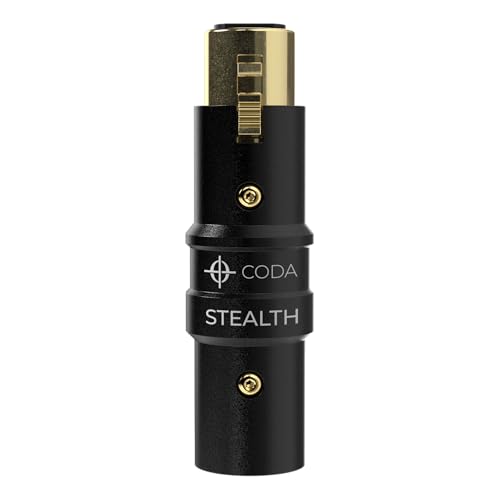
Best Minimalist Design – Coda MB-Stealth Inline Preamp
The Coda MB-Stealth is a compact inline option for adding 28 dB of gain to dynamic and ribbon microphones. Its matte-black aluminum housing and stated -70 dB noise rating make it a tidy fit for podcasting, livestreaming, and recording setups that use 48V phantom power.
Best For: Users who want a discreet, low-noise XLR booster for dynamic or ribbon microphones.
Pros:
- Provides 28 dB of gain using phantom power from the interface.
- Compact matte-black aluminum design blends into most microphone setups.
- Designed with a -70 dB noise rating to help limit hiss and hum.
Cons:
- Does not work with condenser microphones.
- Requires an audio interface or mixer that supplies 48V phantom power.
- Offers fixed gain rather than adjustable preamp controls.
The MB-Stealth makes sense for buyers who prioritize a clean, unobtrusive inline booster over extensive controls. It is best matched with a compatible phantom-powered interface and a passive dynamic or ribbon microphone.
Best Compact Dynamic Mic Booster – StudioMan CL-100
The StudioMan CL-100 is a practical choice among compact microphone preamps for raising the level of dynamic and passive ribbon microphones. Its 25dB gain, balanced XLR connections, and compact metal housing suit home studios, podcasts, live streams, and recording setups.
Best For: Dynamic microphones, passive ribbon mics, and users who need a portable XLR signal boost.
Pros:
- Provides up to 25dB of clean gain.
- Uses balanced XLR input and output connections.
- Compact metal chassis helps with portability and EMI/RFI shielding.
- Supports 48V phantom power and offers a 10Hz–20kHz frequency response.
Cons:
- Designed primarily for dynamic and passive ribbon microphones.
- Its XLR-only format may require additional cables or adapters in some setups.
With its small footprint, sturdy housing, and generous gain boost, the CL-100 is a straightforward addition to a microphone chain when low output is the main concern.
Best Compact Low-Noise Preamp – 20dB Mic Preamplifier
This compact microphone preamp uses balanced amplification to add 20dB of clean gain without intentionally coloring the sound. It supports both dynamic and condenser microphones, making it a flexible option for home studios, podcasting, recording, and live streaming.
Best For: Users seeking a lightweight, low-noise preamp with 48V power support for varied microphone types.
Pros:
- Delivers 20dB of balanced, transparent gain.
- Supports both dynamic and condenser microphones.
- Fully balanced circuit is designed for low-noise operation.
- Black metal casing helps reduce EMC interference and adds durability.
Cons:
- Offers less stated gain than the 25dB and 28dB alternatives in this roundup.
- The supplied details do not specify the full connector layout or frequency response.
This model stands out for buyers who value simple operation, low noise, and broad microphone compatibility in a small metal enclosure.
Best High-Gain Inline Preamp – Bolanle NK1 28dB XLR Preamp
The Bolanle NK1 is a compact microphone preamp built for low-sensitivity dynamic microphones and XLR signal chains. Its Class A circuit provides 28dB of stated gain, while 48V phantom-power compatibility and a shielded metal case make it suitable for microphones such as the SM7B and SM58.
Best For: Dynamic microphones that need a stronger inline boost before reaching a mixer, sound card, or audio interface.
Pros:
- Offers a high 28dB gain boost through a Class A transistor circuit.
- Uses XLR male-to-female connections with gold-plated copper contacts.
- Compatible with 48V phantom power and XLR-equipped devices.
- Alloy-shielded casing is designed to limit electromagnetic interference.
Cons:
- Requires a 48V phantom-power source for operation.
- Its inline two-port design provides less connection flexibility than a larger desktop preamp.
For users dealing with a quiet dynamic microphone, the NK1 offers the highest stated gain in this group while keeping the signal path and physical design compact.
Portable 48V Booster – Compact Mic Preamp
If you need compact microphone preamps for a home studio, podcast setup, or live-streaming rig, this lightweight model offers a straightforward way to add gain and phantom power. Its balanced circuit provides 20dB of gain, while the metal case helps limit interference.
Best For: Home recording, podcasting, and streaming setups that need a portable 48V-capable preamp.
Pros:
- Compact 10.5-ounce design is easy to carry and store.
- Provides 20dB of clean, low-noise gain.
- Supports 5V/48V power and dynamic or condenser microphones.
- Offers 3.5mm, 6.35mm, and XLR connections.
Cons:
- Condenser microphone operation with 48V is listed at approximately 3–5 hours.
- Its 20dB gain may be less suitable for especially low-output microphones than higher-gain alternatives.
This is a practical compact microphone preamp for users who value portability, basic connection flexibility, and clean amplification without adding much equipment to a recording setup.
Ultra-Low-Noise Interface – RO03 66dB Mic Preamp
Among compact microphone preamps, the RO03 stands out for its broad gain range and instrument-friendly design. It offers 19–66dB of usable gain, a stated -120dBV EIN, Type-C power, and multiple output formats for connection to recording and audio equipment.
Best For: Vocal, ribbon microphone, and instrument recording where high gain and low-noise performance are priorities.
Pros:
- Provides a practical 19–66dB variable gain range.
- Features a stated -120dBV equivalent input noise rating.
- Includes XLR, TRS, and TS line-out options.
- Offers 1MΩ instrument input impedance for improved DI use.
Cons:
- The two input ports cannot be used simultaneously.
- The manufacturer recommends connecting to an audio interface’s TRS line input for the lowest noise.
- At 400g, it is less lightweight than the smallest preamp options.
The RO03 is the most feature-focused choice here for users who need substantial gain, instrument compatibility, and flexible line connectivity in a relatively compact enclosure.
Rechargeable Mobile Booster – Compact 48V Mic Preamp
This compact microphone preamp is designed for users who want a portable gain boost with rechargeable operation. It combines 20dB of balanced, low-noise gain with 48V power and a rugged metal case for dynamic and condenser microphone setups.
Best For: Mobile recording, podcasting, and streaming where rechargeable portability matters.
Pros:
- Rechargeable design supports portable use.
- Delivers 20dB of clean, transparent gain.
- Works with dynamic and condenser microphones using 48V power.
- Compact 9.5-ounce metal-bodied construction is easy to transport.
Cons:
- The supplied notes do not specify battery runtime or charging time.
- Its 20dB gain is more limited than the RO03’s 19–66dB range.
- The notes do not identify the second input’s connector type.
Choose this model when a small, rechargeable microphone booster is more important than extensive routing or very high gain. It is a simple fit for portable vocal and streaming systems.
How We Picked the Best Compact Microphone Preamps
We focused on practical specifications that affect everyday recording and performance. The most important considerations were available gain, stated noise performance, XLR connectivity, phantom-power requirements, build quality, and compatibility with dynamic, condenser, and ribbon microphones. We also separated simple inline boosters from fuller-featured preamps with multiple inputs, rechargeable power, or instrument support.
Product listings can vary in how completely they report technical specifications, so treat advertised gain and noise figures as starting points rather than direct laboratory comparisons. Always confirm the current manual and power requirements before connecting a sensitive ribbon microphone.
Quick Comparison
| Best For | Look For | Typical Feature |
|---|---|---|
| Simple dynamic-mic boost | Inline XLR design | Approximately 25–29 dB of gain |
| Low-output ribbon microphones | Clean, high-gain amplification | Careful phantom-power handling |
| Condenser microphones | 48V phantom power | XLR input and output |
| Portable or mobile recording | Rechargeable or flexible power | Compact enclosure and low noise |
| Studio control and versatility | Rack or desktop preamp features | More adjustment and connectivity |
Key Buying Factors for Compact Microphone Preamps
Gain and Headroom
Most dynamic microphones benefit from roughly 20–30 dB of additional gain, while quiet ribbon microphones may need more. More gain is not automatically better: the preamp should provide it without hiss, clipping, or excessive coloration. Leave enough headroom for loud sources such as guitar cabinets, drums, and strong vocals.
Microphone Compatibility and Phantom Power
Inline boosters are commonly designed for passive dynamic and ribbon microphones. Condenser microphones need a genuine 48V phantom-power source, either from the preamp or the connected interface. Verify phantom-power behavior before use, particularly with vintage or active ribbon microphones. Never assume that every compact unit safely passes or blocks phantom power.
Noise, Connections, and Power
Choose balanced XLR input and output for the best resistance to interference. A low-noise design matters most when adding substantial gain to quiet sources. Check whether the unit draws phantom power from the interface, needs batteries or USB power, or includes a rechargeable battery. Also confirm its physical length and connector clearance when installing it directly behind a microphone.
Build and Workflow
A metal housing is useful for touring and frequent handling, while a tiny inline adapter is convenient for permanent installation. If you need multiple inputs, instrument support, gain controls, or easier access on a desk, a fuller preamp may be more practical than a passive-looking inline booster.
Who Should Buy Which Compact Microphone Preamps?
Choose an inline 25–29 dB booster if you use a low-output dynamic microphone and want a straightforward, affordable gain increase before an audio interface. These are typically the simplest choices for podcasting, streaming, vocals, and live speech.
Choose a high-gain, low-noise model if you record quiet sources with a passive ribbon microphone or need extra level without raising the interface gain dramatically. Prioritize documented noise performance and phantom-power safety.
Choose a phantom-powered XLR preamp if your setup includes condenser microphones or you want broader microphone compatibility. Confirm that your interface, mixer, or preamp supplies the required voltage.
Choose a rechargeable or multi-input unit for mobile recording, rehearsal rooms, or flexible setups where wall power is inconvenient. For a fixed studio, a more adjustable desktop or rack-style option may offer better control and easier cable management.