
The right microphone preamp for vocals can add clean gain, reduce noise, and help a quiet dynamic or ribbon microphone perform at its best. The products in this roundup range from compact inline boosters to full channel-strip processors with compression and tone-shaping controls.
Use the comparison and buying advice below to match gain requirements, phantom-power needs, connectivity, and vocal-production features to your recording setup.
Best 10 Microphone Preamp for Vocals Picks for 2026
Feature-Rich Vocal Front End

- Integrated compression, de-essing, enhancement, and gating
- XLR and 1/4-inch connectivity with loop-out
- Rack-mountable single-channel design
Best For: Vocalists wanting an all-in-one channel strip
Clean Gain Booster

- Provides up to +25 dB of gain
- Uses phantom power without passing it to the microphone
- Compact XLR inline design for passive microphones
Best For: Quiet passive vocal microphones and broadcast setups
Compact Inline Amplifier
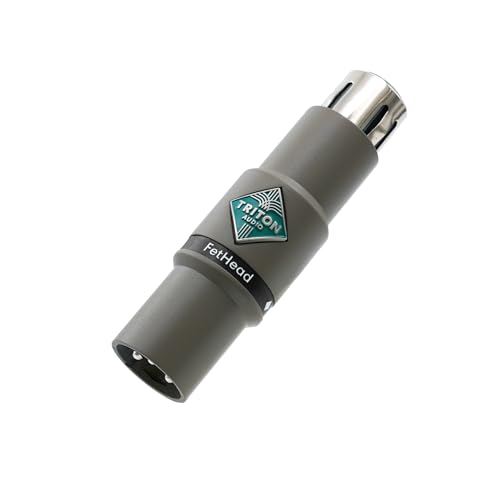
- Low-noise Class-A JFET amplifier
- Shielded compact enclosure
- Inline approach for simple signal boosting
Best For: Space-conscious vocal recording chains
Simple Tube Preamplifier

- Single-channel tube microphone and instrument preamp
- Straightforward design for vocal recording
- Includes a stated two-year warranty
Best For: Basic tube-style vocal preamplification
Best Overall Flexibility

- 0–72 dB adjustable gain
- −120 dBV EIN stated
- USB-C, 48V, and dual outputs
Best For: Vocalists and streamers needing flexible mic and instrument connectivity
Best Simple Inline Booster

- Adds a fixed 28 dB boost
- Compact 7.2-ounce XLR design
- For dynamic and passive ribbon mics
Best For: Dynamic-mic vocalists wanting a simple inline gain increase
Best for Vocal Recording

- Up to 75 dB gain
- Supports dynamic and condenser mics
- Balanced XLR plus 3.5mm outputs
Best For: Vocal recording with varied microphones and output needs
Best Compact Booster
Coda MB-Stealth 28dB Mic Gain Booster
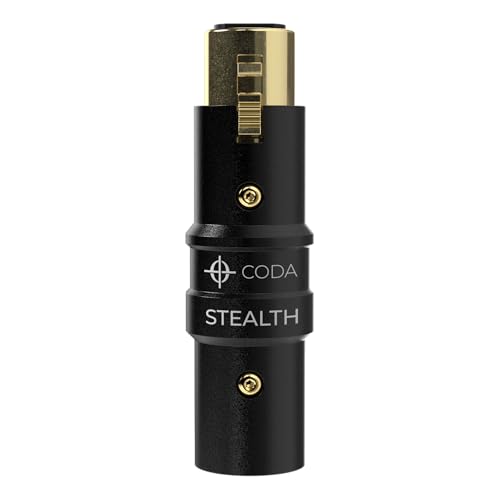
- Adds 28dB of gain for dynamic and ribbon mics
- Compact inline XLR aluminum design
- Uses 48V phantom power and targets low noise
Best For: Dynamic or ribbon vocal mics in compact recording and streaming setups
Best Simple 48V Option

- Supports dynamic and condenser microphones
- Offers 20dB of balanced gain
- Compact black metal case with low-noise design
Best For: Home studios, podcasting, recording, and livestreaming
Best Versatile Gain Control
RO03 66dB Low-Noise Mic Preamp

- Variable 19–66dB gain with advertised -120dBV EIN
- Supports dynamic, condenser, and ribbon microphones
- Adds XLR, TRS, TS outputs and Type-C power
Best For: Flexible vocal recording, home studios, and mixed mic/instrument setups
Feature-Rich Vocal Front End – dbx 286s
If you want a microphone preamp for vocals that also handles dynamics and tone shaping, the dbx 286s combines microphone gain with compression, de-essing, enhancement, and an expander/gate. Its metering and rack-ready design suit home studios, live setups, and vocal processing chains.
Best For: Vocalists and engineers who want an all-in-one channel strip with practical voice-processing tools.
Pros:
- Combines preamp, compressor, de-esser, enhancer, and expander/gate functions.
- Compression can help bring vocals forward with greater clarity and presence.
- Offers XLR and 1/4-inch inputs, loop-out capability, status LEDs, and rack mounting.
Cons:
- Its single-channel design may be limiting for multi-microphone setups.
- The range of processing features may require more setup than a basic preamp.
The dbx 286s is a strong choice when vocal recording requires more than clean gain. Choose it if integrated dynamics and frequency-control tools are more valuable than a minimal signal path.
Clean Gain Booster – Cloudlifter CL-1
The Cloudlifter CL-1 is an inline microphone preamp for vocals designed to add up to 25 dB of gain to quiet passive microphones. It uses phantom power while blocking that phantom power from reaching the microphone, making it useful when a microphone needs more signal strength before the main preamp.
Best For: Home studios, podcasters, streamers, and vocalists using quiet passive microphones with phantom-powered inputs.
Pros:
- Adds up to +25 dB of stated ultra-clean gain.
- Can maintain a microphone’s natural sound while increasing signal strength.
- Compatible with passive ribbon microphones and other passive microphones when used with standard phantom-powered inputs.
Cons:
- It is an inline gain activator, not a complete channel strip with compression or tone controls.
- Requires standard +48V phantom power from the connected microphone input.
The CL-1 makes sense when your existing interface or mixer needs extra clean gain. It is especially practical for quiet passive microphones, but it does not replace a full-featured vocal processor.
Compact Inline Amplifier – Triton Audio FetHead
The Triton Audio FetHead is a compact inline microphone preamp for vocals built around a low-noise Class-A JFET amplifier. Its shielded enclosure and small form factor make it a straightforward option when you need additional inline amplification without adding a larger desktop or rack unit.
Best For: Vocal recording setups that need a compact, low-noise inline amplifier.
Pros:
- Uses a low-noise Class-A JFET amplifier design.
- Features a shielded enclosure for a compact, purpose-built form factor.
- Designed as an inline preamp rather than a bulky standalone processor.
Cons:
- The supplied notes do not specify its gain amount or connector configuration.
- It does not include the compression, de-essing, or other processing found in a channel strip.
The FetHead is worth considering when space and low-noise amplification are priorities. Verify compatibility with your microphone and input chain before buying, since the available specifications are limited.
Simple Tube Preamplifier – ART Tube MP
The ART Tube MP is a single-channel tube microphone and instrument preamplifier for users seeking a straightforward front end for vocal recording. Its simple design keeps the focus on preamplification rather than adding a broad set of channel-strip effects.
Best For: Vocalists and home-recording users who want a basic single-channel tube preamp.
Pros:
- Provides a dedicated single-channel microphone and instrument preamplifier.
- Tube-based design offers an alternative to purely solid-state inline boosters.
- Includes a stated two-year manufacturer warranty.
Cons:
- The supplied notes do not provide detailed gain, connectivity, or processing specifications.
- Single-channel operation is less suitable for multi-microphone recording.
The Tube MP is a sensible candidate if you want a simple tube preamp for vocals without an extensive feature set. Buyers needing clearly documented connections or integrated vocal processing may prefer a more fully specified unit.
Best Overall Flexibility – RO-04 Adjustable Mic Preamp
If you need a microphone preamp for vocals that can handle different microphones, instruments, and recording setups, the RO-04 is a versatile option. Its 0–72 dB gain range, very low stated EIN, phantom power, and dual output levels make it suitable for both studio and mobile workflows.
Best For: Vocalists using dynamic, condenser, or ribbon microphones, plus creators who switch between desktop and mobile streaming.
Pros:
- Wide 0–72 dB gain range supports low-output microphones such as the SM58 and SM7B.
- Stated −120 dBV EIN helps maintain a low noise floor when adding gain.
- USB-C and power-bank support improve portability while retaining 48V phantom power.
- Separate mic and 1 MΩ instrument inputs allow simultaneous vocal and instrument use.
Cons:
- At 2.42 pounds, it is less lightweight than a simple inline booster.
- The wide feature set may be more than needed for a basic single-microphone setup.
The RO-04 stands out when flexibility matters more than minimalism. It is a strong fit for vocal recording, streaming, and portable setups that may include both microphones and instruments.
Best Simple Inline Booster – MANAYO DM3 28dB Mic Booster
For singers using a passive dynamic or ribbon microphone, this compact inline unit provides a straightforward way to add gain before the audio interface. It delivers a fixed 28 dB boost and relies on the interface’s 48V phantom power to operate.
Best For: Vocalists with dynamic or passive ribbon microphones who want a small, uncomplicated gain booster.
Pros:
- Adds 28 dB of gain to help amplify quieter dynamic and ribbon microphones.
- Compact 7.2-ounce design fits easily into a portable recording chain.
- Specified 20 Hz–20 kHz frequency response and output noise below 6 µV.
Cons:
- Requires an audio interface or mixer with 48V phantom power.
- Not compatible with condenser microphones.
- Fixed 28 dB gain offers less control than an adjustable preamp.
The DM3 is best viewed as a focused solution rather than a full-featured preamp. If your vocal microphone is dynamic or passive ribbon and your interface supplies phantom power, its compact design and fixed boost keep the setup simple.
Best for Vocal Recording – JCANOL MIC-1 High-Gain Preamp
The MIC-1 is a practical microphone preamp for vocals when you want substantial clean gain and several output choices. It supports dynamic and condenser microphones, provides 48V phantom power, and combines balanced XLR connectivity with 3.5mm outputs for portable devices.
Best For: Vocal recording with low-output dynamic microphones, condenser microphones, and setups that need both XLR and 3.5mm outputs.
Pros:
- Up to 75 dB of gain provides headroom for quiet vocal sources and low-output microphones.
- Stated −120 dB EIN is designed for low-noise recording.
- Supports dynamic and condenser microphones with 48V phantom power.
- Balanced XLR, 3.5mm mic, and 3.5mm line outputs suit studio and compact devices.
Cons:
- The two input ports cannot operate simultaneously.
- Its multiple output formats may be unnecessary for a basic XLR-only setup.
- The supplied notes do not specify an included power source or accessories.
With high available gain and multiple output formats, the MIC-1 is a flexible choice for vocalists who record across studio and portable equipment. Its input limitation is worth noting if you plan to connect more than one source at once.
Best Compact Booster – Coda MB-Stealth 28dB Mic Gain Booster
If you need a microphone preamp for vocals and use a dynamic or ribbon microphone, the Coda MB-Stealth adds up to 28dB of clean gain without requiring a separate power supply. It draws 48V phantom power from your audio interface and uses an inline XLR design that fits neatly into a recording or streaming setup.
Best For: Dynamic and ribbon vocal microphones, podcasting, livestreaming, and users who want a compact inline gain boost.
Pros:
- Provides 28dB of stated ultra-clean gain.
- Compact aluminum housing with a matte-black finish.
- Designed for low-noise operation with a -70dB noise rating.
- Powered through an interface’s 48V phantom power.
Cons:
- Does not work with condenser microphones.
- Requires an audio interface or other source of 48V phantom power.
The MB-Stealth is a focused solution rather than a full-featured standalone preamp. Choose it when your vocal microphone is dynamic or ribbon and you mainly need more clean level in a small, uncomplicated package.
Best Simple 48V Option – Compact 20dB Vocal Mic Preamp
This microphone preamp for vocals is a straightforward choice when you need additional level for either dynamic or condenser microphones. Its balanced circuitry provides a stated 20dB of clean gain, while built-in 48V power broadens microphone compatibility for home studios, podcasting, recording, and livestreaming.
Best For: Users seeking an affordable, compact booster for dynamic or condenser microphones in studio, podcast, and streaming applications.
Pros:
- Works with both dynamic and condenser microphones.
- Provides 20dB of stated balanced gain.
- Designed for low-noise, transparent amplification.
- Compact, lightweight metal casing helps with portability and EMC interference reduction.
Cons:
- The supplied notes do not specify variable gain or additional outputs.
- Its compact feature set may be limiting for more complex routing needs.
This model emphasizes simplicity and broad microphone compatibility. It makes sense for vocalists and creators who want a small preamp with 48V support and a clean, uncomplicated signal path rather than extensive controls.
Best Versatile Gain Control – RO03 66dB Low-Noise Mic Preamp
For vocal recording setups that need substantial and adjustable gain, the RO03 offers a 19–66dB range and an advertised -120dBV EIN. This microphone preamp for vocals supports dynamic, condenser, and ribbon microphones, and adds XLR, TRS, and TS connectivity plus Type-C power for a more flexible studio or portable rig.
Best For: Vocalists, home-studio users, and creators who need variable gain, broad microphone support, and microphone or instrument connectivity.
Pros:
- Offers a practical 19–66dB variable gain range.
- Supports dynamic, condenser, and ribbon microphones.
- Provides XLR, TRS, and TS output options with +4dBu and -10dBV output.
- Uses Type-C power and includes a 1MΩ instrument input impedance.
Cons:
- The two input ports cannot be used simultaneously.
- The manufacturer recommends connecting to an interface’s TRS line input for the lowest noise.
- Its 400g size and multiple connections are less minimal than an inline booster.
The RO03 is the most adaptable option here, particularly when a vocal setup may also involve instruments or different interface inputs. To get the stated low-noise performance, follow the recommended TRS line-input connection and use suitable cables.
How We Picked the Best Microphone Preamp for Vocals
We selected these microphone preamps for vocals based on the features that matter in real recording and live-use scenarios: available gain, noise performance, microphone compatibility, phantom-power handling, controls, connection type, and overall versatility. The list includes simple inline activators for low-output microphones, affordable standalone preamps, and more complete channel-strip solutions.
Because microphone output levels vary widely, no single model is ideal for every vocalist. A passive ribbon or low-output dynamic microphone may need substantial clean gain, while a condenser microphone typically needs phantom power but may require less amplification. We also considered whether each unit suits home studios, podcasting, rehearsal spaces, or more advanced vocal chains.
Quick Comparison
| Type | Best For | What to Look For |
|---|---|---|
| Inline mic activator | Low-output dynamic and passive ribbon microphones | Clean gain, phantom-power compatibility, short XLR path |
| Standalone mic preamp | Home studios and flexible recording setups | Gain range, noise floor, input and output options |
| Tube or character preamp | Adding warmth or coloration | Drive control, headroom, tube behavior, output level |
| Channel strip | Vocal tracking with onboard processing | Compression, de-essing, EQ or enhancement controls |
Key Buying Factors for a Microphone Preamp for Vocals
Gain and Noise
Check how much gain your microphone actually needs. Inline boosters commonly provide a fixed clean boost, while standalone units offer a wider adjustment range. More gain is not automatically better: excessive amplification can raise hiss or leave insufficient headroom. Look for a low equivalent input noise specification when recording quiet sources.
Microphone Compatibility
Confirm that the preamp supports your microphone type. Condensers need phantom power, while passive ribbons require careful signal-chain planning and should not be connected to inappropriate phantom-power conditions. Dynamic microphones often benefit from an inline booster when the interface preamp lacks enough clean gain.
Connections and Power
Most inline models sit between the microphone and audio interface over XLR and rely on phantom power from the interface. Standalone units may require their own power supply and can provide additional outputs or instrument inputs. Make sure your interface, mixer, or recorder has the connections required by the selected model.
Vocal-Shaping Features
If you want to shape vocals while tracking, a channel strip with compression, de-essing, gating, or enhancement can reduce the need for extra hardware. These controls add flexibility, but a simple, transparent preamp may be the better choice if you prefer to process vocals later in your software.
Who Should Buy Which Microphone Preamp for Vocals?
Choose an inline booster if you already like your microphone but need more clean gain from an interface or mixer. These are compact, simple, and especially useful with low-output dynamics and passive ribbons.
Choose a standalone preamp if you want adjustable gain, phantom power, or extra routing flexibility for a home studio. Models with instrument inputs and filtering can serve more than one recording purpose.
Choose a channel strip if you record vocals regularly and want compression or de-essing before the signal reaches your interface. It is the most feature-rich option, but it also requires more setup knowledge.
Before buying, compare the preamp’s gain range with your microphone’s output, verify phantom-power requirements, and leave adequate headroom for loud vocal peaks. The best Microphone Preamp for Vocals is the one that supplies clean, controlled level without complicating the rest of your signal chain.