
The best drawing tablets with tilt support make digital brushes feel more natural by responding to the angle of your stylus. That can improve shading, calligraphy, and expressive line work without requiring a steep learning curve.
Our 2026 roundup covers screen and screenless models, compact and medium-size surfaces, wireless options, shortcut controls, and tablets compatible with computers or selected Android devices.
Best 10 Drawing Tablets with Tilt Support Picks for 2026
Premium Wireless Pick
XENCELABS Medium Graphic Tablet

- Wireless Bluetooth or USB connectivity
- Two battery-free tilt-sensitive pens
- Comfortable 10.33-by-5.8-inch active area
Best For: Artists wanting a flexible, ergonomic wireless setup
Shortcut-Heavy Value
HUION Inspiroy H1161 Drawing Tablet

- Large 11-by-6.87-inch active area
- 60° tilt battery-free stylus
- Touch strip plus 26 customizable keys
Best For: Creators and educators who rely on shortcut controls
Best Screen Option
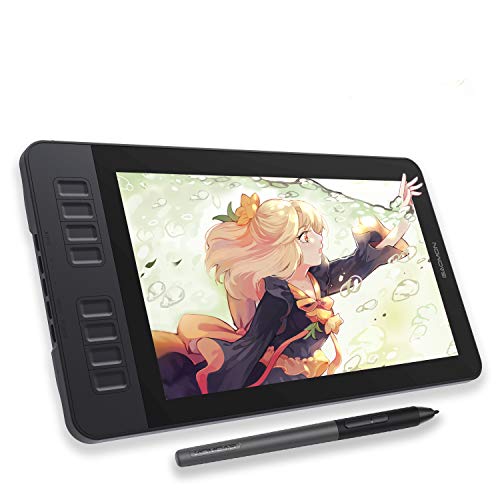
- 11.6-inch Full HD IPS drawing screen
- Battery-free pen with pressure and tilt support
- Eight programmable shortcut keys
Best For: Artists who want to draw directly on the display
Best Compact Workflow

- PenTech 3.0 stylus with 60° tilt
- Scroll wheel and 11 customizable controls
- Works with computers, ChromeOS, and Android
Best For: Portable creative work with extensive shortcut control
Best Screened Value

- 11.6-inch Full HD IPS display
- Battery-free 8192-level pen with 60° tilt
- Includes two pens and 28 nibs
Best For: Beginners and students wanting an accessory-rich pen display
Best Screen-Free Option

- 10×6.7-inch working area
- 60° tilt support with 8192 pressure levels
- 24 customizable or programmed keys
Best For: Users who prefer a screen-free tablet with extensive controls
Best Laminated Display

- Fully laminated 11.6-inch Full HD IPS screen
- 8192-level stylus with 60° tilt support
- Red dial and eight programmable shortcut keys
Best For: Artists wanting a portable display with reduced parallax
Best All-Around Workflow

- 10 x 6.25-inch active area with ±60° tilt support
- Battery-free 8192-pressure stylus and 300PPS report rate
- Dial, shortcut keys, and Windows/macOS/Android support
Best For: Artists wanting a spacious, customizable tablet for home or mobile use
Best for Mobile Compatibility

- 10 x 6.25-inch surface with ±60° tilt function
- Battery-free 8192-pressure stylus
- Touch ring, 12 keys, and Android support
Best For: Android users seeking a large, shortcut-rich drawing tablet
Best Compact 16K Option

- 16,384 pressure levels with ±60° tilt support
- Compact 6.4 x 4-inch active area and slim design
- Eight shortcut keys plus wide OS compatibility
Best For: Beginners and mobile creators who prioritize portability and sensitivity
Premium Wireless Pick – XENCELABS Medium Graphic Tablet
For artists seeking drawing tablets with tilt support, the XENCELABS Medium combines a spacious 10.33-by-5.8-inch active area with wireless connectivity and a paper-like surface. Its two battery-free pens and ergonomic design make it well suited to extended creative sessions.
Best For: Digital artists who want wireless flexibility, dual stylus options, and a comfortable professional setup.
Pros:
- Two battery-free pens with different diameters and button layouts.
- Tilt recognition, 8192 pressure levels, and virtually no lag.
- Bluetooth and USB connectivity with Windows, Mac, and Linux support.
- Frosted, wear-resistant surface and curved palm rest.
Cons:
- It is a pen tablet rather than a built-in display, so you draw while viewing a separate screen.
- Wireless operation requires Bluetooth support on the connected computer.
The XENCELABS stands out for its thoughtful ergonomics, included accessories, and flexible pen setup. It is a strong choice for creators who value comfort and wireless convenience alongside tilt-sensitive control.
Shortcut-Heavy Value – HUION Inspiroy H1161 Drawing Tablet
The HUION Inspiroy H1161 is a practical option among drawing tablets with tilt support, offering a large 11-by-6.87-inch active area, a programmable touch strip, and extensive shortcut controls. Its battery-free stylus is designed for uninterrupted drawing and note-taking.
Best For: Students, teachers, and creators who want a large work surface with many customizable controls.
Pros:
- Battery-free PW100 stylus supports 8192 pressure levels and up to 60° tilt.
- Large active area can support more natural pen movements.
- Programmable touch strip, 10 hard keys, and 16 soft keys.
- Works with Windows, Mac, Linux, and Android devices.
Cons:
- USB connectivity means it is not a wireless tablet.
- Android cursor support has limitations on some Samsung devices.
- Linux support is currently specified for Ubuntu.
With its generous active area and unusually broad shortcut customization, the H1161 prioritizes workflow efficiency. It is particularly useful when quick access to commands matters as much as drawing precision.
Best Screen Option – GAOMON PD1161 Pen Display
If you prefer to draw directly on your work, the GAOMON PD1161 is a pen display worth considering among drawing tablets with tilt support. Its 11.6-inch Full HD IPS screen has a matte film, while the battery-free pen adds pressure and tilt control.
Best For: Beginners, students, and artists who prefer an on-screen drawing experience.
Pros:
- 11.6-inch Full HD IPS display lets you draw directly on the image.
- Battery-free AP50 stylus offers 8192 pressure levels and tilt functionality.
- Matte film helps reduce glare and provides a paper-like feel.
- Eight programmable shortcut keys and two pen buttons support workflow customization.
Cons:
- It is not standalone and must connect to a Windows or Mac computer.
- Connection requires available HDMI and USB ports, or an appropriate converter.
- A power adapter may be needed if the computer cannot provide enough power.
The PD1161’s main advantage is its integrated display, which can make the transition from traditional drawing more intuitive. Just plan for a wired computer setup and confirm your available ports before buying.
Best Compact Workflow – HUION Inspiroy 2 Medium
The HUION Inspiroy 2 Medium offers a compact, control-focused design for shoppers comparing drawing tablets with tilt support. Its 8.7-by-5.4-inch active area pairs with a scroll wheel, programmable keys, and a battery-free PenTech 3.0 stylus.
Best For: Artists and designers who want portable shortcut controls and compatibility with computers or Android devices.
Pros:
- PW110 stylus provides 8192 pressure levels and 60° tilt support.
- Scroll wheel, eight press keys, and three group keys can be customized.
- Supports Windows, macOS, Linux Ubuntu, ChromeOS, and Android devices.
- Compact 420-gram design is convenient for portable use.
Cons:
- It is not standalone and requires a cable-connected computer or smartphone.
- The active area is smaller than the H1161’s, which may feel limiting for broad gestures.
- Linux compatibility is specifically listed for Ubuntu 20.04 LTS.
The Inspiroy 2 Medium is a sensible choice when portability and quick controls take priority over maximum drawing space. Its mobile compatibility also gives it more flexibility than a basic desktop-only pen tablet.
Best Screened Value – VEIKK VK1200
The VEIKK VK1200 is a practical choice among drawing tablets with tilt support if you want a compact screen-based setup. Its 11.6-inch 1920×1080 IPS display, battery-free pen, and 60° tilt support make it suitable for sketching, shading, and digital illustration.
Best For: Beginners, students, and artists who want a small pen display with useful included accessories.
Pros:
- 11.6-inch Full HD IPS display with 72% NTSC color gamut.
- Battery-free pen with 8192 pressure levels and 60° tilt support.
- Six shortcut keys, two pens, 28 replacement nibs, and an artist glove included.
Cons:
- Requires HDMI and USB connectivity to a compatible computer.
- The compact display may feel limiting for users who prefer a larger canvas.
The VK1200 stands out for its generous accessory bundle and straightforward control layout. It is a sensible entry-level pen display when tilt functionality and an included spare pen matter more than a larger screen.
Best Screen-Free Option – Artisul A1201
The Artisul A1201 is a screen-free option for shoppers comparing drawing tablets with tilt support. Its 10×6.7-inch working area, 8192 pressure levels, 60° tilt support, and battery-free stylus are designed for responsive drawing on a connected computer, laptop, or compatible Android device.
Best For: Artists, students, remote workers, and beginners who prefer a larger control surface without an integrated display.
Pros:
- 60° tilt support helps maintain accurate cursor tracking while shading.
- Eight customizable side keys plus 16 programmed shortcut keys.
- Supports Windows, macOS, Android, Chromebook, and common creative software.
- 400 PPS report rate and 8192 pressure levels for responsive strokes.
Cons:
- No built-in display, so you draw while viewing the connected screen.
- The full shortcut-key setup requires installing the driver.
With extensive shortcut controls and broad device compatibility, the A1201 is built for workflow flexibility. Choose it if you are comfortable with a screen-free tablet and want tilt support, customizable controls, and a sizable working area.
Best Laminated Display – XPPen Artist 12 Pro Lite
The XPPen Artist 12 Pro Lite combines a portable 11.6-inch pen display with tilt support for a natural drawing experience. Its fully laminated 1920×1080 IPS screen is designed to reduce parallax, while the battery-free stylus offers 8192 pressure levels and up to 60° tilt support.
Best For: Digital artists and designers who want a portable display with reduced parallax and physical workflow controls.
Pros:
- Fully laminated, anti-glare 11.6-inch Full HD display with a 178° viewing angle.
- Battery-free stylus with 8192 pressure levels and up to 60° tilt support.
- Programmable red dial and eight shortcut keys for hands-on control.
- Supports Windows, macOS, ChromeOS, Linux, and popular creative applications.
Cons:
- Designed for connection to a laptop or desktop rather than standalone use.
- The compact 11.6-inch screen may be less suitable for users who need a spacious canvas.
The Artist 12 Pro Lite is a strong fit when display quality and reduced parallax are priorities. Its dial, shortcut keys, and tilt-enabled stylus add useful control for illustration, animation, and design workflows.
Best All-Around Workflow – Artisul M0610Pro
For artists looking for drawing tablets with tilt support, the Artisul M0610Pro combines a spacious 10 x 6.25-inch active area with a battery-free pen, customizable controls, and a portable 9mm profile. Its ±60° tilt support is designed to capture shading effects, while the dial and shortcut keys help streamline creative work.
Best For: Artists, students, and illustrators who want a roomy tablet with workflow controls and Android support.
Pros:
- Large 10 x 6.25-inch drawing area with ±60° tilt support
- 8192 pressure levels and a 300PPS report rate
- Dial, customizable shortcut keys, and battery-free stylus
- Works with Windows, macOS, Android, and major creative software
Cons:
- Requires a connected computer or compatible Android device
- The listed specifications vary between seven and eight shortcut keys
The M0610Pro is a flexible choice for creators who value drawing space and quick access to frequently used commands. Its portability and broad compatibility also make it practical for working away from a desk.
Best for Mobile Compatibility – Huion HS610
The Huion HS610 is a practical option among drawing tablets with tilt support, especially for users who want to connect an Android phone as well as a Windows or Mac computer. Its 10 x 6.25-inch surface, battery-free stylus, touch ring, and 12 programmable keys provide room and control for drawing and painting.
Best For: Artists and teachers who need a large drawing surface with Android connectivity and extensive shortcut controls.
Pros:
- 10 x 6.25-inch active area with ±60° tilt support
- 8192 pressure levels and battery-free stylus
- Touch ring supports zooming, brush adjustment, and scrolling
- 12 customizable press keys and Android 6.0-or-later support
Cons:
- iPhone and iPad are not supported
- Samsung cursor support has limitations outside the Note series
The HS610 stands out for its combination of a full-size work area and mobile-device support. Check your specific Android phone before buying, particularly if it is a Samsung model.
Best Compact 16K Option – XP-Pen IT640
For shoppers comparing compact drawing tablets with tilt support, the XP-Pen IT640 offers a 6.4 x 4-inch active area, 16,384 pressure levels, and ±60° tilt detection in a slim, portable design. Its eight programmable keys and Android connectivity suit digital art, photo editing, annotation, and OSU play.
Best For: Beginners, students, and mobile creators who prefer a lightweight tablet with high pen sensitivity.
Pros:
- 16,384 pressure levels with ±60° tilt support
- Compact, extra-slim design with included USB-C OTG adapter
- Eight customizable soft keys for common commands
- Supports Windows, macOS, Android, Chrome OS, Harmony OS, and Linux
Cons:
- Smaller 6.4 x 4-inch active area than the other listed tablets
- Not a standalone display; it must connect to a computer or compatible device
- Android support requires Android 10 or later
The IT640 is a strong fit when portability and pen sensitivity matter more than drawing area. Its broad operating-system support adds flexibility, while the smaller surface may be preferable for compact desks or travel.
How We Picked These Drawing Tablets with Tilt Support
We focused on tablets that specifically support stylus tilt recognition, then compared the features that most affect everyday drawing: active-area size, pressure sensitivity, shortcut controls, connection options, compatibility, and portability. The selection includes both traditional graphics tablets that connect to a separate monitor and pen displays with built-in screens.
Because specifications and bundled accessories can vary by seller, confirm the current operating-system support, included cables, pen model, and warranty before purchasing. Tilt support is useful only when the included or compatible stylus supports it.
Quick Comparison
| Type | Best For | What to Look For |
|---|---|---|
| Screenless tablet | Value, portability, and desk-based workflows | Comfortable active area, shortcut keys, and reliable driver support |
| Pen display | Direct-on-screen drawing and visual feedback | Screen size, resolution, viewing angle, and cable setup |
| Wireless or mobile-ready tablet | Flexible workspaces and selected Android devices | Wireless stability, battery life, and confirmed device compatibility |
Key Buying Factors for Drawing Tablets with Tilt Support
Screenless Tablet or Pen Display
A screenless model usually costs less and can be more comfortable for long sessions once you adjust to looking at your monitor. A pen display feels more immediate because you draw directly on the image, but it normally needs more desk space, cabling, and graphics performance.
Active Area and Ergonomics
Larger surfaces give broad strokes more room, while compact tablets suit small desks and travel. Check the tablet’s active area rather than its overall dimensions. Also consider pen weight, surface texture, left-handed support, and whether shortcut keys are positioned where you can reach them naturally.
Pressure, Tilt, and Pen Features
Pressure sensitivity controls line width or opacity, while tilt can affect brush angle, shading, and textured tools in compatible software. High pressure-level counts are not the only measure of quality: consistent tracking, low lag, a comfortable battery-free pen, and dependable tilt recognition matter more in practice.
Controls, Connectivity, and Compatibility
Shortcut keys, touch strips, dials, or scroll wheels can speed up zooming, sizing brushes, and undoing actions. Before buying, verify support for your operating system and preferred apps, along with USB requirements. If you plan to use Android, check whether your exact phone or tablet is supported rather than relying on a general compatibility claim.
Who Should Buy Which Drawing Tablets with Tilt Support?
Choose a Screenless Model for Value
Students, beginners, and artists who already own a good monitor will generally get the strongest value from a screenless tablet with a comfortable medium or large active area and customizable controls.
Choose a Pen Display for Direct Drawing
Illustrators, concept artists, and anyone who dislikes hand-eye separation should consider a pen display. Prioritize screen size, color quality, parallax, adjustable viewing angles, and a stand or compatible mounting solution.
Choose a Compact or Mobile-Friendly Option for Flexibility
Traveling creators and users with limited desk space should look for a smaller tablet with simple connections and confirmed mobile support. For frequent professional use, wireless capability or extra shortcut controls may justify a higher price.