
The right DI box can make instrument and line-level sources easier to connect to a mixer, recorder, or audio interface while reducing hum and preserving a clean signal. That matters when podcast episodes include music, remote playback, live instruments, or multiple audio sources.
We compared 10 passive and active options across connectivity, channel count, signal flexibility, grounding features, and everyday studio practicality. Use the guide below to narrow the choices before deciding which model fits your setup.
Best 10 Di Boxes for Podcasting Picks for 2026
Simple Passive Choice

- Passive operation needs no power
- Pad and ground-lift switches
- 1/4-inch through jack and XLR output
Best For: Basic single-channel instrument connections
Studio-Ready Passive Pick
Samson S-Max MD1 Passive DI Box

- Balanced mic-level XLR output
- Transformer circuitry with shielding
- Ground lift and passive through output
Best For: Durable mono instrument and line connections
Flexible Stereo Active Option
Dual-Input Rechargeable DI Box

- Dual 1/4-inch stereo inputs
- USB-C or 9V battery power
- Stereo through and XLR outputs
Best For: Stereo instruments and varied unbalanced sources
Two-Channel Versatility
ART DPDB 2-Channel Passive DI Box

- Two passive DI channels
- Accepts speaker-level inputs
- Supports instruments, keyboards, and line-level gear
Best For: Multi-source studios needing broad input compatibility
Best All-Around Stereo DI
Bolanle D2 Premium Passive Stereo DI Box

- Dual-channel design for stereo sources
- -15 dB pads help handle hot signals
- No power required; includes ground lift and Thru outputs
Best For: Stereo instruments and flexible podcast routing
Best for Laptops and Phones
Kopul LT-PDI Laptop Passive Direct Box
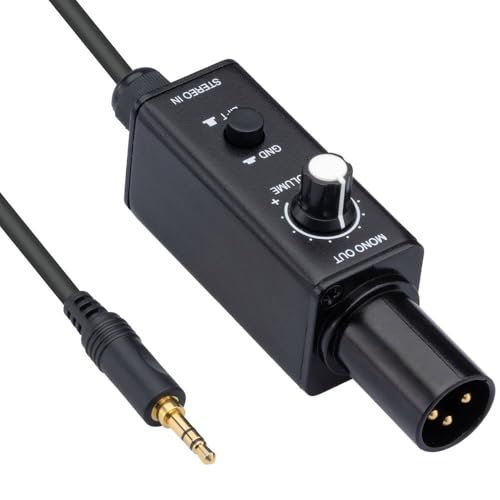
- 3.5mm input for laptops, phones, and tablets
- Balanced mono XLR output for mixers and interfaces
- Compact aluminum body with ground lift
Best For: Mobile podcast and AV connections
Best Signal Control
Samson MD2 Pro Stereo Passive Direct Box

- Stereo 1/4-inch inputs and balanced XLR outputs
- Selectable -15 dB and -30 dB pads per output
- Shielded transformers, ground lift, and Thru outputs
Best For: Dual-source podcast rigs needing level control
Practical Passive Pick
Passive DI Box for Guitar and Bass

- Converts unbalanced signals to balanced XLR output
- Ground lift helps reduce hum and ground loops
- Selectable 0dB, -20dB, and -40dB attenuation
Best For: Simple single-instrument recording and live setups
Dual-Channel Studio Choice
StudioMan PRO200 Passive DI Box

- Two channels for simultaneous source connections
- Independent pads and ground-lift switches
- Parallel LINK outputs simplify signal routing
Best For: Two-source studio, broadcast, and live setups
Compact Road-Ready Option

- Balanced XLR conversion for guitars and keyboards
- Ground lift helps address ground-loop buzz
- Thru output supports amp and PA routing
Best For: Portable instrument recording and live setups
Simple Passive Choice – Yovus DB-1 Passive DI Box
For straightforward di boxes for podcasting, the Yovus DB-1 converts a 1/4-inch instrument signal into a balanced XLR output without requiring batteries or phantom power. Its pad and ground-lift switches add useful flexibility when connecting guitars, keyboards, or other sources to an audio interface or mixer.
Best For: Podcasters connecting a guitar, keyboard, or other instrument to a mixer or interface on a simple, budget-conscious setup.
Pros:
- Passive design requires no power.
- Ground lift can help address electrical grounding buzz.
- Pad switch helps soften hot sources.
- Includes a 1/4-inch through jack for signal pass-through.
Cons:
- Provides one output channel.
- Its passive design offers fewer active gain-control features.
The DB-1 is a practical basic DI for podcast studios that need balanced XLR connectivity and uncomplicated operation. Choose it when passive, single-channel conversion is all your signal chain requires.
Studio-Ready Passive Pick – Samson S-Max MD1 Passive DI Box
The Samson S-Max MD1 is a strong candidate among di boxes for podcasting when you want a clean, passive path from a 1/4-inch instrument or unbalanced line source to a balanced mic-level XLR input. Its transformer circuitry, shielding, ground lift, and through output suit both studio and live applications.
Best For: Podcasters and creators who need durable passive DI conversion with a through output for an amplifier, pedals, or parallel monitoring.
Pros:
- Requires neither phantom power nor batteries.
- Outputs a balanced mic-level XLR signal.
- Ground lift helps fight buzz and hum.
- Steel chassis and passive through output support demanding setups.
Cons:
- It is a mono, single-channel unit.
- It does not provide active gain or powered signal boosting.
With its sturdy enclosure and flexible routing, the MD1 is more than a basic adapter. It is a sensible choice when your podcasting setup includes instruments, an amplifier feed, or parallel signal paths.
Flexible Stereo Active Option – Dual-Input Rechargeable DI Box
This active model stands out among di boxes for podcasting for its dual 1/4-inch high-impedance inputs, stereo or mixed-mono routing, and two power options. It can connect instruments, keyboards, submixers, effects processors, or consumer audio sources to a mixer or PA through stereo XLR outputs.
Best For: Podcasters working with stereo keyboards, dual-channel instruments, or varied unbalanced sources who want flexible routing and power choices.
Pros:
- Dual inputs support stereo or mixed-mono signals.
- Offers stereo 1/4-inch through and XLR outputs.
- Can use USB-C charging or a 9V GF22 battery.
- Ground-lift and hum-cancellation features support cleaner connections.
Cons:
- The 9V battery is not included.
- Its active design requires managing charging or battery power.
- May be more capability than a simple mono podcast setup needs.
The dual-channel layout makes this DI particularly adaptable for more involved recording chains. It is a practical fit when stereo connectivity and source flexibility matter more than the simplicity of a passive box.
Two-Channel Versatility – ART DPDB 2-Channel Passive DI Box
The ART DPDB brings two-channel passive DI functionality to podcast and production setups that need more than a basic instrument converter. It accepts guitar and bass pickup signals, keyboard and line-level outputs, and even speaker-level inputs from a power amplifier before feeding balanced signals to a console.
Best For: Multi-source recording environments handling instruments, keyboards, line-level gear, or post-amplifier signals.
Pros:
- Provides two passive DI channels in one unit.
- Accepts speaker-level inputs from a power amplifier.
- Handles guitar, bass, keyboard, and line-level signals.
- Translates high-impedance pickup signals to balanced low-impedance outputs.
Cons:
- At 2.2 pounds, it is heavier than compact single-channel options.
- The supplied notes do not specify ground lift, pad, or power-free operation.
The DPDB is best viewed as a flexible routing tool rather than a minimalist podcast accessory. Its two-channel design and broad input compatibility can be valuable when a studio regularly combines instruments and more complex signal sources.
Best All-Around Stereo DI – Bolanle D2 Premium Passive Stereo DI Box
For podcast setups using stereo keyboards, synths, drum machines, or other line-level sources, the Bolanle D2 is one of the more flexible DI boxes for podcasting. Its passive design requires no batteries or phantom power, while the channel pads and ground-lift control help manage hot signals and hum.
Best For: Podcasters and creators connecting stereo instruments or other dual-channel sources to a mixer, interface, or PA while retaining local monitoring.
Pros:
- Dual channels support stereo keyboards, synths, or two separate instruments.
- Independent -15 dB pads help prevent clipping from hot sources.
- Ground lift, polarity reversal, and 1/4-inch Thru outputs add practical routing flexibility.
- Passive operation and a rugged metal enclosure require little maintenance.
Cons:
- At 1.94 pounds, it is less lightweight than compact single-channel alternatives.
- Its feature set may be more than needed for a simple mono laptop or microphone setup.
The D2 is a strong choice when your podcast workflow includes stereo or line-level instruments and you want signal control without adding another powered device. For basic mono source conversion, a smaller DI may be easier to carry.
Best for Laptops and Phones – Kopul LT-PDI Laptop Passive Direct Box
The Kopul LT-PDI is a compact option for podcasting from a laptop, tablet, or smartphone. Among DI boxes for podcasting, it is specifically suited to converting an unbalanced 3.5mm stereo line-level output into a balanced mono mic-level XLR signal for a mixer, PA, or audio interface.
Best For: Mobile podcast, AV, and presentation setups that need to connect a computer or portable device to professional audio equipment.
Pros:
- 3.5mm TRS input works with laptops, smartphones, tablets, and similar devices.
- Converts unbalanced line-level audio to balanced mic-level XLR output.
- Ground-lift switch helps reduce hum and unwanted noise.
- Lightweight aluminum construction is easy to carry in a gear bag.
Cons:
- It is a one-channel direct box and is not designed for two independent instrument inputs.
- The supplied design converts the stereo source to a mono output.
- It does not list a Thru output for sending a parallel signal to an amplifier or monitor.
Choose the LT-PDI when your podcast audio starts at a headphone-style device and needs a clean, balanced connection to longer XLR runs. Its compact format is convenient, though users needing stereo outputs or instrument-focused controls should look elsewhere.
Best Signal Control – Samson MD2 Pro Stereo Passive Direct Box
The Samson MD2 Pro is a practical pick when your podcast rig uses two 1/4-inch instrument- or line-level sources. It converts them to balanced XLR outputs and adds adjustable attenuation, making it one of the more capable DI boxes for podcasting when source levels and hum need careful management.
Best For: Studio or live podcast setups using stereo instruments, mixers, or other unbalanced sources that benefit from strong signal conditioning and parallel monitoring.
Pros:
- Two 1/4-inch inputs feed a pair of balanced mic-level XLR outputs.
- Per-output ground lift and -15 dB/-30 dB pads provide useful control over hum and signal level.
- STLX transformers and Mu-Metal shielding are designed for a clean, low-distortion signal path.
- Passive Thru outputs support pedals, amplifiers, or parallel monitoring.
Cons:
- It requires 1/4-inch source connections and is not a direct solution for devices with only a 3.5mm output.
- Its stereo routing and multiple switches may be unnecessary for a basic single-source podcast setup.
- The supplied notes do not specify the enclosure dimensions.
The MD2 Pro stands out for podcast rigs that need two channels, substantial pad control, and a clean transformer-based connection. For laptop-only recording, the dedicated 3.5mm-input Kopul is a more direct fit.
Practical Passive Pick – Passive DI Box for Guitar and Bass
If you need straightforward DI boxes for podcasting, this passive unit converts unbalanced instrument signals to balanced microphone-level output for connection to mixers, audio interfaces, or PA systems. Its ground-lift switch and selectable attenuation make it useful when you need cleaner connections from guitars, basses, keyboards, or other line-level sources.
Best For: Simple podcast, rehearsal, recording, and live setups using one instrument or line-level source.
Pros:
- Passive design requires no batteries or external power.
- Ground-lift switch helps reduce hum and ground-loop noise.
- Offers 0dB, -20dB, and -40dB attenuation settings.
- Includes 1/4-inch input/output and balanced XLR output.
Cons:
- It is a single-channel unit, so it is less suited to two-source setups.
- The notes do not specify a parallel thru or link output.
This is a practical choice when you want a compact, no-power DI for connecting instruments to balanced recording or mixing equipment without unnecessary complexity.
Dual-Channel Studio Choice – StudioMan PRO200 Passive DI Box
For podcasting setups that connect multiple instruments or sources, the StudioMan PRO200 is one of the more flexible DI boxes for podcasting. Its two passive channels convert high-impedance unbalanced signals to balanced XLR output, while independent pads, ground lifts, and parallel LINK outputs provide useful routing control.
Best For: Studio, broadcast, streaming, and live setups that need two channels and flexible signal routing.
Pros:
- Two independent channels support simultaneous device connections.
- Each channel includes -20dB and -40dB attenuation and a ground-lift switch.
- Parallel LINK outputs can route the original signal to an amplifier or monitor.
- Passive operation requires no batteries or external power.
Cons:
- Its dual-channel design may be more equipment than a one-source setup needs.
- The supplied notes do not list a dedicated USB or microphone input.
With two channels and independent controls, the PRO200 is a strong fit for creators and musicians who want a DI that can handle varied instrument levels while keeping routing options open.
Compact Road-Ready Option – PD200 Stereo Passive DI Box
The PD200 is a compact option for creators comparing DI boxes for podcasting and needing to connect guitars, keyboards, or similar sources to balanced equipment. It provides passive signal conversion, a ground-lift switch, input attenuation, and a thru connection for sending a signal to an amplifier while feeding the PA or mixer.
Best For: Portable recording, rehearsal, and live setups where compact size and basic hum reduction matter.
Pros:
- Converts unbalanced instrument signals to balanced XLR output.
- Ground lift helps reduce typical ground-loop buzz.
- Thru signal supports simultaneous amplifier and PA connections.
- Aluminum housing and shock-proof foot pads are suited to mobile use.
Cons:
- The supplied notes do not specify selectable attenuation values.
- Its compact format may provide fewer controls than larger dual-channel models.
This model makes sense when portability is a priority and you need essential DI functions for an instrument-based podcast, rehearsal rig, or small live system.
How We Picked the Best Di Boxes for Podcasting
We evaluated these Di Boxes for Podcasting based on the features that affect real-world recording: input and output options, mono or stereo operation, passive versus active design, attenuation controls, ground-lift or hum-reduction features, transformer isolation, and compatibility with instruments, laptops, mixers, and audio interfaces.
We also considered setup simplicity and versatility. A compact one-channel unit may be ideal for a simple guitar or laptop connection, while a two-channel stereo model can be more useful for music playback, keyboards, or podcast productions with multiple sources.
Quick Comparison
| Best For | Look For | Typical Advantage |
|---|---|---|
| Single instrument | Mono input, balanced XLR output | Simple, reliable signal conversion |
| Stereo playback | Two channels or stereo inputs | Preserves left-right audio |
| Laptops and consumer devices | High-impedance or flexible input support | Easier integration with podcast equipment |
| Hum-prone setups | Ground lift and transformer isolation | Helps reduce unwanted electrical noise |
| Strong or variable sources | Input attenuation pad | Reduces clipping and overload |
Key Buying Factors for Di Boxes for Podcasting
Passive or Active Design
Passive DI boxes typically need no battery or phantom power and are convenient for robust, low-maintenance setups. Active models can offer higher input impedance and may suit passive electric guitars, basses, and other sources that benefit from preserving more high-frequency detail. Check the power requirements before buying.
Mono Versus Stereo
Choose a mono DI for a single microphone-level-compatible instrument path or a single-channel source. Select a two-channel stereo DI when connecting a laptop, keyboard, playback device, or other stereo source. A stereo unit can also be used as two separate mono channels when needed.
Connections and Level Handling
Most podcasting setups benefit from a 1/4-inch input and balanced XLR output. Look for pad switches if you will connect hot line-level equipment, and confirm that the input arrangement matches your cables and source devices. Impedance matching is especially important for passive guitar and bass pickups.
Ground Lift and Isolation
Ground loops can create a persistent buzz when computers, mixers, interfaces, and powered equipment share connections. A ground-lift switch and shielded transformer can help interrupt that noise path, although they cannot fix every source of interference.
Who Should Buy Which Di Boxes for Podcasting?
Choose a Compact Passive Model for a Basic Setup
If you need to connect one instrument to an interface or mixer with minimal configuration, a straightforward passive DI is usually the most economical choice.
Choose a Stereo Model for Music and Laptop Playback
For podcast producers who play clips, backing tracks, or other stereo content, a dual-channel unit avoids collapsing the source into mono and gives you more routing flexibility.
Choose Active or High-Impedance Support for Passive Instruments
Guitarists and bassists using passive pickups should consider an active or high-impedance design when tone preservation is a priority, particularly with longer cable runs.
Choose Attenuation and Ground Controls for Complex Studios
If your setup includes powered computers, mixers, interfaces, or loud line-level sources, prioritize pad controls, ground lift, and transformer isolation. These features provide more options for solving overload and noise problems during recording.