
The best portable multitrack recorders make it easier to capture ideas, build arrangements, and record away from a computer. The right model depends on whether you prioritize hands-on songwriting, flexible inputs, advanced field recording, or simple portability.
We selected 10 practical options for musicians, podcasters, filmmakers, and mobile producers, ranging from compact track-based workstations to professional handheld field recorders.
Best 10 Portable Multitrack Recorders Picks for 2026
Classic Songwriter Workhorse

- Eight-track WAV recording
- Built-in stereo microphones
- Battery-powered, computer-free workflow
Best For: Songwriters wanting simple portable multitrack recording
Touchscreen Studio Hub

- Eight tracks with touchscreen editing
- Drum loops, synths, and MIDI support
- USB-C interface and DAW control
Best For: Musicians wanting an all-in-one portable workstation
Effects-Focused Classic

- Eight playback tracks with 64 V-Tracks
- Built-in guitar and vocal effects
- Drum machine and stereo microphone
Best For: Players wanting standalone effects and rhythm accompaniment
Clip-Free Layering Companion

- 32-bit float recording
- Four-track bounce-and-layer workflow
- Battery or USB-C operation
Best For: Musicians capturing layered ideas and mobile demos
Versatile Pocket Studio
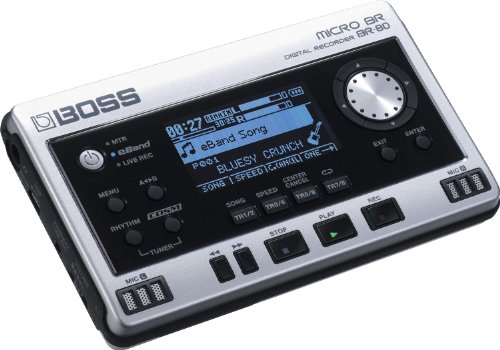
- 64 V-Tracks with eight-track playback
- Built-in stereo mic and COSM effects
- USB interface plus eBand practice features
Best For: Songwriters and players building ideas on the go
Expandable Field Recorder
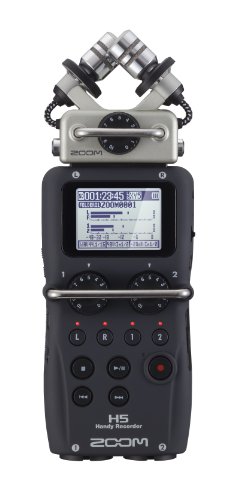
- Interchangeable capsule microphone system
- Four-track simultaneous recording
- Two XLR/TRS inputs with phantom power
Best For: Filmmakers and musicians needing flexible inputs
Layered Idea Recorder

- Four-track recording with bounce capability
- Two combo inputs and built-in microphone
- 32-bit float recording with USB-C interface
Best For: Mobile songwriters creating layered demos
Best Everyday Multitrack Pick

- Four-track 32-bit float recording
- Built-in stereo mics and two XLR/TRS inputs
- USB-C recording with SD backup
Best For: Mobile musicians, podcasters, and filmmakers
Best Professional Field Option

- Six XLR inputs and up to 14 tracks
- 32-bit float recording with dual A/D converters
- Timecode I/O for video synchronization
Best For: Film, broadcast, and multi-microphone field production
Best High-Resolution Handheld

- Up to six tracks plus a stereo mix
- 19.4 mm mics handle up to 140 dB SPL
- 44.1–192 kHz recording with look-ahead limiters
Best For: High-quality music, film, and field recording
Classic Songwriter Workhorse – TASCAM DP-008EX
The TASCAM DP-008EX is a practical choice among portable multitrack recorders for songwriters who want an uncomplicated, battery-powered setup. It records up to eight tracks, includes built-in stereo microphones, and stores WAV recordings on its included 2GB SD card.
Best For: Songwriters and musicians who want straightforward multitrack recording without relying on a computer.
Pros:
- Eight-track digital recording in a compact 610-gram design
- Built-in stereo microphones for quickly capturing ideas
- Includes a 2GB SD card, USB cable, and support for four AA batteries
Cons:
- Small 2-inch screen may feel limiting for detailed editing
- Only 2GB of included storage
The DP-008EX favors simplicity and portability over modern touchscreen features. Its built-in microphones and battery operation make it especially useful for capturing songwriting ideas away from a desktop setup.
Touchscreen Studio Hub – Zoom R12
The Zoom R12 brings a computer-free, touchscreen workflow to portable multitrack recorders. It offers eight tracks, two XLR/TRS combo inputs, onboard editing, effects, drum loops, and USB-C connectivity for recording or controlling a DAW.
Best For: Musicians who want a versatile portable recorder with touchscreen editing, built-in rhythms, and direct instrument connectivity.
Pros:
- Records up to eight tracks with DAW-style touchscreen editing
- Includes 150 drum loops and 18 FM synth instruments
- Both inputs provide 48V phantom power; input 1 also offers Hi-Z
- Works as a USB-C audio interface and DAW control surface
Cons:
- Battery life is rated at up to five hours using four AA batteries
- Its broader feature set may be more than needed for basic recording
With its touchscreen, rhythm tools, effects, and USB-C functions, the R12 is one of the most feature-rich options here. It is well suited to musicians who want a portable workstation rather than a basic sketch recorder.
Effects-Focused Classic – BOSS BR-600
The BOSS BR-600 remains a distinctive option among portable multitrack recorders, combining eight simultaneous playback tracks with 64 V-Tracks, built-in effects, a drum machine, and a stereo microphone. Its battery-powered design is aimed at recording ideas away from the studio.
Best For: Guitarists and vocalists who value onboard effects, rhythm accompaniment, and a classic standalone recording workflow.
Pros:
- Eight simultaneous playback tracks and 64 V-Tracks
- Includes guitar, vocal, and pitch-correction effects
- Built-in drum machine with velocity-sensitive pads
- Built-in stereo microphone and battery operation
Cons:
- Uses CompactFlash media and includes only a 128MB card
- Listed digital recording time is approximately 2 hours and 16 minutes
- Requires four 9V batteries
The BR-600 is appealing for players who want effects and rhythm tools built into a standalone recorder. Its older CompactFlash-based storage and limited included capacity are worth considering before buying.
Clip-Free Layering Companion – Zoom R4
The Zoom R4 is a compact choice among portable multitrack recorders for layering ideas quickly. It records up to four tracks, uses 32-bit float recording to reduce clipping concerns, and combines XLR/TRS inputs, a built-in microphone, effects, rhythms, and USB audio-interface operation.
Best For: Musicians who prioritize quick overdubbing, portable jamming, and flexible recording from microphones or instruments.
Pros:
- 32-bit float recording helps avoid clipping without manual gain adjustments
- Supports recording, bouncing, and repeated layering across four tracks
- Includes two XLR/TRS combo inputs and a built-in stereo microphone
- Runs on four AA batteries or USB-C and works as a 2-in/2-out interface
Cons:
- Four-track recording is less expansive than eight-track alternatives
- Its feature set focuses on layering rather than a larger multitrack mix
The R4 is designed for speed and confidence, especially when recording unpredictable sources on the move. Its bounce workflow expands layering possibilities, while the rhythms and effects make it useful for practice, demos, and spontaneous sessions.
Versatile Pocket Studio – Roland BR-80
The Roland BR-80 is a flexible choice among portable multitrack recorders, combining multitrack recording, phrase practice, and quick stereo capture in one compact unit. Its built-in condenser microphone, SD/SDHC storage, effects, and USB interface make it useful for sketching songs or recording on the go.
Best For: Musicians who want songwriting tools, backing tracks, and multitrack recording in a lightweight portable recorder.
Pros:
- Supports 64 V-Tracks and eight simultaneous playback tracks.
- Built-in stereo condenser microphone enables instant recording.
- Includes COSM amps, effects, backing patterns, and eBand practice features.
- Can function as a USB audio interface with built-in effects.
Cons:
- Uses a 3.5 mm headphone jack rather than a larger studio-style connector.
- Storage is limited to SD/SDHC cards up to 32 GB.
- Its extensive practice and effects features may take time to learn.
The BR-80 stands out for musicians who want more than basic field recording. It is especially appealing when built-in effects, rhythm patterns, and song-development features matter as much as portability.
Expandable Field Recorder – Zoom H5
The Zoom H5 brings interchangeable microphones and four-track recording to the portable multitrack recorders category. Its detachable X/Y capsule, two XLR/TRS inputs, phantom power, and USB interface give filmmakers and musicians a practical setup for recording in the field or connecting to a computer or iPad.
Best For: Filmmakers and musicians who need adaptable microphones, external inputs, and portable four-track recording.
Pros:
- Interchangeable input capsule system supports different recording setups.
- Records four tracks simultaneously.
- Two XLR/TRS combo inputs include selectable phantom power and a -20 dB pad.
- Works as a multichannel or stereo USB audio interface with Loop Back.
Cons:
- Records to SD/SDHC cards up to 32 GB.
- Requires two batteries for portable operation.
- Its additional capsules and input options can add complexity to setup.
The H5 is a strong fit when input flexibility is a priority. Compared with simpler handheld recorders, its capsule system and professional-style connections make it better suited to evolving recording needs.
Layered Idea Recorder – Zoom R4
The Zoom R4 is a compact option among portable multitrack recorders for capturing song ideas, demos, and layered performances. It combines four-track recording, bounce capability, two combo inputs, a built-in microphone, and a USB-C 2-in/2-out interface in a battery-powered design.
Best For: Mobile songwriters and solo performers who want to layer instruments, record demos, and work away from a computer.
Pros:
- Four-track recording with bounce functionality for layered parts.
- Two XLR/TS combo inputs plus a built-in omnidirectional microphone.
- Supports 32-bit float recording and includes an undo function.
- Offers built-in effects, rhythm patterns, EQ, pan, echo, and reverb controls.
Cons:
- Maximum sample rate is 48 kHz.
- Runs on four AA batteries for mobile use.
- Its four-track format may be limiting for larger arrangements.
The R4 is designed around fast, portable music creation rather than complex studio production. Its bounce workflow, built-in mic, effects, and USB-C connectivity make it particularly useful for developing layered demos wherever inspiration strikes.
Best Everyday Multitrack Pick – Zoom H4 Essential
The Zoom H4 Essential is a practical choice for creators who want portable multitrack recorders without a complicated setup. Its built-in stereo microphones, two XLR/TRS inputs, four-track recording, and 32-bit float capture make it suitable for music, interviews, podcasts, video audio, and live performances.
Best For: Musicians, podcasters, filmmakers, and field recordists who need a compact recorder with flexible input options.
Pros:
- Four-track recording with 32-bit float capture helps reduce clipping concerns.
- Built-in stereo microphones plus two XLR/TRS inputs support varied recording setups.
- USB-C connectivity enables recording or streaming to a phone, tablet, or computer while saving a backup to SD card.
- Spoken menu guidance can make operation easier for visually impaired users and other creators.
Cons:
- Runs on two AA batteries, so extended sessions may require spares.
- Its two external inputs are less suited to larger microphone setups than professional six-input recorders.
For most mobile creators, the H4 Essential balances portability, straightforward operation, and useful multitrack flexibility. It is especially appealing when built-in microphones and occasional external inputs are more important than a high input count.
Best Professional Field Option – Zoom F6
The Zoom F6 is built for demanding location work and is one of the more capable portable multitrack recorders in this lineup. With six XLR inputs, up to 14 tracks, 32-bit float recording, and timecode I/O, it offers the connectivity and synchronization features needed for film, broadcast, and larger field-production setups.
Best For: Filmmakers, broadcast crews, and musicians recording multiple microphones in professional field environments.
Pros:
- Six XLR inputs allow several microphones to be recorded simultaneously.
- Up to 14 tracks provide substantial production flexibility.
- 32-bit float recording with dual A/D converters helps handle both quiet and very loud sources without clipping.
- Timecode I/O supports frame-accurate synchronization with video.
Cons:
- Its professional feature set may be more than casual users need.
- At 2.4 pounds, it is heavier than the compact handheld options listed here.
- Four AA batteries are required for battery operation.
The F6 is the strongest fit when input count, track capacity, and video synchronization matter more than minimal size. It can also function as a USB audio interface, adding flexibility for studio or computer-based workflows.
Best High-Resolution Handheld – Zoom H6 Studio
The Zoom H6 Studio is a versatile option for buyers comparing portable multitrack recorders for music, film, and field recording. It records up to six individual tracks plus a stereo mix in 32-bit float, while its large 19.4 mm microphones, look-ahead limiters, and support for sample rates up to 192 kHz target detailed, dependable capture.
Best For: Musicians and filmmakers who want a handheld recorder with high-resolution recording and strong overload protection.
Pros:
- Records six individual tracks plus a stereo mix with 32-bit float recording.
- 19.4 mm microphones handle sound levels up to 140 dB SPL.
- Look-ahead limiters help prevent distortion before overloads occur.
- Supports recording from 44.1 to 192 kHz for different production needs.
Cons:
- The supplied details do not specify the number or type of external inputs.
- Operation requires four AA batteries, although rated battery life is up to 15 hours.
- Its larger feature set may be unnecessary for simple voice recordings.
The H6 Studio is a strong middle ground for creators who want more than basic handheld recording but do not need the F6’s stated timecode workflow. Its high SPL handling, limiter design, and broad sample-rate range make it well suited to unpredictable recording environments.
How We Picked These Portable Multitrack Recorders
We focused on recorders that support more than basic stereo capture and can play a meaningful role in a mobile production setup. Our selections represent different approaches: dedicated multitrack workstations, handheld recorders with overdubbing functions, and professional field units with robust input and format support.
We considered track capacity, input versatility, built-in microphones, portability, battery operation, effects, monitoring, file handling, and suitability for real-world recording tasks. Because these models serve different users, the best choice is not necessarily the one with the most features.
Quick Comparison
| Best For | What to Prioritize |
|---|---|
| Songwriting and demos | Hands-on controls, overdubbing, and built-in microphones |
| Band rehearsals | Multiple inputs, reliable monitoring, and enough track capacity |
| Podcasting and video | Clean preamps, simple operation, and flexible file transfer |
| Professional field work | Low-noise inputs, time-saving workflows, and dependable recording formats |
Key Buying Factors for Portable Multitrack Recorders
Track Count and Workflow
Check whether the recorder provides simultaneous recording or mainly supports overdubbing. Eight-track and four-track models can be useful for layered songs, while field recorders may emphasize multichannel capture rather than traditional mixer-style production.
Inputs and Microphones
Built-in stereo microphones are convenient for rehearsals, ambience, and quick ideas. XLR/TRS combo inputs are more versatile for microphones, instruments, and line-level sources. If you plan to record a full band, verify how many inputs can record at once and whether phantom power is available.
Recording Quality and Storage
Higher-resolution recording can preserve more detail, but it also uses more storage. Features such as 32-bit float can simplify gain management in compatible workflows, although they do not replace good microphone placement or a suitable preamp.
Portability and Power
Look at weight, physical controls, battery life, memory-card requirements, and whether the unit can run from USB power. A compact recorder that is easy to operate is often more useful than a feature-heavy model that stays in a drawer.
Who Should Buy Which Portable Multitrack Recorders?
Choose a dedicated pocketstudio-style recorder if you want tactile controls for songwriting, overdubs, and self-contained demos. A compact multitrack unit with effects and drum patterns is a strong fit for musicians who want to develop arrangements without opening a computer.
Choose a handheld recorder if you need quick stereo capture, occasional overdubbing, or a flexible tool for podcasts, rehearsals, and video production. Models with combo inputs are especially useful when you alternate between microphones and instruments.
For demanding film, documentary, or location work, prioritize a professional field recorder with quiet preamps, dependable connectors, and the input count your production requires. Before buying, confirm accessory needs such as microphones, cables, SD cards, batteries, wind protection, and monitoring headphones.