
A hard drive enclosure with cooling fan can turn spare SATA drives into practical external storage while helping manage heat during long transfers, backups, and media workloads.
Our 2026 roundup covers single-drive docks, tool-free dual-bay units, RAID enclosures, and high-capacity multi-bay systems with USB-A, USB-C, or eSATA connectivity.
Best 10 Hard Drive Enclosure with Cooling Fan Picks for 2026
Best Dual-Bay Value
CENMATE 2-Bay Aluminum Enclosure

- Supports two 2.5-inch or 3.5-inch SATA drives
- Tool-free, hot-swappable design
- USB-A/C, daisy-chain, and built-in cooling fan
Best For: Flexible two-drive desktop storage
Best Single-Drive Dock
SABRENT USB 3.0 Cooling-Fan Dock
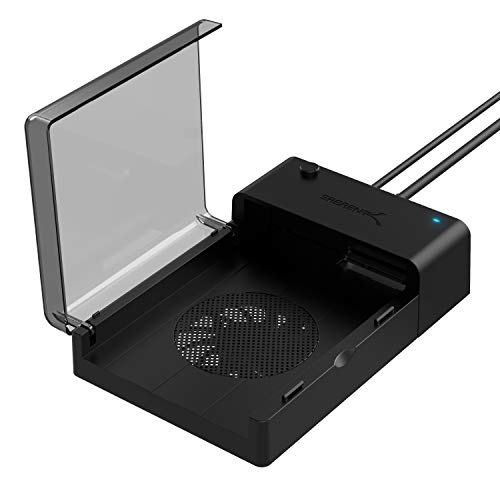
- Accepts 2.5-inch and 3.5-inch SATA drives
- Hot-swappable, plug-and-play operation
- Supports drives up to 22TB
Best For: Drive backups, cloning, and migration
Best Adjustable Cooling
Vantec NexStar HX 3.5-Inch Enclosure

- 60mm fan offers on/off and variable control
- Ventilated aluminum enclosure for 3.5-inch drives
- Hot-swappable USB 3.0 plug-and-play setup
Best For: Single-drive desktop storage with fan control
Maximum-Capacity Pick

- 10 bays support up to 200TB
- Eight hardware RAID modes
- Dual fans and USB/eSATA connectivity
Best For: Large-capacity DAS storage and multi-drive RAID setups
Simple Five-Drive Choice
Yottamaster PS500C3 5-Bay Enclosure

- Five bays and up to 110TB
- 80mm fan with aluminum shell
- Non-RAID USB-C design
Best For: Independent multi-drive storage without hardware RAID
Compact RAID Pick
CENMATE 2-Bay ASM1156R Enclosure

- Two-bay design for HDDs or SSDs
- Four RAID and disk modes
- Tool-free installation with active cooling
Best For: Compact desktop RAID 0 or RAID 1 storage
Best RAID Cooling Pick

- USB 3.1 Gen 2 up to 10Gbps
- RAID 0/1, JBOD, and PM modes
- Two-speed fan and aluminum body
Best For: Two-drive RAID storage with active cooling
Best High-Capacity DAS

- Four bays and up to 80TB stated capacity
- Tool-free, hot-swappable drive access
- USB 3.0 with active fan cooling
Best For: Multi-drive external storage without RAID or NAS
Best Fast Expansion Option
CENMATE Dual-Bay 10Gbps Enclosure

- USB 3.2 Gen 2 up to 10Gbps
- Hot-swappable two-drive design
- Daisy-chain expansion support
Best For: Fast two-drive DAS storage that can expand
Best Dual-Bay Value – CENMATE 2-Bay Aluminum Enclosure
If you need a hard drive enclosure with cooling fan for managing two SATA drives, the CENMATE offers a practical desktop storage setup. It supports both 2.5-inch and 3.5-inch HDDs or SSDs, USB-A/C 3.0 connectivity, hot swapping, and tool-free installation.
Best For: Users who want flexible two-drive external storage, easy drive changes, and daisy-chain expansion.
Pros:
- Supports two 2.5-inch or 3.5-inch SATA HDDs or SSDs, with up to 20TB per drive.
- Aluminum construction and a built-in 2-inch fan help manage heat.
- Tool-free trays, hot swapping, USB-A/C connectivity, and up to 5Gbps transfers add convenience.
- USB host support enables daisy chaining up to three devices.
Cons:
- It is a DAS enclosure and does not provide RAID or NAS functionality.
- The fan operates around 40–50 decibels, which may be noticeable in quiet spaces.
The CENMATE is a versatile choice when you need two accessible drive bays rather than a RAID array. Its cooling fan, broad drive compatibility, and expansion support make it especially useful for desktop backups and storage growth.
Best Single-Drive Dock – SABRENT USB 3.0 Cooling-Fan Dock
The SABRENT EC-DFFN is a straightforward hard drive enclosure with cooling fan for accessing one bare SATA drive at a time. Its dock-style design supports 2.5-inch and 3.5-inch drives, hot swapping, plug-and-play setup, and USB 3.0 transfers.
Best For: Users who regularly connect, back up, clone, or migrate individual SATA drives.
Pros:
- Works with standard 2.5-inch and 3.5-inch SATA HDDs and SSDs.
- Built-in fan provides active cooling during use.
- Hot-swappable, driver-free plug-and-play operation simplifies drive access.
- Supports drives up to 22TB and includes a free Acronis True Image for Sabrent download.
Cons:
- It holds only one drive at a time.
- USB 3.0 transfer speeds are up to 5Gbps, despite SATA signaling bandwidth up to 6Gbps.
This SABRENT dock is a good fit for occasional or recurring drive work where convenience matters more than multi-drive capacity. The cooling fan and cloning-software offer add useful value for backup and migration tasks.
Best Adjustable Cooling – Vantec NexStar HX 3.5-Inch Enclosure
Vantec NexStar HX, 3.5" SATA III Hard Drive Enclosure USB 3.0 With Fan (NST-387S3-BK)
Check Price On AmazonFor a single 3.5-inch SATA drive, the Vantec NexStar HX is a hard drive enclosure with cooling fan that emphasizes airflow control. It combines ventilation, a large 60mm fan with an on/off and variable switch, USB 3.0 connectivity, and hot-swappable plug-and-play operation.
Best For: Desktop users who want adjustable fan control for a large-capacity 3.5-inch drive.
Pros:
- The 60mm fan includes on/off and variable-speed control.
- Vents are designed to exhaust hot air and bring in cooler air.
- Supports SATA III drives and USB 3.0 transfer rates up to 5Gbps.
- Hot swapping and no-driver setup make adding storage simple.
Cons:
- It supports one 3.5-inch drive rather than multiple drives.
- The design is intended for Windows, macOS, and Linux computers and is not compatible with phones.
- Drive installation uses a screw set, so it is not tool-free.
The NexStar HX stands out for users who want more control over cooling than a fixed-speed fan provides. Its single-drive layout keeps the setup focused, while the ventilated aluminum enclosure supports regular desktop storage expansion.
Best High-Capacity Cooling – Yottamaster 2-Bay 48TB Enclosure
The Yottamaster DY200C3 is a hard drive enclosure with cooling fan built for large two-drive storage setups. It supports two 3.5-inch drives up to 24TB each, uses a USB Type-C connection, and adds a tool-free magnetic cover, UASP/TRIM support, and automatic sleep.
Best For: Video editors, photographers, and users building high-capacity external or always-on storage without RAID.
Pros:
- Two bays provide up to 48TB total capacity, based on 24TB per drive.
- A 60mm high-airflow fan and straight air duct are designed for improved cooling.
- Magnetic tool-free access allows quick drive installation and swapping.
- Supports Windows, Mac, and Linux, with UASP/TRIM and multiple protection features.
Cons:
- It supports 3.5-inch drives only.
- The USB interface is listed at up to 5Gbps, so actual performance depends on the connected system and drive.
- The supplied notes do not indicate RAID functionality.
With its 48TB ceiling and active airflow, the Yottamaster is the strongest option here for capacity-focused storage. The tool-free cover and automatic sleep mode make it practical for frequent access as well as longer-running setups.
Maximum-Capacity Pick – CENMATE 10-Bay RAID Enclosure
If you need a hard drive enclosure with cooling fan for a large collection of SATA drives, this 10-bay CENMATE model offers substantial capacity and multiple hardware RAID configurations. It supports 2.5-inch and 3.5-inch HDDs or SSDs, with USB 3.0 and eSATA connectivity.
Best For: Users building high-capacity DAS storage with up to 10 drives and flexible RAID options.
Pros:
- Supports up to 10 SATA HDDs or SSDs and up to 200TB total capacity, subject to drive compatibility.
- Offers eight modes, including RAID 0, RAID 5, RAID 50, RAID 00, Clone, Large, and Normal.
- Aluminum construction and dual 2.7-inch fans help with heat management.
- Includes USB-A, USB-C, and eSATA connectivity with transfer rates up to 5Gbps.
Cons:
- Requires at least two drives, with one installed in each five-drive group, when using the 10-bay enclosure.
- Changing RAID modes requires a specific power-off, switch, and reset-button procedure and can erase data.
- Fan noise is rated around 40–50 decibels, so it may not suit noise-sensitive spaces.
This is the most expansive option in the group, but its setup requirements make careful drive testing and reliable backups especially important before configuring RAID.
Simple Five-Drive Choice – Yottamaster PS500C3 5-Bay Enclosure
For straightforward multi-drive storage, the Yottamaster PS500C3 is a hard drive enclosure with cooling fan that holds five 2.5-inch or 3.5-inch SATA drives. Its USB-C connection, aluminum shell, removable trays, and 80mm fan make it suited to desktop storage and routine drive management.
Best For: Users who want five independent drives in a plug-and-play, non-RAID enclosure.
Pros:
- Supports five SATA HDDs or SSDs with up to 22TB per drive and 110TB total capacity.
- Includes five removable trays for easier installation and replacement.
- Aluminum construction, ventilation openings, and an 80mm low-noise fan support cooling.
- USB 3.1 Gen 1 Type-C provides up to 5Gbps connectivity and is compatible with Windows and Mac.
Cons:
- This is a non-RAID model; RAID must be configured through operating-system software.
- Total drive power consumption must remain within the supplied 78W adapter’s limit.
- The listed USB interface requires a computer or laptop with a Type-C port.
The PS500C3 is a practical choice when you prefer independent disks over hardware RAID, though users with high-power drives should check their total power requirements first.
Compact RAID Pick – CENMATE 2-Bay ASM1156R Enclosure
This compact CENMATE is a hard drive enclosure with cooling fan for users who need two-drive storage and basic hardware RAID flexibility. The ASM1156R chip, tool-free design, USB-A/USB-C connectivity, and support for 2.5-inch and 3.5-inch SATA drives make it a versatile desktop option.
Best For: Home and small-office users who need a compact two-bay enclosure with RAID 0, RAID 1, JBOD, or Normal modes.
Pros:
- Supports two 2.5-inch or 3.5-inch SATA HDDs or SSDs, up to 20TB per drive.
- Provides RAID 0, RAID 1, JBOD, and Normal modes through the ASM1156R chip.
- Tool-free drive installation and included USB-A/USB-C 3.0 cable simplify setup.
- Aluminum construction and a 2-inch fan help manage heat.
Cons:
- Capacity is limited to two drives and up to 40TB total based on the listed specifications.
- Changing or creating a RAID array may result in data loss and requires a reset-button step.
- Fan noise is rated around 40–50 decibels, and Mac OS does not include the enclosure’s RAID software.
With a smaller footprint than the 5- and 10-bay alternatives, this enclosure fits users who want mirrored or striped storage without committing to a larger multi-drive system.
Best RAID Cooling Pick – MAIWO Dual-Bay RAID Enclosure
If you want a hard drive enclosure with cooling fan and flexible storage management, the MAIWO dual-bay model combines USB-C 10Gbps connectivity with RAID 0, RAID 1, JBOD, and PM modes. Its aluminum body and two-speed fan are designed to help manage heat during extended use.
Best For: Users who need two-drive storage with selectable RAID modes, broad SATA compatibility, and high-speed USB-C transfers.
Pros:
- Supports 2.5- and 3.5-inch SATA HDDs and SSDs, with a bracket required for 2.5-inch drives.
- Offers RAID 0, RAID 1, JBOD, and PM modes.
- USB 3.1 Gen 2 Type-C supports transfer rates up to 10Gbps, with USB-C and USB-A cables included.
- Aluminum construction, honeycomb vents, and a two-speed rear fan assist heat dissipation.
Cons:
- It is a two-bay enclosure rather than a larger multi-drive system.
- Actual SATA drive speeds can be limited to 6Gbps under UASP.
- Changing RAID modes requires backing up data and initializing or formatting drives.
The MAIWO is a strong fit when RAID flexibility matters as much as cooling. Its 48TB stated total capacity and included mounting accessories make it practical for a compact desktop storage setup.
Best High-Capacity DAS – CENMATE Four-Bay Enclosure
For users needing several drives in one desktop unit, this hard drive enclosure with cooling fan provides four tool-free bays, USB 3.0 connectivity, and support for both 2.5- and 3.5-inch SATA HDDs and SSDs. It is a DAS enclosure, not a RAID or NAS system.
Best For: Individuals and businesses building a high-capacity, independently managed external storage setup with up to four drives.
Pros:
- Four bays support up to 20TB per drive, for a stated maximum capacity of 80TB.
- Tool-free, hot-swappable design simplifies drive installation and replacement.
- Aluminum construction and a 2-inch fan help manage heat.
- Includes USB-A and USB-C 3.0 connectivity with plug-and-play support for Windows, Mac, and Linux.
Cons:
- USB 3.0 limits stated transfer speeds to up to 5Gbps.
- It does not provide RAID or NAS functionality.
- The fan produces approximately 40–50 decibels, so it may not suit noise-sensitive users.
The CENMATE four-bay enclosure prioritizes capacity and straightforward drive access over RAID features. Choose it when you want multiple independently accessible drives and can accept USB 3.0 speeds and audible fan operation.
Best Fast Expansion Option – CENMATE Dual-Bay 10Gbps Enclosure
This hard drive enclosure with cooling fan is designed for fast two-drive storage, pairing USB 3.2 Gen 2 with hot swapping and a daisy-chain expansion port. It supports 2.5- and 3.5-inch SATA HDDs and SSDs, while its aluminum housing and 2-inch fan help address heat during operation.
Best For: Users who want a fast two-bay DAS enclosure with hot-swappable drives and the option to expand storage through daisy chaining.
Pros:
- USB 3.2 Gen 2 provides up to 10Gbps connectivity.
- Supports up to 20TB per drive, for a stated 40TB total capacity.
- Hot swapping allows drive replacement without powering down the enclosure.
- USB host daisy chaining can expand storage through up to three devices, with a stated 120TB expansion capacity.
Cons:
- It is a DAS enclosure with no RAID or NAS support.
- The 2-inch fan produces approximately 40–50 decibels.
- Actual read and write speeds depend on the drives and connected computer.
The CENMATE dual-bay model is a practical middle ground for fast external storage without RAID complexity. Its hot-swap design and expansion capability are especially useful for users planning to grow a multi-drive setup.
How We Picked the Best Hard Drive Enclosure with Cooling Fan
We compared these enclosures by drive compatibility, cooling design, connection speed, bay count, installation convenience, and storage flexibility. Models supporting both 2.5-inch and 3.5-inch SATA HDDs or SSDs offer broader long-term usefulness, while dedicated 3.5-inch units can be a better fit for desktop hard drives.
We also separated simple external storage from RAID-capable products. RAID can improve redundancy or performance, but it requires careful setup and should not replace an independent backup. Tool-free trays, hot-swapping, aluminum housings, and included cables were considered practical advantages rather than substitutes for reliable drives and backups.
Quick Comparison
- Best for one drive: A single-bay dock or enclosure keeps setup simple and affordable.
- Best for flexible home storage: A dual-bay model supports multiple drives without taking up much desk space.
- Best for large media libraries: Four- and five-bay enclosures provide room to expand.
- Best for serious capacity: A 10-bay enclosure suits extensive archives, server-style storage, and multi-drive workflows.
- Best for faster transfers: Look for USB 3.2 Gen 2 or 10Gbps USB-C, provided your computer supports the same standard.
Key Buying Factors for a Hard Drive Enclosure with Cooling Fan
Drive Size and Capacity
Confirm whether the enclosure accepts 2.5-inch drives, 3.5-inch drives, or both. Check the manufacturer’s stated maximum capacity and remember that a multi-bay enclosure’s total capacity depends on the number and size of installed drives.
Cooling and Noise
A fan is particularly useful for several drives operating together or for sustained transfers. Check for ventilation openings, fan-control features, and user feedback about noise. A fan helps move heat away, but it cannot compensate for blocked airflow or poor placement.
Connectivity and Speed
USB 3.0 and USB 3.1 Gen 1 are suitable for everyday backups and media access, while 10Gbps USB 3.1 Gen 2 or USB 3.2 Gen 2 can reduce transfer times with compatible SSDs and host ports. Avoid judging speed by the connector shape alone; USB-C does not automatically mean 10Gbps.
RAID, Hot-Swap, and Installation
Choose RAID only when you understand the available modes and their trade-offs. Hot-swap support and tool-free bays make drive changes easier, but always eject or power down drives according to the enclosure’s instructions to reduce data-loss risk.
Who Should Buy Which Hard Drive Enclosure with Cooling Fan?
Choose a single-bay dock if you occasionally clone, recover, or access one bare SATA drive. Pick a dual-bay enclosure for a compact backup setup or two-drive workspace. Four- and five-bay models are better for photographers, video editors, and home users building expandable direct-attached storage. A 10-bay enclosure is aimed at advanced users who need substantial capacity and are comfortable managing multiple disks.
Finally, match the enclosure to your computer, drives, and backup plan. The best Hard Drive Enclosure with Cooling Fan is not simply the one with the most bays; it is the model whose interface, capacity, cooling, and drive-management features fit your workload.