
Freshly milled flour can bring better flavor, texture, and control to homemade bread, pastries, and other recipes. The right grain mill depends on how often you bake, which grains you use, and whether you prefer electric speed or manual control.
These 10 grain mills for home use include compact appliances, high-capacity electric pulverizers, KitchenAid-compatible attachments, and hand-operated designs. Use the guide below to narrow the choices by performance, capacity, cleanup, and overall practicality.
Best 10 Grain Mills for Home Use Picks for 2026
Best Electric Mill

- 1200-watt motor for hard grains
- Fine flour from impact milling heads
- 8-cup hopper and nesting design
Best For: Frequent home bread bakers
Best Traditional Mill
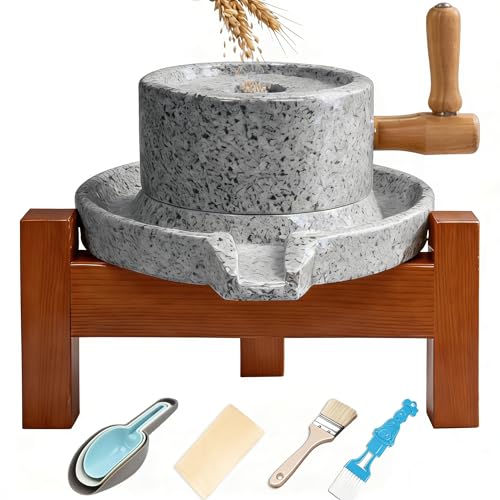
- Manual, electricity-free operation
- Granite stones and red oak frame
- Adjustable fine-to-coarse textures
Best For: Traditional home milling enthusiasts
Best Multi-Ingredient Grinder

- 25,000-rpm stainless-steel blades
- Handles dry grains, herbs, and spices
- Overload protection and timed operation
Best For: Dry-ingredient batch grinding
Best Mixer Attachment

- Tool-free KitchenAid compatibility
- Nine adjustable grind settings
- All-metal body with 10-cup limit
Best For: KitchenAid owners with limited storage
High-Capacity Electric Pick
1000g Commercial Grain Grinder

- 3000W motor reaches 32,000 RPM
- Adjustable 70-300 mesh texture control
- Safety lock and overload protection
Best For: Fast, larger-batch dry grinding at home
Off-Grid Manual Pick

- Operates without electricity
- 1.3kg capacity with a large hopper
- Adjustable grind for grains, spices, and coffee
Best For: Camping, preparedness, and electricity-free milling
Compact Timer-Controlled Pick
550g Stainless Steel Grain Mill

- 2000W motor reaches 28,000 RPM
- 70-300 mesh fineness range
- Timer helps control grinding consistency
Best For: Moderate home batches of dry grains and spices
Heavy-Duty Pick
VEVOR 3000W Cast-Iron Grain Mill

- 3000W motor for high-speed dry grinding
- Durable cast-iron body and plates
- Adjustable thickness control
Best For: Frequent dry grinding in a dedicated home workspace
Compact Batch Pick
750g High-Speed Stainless Steel Grinder
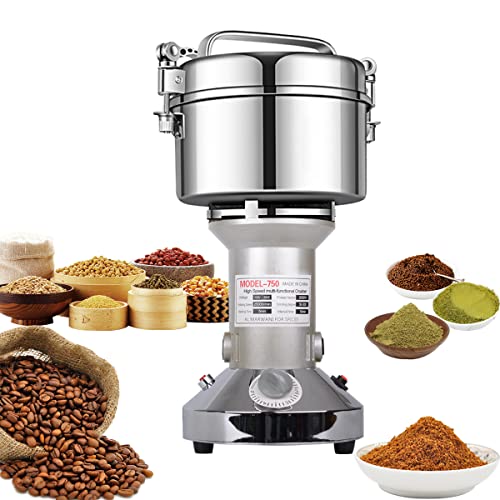
- 2000W motor with 25,000 RPM speed
- 750g capacity for small batches
- Overload protection and stainless-steel body
Best For: Occasional home grinding of dry grains, spices, and herbs
Timed-Grinding Pick

- 28,000 RPM motor for fast grinding
- 5-, 15-, and 30-second timer settings
- 1.8-pound cup with swing design
Best For: Beginners grinding dry ingredients in timed batches
Best Electric Mill – NutriMill Impact Compact
For shoppers comparing grain mills for home use, the NutriMill Impact Compact is a practical electric option for producing fine flour efficiently. Its 1200-watt motor, impact milling heads, and generous 8-cup hopper suit regular bread baking, while the nesting design helps simplify storage.
Best For: Frequent home bread bakers who want fine flour and larger batch capacity.
Pros:
- 1200-watt motor is designed for hard grains such as wheat.
- Impact milling heads target a fine, consistent bread-flour texture.
- 8-cup hopper and 12-cup canister support larger batches.
- Parts nest together, and the cyclone air filtration system helps maintain airflow.
Cons:
- Requires electricity, unlike manual mills.
- Its larger batch-oriented components may be more than occasional users need.
With substantial capacity and a compact storage approach, this mill is a strong fit for households that make fresh flour regularly and prioritize speed over hand-operated control.
Best Traditional Mill – Handmade Stone Grain Mill
Among grain mills for home use, this handmade stone mill stands out for shoppers who prefer a non-electric, traditional approach. Its granite stones and red oak frame allow hands-on control over texture, from fine pastry flour to coarser cereal meal.
Best For: Home users seeking manual milling, natural materials, and adjustable textures.
Pros:
- Manual operation needs no electricity.
- Granite stones and an unfinished red oak frame provide a natural-material design.
- Grinding time can be adjusted for fine or coarse results.
- Includes cleaning brushes, measuring scoops, a filter bag, and a recipe booklet.
Cons:
- At 40 pounds, it is substantially heavier than electric countertop options.
- Manual grinding requires more time and physical effort.
- The 16-by-16-by-12-inch footprint requires dedicated counter or storage space.
This is best viewed as a durable, hands-on appliance for traditional milling rather than a quick batch solution. The included accessories add versatility for grains, spices, and plant-milk preparation.
Best Multi-Ingredient Grinder – 1000g High-Speed Grain Mill
For buyers considering grain mills for home use that also handle spices and herbs, this 1000g stainless-steel grinder offers high-speed pulverizing. It is intended for dry ingredients only and uses short operating cycles, so it suits users who can work in controlled batches.
Best For: Households needing one machine for dry grains, spices, herbs, coffee, and similar ingredients.
Pros:
- High-speed 25,000-rpm blades can produce powders from 50 to 300 mesh.
- 1000g capacity supports substantial ingredient batches.
- 304 stainless-steel blades and a food-grade stainless-steel body are designed for durability.
- Overload protection and automatic timing add operating convenience.
Cons:
- Operation is limited to dry materials; wet, oily, or moist ingredients are unsuitable.
- It should run for no more than three minutes at a time, followed by a 5–10-minute rest.
- The grinding chamber should not be rinsed directly with water.
This machine is more of a high-speed dry-food pulverizer than a dedicated flour mill. Its broad ingredient range is useful, but the short duty cycle and cleaning restrictions require careful use.
Best Mixer Attachment – FOCOLLK KitchenAid Grain Mill
If you already own a KitchenAid stand mixer, this attachment is a space-conscious choice among grain mills for home use. It offers nine grind levels for dry grains and connects to the mixer’s power hub without tools, turning existing equipment into a fresh-flour setup.
Best For: KitchenAid owners who want adjustable flour textures without adding a separate countertop motor.
Pros:
- Fits all KitchenAid stand mixer models and installs without tools.
- Nine settings range from coarse cracked grains to ultra-fine powder.
- All-metal die-cast aluminum construction is rust-resistant and designed for regular use.
- Detachable grinding components and an included brush simplify dry cleaning.
Cons:
- It is not suitable for peanuts, soybeans, or sunflower seeds.
- Only dry, non-oily ingredients should be used.
- Sessions are limited to 10 cups, and the mixer should cool for 45 minutes between batches.
This attachment makes sense when storage space and compatibility matter more than standalone operation. Its nine settings provide useful control, but the cooling requirements limit rapid, repeated batches.
High-Capacity Electric Pick – 1000g Commercial Grain Grinder
For shoppers comparing grain mills for home use, this high-powered stainless steel model stands out for its large 1000g chamber and fast 32,000 RPM motor. It is designed for dry grains, spices, coffee, nuts, herbs, and other dry ingredients, with adjustable settings for different powder textures.
Best For: Home cooks, bakers, and bulk-prep users who want fast, high-volume grinding.
Pros:
- Large 1000g stainless steel grinding chamber reduces the number of batches needed.
- Adjustable 70-300 mesh control supports coarse-to-ultrafine results.
- Safety lock, automatic shutoff, overload protection, sieve, and cleaning tools are included.
Cons:
- Not suitable for wet, oily, or sticky ingredients.
- Its 3000W motor and 16.2-inch height may be more than casual users need.
- Requires cleaning and maintenance after grinding.
This is a strong choice when speed and batch capacity matter most. Its commercial-style motor and texture control are useful for frequent dry-ingredient processing, while the safety features add convenience for home operation.
Off-Grid Manual Pick – Manual Hand Grain Mill
This manual grain mill is a practical option for shoppers seeking grain mills for home use without relying on electricity. Its stainless steel grinding discs, large hopper, adjustable grind, and hand crank can handle dry grains, coffee, spices, herbs, and nuts for kitchen, camping, or preparedness use.
Best For: Users who want electricity-free grinding for home, camping, or survival applications.
Pros:
- Manual operation works without electricity.
- Adjustable grinding degree supports flour, grist, spices, and coffee.
- Large hopper and 1.3kg capacity support larger batches.
- Stainless steel grinding discs are designed for food-safe use and easy dismantling.
Cons:
- Hand-crank operation requires more physical effort than an electric mill.
- At 28.6 pounds, it is substantially heavier than compact countertop models.
- Only dry materials should be ground; wet, oily, and sticky ingredients are unsuitable.
Choose this mill if independence from electrical power is a priority. Its sturdy, large-format design suits committed home millers and off-grid use, but its weight and manual operation make it less convenient for quick everyday batches.
Compact Timer-Controlled Pick – 550g Stainless Steel Grain Mill
For home users comparing grain mills for home use, this 550g stainless steel electric mill offers a smaller batch size with a 2000W, 28,000 RPM motor. Its timer and adjustable grinding time help process dry grains, spices, herbs, and coffee into textures ranging from 70 to 300 mesh.
Best For: Home kitchens that need a compact electric mill for moderate dry-ingredient batches.
Pros:
- Food-grade 304 stainless steel construction is sturdy and easy to wipe clean.
- 2000W motor and triple-blade design support fast dry-ingredient grinding.
- Timer-based operation lets users adjust grinding time and fineness.
Cons:
- 550g capacity is smaller than the larger commercial-style option.
- Wet, oily, and sticky ingredients are not suitable.
- Continuous grinding should not exceed five minutes, followed by a 5-10 minute cooling period.
This model balances strong power with a relatively compact footprint. It is a sensible fit for routine home grinding when 550g batches are sufficient, provided you follow the recommended filling and cooling instructions.
Heavy-Duty Pick – VEVOR 3000W Cast-Iron Grain Mill
For shoppers comparing grain mills for home use, this VEVOR model emphasizes power, durability, and adjustable grinding. Its 3000W motor and cast-iron grinding plates are suited to dry grains, spices, cereals, and other crops, although its 46.7-pound industrial-style build is better for a dedicated workspace than casual countertop use.
Best For: Buyers who want a heavy-duty electric mill for frequent dry grinding of grains, corn, wheat, rice, and similar ingredients.
Pros:
- Powerful 3000W motor supports continuous, high-capacity grinding.
- Cast-iron body and grinding plates are built for prolonged use.
- Adjustable thickness control helps tailor the grind for grains, spices, coffee, and nuts.
- Stainless-steel funnel supports consistent feeding and easy cleanup.
Cons:
- At 46.7 pounds, it is relatively heavy for home use.
- Its 500 g capacity may require multiple batches for larger quantities.
- Designed for dry grinding rather than wet or sticky ingredients.
This is the most substantial option in the group, making sense when stability and long-term durability matter more than portability. The adjustable setting adds flexibility, but the industrial size and weight should be considered before buying.
Compact Batch Pick – 750g High-Speed Stainless Steel Grinder
This compact electric grinder is a practical choice for grain mills for home use when you need a lightweight machine for small batches. Its 2000W motor and 25,000 RPM speed can process dry grains, coffee, spices, herbs, and nuts, while the stainless-steel construction keeps the unit relatively easy to handle.
Best For: Home cooks who want a portable grinder for occasional small-batch dry ingredients.
Pros:
- 750 g capacity is useful for small to medium batches.
- Triple-blade design supports fine grinding from 50 to 300 mesh.
- Stainless-steel construction is sturdy and easy to wipe clean.
- Overload protection automatically shuts the unit off for added safety.
Cons:
- It should run for no more than 3 minutes at a time, followed by a 5–10 minute rest.
- Only dry materials should be ground; wet, oily, or moist ingredients are unsuitable.
- The motor compartment should not be rinsed directly with water.
With its lighter 8-pound design and broad ingredient range, this model is easier to store than a commercial mill. Its timed-use limitations make it better for intermittent batches than extended grinding sessions.
Timed-Grinding Pick – VEVOR 2100W Swing-Type Mill
For grain mills for home use with simpler controls, this VEVOR swing-type grinder combines a 2100W motor with preset 5-, 15-, and 30-second timers. It is designed for dry grains, spices, cereals, coffee, corn, and pepper, with a shaking cup that helps distribute ingredients during grinding.
Best For: Beginners who want a high-speed dry grinder with timed controls and a larger 1.8-pound working capacity.
Pros:
- 28,000 RPM motor can produce fine powder quickly.
- Timer options help simplify short grinding cycles.
- Triple stainless-steel blades and 30–300 mesh fineness support versatile results.
- 1.8-pound cup and 270-degree swing design help improve ingredient distribution.
Cons:
- It is intended for dry ingredients and is not suitable for wet, oily, or sticky materials.
- After up to 5 minutes of operation, it requires a 5–10 minute rest.
- Hard ingredients may need to be cut before grinding.
This model offers a useful balance of speed, capacity, and beginner-friendly operation. The timer and swing design can make repeated dry-grinding tasks more manageable, provided you follow the recommended rest periods.
How We Picked the Best Grain Mills for Home Use
We focused on the features that matter for household grain milling: grinding method, motor power or manual leverage, hopper and batch capacity, material durability, grind adjustment, operating convenience, and storage needs. We also considered versatility, since many shoppers want to process wheat, corn, rice, oats, spices, coffee, or other dry ingredients rather than mill only one type of grain.
Product descriptions and specifications were compared carefully, but advertised wattage and speed should not be treated as a complete measure of flour quality. Consistent results, safe operation, and a design suited to your routine are equally important.
Quick Comparison
- Best for frequent batches: High-capacity electric models with powerful motors and stainless-steel grinding chambers.
- Best for compact kitchens: Smaller electric mills or a KitchenAid attachment that uses equipment you already own.
- Best for off-grid use: Manual hand-crank mills with sturdy frames and accessible adjustment controls.
- Best for versatility: Mills with adjustable fineness and compatibility with several dry grains and ingredients.
Key Buying Factors for Grain Mills for Home Use
Electric or Manual Operation
Electric mills are faster and require less effort, making them practical for regular bread baking or larger households. Manual mills are quieter, operate without power, and can be more dependable during outages, but they require physical effort and usually process smaller batches more slowly.
Capacity and Intended Workload
Check both the stated hopper capacity and how much flour you typically need per session. A large commercial-style grinder may reduce batching time, while a compact model can be easier to store and sufficient for occasional use. Avoid choosing solely by the largest capacity if counter space is limited.
Grind Control and Ingredient Compatibility
Adjustable settings help you move from coarse cracked grain to finer flour, although the available range varies by design. Confirm that the mill is intended for the ingredients you plan to use. Some high-speed pulverizers are versatile but may be better suited to dry ingredients than oily, damp, or sticky foods.
Construction, Heat, and Cleanup
Stainless-steel chambers and grinding parts are generally easy to wipe clean and resistant to corrosion. High-speed motors can generate heat, so follow the manufacturer’s batch-size and rest-time guidance to protect flavor and equipment life. Look for removable components or straightforward access to areas where flour collects.
Who Should Buy Which Grain Mills for Home Use?
Choose a compact electric mill if you want fresh flour occasionally and value simple storage. Frequent home bakers should consider a faster, higher-capacity electric model. A manual wood-framed or hand-crank mill suits shoppers who prioritize durability, quiet operation, and independence from electricity. If you already own a compatible KitchenAid mixer, an attachment can provide a space-saving way to begin milling without adding another large appliance.
Before ordering, verify dimensions, voltage, included accessories, cleaning instructions, and the seller’s guidance on suitable grains. The best choice is the model that matches your actual batch size and routine—not necessarily the one with the highest advertised wattage.