
Freshly milled flour can bring more aroma, flavor, and control to home baking, but the right mill depends on your batch size, preferred grains, available counter space, and tolerance for noise or manual effort.
We compared 10 popular grain mills for home bakers, from dedicated stone and impact mills to hand-crank grinders, KitchenAid attachments, and high-speed stainless-steel pulverizers.
Best 10 Grain Mill for Home Bakers Picks for 2026
Editor's Choice

- 450-watt motor with thermal protection
- Corundum stones for hard grains
- Fine-to-coarse texture control
Best For: Home bakers wanting adjustable electric stone milling
Best Manual Option

- No electricity required
- Adjustable stainless steel grinding discs
- Large hopper for dry ingredients
Best For: Off-grid, camping, and manual kitchen milling
Best for Fine Flour

- Fine pastry flour to cracked grain
- 450-watt protected motor
- Corundum stones made for hard grains
Best For: Pastry and bread bakers seeking flexible textures
Best Space-Saving Pick

- Tool-free KitchenAid installation
- Nine adjustable grind settings
- Lightweight 3.25-pound attachment
Best For: KitchenAid owners milling occasional dry-grain batches
High-Speed Power Pick
VEVOR Electric Grain Mill Grinder

- 2100-watt motor with 28,000 RPM operation
- 30- to 300-mesh adjustable fineness
- Handles dry grains, spices, and coffee
Best For: Fast small-batch grinding of dry ingredients
Stand Mixer Attachment Pick
HOZODO Grain Mill Attachment for KitchenAid

- All-metal attachment for KitchenAid mixers
- Nine settings from coarse to ultra-fine
- Designed for dry, low-oil grains
Best For: KitchenAid owners milling fresh flour
Frequent Bread Baker Pick
NutriMill Impact Compact Grain Mill

- 1200-watt motor for hard grains
- Impact heads make fine bread flour
- 8-cup hopper and 12-cup canister
Best For: Regular bread bakers milling larger batches
Classic Hand-Crank Choice

- Heavy-duty cast iron body
- Table clamp for stability
- Grinds corn, wheat, oats, and brewing grains
Best For: Electricity-free home grinding
High-Capacity Electric Pick
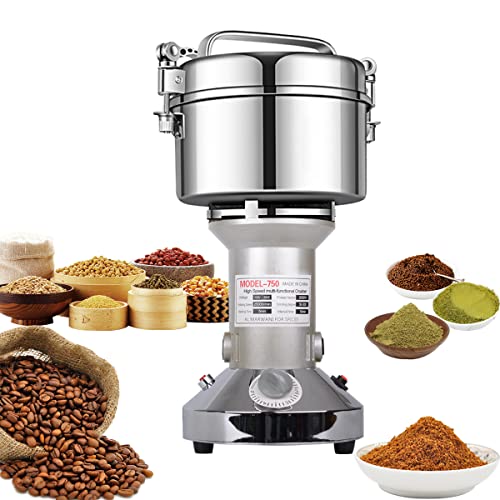
- 750g capacity and 2,000W motor
- Up to 25,000 RPM listed
- 50-to-300-mesh fineness range
Best For: Larger batches of dry ingredients
Compact Electric Option
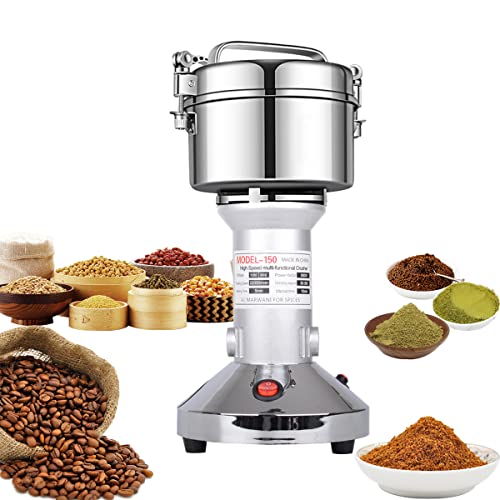
- Compact 150g grinding capacity
- 900W motor at 22,000 RPM
- Designed for dry grains, seeds, herbs, and spices
Best For: Small recipe-sized batches
Editor's Choice – NutriMill Harvest Black
For home bakers seeking a dependable grain mill for home bakers, the NutriMill Harvest combines a 450-watt motor with near-diamond-hard corundum stones. Its texture control supports everything from fine pastry flour to coarser cracked grain.
Best For: Home bakers who want an electric stone mill with adjustable textures and thermal protection.
Pros:
- 450-watt heavy-duty motor with auto-shutoff thermal protection
- Corundum Grainmaster stones handle hard grains
- Texture control ranges from fine to coarse
- CSA tested and listed; designed and assembled in the USA
Cons:
- At 18.7 pounds, it is not especially portable
- Designed for non-oily grains and legumes
The Harvest Black is a strong all-around choice when consistent electric milling and flour-texture control matter more than portability.
Best Manual Option – Heavy-Duty Hand Grain Mill
This manual grain mill for home bakers is suited to kitchens, camping, and backup food preparation where electricity is unavailable. Its adjustable stainless steel grinding discs can process dry grains, spices, herbs, and coffee beans.
Best For: Bakers who value manual operation, broad dry-ingredient versatility, and off-grid use.
Pros:
- Manual design requires no electricity
- Adjustable grinding degree supports fine flour through coarser meal
- Large hopper and flywheel support batch milling
- Easy to dismantle for cleaning
Cons:
- Only suitable for dry materials; wet, oily, and sticky foods are excluded
- Heavy at 28.6 pounds
- Manual cranking requires more effort than an electric mill
Choose this model for flexibility and energy independence, but account for its substantial weight and the physical work of hand milling.
Best for Fine Flour – NutriMill Harvest Gold
The NutriMill Harvest Gold is a practical grain mill for home bakers who regularly make bread and pastries. Its 450-watt motor and German-made corundum stones are designed to mill hard grains, while the texture knob moves from pastry flour to cracked grain.
Best For: Home bakers focused on fine flour for lighter baked goods, with the option to mill coarser textures.
Pros:
- Produces textures from fine pastry flour to coarse cracked grain
- 450-watt motor includes auto-shutoff thermal protection
- Corundum stones are designed for hard grains
- Compact 7-by-7-by-13-inch footprint
Cons:
- Intended for non-oily grains and legumes
- Its 18.7-pound weight limits portability
With its fine-flour capability and adjustable output, the Gold version is well matched to bakers who want fresh-milled flour for pastries as well as everyday baking.
Best Space-Saving Pick – FOCOLLK KitchenAid Attachment
If you already own a KitchenAid stand mixer, this attachment offers a compact way to add a grain mill for home bakers without buying a separate countertop motor. It has nine settings for dry, non-oily grains, from cracked grains to fine powder.
Best For: KitchenAid owners who want adjustable milling and a lightweight attachment for occasional batches.
Pros:
- Fits all KitchenAid stand mixer models and installs without tools
- Nine grind settings cover coarse through fine results
- Food-grade die-cast aluminum alloy construction
- Detachable chamber simplifies residue removal
Cons:
- Not suitable for peanuts, soybeans, or sunflower seeds
- Must be cleaned with the included brush rather than water or a dishwasher
- Requires rest periods, including 45 minutes between batches for mixer cooling
This is a convenient choice for KitchenAid households, especially when storage space is limited, though batch scheduling and dry-ingredient restrictions are important.
High-Speed Power Pick – VEVOR Electric Grain Mill Grinder
For home bakers who want a versatile grain mill for home bakers, the VEVOR Electric Grain Mill Grinder offers high-speed processing for dry grains, cereals, corn, coffee, and spices. Its 2100-watt motor, 800 g cup, and timed controls make it suited to quick small-batch grinding, though it is not designed for wet, oily, or sticky ingredients.
Best For: Home cooks and bakers who need a powerful mill for dry grains, spices, and other small-batch ingredients.
Pros:
- 28,000-RPM motor and triple stainless-steel blades can produce fine powder quickly.
- Timed settings of 5, 15, and 30 seconds simplify repeat grinding.
- Adjustable fineness ranges from 30 to 300 mesh.
- 270-degree shaking design helps improve grinding efficiency and reduce sticking.
Cons:
- Limited to dry materials; wet, oily, and sticky ingredients are unsuitable.
- Continuous operation is limited to five minutes, followed by a recommended rest.
- Its 800 g cup may require multiple batches for larger baking projects.
This VEVOR model is a strong choice when speed and ingredient versatility matter most. Its timed operation and broad fineness range are useful for experimenting with dry grains, but frequent bread bakers may prefer a mill designed specifically around flour production.
Stand Mixer Attachment Pick – HOZODO Grain Mill Attachment for KitchenAid
If you already own a KitchenAid stand mixer, the HOZODO attachment is a space-conscious way to add a grain mill for home bakers to your setup. It grinds low-moisture, low-oil grains such as wheat, oats, corn, millet, and wheat into fresh flour, with nine settings for adjusting the texture.
Best For: KitchenAid owners who want adjustable fresh-flour milling without buying a separate electric motor base.
Pros:
- All-metal die-cast aluminum construction supports grinding hard and fibrous dry grains.
- Nine grind settings provide textures from coarse to ultra-fine.
- Removable design and included cleaning tool make flour removal straightforward.
- Works with low-moisture, low-oil grains including wheat, oats, corn, and millet.
Cons:
- Designed for KitchenAid stand mixers rather than standalone operation.
- Not intended for high-oil ingredients such as nuts or sesame seeds.
- Extended use may require 30- to 45-minute cooling breaks for the mixer.
The HOZODO is appealing for bakers who value integration and control. Start at the coarse setting and work finer to help prevent clogging, and plan around the recommended cooling breaks when milling multiple batches.
Frequent Bread Baker Pick – NutriMill Impact Compact Grain Mill
The NutriMill Impact Compact is a dedicated grain mill for home bakers focused on fresh flour and bread making. Its 1200-watt motor and impact milling heads are designed for hard grains such as wheat, while the 8-cup hopper and 12-cup flour canister support larger batches than many compact grinders.
Best For: Frequent bread bakers who want a dedicated mill with generous hopper and flour-canister capacity.
Pros:
- 1200-watt motor is designed to handle hard grains such as wheat.
- Impact milling heads are intended to produce fine-textured bread flour.
- 8-cup hopper and 12-cup canister accommodate larger milling batches.
- Nesting components and compact design simplify storage.
Cons:
- The supplied details do not list adjustable grind settings.
- Its focus is fresh flour and wheat grinding rather than broad spice-grinding versatility.
- The white compact base may still require dedicated storage space despite its nesting design.
For regular bread production, the NutriMill’s flour-focused design and larger capacity make it the most purpose-built option in this group. Its cyclone air filtration also helps maintain airflow during milling, supporting consistent operation.
Classic Hand-Crank Choice – Cast Iron Grain Mill
For home bakers comparing a grain mill for home bakers, this manual cast iron model offers a straightforward, electricity-free way to grind corn, wheat, oats, and brewing grains. Its table clamp is designed to keep the mill in place during use.
Best For: Home bakers who prefer manual grinding and a heavy-duty, clamp-mounted design.
Pros:
- Heavy-duty cast iron construction.
- Table clamp supports stable countertop use.
- Suitable for corn, wheat, oats, and brewing grains.
- Requires no electrical power.
Cons:
- Manual cranking requires more effort than an electric grinder.
- At 7.5 pounds, it is relatively substantial to move and store.
- The supplied notes do not specify a grinding capacity or fineness range.
This is a practical pick for bakers who value durable construction and hands-on control over speed and convenience. The clamp and crank make it better suited to a dedicated work area than occasional portable use.
High-Capacity Electric Pick – 750g Stainless Steel Grinder
This 750g electric grain mill for home bakers is built for fast processing of dry grains and other ingredients. Its 2,000-watt motor, stainless steel body, and stated 50-to-300-mesh fineness range suit users who want high-speed batch grinding.
Best For: Bakers who need a larger-capacity electric grinder for dry grains, flour, spices, herbs, or coffee.
Pros:
- 750g capacity with a 2,000-watt motor.
- High-speed operation listed at 25,000 RPM.
- Designed for grains, cereals, spices, herbs, coffee, and other dry foods.
- Overload shutoff and reset button provide a stated safety feature.
Cons:
- Only dry ingredients should be used; wet, moist, or oily materials are not suitable.
- Recommended operation is limited to three minutes followed by a five-to-10-minute rest.
- The grinding chamber should be cleaned with a cloth rather than rinsed directly with water.
The larger capacity makes this the more practical choice for batch preparation, but its timed-duty limits mean it is not intended for uninterrupted grinding. Follow the fill, cooling, and cleaning instructions carefully.
Compact Electric Option – 150g Grain Grinder
For shoppers seeking a compact grain mill for home bakers, this 150g stainless steel electric grinder is designed for smaller quantities of dry grains, seeds, flour, nuts, herbs, and spices. Its 900-watt motor and 22,000 RPM speed are aimed at quick, fine grinding.
Best For: Home bakers who grind small quantities and want a compact electric machine.
Pros:
- Compact 150g capacity for small batches.
- 900-watt motor and listed speed of 22,000 RPM.
- Stated crushing fineness ranges from 50 to 300 mesh.
- Stainless steel construction, snap-on cover, and non-slip base.
Cons:
- Small capacity is less suitable for large baking batches.
- Designed for dry ingredients only and should not be filled beyond two-thirds.
- Operation should be limited to three minutes with a five-to-10-minute rest.
This model makes sense when countertop space and batch size matter more than throughput. Its smaller chamber can be convenient for recipe-sized quantities, provided you allow cooling time and keep water away from the grinding tank.
How We Picked the Best Grain Mill for Home Bakers
We organized this roundup around the features that matter most in a home kitchen: milling method, motor power, hopper and output capacity, adjustability, cleanup, durability, storage, and ease of use. We also included different formats because a frequent bread baker may need a dedicated electric mill, while an occasional user might prefer a manual grinder or stand-mixer attachment.
Product descriptions and specifications were considered alongside practical fit. Wattage alone does not determine flour quality or speed, so treat it as one indicator rather than a guarantee. Always confirm the manufacturer’s instructions for suitable grains and whether the mill is intended for oily ingredients, wet materials, or continuous operation.
Quick Comparison
| Type | Best For | Main Advantage | Potential Trade-Off |
|---|---|---|---|
| Electric stone mill | Regular bread and pastry baking | Adjustable, traditional milling | More counter space and noise |
| Impact or high-speed mill | Fast flour production | Quick operation and compact designs | Often louder; heat and texture may vary |
| Manual hand mill | Off-grid use or occasional milling | No electricity required | Requires physical effort |
| KitchenAid attachment | Existing stand-mixer owners | Uses equipment already on the counter | Depends on mixer compatibility |
| Small stainless-steel grinder | Small batches and multi-purpose grinding | Compact and versatile | Limited capacity and less baking-specific control |
Key Buying Factors for a Grain Mill for Home Bakers
Milling Method and Flour Texture
Stone mills are appealing for bakers who want adjustable settings and a dedicated flour-making appliance. Impact mills and pulverizers can work quickly, while small blade-style grinders are better suited to modest quantities than large bread batches. Look for clear adjustment controls if you want to switch between coarse meal and finer flour.
Capacity and Batch Size
Consider how much flour you normally use at once. A compact model may be convenient for one loaf or occasional recipes, but larger hoppers and continuous-feed designs are more practical for multiple loaves. Do not confuse hopper capacity with actual flour output; check both when specifications are available.
Power, Noise, and Heat
Higher wattage can support faster grinding, but it may also mean more noise and a larger motor housing. Excess heat can affect delicate ingredients, so follow the recommended duty cycle and avoid running a small grinder beyond its intended capacity.
Cleaning and Compatibility
Choose removable or accessible milling components when easy cleanup matters. For attachments, verify the exact KitchenAid or stand-mixer connection before buying. Manual models should have a stable base and comfortable crank, especially if you plan to mill regularly.
Who Should Buy Which Grain Mill for Home Bakers?
Choose a dedicated electric stone mill if you bake with whole grains frequently and want repeatable control. An impact mill is a sensible choice when speed and straightforward operation matter most. A KitchenAid attachment fits bakers who already own a compatible mixer and want to minimize another countertop appliance.
Pick a manual hand-crank or cast-iron mill for emergency preparedness, off-grid use, or a slower traditional process. Compact stainless-steel grinders are best for small batches and occasional flour, spice, seed, or grain grinding, provided their capacity matches your recipes. Before ordering, prioritize your typical batch size, storage space, cleanup preferences, and the grains you actually plan to mill.