
Freshly milled flour can bring more aroma, flavor, and control to homemade bread, but the right grain mill depends on how often you bake, the grains you use, and how much effort you want to spend.
We compared 10 grain mills for bread flour across electric and manual designs, milling capacity, grind control, construction, and everyday practicality to help you choose a model that fits your baking routine.
Best 10 Grain Mill for Bread Flour Picks for 2026
High-Output Pick
NutriMill Impact Compact Electric Grain Mill

- 1200-watt motor handles hard grains like wheat
- Fine-textured impact milling for bread flour
- Large hopper and canister for batch baking
Best For: Frequent bread bakers making larger batches
Stand Mixer Upgrade
KitchenAid KGM All Metal Grain Mill

- Fits household KitchenAid stand mixers
- 12 grind levels from coarse to fine
- Handles wheat and other low-moisture grains
Best For: KitchenAid owners wanting an attachment mill
Stone-Ground Choice
NutriMill Harvest Electric Stone Grain Mill

- Corundum stones mill hard grains
- 450-watt motor has thermal protection
- Adjusts from pastry flour to cracked grain
Best For: Home bakers wanting adjustable stone-ground textures
Manual Milling Option
Lehman's Manual Power Grain Mill

- Grinds wheat and other dry grains to pastry flour
- 12-inch flywheel supports easier hand grinding
- Can be motorized and bolted to a base
Best For: Off-grid or hands-on home bread bakers
Best Versatile Hand Mill

- Produces up to 1.25 cups per minute
- Stone and stainless steel burrs included
- Adjusts from fine flour to cracked grain
Best For: Versatile manual milling, including bread flour and oily ingredients
Best Traditional Corn Mill

- Durable cast-iron construction
- 2400 g high-hopper capacity
- Not designed for superfine bread flour
Best For: Coarse grain, corn, brewing, and multipurpose kitchen grinding
Best Compact Bread Flour Mill
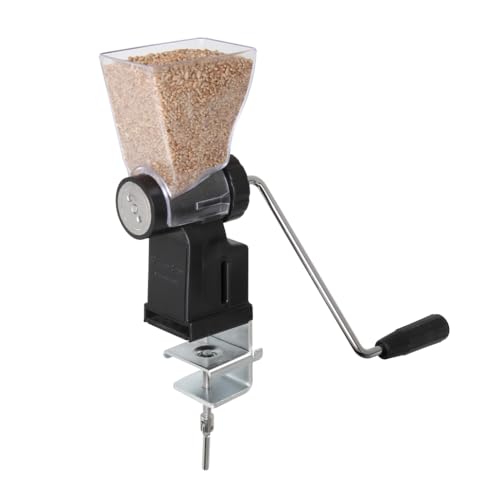
- Makes fine, bread-quality flour
- Lightweight design weighs under 3 pounds
- Optional electric motor adds flexibility
Best For: Small-batch bread flour from dry, non-oily grains
High-Capacity Pick
1000g 3000W Stainless Steel Grain Mill

- 1000g capacity for larger batches
- 30,000-rpm motor with timer control
- 304 stainless steel body for dry ingredients
Best For: Larger household or light commercial milling batches
Compact Budget Option
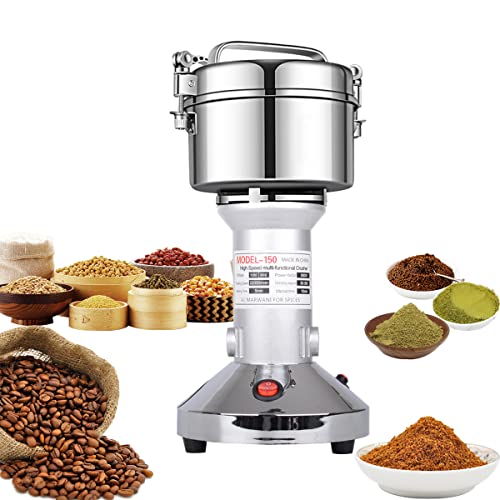
- Compact 150g stainless steel design
- 900W motor at 22,000 rpm
- Overload shutoff with reset button
Best For: Small dry-ingredient batches and limited counter space
Mid-Size Workhorse
750g 2000W Electric Grain Mill
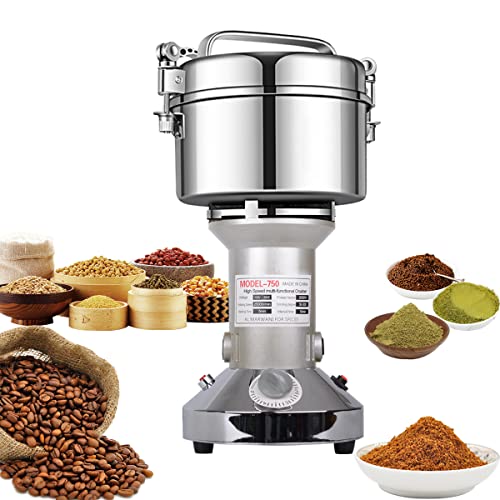
- 750g capacity for moderate batches
- 2000W motor at 25,000 rpm
- Overload protection and triple-blade design
Best For: Home bakers milling moderate amounts of dry grains
High-Output Pick – NutriMill Impact Compact Electric Grain Mill
If you need a grain mill for bread flour and regularly process hard wheat, the NutriMill Impact Compact emphasizes speed and batch capacity. Its 1200-watt motor, impact milling heads, and large hopper are suited to frequent home baking.
Best For: Frequent bread bakers who want an electric mill for larger batches of fresh flour.
Pros:
- 1200-watt motor is designed to mill hard grains such as wheat.
- Impact milling heads produce a fine texture intended for bread flour.
- 8-cup hopper and 12-cup flour canister support larger batches.
- Nesting parts and cyclone air filtration make storage and airflow management practical.
Cons:
- Its 20-cup overall capacity and motorized design may be more than occasional bakers need.
- It requires access to household electricity.
The NutriMill Impact Compact is a strong match for bread-focused kitchens that value speed and capacity. Its compact nesting design helps offset the footprint of a higher-output electric mill.
Stand Mixer Upgrade – KitchenAid KGM All Metal Grain Mill
For shoppers seeking a grain mill for bread flour without adding a separate motor base, the KitchenAid KGM attaches to household KitchenAid stand mixers. Its 12 grind levels let you adjust low-moisture grains from coarse to fine.
Best For: KitchenAid owners who want adjustable grain milling in an attachment format.
Pros:
- Fits all household KitchenAid stand mixers.
- Offers 12 grind levels from coarse to fine.
- Works with wheat, corn, rice, and other low-moisture, low-oil grains.
- Includes a cleaning brush and a one-year hassle-free warranty policy.
Cons:
- It requires a compatible KitchenAid stand mixer to operate.
- The attachment is intended for low-moisture, low-oil grains rather than all ingredients.
The KGM is a convenient choice if you already own a KitchenAid and want flexible control over flour texture. It saves the need for a standalone electric mill while keeping the setup tied to the mixer.
Stone-Ground Choice – NutriMill Harvest Electric Stone Grain Mill
The NutriMill Harvest is a practical grain mill for bread flour when you want stone milling and adjustable texture control. Its corundum milling stones handle hard grains, while the texture knob ranges from fine pastry flour to coarse cracked grain.
Best For: Home bakers who want an electric stone mill with broad texture adjustment.
Pros:
- Near-diamond-hard Corundum Grainmaster stones are made to mill hard grains.
- 450-watt motor includes automatic thermal protection.
- Texture control ranges from pastry flour to cracked grain.
- Can mill non-oily grains and legumes, and is designed and assembled in the USA.
Cons:
- Its 5-cup capacity is smaller than the larger-batch mills in this roundup.
- At 18.7 pounds, it is not especially lightweight for moving or storage.
With stone milling and a dedicated texture control, the Harvest offers versatility beyond bread flour alone. It is best suited to home users who appreciate adjustable results and do not need the largest hopper.
Manual Milling Option – Lehman's Manual Power Grain Mill
If you want a grain mill for bread flour that does not depend on electricity, Lehman’s Manual Power Grain Mill offers hand-powered grinding with a large flywheel. It handles dry grains from wheat and rye to rice and quinoa, with a capacity suited to home use.
Best For: Self-sufficient home bakers who prefer manual milling or want a mill that can also be motorized.
Pros:
- Grinds a range of free-flowing dry grains to pastry flour.
- 12-inch iron V-belt flywheel provides momentum for easier hand grinding.
- 6-cup hopper supports a useful home-baking batch size.
- Can be motorized, and four pre-drilled base holes allow bolting down.
Cons:
- Hand grinding requires physical effort and takes more involvement than an electric mill.
- Its 26-pound weight and 14-inch height make it a substantial countertop or mounted appliance.
- The supplied specifications describe dry-grain use, not oily or moist ingredients.
Lehman’s mill stands out for users who value independence from electricity and hands-on control. The flywheel eases manual operation, while the motorization option adds flexibility for a future setup.
Best Versatile Hand Mill – Wonder Junior Deluxe
If you want a highly adaptable grain mill for bread flour, the Wonder Junior Deluxe offers manual control from fine flour to cracked grain. Its stone burrs handle dry grains, while stainless steel burrs support oily foods, nuts, seeds, spices, and other ingredients.
Best For: Bakers who want fine flour capability plus a versatile manual mill for specialty ingredients.
Pros:
- Can produce up to 1.25 cups of flour per minute.
- Locking adjustment knob supports precise fine-to-coarse settings.
- Includes stone and stainless steel burr sets for dry, oily, and high-moisture foods.
- Heavy-duty aluminum construction and a secure double-clamp table mount.
Cons:
- At 14 pounds, it is heavier than the other manual mills listed here.
- Manual cranking requires physical effort for larger batches.
This is the strongest all-around option when bread flour is only part of your milling routine. The extra burr set and broad ingredient range add flexibility, while the durable construction suits frequent use.
Best Traditional Corn Mill – Victoria Cast Iron Grain Mill
The Victoria Manual Cast Iron Grain Mill is a traditional clamp-on grinder with a high hopper and adjustable white iron discs. It can process many grains, but shoppers seeking a grain mill for bread flour should note that it does not produce a superfine texture or fine whole-wheat powder.
Best For: Users prioritizing sturdy cast-iron construction and coarse-to-medium grinding for corn, grains, brewing, and kitchen ingredients.
Pros:
- Heavy-duty cast-iron body with double tin plating.
- Adjustable screw lets you change grinding coarseness and fineness.
- High hopper provides a 2400 g capacity.
- Clamp fits tables from 1/2 to 2 inches thick and includes a surface protector.
Cons:
- Cannot grind to a superfine texture.
- Will not grind whole wheat into fine powder, limiting its use for bread flour.
- Includes a 90-day limited manufacturer warranty.
Choose this mill for traditional, heavy-duty grinding rather than ultra-fine bread flour. Its capacity and broad ingredient compatibility make it useful for corn, brewing grains, spices, and other coarse-ground foods.
Best Compact Bread Flour Mill – Kitchen Crop Hand Crank Mill
Kitchen Crop Hand Crank Grain Mill Wheat Flour Grinder, Stainless Steel Metal Burrs (The Grain Mill)
Check Price On AmazonThe Kitchen Crop Hand Crank Grain Mill is a compact choice for bread flour milling in small batches. Its stainless steel burrs and adjustment dial handle dry grains from coarse cracked cereal through fine, bread-quality flour, and the mill can later accept an optional electric motor.
Best For: Small-batch bakers who want a lightweight manual mill with a future electric-drive option.
Pros:
- Adjusts from cracked grains and cereal to fine, bread-quality flour.
- Stainless steel burrs grind wheat, rice, oats, barley, rye, corn, and other non-oily grains.
- Weighs less than 3 pounds for easy storage and transport.
- Wide clamp base fits counters and tables up to 2 inches thick.
Cons:
- Limited to dry, non-oily grains and seeds.
- Optional electric drive motor is sold separately.
- Compact two-cup hopper is better suited to small batches than high-volume milling.
For bread bakers who value a small footprint, this mill offers the most focused feature set of the group. It is a practical fit for fresh flour in modest quantities, with the option to add motor assistance later.
High-Capacity Pick – 1000g 3000W Stainless Steel Grain Mill
If you need a grain mill for bread flour and other dry ingredients, this 1000g stainless steel grinder offers substantial capacity and adjustable grinding time. Its high-speed motor is designed for fine powder, though its short operating cycles require planned pauses.
Best For: Home kitchens, small food businesses, and users who want to process larger batches of dry grains or spices.
Pros:
- Large 1000g capacity for fewer refills.
- 3000W motor and 30,000-rpm rotation speed.
- Adjustable timer with stated fineness from 70 to 300 mesh.
- Food-grade 304 stainless steel construction.
Cons:
- Designed for dry ingredients; wet materials are not specified for use.
- Continuous grinding should not exceed five minutes, followed by a cooling rest.
- Cleaning requires wiping rather than rinsing the machine directly.
This is the strongest capacity option in the group for bread-flour prep and other dry milling jobs. The timer and broad ingredient range add flexibility, but the cooling instructions matter for repeated batches.
Compact Budget Option – 150g High-Speed Grain Grinder
For shoppers seeking a compact grain mill for bread flour, this 150g electric grinder focuses on small batches and quick processing. It handles dry wheat and other grains, but the limited capacity and required rest periods make it better suited to occasional use.
Best For: Small household batches, spices, herbs, coffee beans, and users with limited counter or storage space.
Pros:
- Compact 150g capacity with a 900W motor.
- 22,000-rpm speed and stated 50-to-300-mesh fineness.
- Food-grade stainless steel construction.
- Overload shutoff and reset button provide an added safety feature.
Cons:
- Small capacity requires repeated fills for larger bread-flour batches.
- Operation should be limited to three minutes before a five-to-10-minute rest.
- Only dry materials should be ground; wet, moist, or oily ingredients are unsuitable.
This model is practical when batch size matters less than compactness and versatility. For regular bread baking, expect more refill and cooldown interruptions than with the larger mills.
Mid-Size Workhorse – 750g 2000W Electric Grain Mill
This 750g grinder is a middle-ground choice for a grain mill for bread flour, combining more batch capacity than a compact unit with a high-speed 2000W motor. It is intended for dry wheat, cereals, rice, spices, herbs, and coffee, with careful attention to its short duty cycle.
Best For: Home bakers and kitchens that need moderate-size dry-grain batches without moving up to a 1000g machine.
Pros:
- 750g capacity balances batch size and countertop practicality.
- 2000W motor with 25,000-rpm rotation speed.
- Triple-blade design and stated 50-to-300-mesh fineness.
- Overload shutoff with reset function.
Cons:
- Operation is recommended for no more than three minutes at a time.
- Requires a five-to-10-minute rest between grinding sessions.
- Stainless steel container should be cleaned with a cloth rather than direct water rinsing.
With its moderate capacity and strong motor, this is a sensible compromise for bread-flour preparation. It can process more per batch than the 150g model, although the cooldown schedule limits nonstop production.
How We Picked the Best Grain Mill for Bread Flour
We focused on the features that matter most when turning wheat berries into bread flour: consistent particle size, useful grind adjustment, motor or crank performance, hopper and container capacity, cleanup, and overall durability. The selection includes purpose-built grain mills as well as compact high-speed grinders, so shoppers can compare convenience, flexibility, and cost.
Manual mills can work well for occasional baking or off-grid use, while electric models are generally faster and easier for larger batches. Stone and burr systems are typically better suited to controlled flour milling than small spice-style grinders, although high-speed grinders may appeal to shoppers who prioritize compact storage and quick processing.
Quick Comparison
| Best For | Recommended Type | What to Prioritize |
|---|---|---|
| Frequent bread baking | Electric grain mill | Motor power, cooling, grind consistency, and capacity |
| Quiet, hands-on milling | Manual burr or stone mill | Crank comfort, stability, adjustment, and build quality |
| KitchenAid owners | Stand-mixer attachment | Mixer compatibility, attachment speed, and storage |
| Small kitchens | Compact electric mill | Footprint, cord storage, hopper size, and cleanup |
| Large batches | High-capacity electric mill | Batch size, duty cycle, heat management, and container design |
Key Buying Factors for a Grain Mill for Bread Flour
Grind Quality and Adjustment
Look for a mill that can produce a fine, repeatable flour suitable for yeast breads. Adjustable settings are valuable because whole-wheat recipes, sourdough, pastry, and cracked grains benefit from different textures. A mill that produces excessive heat may affect delicate flavor and storage life, so ventilation and sensible batch limits matter.
Capacity and Speed
Match the hopper and output to your baking habits. A smaller mill is easier to store and may be enough for occasional loaves, while frequent bakers should consider faster output and a larger flour container. Published wattage alone does not determine performance; milling design, cooling, and the grain being processed also matter.
Construction and Maintenance
Metal burrs, quality stone components, and sturdy housings can improve longevity. Check whether the milling heads are removable, whether parts are easy to brush clean, and whether the manufacturer permits oily grains or only dry wheat and similar grains. Never assume a flour grinder designed for spices can safely handle every grain or continuous workload.
Ease of Use and Noise
Electric mills save time but can be loud. Manual models avoid motor noise and provide more control, but they require physical effort and a stable mounting position. Consider controls, safety features, cord placement, and how easily the finished flour transfers into a bowl or storage container.
Who Should Buy Which Grain Mill for Bread Flour?
Choose a dedicated electric mill if you bake bread regularly and want fast, consistent results with minimal effort. A manual stone or burr mill is better for occasional bakers, people who value durability and simplicity, or anyone preparing flour without electricity. A KitchenAid attachment makes sense when you already own the compatible stand mixer and want to avoid adding another countertop appliance.
Compact high-speed grinders are most appropriate for small quantities, experimental baking, and shoppers with limited storage. For family-size batches or frequent whole-grain baking, prioritize a purpose-built grain mill with adequate capacity, adjustable settings, and a clearly stated duty cycle. Before buying, confirm the model supports the grains you use and can produce the flour texture your bread recipes require.