
Choosing baby monitors with breathing alerts can make nighttime feel a little less stressful, especially for new parents who want an extra layer of reassurance.
In this roundup, we focus on practical features, alert styles, setup ease, and whether each monitor fits your nursery routine and budget.
Best 10 Baby Monitors with Breathing Alerts Picks for 2026
Bedside, No-WiFi Coverage
Babysense 7 Under-Mattress Monitor

- Non-contact movement sensing through the mattress
- Two pads cover the full crib or bed area
- No WiFi and no wearable parts
Best For: Families wanting full-crib passive monitoring
Wearable Vibration Alert
Levana Oma Sense Diaper Monitor

- Vibration-first alert system for low abdominal movement
- Wearable design with zero skin contact
- No WiFi, radio, or Bluetooth frequencies
Best For: Newborn parents wanting a wearable alert monitor
Video Plus Health Readings
Owlet Dream Duo 2 Smart Monitor

- FDA-cleared Dream Sock tracks pulse and oxygen
- Includes HD camera with app and base-station alerts
- Supports 48 hours of free video clip storage
Best For: Parents wanting health tracking with video
Simple Cordless Motion Monitor
BabySmile Baby Movement Monitor

- Detects subtle abdominal movement.
- Alarms if no movement is sensed for about 20 seconds.
- Cordless design with long battery life.
Best For: Parents who want a simple, cordless motion monitor with a local alarm.
Wearable Health Alert Monitor
Owlet Dream Sock Smart Baby Monitor
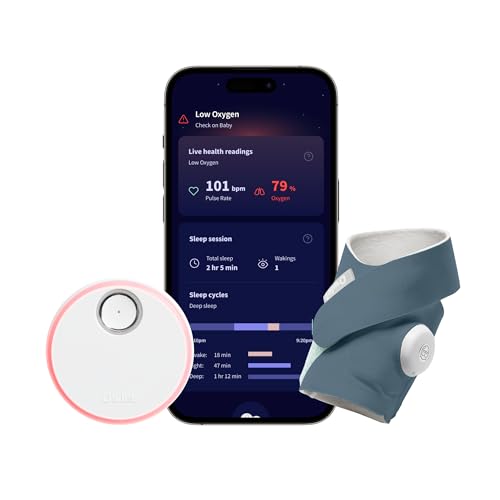
- Tracks pulse rate and oxygen in real time.
- Alerts on the Base Station and phone when readings leave preset zones.
- Adds Predictive Sleep Technology and sleep-trend insights.
Best For: Parents who want real-time pulse and oxygen alerts plus sleep-trend insights.
Gentle Motion Watch

- Tracks abdominal movement during sleep or rest
- Two-step vibration then audible alert system
- Works with Android and iOS without Wi-Fi
Best For: Families wanting a portable movement monitor for naps and overnight care
Breathing Video Guard
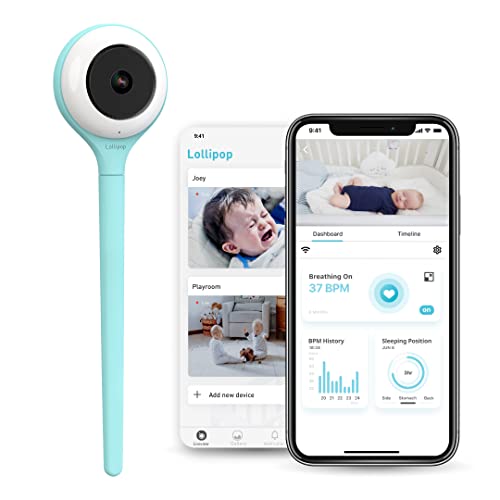
- Optional contactless breathing monitoring in-app
- 1080p live view with true crying detection
- Includes sleep tracking and family sharing
Best For: Buyers who want a smart camera monitor with optional breathing insights
Bedside, No-WiFi Coverage – Babysense 7 Under-Mattress Monitor
If you want baby monitors with breathing alerts that stay completely out of the way, Babysense 7 takes a non-contact approach by tracking movement through the mattress. It uses two sensor pads to cover the whole crib or bed area, and it alerts you if no movement is detected for 20 seconds or if movement slows, making it a practical option for parents who want passive monitoring without wearables or WiFi.
Best For: Parents who want full-crib movement monitoring with no wearable parts and no wireless connection.
Pros:
- Non-contact design monitors through the mattress with no direct contact to baby.
- Two sensor pads are designed to cover the entire crib or bed area.
- Enhanced sensitivity is intended to lower the chance of false alarms.
- No WiFi is required, which keeps setup simple.
Cons:
- Not compatible with memory foam mattresses.
- Requires a crib or bed with a hard base.
- Only tracks movement, not video or app-based health data.
This is a straightforward movement monitor for families who prioritize crib-wide coverage and a non-wearable design. It is less feature-heavy than app-connected systems, but the safety-focused setup may be exactly what some parents want.
Wearable Vibration Alert – Levana Oma Sense Diaper Monitor
Among baby monitors with breathing alerts, the Levana Oma Sense stands out for its wearable, zero-skin-contact design. It slips over baby’s diaper, pants, or a buttoned-up onesie and tracks abdominal movement, then uses vibrations first and an audible alarm if movement does not resume, which gives parents a layered alert system without relying on WiFi, radio, or Bluetooth.
Best For: Parents of infants 0-6 months who want a wearable breathing monitor with vibration-first alerts.
Pros:
- Monitors abdominal movement and alerts if no movement is detected for 15 seconds.
- Uses randomized vibrations first to gently stimulate baby.
- Audible emergency alarm follows if movement is not re-established.
- No skin contact and no WiFi, radio, or Bluetooth frequencies.
Cons:
- Designed for infants between 0-6 months old.
- Requires wearing the monitor over diaper, pants, or onesie.
- Does not provide video monitoring.
This monitor is a focused choice for parents who want a wearable breathing alert device with a built-in stimulation step before the louder alarm. Its age range and clip-on style make it best suited to younger newborn use.
Video Plus Health Readings – Owlet Dream Duo 2 Smart Monitor
If you’re comparing baby monitors with breathing alerts and want more than movement sensing, the Owlet Dream Duo 2 adds live health tracking and video in one system. The FDA-cleared Dream Sock tracks pulse rate, oxygen, wakings, and sleep trends, while the included camera and base station deliver real-time notifications through lights, sounds, and the app when readings fall outside preset ranges.
Best For: Parents who want FDA-cleared pulse and oxygen tracking paired with HD video monitoring.
Pros:
- Dream Sock tracks pulse rate, oxygen, wakings, and sleep trends in real time.
- FDA-cleared for healthy infants 1-18 months, 6-30 lbs.
- Includes HD video camera plus base station alerts and in-app notifications.
- Comes with 48 hours of free video clip storage.
Cons:
- U.S. version only and will not work outside the US.
- Designed for healthy infants within a specific age and weight range.
- Requires the Owlet app for full remote tracking.
This is the most feature-rich option in the group, especially if you want health data alongside video monitoring. It is best for families who prefer a more connected system and are comfortable staying within the supported US use case.
Clip-On Sleep Tracking – Sense-U Pro Breathing Monitor
The Sense-U Pro is a practical pick for baby monitors with breathing alerts if you want a small clip-on device that focuses on movement, position, and temperature trends. It gently vibrates after 15 seconds of paused abdominal movement, then sends an audible alert and smartphone notification if movement still does not resume, while also giving you sleep reports and up to 7+ days of battery life.
Best For: Families who want a portable clip-on monitor with sleep trend reports and long battery life.
Pros:
- Tracks abdominal movement, sleep position, and feeling temperature trends.
- Vibration comes first, followed by audible alerts and smartphone notifications.
- Clip-on design is lightweight, compact, and travel-friendly.
- Offers up to 7+ days of monitoring on a single charge.
Cons:
- Compatible with smartphones, so app use is part of the setup.
- Does not include video monitoring.
- Uses Bluetooth Low Energy rather than a standalone bedside unit.
This model is a strong middle ground for parents who want breathing-style alerts plus useful sleep insights. Its long battery life and clip-on build make it especially convenient for home use and travel.
App-Based Breathing Alert Monitor – Aurio Smart Baby Monitor
If you’re comparing baby monitors with breathing alerts, Aurio takes a broader wellness-tracking approach by monitoring breathing rate, sleep duration, position, rollover activity, diaper wetness, and temperature. It is built for parents who want real-time updates in the app and a monitor that keeps recording even when it is not connected to your phone.
Best For: Parents who want app-based breathing alerts plus extra wellness tracking like sleep, temperature, and diaper wetness.
Pros:
- Tracks breathing rate and sends abnormal alerts through the mobile app.
- Records sleep duration, position, rollover notifications, and wet diaper alerts.
- Connects to up to two phones simultaneously for shared monitoring.
- Uses a soft, baby-safe rubber design with a sealed rechargeable battery.
Cons:
- Notifications and audible alarms are app-based; the device itself does not emit sound, light, or vibration.
- Designed around smartphone use, so it is not a standalone alert unit.
Aurio is a strong fit if you want a compact monitor centered on breathing alerts but also want broader day-to-day wellness data. Its biggest advantage is the combination of 24/7 recording and multiple event types, though families should be comfortable relying on the app for alerts.
Simple Cordless Motion Monitor – BabySmile Baby Movement Monitor
For shoppers focused on baby monitors with breathing alerts, BabySmile offers a simple movement-based setup that detects subtle abdominal motion and sounds an alarm if no movement is sensed for about 20 seconds. It is designed as a cordless, diaper-clip monitor for sleep monitoring at home or on the go, without apps or wireless frequencies.
Best For: Parents who want a simple, cordless motion monitor with a local alarm and no app dependency.
Pros:
- Detects subtle abdominal movement and triggers an alert after about 20 seconds of no movement.
- Cordless design makes it easy to use at home or while traveling.
- No wires, cords, or app-based frequency requirements.
- Long battery life of about 2,200 hours with typical use.
Cons:
- Focuses on movement detection rather than true breathing-rate tracking.
- Compatible with nothing else, so it is a standalone monitor only.
BabySmile is the most straightforward pick here if you want a local alarm and minimal setup. It keeps the feature set narrow, which may appeal to parents who want a portable movement monitor without app notifications or extra smart functions.
Wearable Health Alert Monitor – Owlet Dream Sock Smart Baby Monitor
If your search for baby monitors with breathing alerts is really about getting timely health notifications, Owlet Dream Sock stands out by tracking pulse rate and oxygen levels in real time. It sends alerts on the Base Station and in the app when readings leave preset zones, and it adds sleep-pattern insight through Predictive Sleep Technology.
Best For: Parents who want real-time pulse and oxygen alerts plus sleep-trend insights in one wearable monitor.
Pros:
- Tracks pulse rate and oxygen levels in real time with zone-based alerts.
- Includes a Base Station plus phone notifications for added visibility.
- Predictive Sleep Technology helps you understand sleep rhythms and wake windows.
- Comfortable fabric sock with a 16-hour battery life.
Cons:
- Designed only for healthy infants 1 to 18 months, 6 to 30 lbs.
- Requires compatible Bluetooth and 2.4 GHz Wi-Fi setup.
- U.S. version is only compatible in the United States.
Owlet Dream Sock is the most advanced option in this group if you want breathing-adjacent wellness monitoring with strong alerting and sleep context. It is best for families who value richer data and are comfortable with a wearable sock format and setup requirements.
Gentle Motion Watch – Clip-On Movement Monitor
If you’re comparing baby monitors with breathing alerts, this clip-on movement monitor is aimed at parents who want a simple, portable layer of reassurance during naps and nighttime sleep. It tracks gentle abdominal movement and uses a two-step alert sequence to help caregivers respond if no movement is detected.
Best For: Parents who want a compact, non-Wi-Fi movement monitor for crib, bassinet, or bedside use.
Pros:
- Gentle 2-step alert starts with vibration, then moves to an audible alarm if needed.
- App alerts work on Android and iOS for real-time monitoring and settings control.
- Clip-on design is lightweight and made for all-night use without bulk.
- No Wi-Fi required, and the battery is rated for up to 7 days of typical use.
Cons:
- Tracks movement, not camera video or audio.
- Designed around diaper/clothing clipping, so fit may matter for some sleep setups.
This is a straightforward option if your priority is movement-based alerting over a full camera system. It focuses on portability, fast notification, and easy everyday use.
Breathing Video Guard – Smart Wi-Fi Camera
For families shopping for baby monitors with breathing alerts, this Wi-Fi camera stands out because it adds contactless breathing monitoring through an in-app plan. It uses AI to view breathing and sleep position history, while also offering live video, cry detection, and app-based sharing for everyday monitoring.
Best For: Parents who want a camera monitor with optional breathing and sleep tracking features in the app.
Pros:
- Contactless breathing monitoring uses AI and does not require a wearable sensor.
- 1080p live view with family sharing and downloadable triggered-event video.
- True crying detection helps distinguish real cries from background noise.
- Includes sleep tracking, crossing detection, push-to-talk, and sound options.
Cons:
- Breathing monitoring is tied to an extra in-app subscription plan.
- Some key monitoring features depend on app and cloud-based functionality.
This is a strong pick if you want a visual monitor first and breathing insight as an added feature. The tradeoff is that the breathing tools are not part of the free core experience.
Long-Range Sleep Sentinel – Clip-On Smart Tracker
If you’re comparing baby monitors with breathing alerts, this clip-on tracker is built for parents who want movement-based monitoring with extra sleep and temperature insights. It clips to the diaper, sends vibration and audible alerts for abdominal movement issues, and can also be used with the app or base station for added visibility.
Best For: Families who want a clip-on monitor with app alerts, temperature tracking, and twin support.
Pros:
- Gently vibrates after 15 seconds without abdominal movement, then sounds an alert if needed.
- Tracks rollover and overheating, with room temperature and humidity alerts on the base station.
- Supports app notifications, family sharing, and twin monitoring.
- Offers free in-depth sleep analysis plus 7+ days of battery life per charge.
Cons:
- Requires Bluetooth Low Energy and works best in the same room for optimal connection.
- It is not a medical device and is intended for healthy children up to 12 months old.
Overall, this is a versatile monitoring option if you want more than simple motion alerts. The combination of alerting, sleep analysis, and environmental tracking makes it especially practical for routine home use.
How We Picked the Best Baby Monitors with Breathing Alerts
We prioritized monitors that are designed to detect movement or breathing-related patterns in a way that is useful for everyday parents, not just tech enthusiasts. Key factors included alert reliability, ease of setup, comfort for the baby, battery life, sensor style, and whether the monitor works without constant Wi-Fi dependence.
Quick Comparison: What Matters Most
Some Baby Monitors with Breathing Alerts are contact-based, such as under-mattress sensors or clip-on trackers, while others combine breathing-related monitoring with camera features, app access, or sleep insights. The right choice often comes down to whether you want simple bedside alerts, a smart monitoring system, or a more portable option for travel and flexible use.
Key Buying Factors for Baby Monitors with Breathing Alerts
Alert Type
Look for audible alarms, vibrations, app notifications, or a combination of these. If you want immediate bedside awareness, vibration and sound can be especially helpful.
Contact Vs. Non-Contact Design
Non-contact systems may use under-mattress sensors, while wearable or clip-on monitors track movement directly. Consider what feels most comfortable for your baby and easiest for your routine.
Connectivity and App Dependence
Some families prefer no-Wi-Fi monitors for simplicity and privacy, while others want smart features like remote access, sleep tracking, and video streaming. Choose based on how often you need to check in from outside the nursery.
Comfort, Fit, and Age Range
A monitor should be appropriate for your baby’s age and sleep setup. A secure fit and unobtrusive design matter, especially for newborns and active sleepers.
Battery Life and Portability
If you travel often or move the monitor between rooms, long battery life and compact hardware can make a big difference.
Who Should Buy Which Baby Monitors with Breathing Alerts?
Parents who want a straightforward, low-tech setup may prefer a simple sensor-based monitor. Families who want more visibility and smart-home style features may lean toward connected camera-and-sensor systems. If portability is important, choose a lightweight clip-on or wearable model. For the most peace of mind, select the monitor that best matches your comfort level, nursery layout, and how closely you want to track your baby’s sleep.