
Choosing an audio interface with MIDI input can make a home studio much easier to build and expand. You get cleaner audio, reliable device connectivity, and a simpler workflow for keyboards, drum machines, and other hardware.
Below, we’ve rounded up 10 strong options for different budgets and use cases, from compact starter interfaces to more flexible models for growing setups.
Best 10 Audio Interface with Midi Input Picks for 2026
Pro Studio Hub
Focusrite Scarlett 4i4 4th Gen USB-C Audio Interface

- MIDI I/O plus 4-in/4-out design
- Two mic preamps and two Hi-Z inputs
- Auto Gain, Clip Safe, and Air mode
Best For: Home studios needing flexible routing and MIDI
Budget Recording Starter
PreSonus AudioBox 96 25th Anniversary USB Audio Interface
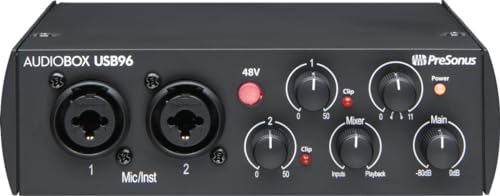
- MIDI I/O in a compact 2-channel box
- Two Class-A mic preamps and two instrument inputs
- Bus-powered and includes recording software
Best For: Beginners and portable laptop recording
Portable Minimalist
Alloy Red 2x2 USB-C Audio Interface

- 24-bit/192kHz conversion and bus power
- Two combo inputs with phantom power
- Direct monitoring plus 3.5mm headphone jack
Best For: Mobile vocal and guitar recording without MIDI
MIDI-Friendly Creator Pick
Arturia MiniFuse 2 USB Audio & MIDI Interface

- 5-pin MIDI in/out for hardware gear
- Two combo inputs with phantom power
- Loopback, bundled software, and 5-year warranty
Best For: Synth players and home producers needing MIDI
Compact Studio Starter
Focusrite Scarlett 2i2 4th Gen USB-C Audio Interface
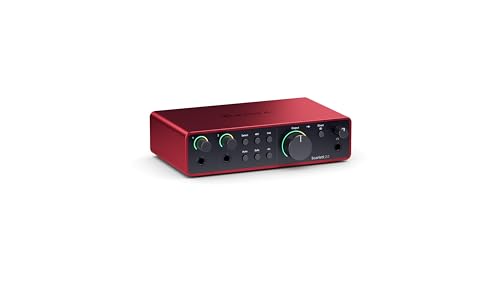
- 2 mic pres and 2 Hi-Z inputs
- 120dB dynamic range with Auto Gain
- Includes major recording software bundles
Best For: Solo musicians and home studios focused on vocals and guitar
Vintage Tone Recorder
Universal Audio Volt 2 USB Audio Interface
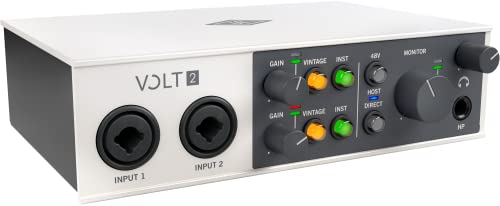
- 2x2 USB-C interface with MIDI support
- Vintage mode adds 610-style preamp color
- Compatible with Mac, Windows, iPad, and iPhone
Best For: Musicians and creators who want portable recording with MIDI support
Budget Tracking Hub
M-AUDIO M-Track Duo USB Audio Interface
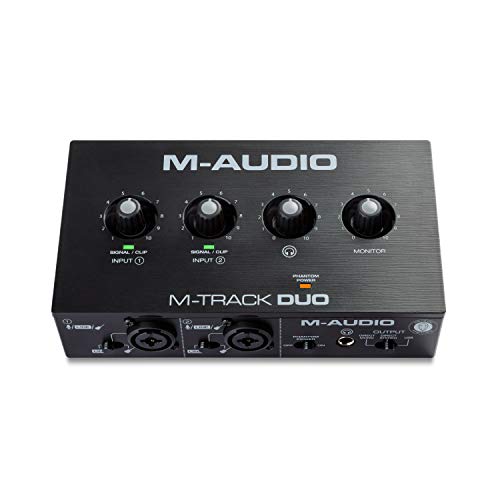
- Dual combo inputs with phantom power
- USB/direct monitoring for zero latency
- Includes MPC Beats software
Best For: Beginners and budget creators building a simple recording setup
4-Input Recording Hub
Behringer U-PHORIA UMC404HD 4x4 USB Interface

- 4x4 audio/MIDI interface with 1 MIDI I/O
- Four MIDAS-designed mic preamps with phantom power
- 24-bit/192 kHz conversion in a metal chassis
Best For: Home studios needing multiple inputs and MIDI connectivity
Compact Songwriter Pick
Focusrite Scarlett Solo 4th Gen USB-C Interface

- 120 dB dynamic range with 24-bit/192 kHz conversion
- 1 XLR mic preamp plus 1 Hi-Z instrument input
- Includes recording software and Hitmaker Expansion
Best For: Solo recording setups that prioritize simplicity and sound quality
Dual-Input MIDI Workhorse
Behringer UMC204HD 2x4 USB Interface

- Built-in MIDI I/O for keyboards and control surfaces
- Two combo XLR/TRS inputs for flexible recording
- 24-bit/192 kHz converters with 2 analog inserts
Best For: Small studios that need MIDI and external effects support
Pro Studio Hub – Focusrite Scarlett 4i4 4th Gen USB-C Audio Interface
If you want an audio interface with midi input that can anchor a small studio, the Focusrite Scarlett 4i4 4th Gen is built for exactly that job. It combines two mic preamps, two Hi-Z instrument inputs, four line inputs, four outputs, and MIDI I/O, so it can handle microphones, guitars, synths, and drum machines in one compact unit.
Best For: Home studios that need flexible I/O, MIDI connectivity, and polished recording features.
Pros:
- Includes MIDI I/O alongside 4-in/4-out connectivity.
- Two 4th Gen mic preamps and two Hi-Z inputs support a range of sources.
- 120dB dynamic range and Focusrite converters aim for studio-quality sound.
- Auto Gain, Clip Safe, and Air mode add useful recording and tonal tools.
Cons:
- More interface than a basic solo or dual-input setup if you only record one source at a time.
- Requires USB-C-based setup and included power supply for operation.
Overall, the Scarlett 4i4 4th Gen stands out as the most capable option here for musicians who want an audio interface with midi input plus enough analog routing to grow into. It is a practical pick when you want performance features without stepping up to a much larger studio interface.
Budget Recording Starter – PreSonus AudioBox 96 25th Anniversary USB Audio Interface
The PreSonus AudioBox 96 is a straightforward audio interface with midi input for anyone building a simple recording setup. Its two Class-A mic preamps, two instrument inputs, and MIDI I/O make it a compact way to connect vocals, guitar, bass, and external MIDI gear without overcomplicating the workflow.
Best For: Beginners and portable setups that need basic recording inputs plus MIDI.
Pros:
- Includes MIDI I/O in a small 2-channel interface.
- Two Class-A mic preamps and two instrument inputs cover common recording needs.
- Bus-powered USB 2.0 design is easy to move with a laptop.
- Comes with Studio One Artist, Ableton Live Lite, and Studio Magic Plug-In Suite.
Cons:
- Limited to 24-bit/96 kHz rather than higher-resolution recording.
- Only two channels, so it is less flexible for larger sessions.
For a low-friction entry point, the AudioBox 96 delivers the essentials and keeps the setup simple. It is a sensible choice if you want MIDI support and solid basics more than extra channels or advanced monitoring features.
Portable Minimalist – Alloy Red 2×2 USB-C Audio Interface
This compact audio interface is aimed at simple, high-fidelity recording, but it does not include MIDI input. If your priority is a lightweight USB-C interface for vocals or guitar, it offers two combo jacks, 24-bit/192kHz conversion, bus power, and direct monitoring in a very small package.
Best For: Mobile creators who want a compact 2-channel interface for audio recording only.
Pros:
- 24-bit/192kHz support gives it strong resolution for the size.
- Two combo inputs with phantom power handle vocals and instruments.
- USB-C bus power keeps the setup simple and portable.
- Direct monitoring and 3.5mm headphone connectivity are convenient for tracking.
Cons:
- No MIDI input, so it is not suited for MIDI keyboards or drum machines.
- Windows-focused details in the listing make it less clearly positioned for broader setups.
As a bare-bones recording tool, this interface is easy to recommend for travel or desk setups that only need audio I/O. It is not the right pick if MIDI connectivity is a must-have.
MIDI-Friendly Creator Pick – Arturia MiniFuse 2 USB Audio & MIDI Interface
The Arturia MiniFuse 2 is a strong audio interface with midi input for creators who want a compact all-in-one recording box. It adds 5-pin MIDI in and out, two combo mic/inst/line inputs, two balanced outputs, loopback, and bus-powered USB operation, making it useful for synths, controllers, vocals, and guitar.
Best For: Synth players, home producers, and beginners who want MIDI plus recording flexibility.
Pros:
- Includes 5-pin MIDI input and output for hardware synths and controllers.
- Two combo inputs and 48V phantom power cover common recording sources.
- Loopback feature helps with voiceovers and streaming-style workflows.
- 5-year warranty and included software add long-term value.
Cons:
- Only two analog inputs, so it is not aimed at larger multitrack sessions.
- USB-C hub power is limited to 250mA, which may not suit every accessory need.
MiniFuse 2 is one of the easiest recommendations here if MIDI hardware is part of your setup. It balances useful creative features with a compact design, making it a practical choice for small studios and portable production rigs.
Compact Studio Starter – Focusrite Scarlett 2i2 4th Gen USB-C Audio Interface
If you want an audio interface with midi input, the Focusrite Scarlett 2i2 4th Gen is worth considering for its streamlined 2-channel recording setup and strong headline features. It focuses on mic and instrument capture, with 4th Gen preamps, Auto Gain, Clip Safe, and Air mode to help newer and experienced users get clean, polished results fast.
Best For: Solo musicians and home recordists who want a simple, high-quality USB-C interface for vocals, guitar, and general music production.
Pros:
- 2 mic preamps and 2 Hi-Z instrument inputs for flexible basic tracking
- 120dB dynamic range and 24-bit/192kHz support for studio-grade recording
- Auto Gain and Clip Safe help prevent level issues during takes
- Includes Pro Tools Intro+, Ableton Live Lite, Cubase LE, and Hitmaker Expansion
Cons:
- No MIDI connectivity is listed in the supplied specifications
- Only 2 channels, so it is not aimed at larger recording setups
- Best suited to core recording tasks rather than hardware MIDI workflows
Overall, this is a polished, easy-to-use interface for people who care more about great sound and fast workflow than expandability. If your setup is centered on mics and guitars, it offers a strong balance of quality and convenience.
Vintage Tone Recorder – Universal Audio Volt 2 USB Audio Interface
The Universal Audio Volt 2 is a practical audio interface with midi input support for musicians who want a compact 2×2 setup and a classic-inspired recording sound. Its Vintage mode adds UA’s 610-style preamp flavor, while 24-bit/192kHz conversion and compatibility with Mac, Windows, iPad, and iPhone make it a versatile option for small desktop or mobile rigs.
Best For: Players, podcasters, and streamers who want a portable interface with MIDI support and a warm, analog-style character.
Pros:
- 2×2 USB-C interface with MIDI support
- Vintage mode emulates UA’s classic 610 preamps
- Up to 24-bit/192kHz recording for detailed capture
- Works with MacOS, Windows, iPad, and iPhone for flexible use
Cons:
- Requires an external Volt power supply for mobile use
- iOS use needs an Apple Lightning to USB Camera Adapter on many devices
- Only 2 channels, so it is not designed for larger multi-input sessions
Volt 2 stands out if you want a compact interface that blends a simple workflow with characterful preamp emulation. It is especially appealing when portability and MIDI connectivity matter alongside straightforward recording.
Budget Tracking Hub – M-AUDIO M-Track Duo USB Audio Interface
The M-AUDIO M-Track Duo is a straightforward audio interface with midi input support for users who need an affordable way to record, stream, or podcast. It offers two combo XLR/line/instrument inputs, transparent Crystal Preamps, and direct monitoring, making it a practical pick for simple home setups and mobile production.
Best For: Beginners and budget-minded creators who need a compact interface for recording vocals, guitar, streaming, and podcasting with MIDI support.
Pros:
- Dual combo XLR/line/instrument inputs with phantom power
- USB/direct monitoring switch for zero-latency monitoring
- 48kHz audio resolution for everyday recording tasks
- Includes MPC Beats software for production and beat making
Cons:
- 48kHz max sample rate is lower than some competing interfaces
- Only 2 channels, so it is limited for bigger sessions
- Build and feature set are focused on essentials rather than premium extras
This is a sensible entry-level interface if your priority is clean input, simple monitoring, and broad compatibility. It keeps the feature set focused on the basics, which can be exactly what a first studio or streaming setup needs.
4-Input Recording Hub – Behringer U-PHORIA UMC404HD 4×4 USB Interface
If you want an audio interface with midi input that can handle a small studio setup, the Behringer U-PHORIA UMC404HD is built for recording microphones, instruments, and MIDI gear at the same time. Its 4×4 USB 2.0 design, 24-bit/192 kHz conversion, and MIDAS-designed preamps make it a practical choice for users who need more I/O than a basic two-channel interface.
Best For: Home recordists and musicians who need four inputs, four outputs, and built-in MIDI I/O.
Pros:
- 4×4 USB audio/MIDI interface with 1 MIDI I/O for connecting external MIDI devices
- Four MIDAS-designed mic preamps with +48V phantom power for recording multiple sources
- 24-bit/192 kHz resolution for high-quality recording and playback
- Metal chassis is impact-resistant and designed for durability
Cons:
- Bulkier than a compact two-channel interface
- Windows support is specifically listed in the product details
This is a strong fit if your priority is flexibility: more inputs, more outputs, and MIDI connectivity in one rugged box. It’s less about portability and more about giving a recording setup room to grow.
Compact Songwriter Pick – Focusrite Scarlett Solo 4th Gen USB-C Interface
The Focusrite Scarlett Solo 4th Gen is a straightforward audio interface with midi input alternatives in the sense that it focuses on a simple mic-and-instrument recording workflow rather than external MIDI connectivity. If you mainly need a compact USB-C interface for vocals and guitar, it offers studio-quality conversion, a Hi-Z instrument input, and updated Air mode for adding presence to tracks.
Best For: Solo musicians, songwriters, and podcasters who want a compact 2-channel interface for mic and instrument recording.
Pros:
- Huge 120 dB dynamic range with converters based on Focusrite’s flagship interfaces
- 1 XLR mic preamp and 1 Hi-Z instrument input for simple recording setups
- Improved Air mode adds presence and harmonic drive to vocals and guitars
- Includes Pro Tools Intro+, Ableton Live Lite, Cubase LE, and Hitmaker Expansion
Cons:
- No MIDI I/O is listed in the supplied details
- Only 2 channels, so it’s not built for larger multi-input sessions
For a minimal desk setup, the Solo keeps things focused and easy to use while still offering strong sound quality and useful included software. It’s a better match for direct recording than for users who need hardware MIDI support.
Dual-Input MIDI Workhorse – Behringer UMC204HD 2×4 USB Interface
If you need an audio interface with midi input for a small studio or project setup, the Behringer UMC204HD gives you two combination XLR/TRS inputs, built-in MIDI I/O, and 24-bit/192 kHz conversion in one compact unit. It’s aimed at users who want to record microphones, instruments, or line-level sources while also connecting keyboards and other MIDI hardware.
Best For: Musicians and producers who want a compact 2-in/4-out interface with MIDI connectivity and external effects support.
Pros:
- Built-in MIDI I/O for keyboards, control surfaces, and other MIDI hardware
- Two combination XLR/TRS inputs support microphones, instruments, and line-level sources
- 24-bit/192 kHz resolution for detailed recording and post-production work
- Includes 2 analog inserts and multiple playback options, including TRS and RCA
Cons:
- Only two input channels, so it’s not ideal for larger tracking sessions
- Windows compatibility is specifically called out in the supplied details
The UMC204HD stands out as a practical middle ground: more capable than a basic two-channel interface, yet still compact and affordable in spirit. Its MIDI support and insert points make it especially useful for small hardware-driven setups.
How We Picked the Best Audio Interface with Midi Input
We focused on interfaces that offer a practical mix of audio quality, MIDI connectivity, driver stability, input count, and overall value. We also favored models that fit common recording needs, whether that means solo vocal tracking, stereo recording, or connecting external instruments through MIDI.
Quick Comparison
If you need the simplest setup, smaller 2-in/2-out models are usually the easiest choice. If you plan to connect outboard gear, synths, or multiple sources at once, a larger Audio Interface with Midi Input and additional I/O will be more flexible. For most buyers, the right pick comes down to how many inputs you need today and how much room you want for expansion later.
Key Buying Factors for an Audio Interface with Midi Input
I/O Count
Match the number of mic, line, and instrument sources you record at the same time. A solo creator may only need two inputs, while a small band or hardware-based producer may benefit from four or more.
MIDI Connectivity
Check whether the MIDI ports are standard 5-pin DIN connections and whether you need both MIDI in and out. This matters if you want to sync a keyboard, sequencer, drum machine, or external synth rig.
Audio Resolution and Monitoring
Higher sample rates and bit depths can be useful, but stable drivers, low-latency monitoring, and clean preamps usually matter more in day-to-day recording.
Power and Device Compatibility
Make sure the interface works with your computer, tablet, or mobile setup. USB-C is convenient, but compatibility is more important than the connector itself.
Software and Workflow
Included software bundles, loopback options, direct monitoring, and control knobs can make a big difference for beginners and busy creators.
Who Should Buy Which Audio Interface with Midi Input?
If you are a singer-songwriter or podcaster, a compact 2-channel model is often enough. If you use a MIDI keyboard or external synths, prioritize an interface that clearly supports your hardware workflow. Producers who want room to grow should look at models with extra inputs and outputs so they do not outgrow their setup too quickly.
For most buyers, the best choice is the one that balances audio quality, MIDI support, and future expandability without adding unnecessary complexity.