
Choosing the right VR headset in 2026 comes down to more than resolution alone. Battery life, comfort, tracking, content library, and whether you want standalone or PC-tethered use all matter.
This roundup focuses on the best options for different buyers, from affordable entry-level picks to premium headsets for demanding players and simulator fans.
Best 10 Vr Headsets Picks for 2026
Standalone Gaming Pick

- Wireless all-in-one VR with built-in battery
- 500+ titles for gaming, fitness, and entertainment
- 3D audio, hand tracking, and Touch controllers
Best For: Easy standalone VR for everyday play and social use
PC Simulator Pick

- 3840x3840-per-eye QLED/Mini-LED display
- 140° field of view for cockpit-style immersion
- Wired PC VR with inside-out tracking
Best For: Flight and racing sim users who want sharp, wide PC VR visuals
Premium Mixed Reality Pick
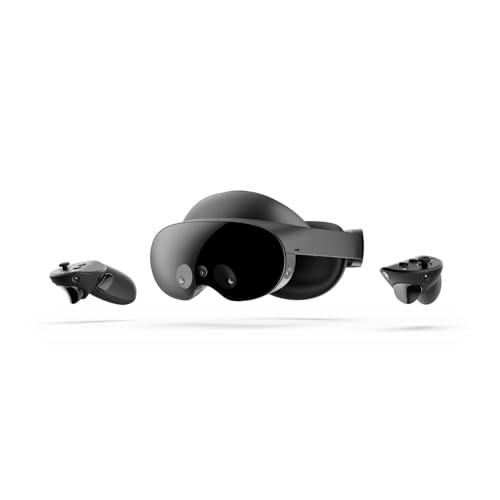
- Full-color passthrough for mixed reality use
- Resizable screens for multitasking and collaboration
- Touch Pro controllers with self-tracking and haptics
Best For: Work, creation, and advanced mixed reality sessions
Budget Phone-Based Pick

- Fits 4.7-7.2 inch smartphones
- Bluetooth controller included for interaction
- Blue-light lenses and adjustable comfort features
Best For: Affordable phone-based VR viewing for casual users
Editor’s Pick
Meta Quest 3 512GB Gorilla Tag Bundle

- 4K+ Infinite Display and mixed reality support
- Snapdragon XR2 Gen 2 for faster VR performance
- Includes Gorilla Tag items and Meta Horizon+ trial
Best For: Premium standalone VR with bundle extras
Top Value
Meta Quest 3 512GB Batman Bundle
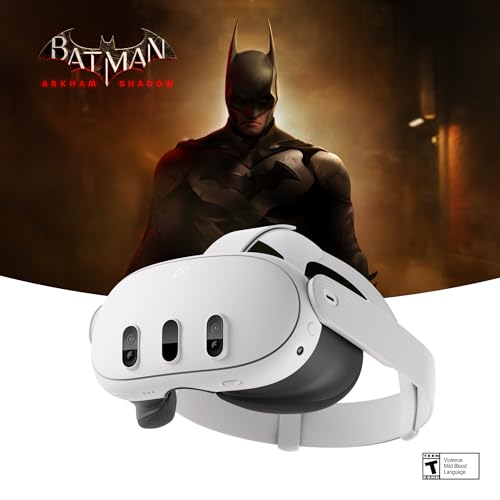
- 4K Infinite Display with upgraded resolution
- Includes Batman: Arkham Shadow game
- Wireless standalone headset with mixed reality
Best For: Gamers wanting a bundled Quest 3
Budget-Friendly Refurbished

- Renewed all-in-one VR headset at a lower price
- 120Hz display and room-scale tracking
- Includes 2 controllers and key accessories
Best For: Affordable entry into standalone VR
Premium Mixed Reality Learning Bundle
Meta Quest Pro 256GB with OAO Field Trips

- 256GB Meta Quest Pro headset plus OAO field trips access
- Full-color passthrough and 10 advanced VR/MR sensors
- Touch Pro Controllers, haptics, and multitasking screens
Best For: immersive learning, mixed reality, and premium productivity
High-Resolution Standalone Pick
Meta Quest 3 512GB Renewed Premium

- 512GB storage with standalone wireless play
- 4K Infinite Display and nearly 30% higher resolution
- Snapdragon XR2 Gen 2 and dual RGB passthrough cameras
Best For: wireless gaming and mixed reality with high storage
Budget-Friendly Classic Choice

- 256GB storage and standalone VR basics
- 1832 x 1920 resolution with 90Hz refresh
- Includes grip covers and adjustable knuckle straps
Best For: value-focused gaming and entertainment
Standalone Gaming Pick – Meta Quest 2 128 GB
If you want a straightforward entry into VR headsets, the Meta Quest 2 is built around convenience. It runs wirelessly, includes built-in battery power, and needs no PC or console, making it a practical choice for gaming, fitness, social spaces, and entertainment.
Best For: Players who want an easy-to-use standalone headset for games, workouts, and social VR.
Pros:
- Wireless standalone design with built-in battery and simple setup
- 3D positional audio, hand tracking, and Touch controllers for immersion
- 128 GB storage and access to 500+ titles across multiple categories
- Guardian alerts help you stay inside your designated play space
Cons:
- Not designed for PC-tethered simulator use like DisplayPort headsets
- Visuals are lower resolution than premium PC VR options
- Accounts required; some content may be more mature in tone
Overall, Quest 2 remains a strong all-in-one option if you value portability and a broad content library over top-end PC-driven visuals. It’s a flexible pick for everyday VR use.
PC Simulator Pick – Pimax Crystal Super Ultrawide
Among VR headsets aimed at PC users, the Pimax Crystal Super is clearly built for simulation-first performance. Its 3840×3840-per-eye QLED and Mini-LED display, 140° field of view, and DisplayPort wired connection are geared toward flight, racing, and demanding PC VR sessions.
Best For: PC sim racers and flight sim fans who want maximum clarity and a wide field of view.
Pros:
- Very high 3840×3840-per-eye resolution for sharp imagery
- 140° FOV expands peripheral vision in simulators
- QLED plus Mini-LED with local dimming for strong contrast and brightness
- Up to 90Hz refresh rate and inside-out tracking for responsive play
Cons:
- Requires a PC and wired DisplayPort/USB connection
- Built around simulator and gaming use rather than standalone convenience
- May demand strong GPU performance to fully benefit from its resolution
This is a specialist headset, not a casual all-purpose device. If your priority is cockpit immersion, wide visibility, and image detail, it stands out as a serious PC VR choice.
Premium Mixed Reality Pick – Meta Quest Pro
The Meta Quest Pro is aimed at mixed reality, collaboration, and premium comfort rather than basic gaming alone. With full-color passthrough, pancake lenses, multiple resizable screens, and Touch Pro controllers, it is designed for users who want advanced VR headsets for work, creation, and social interaction.
Best For: Professionals and advanced users who want mixed reality, multitasking, and premium comfort.
Pros:
- High-resolution color passthrough lets you see the real world while working or playing
- Multiple resizable screens support multitasking and organization
- Touch Pro Controllers add self-tracking cameras and advanced haptics
- Counterbalanced ergonomics and pancake lenses improve comfort and clarity
Cons:
- Higher-end device focused on advanced use cases rather than budget value
- Requires a Meta account to use
- Field of view is 106 degrees, which is narrower than some VR headsets built for simulation
If you want a headset that bridges work and immersive use, the Quest Pro offers a feature set that is clearly more advanced than entry-level models. It makes the most sense when mixed reality and productivity matter.
Budget Phone-Based Pick – TECKNET Phone VR Headset
If you’re shopping for VR headsets for a phone, the TECKNET model is a simple low-cost option for casual viewing. It fits a wide range of smartphones, uses anti-blue-light lenses, and includes a Bluetooth controller for basic interaction with videos, games, and virtual tours.
Best For: Casual phone users, families, and kids who want an inexpensive entry into VR-style viewing.
Pros:
- Works with 4.7-7.2 inch smartphones across iPhone, Samsung, Google Pixel, and Android devices
- Bluetooth controller adds easier interaction for games and video use
- Lightweight 268g design with adjustable headband and soft foam mask
- Blue-light protection lenses and adjustable focus/pupil distance support comfort
Cons:
- Does not automatically convert normal images into 3D
- Depends on smartphone apps and compatible 3D or panoramic content
- Not a standalone VR system with built-in processing or battery
This headset makes sense if you mainly want an affordable, phone-based way to explore VR content. It is best viewed as a simple viewer for media and casual experiences rather than a full standalone VR platform.
Editor’s Pick – Meta Quest 3 512GB Gorilla Tag Bundle
If you want vr headsets that feel truly next-gen, the Meta Quest 3 stands out with a sharp 4K+ Infinite Display, full-color passthrough, and fast Snapdragon XR2 Gen 2 performance. This Amazon-exclusive Gorilla Tag bundle also adds in-game extras, making it a strong all-around choice for gaming, mixed reality, and everyday entertainment.
Best For: Buyers who want a premium standalone VR headset with a bonus game bundle and mixed reality features.
Pros:
- Nearly 30% higher resolution with a 4K+ Infinite Display
- Wireless standalone play with 2+ hours of battery life
- Snapdragon XR2 Gen 2 processor for faster load times and smoother graphics
- Includes Gorilla Tag extras plus 3 months of Meta Horizon+
Cons:
- Battery life is still limited for long sessions
- Bundle extras may matter less if you do not play Gorilla Tag
- Pricier than entry-level headsets
The Quest 3 is the most feature-rich option in this group, especially if you want sharp visuals and strong mixed reality support in a wireless design. The included bundle value makes it easier to justify for players who plan to use the headset often.
Top Value – Meta Quest 3 512GB Batman Bundle
Among vr headsets in this range, the Meta Quest 3 is the straightforward pick if you want better visuals, stronger performance, and full-color passthrough without a tether. This version bundles Batman: Arkham Shadow, so it works well for shoppers who want a ready-to-play package focused on gaming and fitness.
Best For: Buyers who want a standalone VR headset with a bundled game and mixed reality features.
Pros:
- Nearly 30% leap in resolution with a 4K Infinite Display
- Snapdragon XR2 Gen 2 processor for fast, smooth gameplay
- Full-color dual RGB cameras for mixed reality passthrough
- Includes Batman: Arkham Shadow
Cons:
- Battery life is listed at just over 2 hours
- Wireless design may not suit users who prefer a cabled setup
- Focused mainly on gaming and fitness rather than specialized use cases
This is a strong all-in-one option if you want the Quest 3 experience with an included game instead of separate accessories. It keeps the same core hardware advantages while adding a more obvious gaming hook.
Budget-Friendly Refurbished – Meta Quest 2 128GB Renewed
If you want to spend less on vr headsets, the renewed Meta Quest 2 is the practical entry point. It still offers an all-in-one standalone experience, room-scale tracking, and a 120Hz display, making it a reasonable pick for basic VR use without paying for the latest hardware.
Best For: Budget-minded buyers who want a renewed standalone VR headset for casual virtual reality experiences.
Pros:
- Lower-cost renewed option with 128GB of storage
- Standalone all-in-one VR with room-scale tracking
- 120Hz refresh rate for smoother motion
- Includes 2 Touch Controllers and essential accessories
Cons:
- Older headset with lower resolution than Quest 3
- 90-day limited warranty is shorter than new-product coverage
- Refurbished condition may not appeal to every buyer
The Quest 2 remains a sensible way to get into VR if your priority is price over premium features. It is not as advanced as the Quest 3, but it still covers the basics well for standalone play.
Premium Mixed Reality Learning Bundle – Meta Quest Pro 256GB with OAO Field Trips
If you want vr headsets that go beyond gaming, this Meta Quest Pro bundle is built around mixed reality and immersive learning. It includes a 256GB headset plus access to Optima Academy Online field trips, with full-color passthrough, advanced sensors, and multitasking support for work, play, and education.
Best For: Buyers who want a premium VR/MR headset for education, productivity, and immersive experiences.
Pros:
- Includes a 256GB Meta Quest Pro headset and OAO virtual field trips access.
- High-resolution mixed reality passthrough helps you see the physical world while using VR.
- Meta Avatars, Touch Pro Controllers, and advanced haptics add more natural interaction.
- Resizable screens and spatial audio support multitasking and immersive use.
Cons:
- The learning subscription focus may be more than some buyers need.
- Premium hardware and feature set make it a higher-end option.
This is the most specialized pick in the roundup: it pairs advanced Meta hardware with an educational subscription and mixed reality tools. For shoppers comparing vr headsets for more than entertainment, it stands out for versatility and immersion.
High-Resolution Standalone Pick – Meta Quest 3 512GB Renewed Premium
The Meta Quest 3 is a strong fit if you want vr headsets with modern standalone performance and a large game-ready storage capacity. This renewed premium model emphasizes sharper 4K Infinite Display resolution, wireless play, dual RGB color passthrough cameras, and faster processing for smoother gaming.
Best For: Gamers who want a standalone headset with strong visuals, wireless convenience, and plenty of storage.
Pros:
- 512GB of storage gives you room for apps and games.
- 4K Infinite Display and nearly 30% higher resolution improve visual detail.
- Snapdragon XR2 Gen 2 processor delivers 2x graphical processing power.
- Dual RGB color cameras support full-color passthrough and mixed reality use.
Cons:
- This is a renewed premium unit rather than a brand-new headset.
- Battery life is listed at about 2.2 hours, so long sessions may need planning.
Overall, this is the most storage-rich and performance-focused standalone option in the set. If you want a recent Meta headset with strong visuals and untethered play, it is an easy one to shortlist.
Budget-Friendly Classic Choice – Meta Quest 2 256GB Renewed
If you are comparing vr headsets on value, this renewed Meta Quest 2 keeps the focus on core VR performance. It offers 256GB storage, a high-resolution display, hand tracking, and included controller accessories, making it a practical all-in-one option for gaming and entertainment.
Best For: Buyers who want a more affordable standalone headset with solid essentials and useful controller accessories.
Pros:
- 256GB storage provides plenty of space for VR content.
- 1832 x 1920 pixels per eye and a 90Hz display support immersive gameplay.
- Top hand-tracking system and motion-sensing controllers cover the basics well.
- Includes anti-slip controller grip covers and adjustable knuckle straps.
Cons:
- It is a renewed unit with a 90-day limited warranty.
- Display and field of view are older than newer Meta models.
This is the most straightforward value pick here, especially if you want a large-storage headset without moving to the newest generation. It should appeal to shoppers who care more about practical VR use than premium extras.
How We Picked These Vr Headsets
We prioritized models with strong real-world performance, broad compatibility, and clear value for the price. For Vr Headsets, that means looking beyond spec sheets and weighing ease of setup, comfort over long sessions, display quality, tracking accuracy, controller support, and the strength of the ecosystem.
We also considered whether a headset is best for standalone use, PC VR, or specialized sim racing and flight applications, since the right choice depends heavily on how you plan to use it.
Quick Comparison
The Meta Quest line is the most flexible option for most buyers thanks to its standalone design and large app library. The Quest 3 models are the best all-around picks if you want newer hardware and stronger mixed-reality capability, while the Quest 2 remains a budget-friendly entry point and a smart renewed buy for lower cost.
Premium options like the Pimax Crystal Super are aimed at enthusiasts who want maximum clarity and a wide field of view for simulators. The Meta Quest Pro sits in a different category, with a more premium build and productivity-friendly features that appeal to niche users.
Key Buying Factors for Vr Headsets
Display and Optics
Higher resolution can improve clarity, but lens quality and field of view matter just as much. If you wear the headset for long sessions or use it for sim racing, sharper optics and less visual distortion may be more important than raw specs.
Comfort and Fit
Weight balance, strap design, and facial interface comfort can make or break a headset. Heavier units may still be worth buying if they offer better visuals, but lighter standalone models are usually easier for beginners.
Tracking and Controllers
Accurate inside-out tracking is ideal for most users. Dedicated controllers and responsive hand tracking also improve gameplay, especially in action titles and fitness apps.
Standalone Vs. PC VR
Standalone Vr Headsets are simpler to use and require less hardware, while PC-connected models can deliver higher fidelity for supported games and simulators. Decide based on your setup before comparing specs.
Who Should Buy Which Vr Headsets?
If you want the easiest all-around experience, choose a Quest model. If you are shopping on a tighter budget, a renewed Quest 2 can still deliver excellent value. If your priority is premium immersion for racing or flight simulation, a high-end specialist headset is the better fit.
For casual buyers, the best headset is usually the one with the strongest app support and least setup friction. For enthusiasts, comfort, clarity, and tracking precision should outweigh headline features.