
The best mini refrigerators make it easier to keep drinks, snacks, and everyday essentials close without taking up the space or energy of a full-size refrigerator.
We compared compact models across storage capacity, freezer design, temperature control, noise, door flexibility, and intended use to help you find the right fit for a dorm, office, bedroom, or entertainment area.
Best 10 Mini Refrigerators Picks for 2026
Efficient Dorm Cooling

- Energy Star certified design
- 0.92 cu. ft. separate freezer
- Reversible door and glass shelves
Best For: Energy-conscious dorms, offices, and apartments
Roomy Compact Storage
Frigidaire 4.5 Cu. Ft. Refrigerator
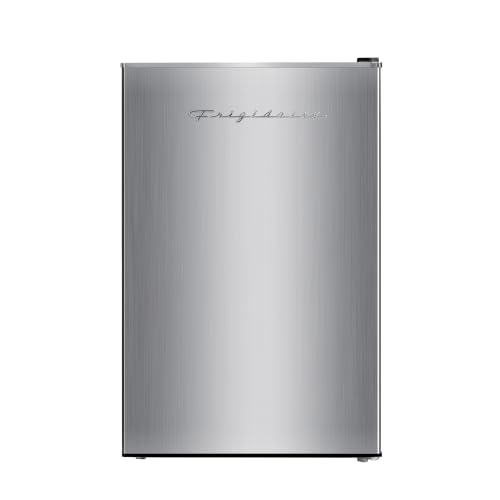
- Largest 4.5 cu. ft. capacity
- Can dispenser and 2L door basket
- Reversible door with leveling legs
Best For: High-capacity beverage and food storage
Quiet Everyday Cooling
Upstreman 3.2 Cu. Ft. Mini Fridge

- Quiet 38 dB operation
- 206 kWh stated annual energy use
- Adjustable shelves and reversible door
Best For: Quiet bedroom, dorm, or office use
Simple Frozen-Food Storage

- Separate 0.2 cu. ft. freezer
- Adjustable 32–50°F cooling range
- Two glass shelves in a compact design
Best For: Straightforward home, dorm, and office cooling
Best Compact Pick
Upstreman 1.7 Cu. Ft. Mini Fridge

- Compact footprint for desks, counters, dorms, and offices
- Includes a freezer compartment and five temperature settings
- Quiet 38 dB operation with reversible door
Best For: Small rooms and workspaces needing quiet cooling
Best Full-Size Storage
3.2 Cu. Ft. Mini Fridge with Freezer

- 3.2 cubic feet of total storage
- Separate upright freezer for ice and short-term storage
- Adjustable shelves and reversible door
Best For: Dorms, bedrooms, and offices needing extra capacity
Best Beverage Cooler
Electactic 130-Can Beverage Refrigerator

- Holds up to 130 standard cans
- Five adjustable racks and LED interior lighting
- 37°F–61°F temperature range with glass door
Best For: Home bars, game rooms, offices, and entertaining spaces
Best Overall Mini Refrigerator
3.2 Cu. Ft. Mini Fridge with Freezer

- 3.2 cu. ft. capacity with top freezer
- Quiet operation below 37 dB
- Reversible door and organized interior
Best For: Versatile bedroom, dorm, office, or kitchen storage
Best Beverage Mini Refrigerator
EUHOMY 130 Can Beverage Fridge

- Fits up to 130 standard cans
- Digital control from 37°F to 61°F
- Five removable shelves and glass door
Best For: Dedicated drink storage in home bars and offices
Best Compact Mini Refrigerator
Electactic 1.6 Cu. Ft. Mini Fridge

- Compact 1.6 cu. ft. freezerless design
- Seven thermostat settings
- Quiet 38 dB compressor operation
Best For: Personal cooling in dorms, offices, RVs, and apartments
Efficient Dorm Cooling – Midea 3.1 Cu. Ft. Mini Fridge
The Midea 3.1 cu. ft. mini refrigerator balances compact storage with a separate top freezer. Its Energy Star certification, reversible door, interior light, and adjustable glass shelving make it a practical choice for dorm rooms, offices, bedrooms, and apartments.
Best For: Shoppers who want an energy-conscious mini refrigerator with a useful freezer and flexible storage.
Pros:
- Energy Star certified with stated annual energy consumption of 270 kWh.
- Separate 0.92 cu. ft. freezer and 2.16 cu. ft. fresh-food section.
- Reversible door, LED interior light, removable glass shelves, and crisper drawer.
Cons:
- Manual defrost requires periodic maintenance.
- Its 33-inch height and 46.3-pound weight may be less convenient for frequent moving.
With a modest footprint and more freezer capacity than many compact single-door models, this Midea mini refrigerator is a well-rounded option when cold storage and frozen-food space both matter.
Roomy Compact Storage – Frigidaire 4.5 Cu. Ft. Refrigerator
The Frigidaire 4.5 cu. ft. mini refrigerator emphasizes usable interior space in a compact freestanding design. Glass shelves, a 2L door basket, can dispenser, chiller compartment, and stainless steel door help organize everyday drinks and food in dorms, offices, bedrooms, or apartments.
Best For: Buyers who prioritize the largest stated capacity and organized beverage storage among these mini refrigerators.
Pros:
- 4.5 cu. ft. capacity provides generous room for bottles, cans, snacks, and food.
- Includes three shelves, a 2L door basket, built-in can dispenser, and chiller compartment.
- Reversible door, leveling legs, flush back, and stainless steel door support flexible placement.
Cons:
- Its 21-inch depth and 22-inch width require more clearance than smaller models.
- The internal freezer is relatively compact at 0.3 cu. ft.
- Manual defrost requires periodic upkeep.
This Frigidaire is a strong fit when refrigerator organization and capacity matter more than having a large freezer compartment. Its flush-back design and reversible door add placement flexibility.
Quiet Everyday Cooling – Upstreman 3.2 Cu. Ft. Mini Fridge
The Upstreman BR321 is a compact mini refrigerator designed for quiet everyday use. Its 3.2 cu. ft. interior combines a 2.9 cu. ft. refrigerator section with a 0.3 cu. ft. freezer, while five temperature levels, adjustable glass shelves, and a reversible door help tailor it to different spaces.
Best For: Bedrooms, dorms, and offices where low operating noise and flexible placement are important.
Pros:
- Stated operating noise of 38 dB is suited to sleep and work areas.
- Energy Star certified with stated annual energy consumption of 206 kWh.
- Includes adjustable glass shelves, crisper drawer, reversible door, and leveling feet.
Cons:
- The 0.3 cu. ft. freezer is not suitable for storing ice cream or ice cubes, according to the supplied notes.
- Manual defrost requires periodic maintenance.
- It has no door lock.
This Upstreman mini refrigerator offers a practical combination of quiet operation, low stated energy use, and adaptable storage. It is especially appealing for personal food and drink storage where freezer needs are limited.
Simple Frozen-Food Storage – Igloo 3.2 Cu. Ft. Mini Fridge
The Igloo 3.2 cu. ft. mini refrigerator provides straightforward compressor cooling with an adjustable mechanical thermostat and a separate freezer compartment. Its glass shelves and compact 18.63-by-17.13-by-32.5-inch footprint make it suitable for homes, dorms, and offices.
Best For: Shoppers seeking a simple compact refrigerator with dedicated frozen-food space and mechanical temperature control.
Pros:
- 3.2 cu. ft. capacity includes a separate 0.2 cu. ft. freezer.
- Adjustable 32–50°F refrigerator cooling range supports basic temperature control.
- Two glass shelves and a compact freestanding design suit smaller spaces.
Cons:
- The freezer is smaller than the freezer compartments in some comparable models.
- The door orientation is listed as left, limiting placement flexibility.
- Stated annual energy consumption is 304 kWh.
This Igloo mini refrigerator keeps the feature set simple while still offering separate frozen-food storage and adjustable cooling. It makes sense for users who want a compact unit without a complicated control system.
Best Compact Pick – Upstreman 1.7 Cu. Ft. Mini Fridge
Among mini refrigerators for tight spaces, the Upstreman FR17 stands out for its compact footprint and practical freezer compartment. Its 1.7-cubic-foot capacity, five temperature settings, reversible door, and 38 dB operation make it suitable for desks, counters, dorms, bedrooms, and offices.
Best For: Small rooms and workspaces where quiet operation and a compact freezer are useful.
Pros:
- Compact 18.9-by-17.7-by-19.3-inch dimensions fit under desks or on counters.
- Includes a compact freezer for ice cubes and short-term frozen storage.
- Quiet 38 dB operation and reported daily energy use as low as 0.5 kWh.
- Reversible door and adjustable thermostat add setup flexibility.
Cons:
- The temperature range is not intended for storing ice cream.
- Manual defrosting is required.
- The 1.7-cubic-foot capacity is limited for larger grocery loads.
This is a sensible choice when floor and counter space are priorities. It offers useful everyday cooling in a small package, but shoppers needing more fresh-food storage should consider a larger unit.
Best Full-Size Storage – 3.2 Cu. Ft. Mini Fridge with Freezer
This 3.2-cubic-foot model is one of the more storage-focused mini refrigerators in the group. It combines a 2.9-cubic-foot fresh-food section with a separate 0.3-cubic-foot upright freezer, adjustable shelves, door bins, and a reversible door for flexible placement.
Best For: Dorms, bedrooms, or offices that need more food storage than a compact countertop fridge provides.
Pros:
- Offers 3.2 cubic feet of total capacity with a dedicated freezer compartment.
- Adjustable shelves and two door shelves help organize groceries and drinks.
- Reversible door works for different room layouts.
- ETL certified and designed for standard 115V/60Hz power.
Cons:
- Its 32.7-inch height requires more vertical clearance than smaller mini fridges.
- Manual defrosting is part of routine maintenance.
- The freezer is intended primarily for ice and short-term frozen storage.
Choose this model when capacity is more important than the smallest possible footprint. The upright design provides useful organization and freezer access, while the reversible door makes it easier to fit into a corner.
Best Beverage Cooler – Electactic 130-Can Beverage Refrigerator
For shoppers seeking mini refrigerators dedicated to drinks, the Electactic beverage refrigerator is built around organized can and bottle storage. Its 3.2-cubic-foot interior holds up to 130 standard cans, uses five adjustable wire racks, and provides temperature control from 37°F to 61°F.
Best For: Home bars, game rooms, offices, garages, and entertaining areas focused on beverage storage.
Pros:
- Large beverage-focused capacity accommodates up to 130 standard cans.
- Five adjustable wire racks can hold cans, bottled water, and wine bottles.
- Temperature range of 37°F to 61°F suits different beverages.
- Glass door, LED lighting, reversible door, and under-counter installation add convenience.
Cons:
- Freezerless design is not suitable for frozen food storage.
- Wire shelving is optimized for drinks rather than general groceries.
- Manual defrosting is required.
This is the strongest fit for beverage-first setups rather than general-purpose food refrigeration. Its adjustable racks and glass door make drinks easy to organize and see, while the compact dimensions support under-counter or freestanding placement.
Best Overall Mini Refrigerator – 3.2 Cu. Ft. Mini Fridge with Freezer
For shoppers comparing mini refrigerators with useful everyday capacity, this 3.2-cubic-foot model combines a compact footprint with a small top freezer. Its six-position thermostat, glass shelves, crisper drawer, LED light, and reversible door make it a practical choice for bedrooms, dorms, offices, and kitchens.
Best For: Buyers who want a versatile mini refrigerator with a freezer compartment and organized fresh-food storage.
Pros:
- 3.2 cubic feet of storage with a 0.2-cubic-foot freezer.
- Quiet compressor operation rated below 37 dB.
- Includes two removable glass shelves, a crisper drawer, LED lighting, and a reversible door.
- Uses approximately 0.55 kWh per day and offers one-touch defrosting.
Cons:
- The freezer is compact and may not suit shoppers needing substantial frozen-food storage.
- At 37.5 pounds, it is less convenient to move frequently than smaller countertop models.
This is a strong all-purpose option when you need more than a beverage cooler but still want a space-conscious appliance. Check the listed dimensions carefully, especially for tight dorm or office setups.
Best Beverage Mini Refrigerator – EUHOMY 130 Can Beverage Fridge
Among mini refrigerators designed primarily for drinks, the EUHOMY beverage refrigerator stands out with room for up to 130 standard cans and five removable shelves. Its glass door, digital temperature controls, and 37°F-to-61°F range make it easy to organize and monitor a drink collection.
Best For: Home bars, offices, kitchens, and entertainment spaces that need dedicated beverage storage.
Pros:
- 3.2-cubic-foot interior holds up to 130 standard cans.
- Five removable shelves can be arranged across five slots.
- Digital temperature control adjusts from 37°F to 61°F.
- Double-layer UV-blocking glass, reversible door, and quiet 36 dB operation.
Cons:
- This is a freezerless beverage refrigerator, so it is not intended for frozen-food storage.
- Its 51.8-pound weight makes it less portable than compact countertop mini refrigerators.
- The manufacturer recommends leaving it upright for 24 hours before initial use.
The EUHOMY is a focused choice rather than a general-purpose food fridge. Choose it if flexible drink organization and display visibility matter more than freezer space or a lightweight design.
Best Compact Mini Refrigerator – Electactic 1.6 Cu. Ft. Mini Fridge
If space is your main concern, this 1.6-cubic-foot Electactic mini refrigerator is sized for desks, floors, dorm rooms, offices, RVs, and studio apartments. It provides compressor cooling, seven thermostat settings, and a reversible door in a compact, freezerless design.
Best For: Individuals who need a small personal refrigerator for drinks, snacks, and perishables without a freezer.
Pros:
- Compact 17.52-by-17.13-by-18.70-inch footprint works on a countertop or floor.
- Seven-setting thermostat covers a stated range of 32°F to 50°F.
- Compressor cooling provides rapid, consistent cooling.
- Runs at approximately 38 dB and has a reversible door for flexible placement.
Cons:
- The 1.6-cubic-foot capacity is substantially smaller than the 3.2-cubic-foot options in this roundup.
- It is freezerless and not intended for freezing food.
- The manual defrost system requires more hands-on maintenance.
This model makes the most sense when a small footprint and quiet operation matter more than maximum capacity. Its freezerless interior is best suited to personal, everyday cooling rather than bulk storage.
How We Picked These Mini Refrigerators
We selected models that cover the most common compact-cooling needs, from basic food storage and dorm use to dedicated beverage refrigeration. Our comparison focused on usable capacity, freezer configuration, temperature adjustability, door design, shelf layout, operating noise, energy-conscious features, and overall practicality.
Because compact refrigerators vary significantly in layout, capacity numbers alone do not tell the whole story. A 3.2-cubic-foot model with a freezer may be more versatile for meals, while a beverage cooler with a glass door may be better for cans and bottles. We also considered whether each refrigerator’s design suits bedrooms, offices, dorm rooms, kitchens, or entertainment spaces.
Quick Comparison
| Best For | Recommended Capacity | Features to Prioritize |
|---|---|---|
| Dorms and bedrooms | 1.6–3.2 cu. ft. | Low noise, compact footprint, freezer compartment |
| Shared offices | 3.1–4.5 cu. ft. | Flexible shelving, larger storage, easy cleaning |
| Beverages | 1.6–3.2 cu. ft. | Glass door, adjustable temperature, rack layout |
| Small kitchens | 3.2–4.5 cu. ft. | Fuller storage, freezer space, reversible or accessible door |
Key Buying Factors for Mini Refrigerators
Capacity and Layout
Choose capacity based on what you will store, not just the exterior size. Around 1.6 to 1.7 cubic feet works for drinks, snacks, and a few essentials. Models near 3.1 to 3.2 cubic feet offer a useful balance of food storage and compactness, while 4.5-cubic-foot options are better for shared spaces or larger grocery loads.
Freezer or Beverage-Only Design
A freezer compartment adds flexibility for frozen meals, ice, and short-term storage, but it reduces refrigerator space. If the appliance is mainly for soda, water, beer, or wine, a dedicated beverage refrigerator with adjustable temperature control and organized racks may be more practical.
Noise, Energy Use, and Placement
For bedrooms and study areas, look for quiet operation and energy-conscious construction. Leave ventilation clearance around the cabinet, place the unit on a level surface, and avoid locations exposed to direct sunlight or excessive heat. Always check the manufacturer’s clearance recommendations before installation.
Door Swing, Shelves, and Controls
A reversible door can make a compact refrigerator easier to position in tight rooms. Adjustable or removable shelves help accommodate taller bottles and containers, while accessible thermostat controls make temperature changes simpler. Glass shelves are convenient to clean, but should be handled carefully.
Who Should Buy Which Mini Refrigerators?
Choose a small 1.6- to 1.7-cubic-foot model if you need a simple personal refrigerator for a bedroom, office, guest room, or occasional beverage storage.
Choose a 3.1- to 3.2-cubic-foot model with a freezer if you want the best all-purpose balance for dorm meals, snacks, drinks, and frozen items.
Choose a 4.5-cubic-foot refrigerator if multiple people will use it or you need more room for groceries and meal storage.
Choose a dedicated beverage cooler if organized drink storage matters more than freezer space. These models are especially useful in home bars, media rooms, offices, and entertaining areas.