
Great field recorders make it easier to capture clean audio anywhere, whether you’re filming, recording music, or building content on the go.
This roundup focuses on portable models that balance sound quality, flexibility, and workflow so you can choose the right recorder with confidence.
Best 10 Field Recorders Picks for 2026
Clip-Free 32-Bit Float Recording
Zoom F3 Professional Field Recorder for Filmmakers & Musicians

- 32-bit float recording for wide dynamic range capture
- Dual locking XLR inputs for secure field setups
- Ultra-low-noise preamps and flexible power options
Best For: Run-and-gun filmmakers and location recordists
Portable Handheld Simplicity
TASCAM DR-05XP 32-Bit Float Portable Handheld Field Recorder

- 32-bit float plus 24-bit and 16-bit recording modes
- Built-in omnidirectional mics for loud sources
- USB-C audio interface for direct computer recording
Best For: Portable recording, voice work, and quick audio-for-video setups
Pro Multi-Track Production
Zoom F8n Pro Field Recorder for Filmmakers with 8 Inputs & 10 Tracks
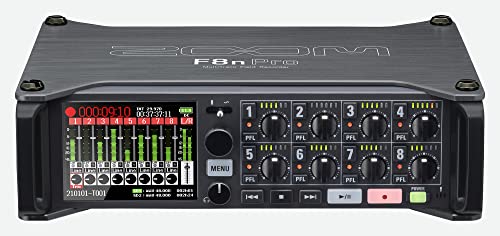
- 8 inputs and 10 tracks for complex production rigs
- 32-bit float recording with dual AD converters
- Dual SD slots and 0.2ppm timecode accuracy
Best For: Film crews and field audio teams needing redundant multi-track capture
Modular Handheld Flexibility
Zoom H5 4-Track Handheld Recorder for Filmmakers & Musicians
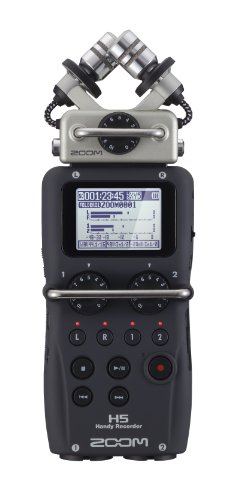
- Interchangeable input capsules for different recording jobs
- Four-track recording with two XLR/TRS combo inputs
- USB audio interface mode for PC, Mac, and iPad
Best For: Creators who want a flexible handheld recorder with expandable inputs
Compact Stereo Starter
Zoom H1 Essential Recorder for Musicians, Podcasters & Content Creators

- 32-bit float stereo recording for clip-free capture
- USB-C mic mode for calls, livestreams, and desktop use
- Portable handheld design for music, voice, and ambience
Best For: Creators who need a simple stereo recorder for quick, polished audio
Multi-Input Workhorse
TASCAM DR-40XP 4-Channel 32-Bit Float Portable Handheld Field Recorder
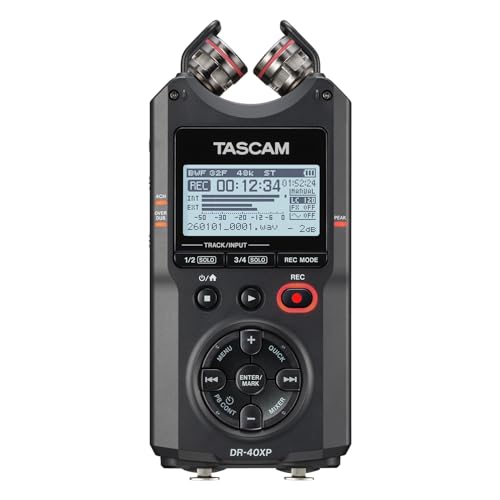
- 4-channel capture with built-in mics plus external inputs
- Two XLR/TRS inputs for more flexible recording setups
- USB-C interface mode for computer and mobile workflows
Best For: Users who need a handheld recorder with multi-track flexibility and external mic support
Accessibility-Focused All-Rounder
Zoom H2 Essential Handheld Recorder for Musicians, Podcasters & Filmmakers

- Three built-in mics with nine selectable recording patterns
- USB mic mode records to SD card simultaneously as backup
- Bluetooth control and timecode sync for multi-unit setups
Best For: Users who want versatile pickup patterns, backup recording, and accessibility features
Compact 32-Bit Float Recorder
Zoom H1 XLR 2-Channel Recorder for Filmmakers

- 32-bit / 96kHz recording
- Two XLR/TRS combo inputs
- OLED waveform display and 3.5mm I/O
Best For: Users who want a simple handheld recorder for interviews, podcasts, and everyday location audio
Large-Capsule Studio Recorder
Zoom H5 Studio Handy Recorder for Filmmakers

- 19.4mm X/Y built-in microphones
- 32-bit float and up to 4-track recording
- Dedicated gain knobs for fast control
Best For: Creators who need a portable recorder with large built-in mics and multi-track capture
Guided 4-Track Recorder
Zoom H4 Essential Handheld Recorder

- 32-bit float 4-track recording
- Two XLR/TRS inputs plus built-in stereo mics
- USB-C recording and spoken menu guidance
Best For: Creators who want an easy-to-use handheld recorder with flexible inputs and SD backup
Clip-Free 32-Bit Float Recording – Zoom F3 Professional Field Recorder for Filmmakers & Musicians
If you need a compact field recorder that can handle unpredictable sound without constant level riding, the Zoom F3 is built for that job. Its 32-bit float recording and dual A/D converters are aimed at capturing everything from quiet dialogue to sudden peaks, making it a practical choice for field recording on set or in rough locations.
Best For: Run-and-gun filmmakers and recordists who want clip-free capture with secure XLR connections.
Pros:
- 32-bit float recording helps preserve audio across quiet and loud passages without manual gain changes.
- Dual locking XLR inputs are useful when the recorder is mounted out of reach or built into a larger rig.
- Ultra-low-noise preamps are designed for cleaner results in uncontrolled environments.
- Flexible power and standalone or USB workflows support long days on set or on location.
Cons:
- It is a focused field recorder, so it does not offer the broader feature set of larger multi-input models.
- The two-input design may be limiting for more complex productions.
The F3 is a strong fit if your priority is dependable, low-maintenance recording in situations where retakes are not an option. It keeps the setup simple while still giving you the capture headroom field recorders are known for.
Portable Handheld Simplicity – TASCAM DR-05XP 32-Bit Float Portable Handheld Field Recorder
The TASCAM DR-05XP is a straightforward field recorder for capturing music, voice, audio-for-video, meetings, and dictation without much setup. Its built-in omnidirectional microphones and 32-bit float recording make it a handy option when you want portable stereo recording with enough headroom for louder sources.
Best For: Users who want a simple handheld recorder with USB-C interface support.
Pros:
- 32-bit float, 24-bit, and 16-bit modes give you flexible recording options.
- Built-in omnidirectional condenser mics are rated for loud environments up to 125dB SPL.
- USB-C 2-in/2-out interface mode adds direct computer recording capability.
- Lightweight handheld design makes it easy to carry for quick field work.
Cons:
- Battery life is listed at up to 17.5 hours, but batteries and SD card are not included.
- The built-in mic design is convenient, but it is less flexible than an XLR-based recorder.
For simple capture jobs, the DR-05XP keeps things practical and portable. It is best viewed as an easy everyday field recorder rather than a complex production hub.
Pro Multi-Track Production – Zoom F8n Pro Field Recorder for Filmmakers with 8 Inputs & 10 Tracks
If you need a serious field recorder for film production, the Zoom F8n Pro is built for multi-track work with strong workflow tools. With 8 inputs, 10 tracks, 32-bit float capture, and dual SD cards, it is aimed at productions that need dependable recording, accurate timecode, and redundancy on set or in the field.
Best For: Film crews and field audio teams needing multi-input recording with timecode and redundancy.
Pros:
- 8-channel/10-track recording supports more complex production setups.
- 32-bit float and dual AD converters help capture clip-free audio across wide dynamic range.
- Timecode accuracy down to 0.2ppm is useful for keeping audio aligned with picture.
- Dual SD slots with redundant recording add an extra layer of security.
Cons:
- It is larger and heavier than compact handheld recorders.
- The advanced feature set may be more than casual users need.
The F8n Pro is designed for demanding workflows where reliability matters as much as sound quality. If your field recording needs revolve around multi-track production and sync accuracy, it is one of the strongest picks here.
Modular Handheld Flexibility – Zoom H5 4-Track Handheld Recorder for Filmmakers & Musicians
The Zoom H5 is a flexible field recorder for users who want a handheld unit with expandable input options. Its interchangeable capsules, four-track simultaneous recording, and XLR/TRS combo inputs make it a practical pick for audio-for-video, music, and general field work.
Best For: Filmmakers and musicians who want a modular handheld recorder with multiple input options.
Pros:
- Interchangeable input capsules let you adapt the recorder to different jobs.
- Detachable X/Y capsule includes shock-mounted mics to reduce handling noise.
- Two XLR/TRS combo inputs with phantom power and -20dB pad add flexibility.
- Four-track simultaneous recording and USB audio interface mode expand its usefulness.
Cons:
- It records directly to SD/SDHC cards up to 32GB, which is more limited than newer workflows.
- The battery and storage specs are less expansive than higher-end production recorders.
The H5 remains appealing if you want a field recorder that can change with the job instead of locking you into one input style. It is a capable middle-ground option for creators who value flexibility.
Compact Stereo Starter – Zoom H1 Essential Recorder for Musicians, Podcasters & Content Creators
If you want a simple way to upgrade your field recorders setup, the Zoom H1 Essential is built for fast, clip-free stereo capture. It’s a practical pick for creators who need better sound than a phone or camera can provide, with X/Y stereo mics, 32-bit float recording, and USB-C connectivity for recording directly into computers, phones, or livestream setups.
Best For: Musicians, podcasters, and content creators who want an easy handheld recorder for stereo audio and voice capture.
Pros:
- 32-bit float recording helps keep audio clip-free without gain adjustment
- Built-in X/Y stereo microphones suit music, interviews, ambience, and voiceovers
- USB-C mic mode works with livestreams, meetings, calls, and desktop recording
- Lightweight handheld design is easy to carry for quick recording sessions
Cons:
- Uses 2 AAA batteries instead of a built-in rechargeable battery
- Single stereo mic setup is less flexible than multi-input field recorders
- No XLR/TRS inputs for external microphone expansion
Overall, this is a straightforward field recorder for creators who value speed, portability, and clean stereo audio. It fits best when you want reliable results with minimal setup.
Multi-Input Workhorse – TASCAM DR-40XP 4-Channel 32-Bit Float Portable Handheld Field Recorder
The TASCAM DR-40XP is a flexible option in field recorders for users who need more routing and multi-track control. With 4-channel recording, adjustable built-in mics, 2 XLR/TRS inputs, and 32-bit float support, it’s set up for music, audio for video, and interview workflows where you may want to capture multiple sources at once.
Best For: Musicians, videographers, and interviewers who need a handheld recorder with external inputs and 4-channel capture.
Pros:
- 4-channel recording captures built-in mics and external inputs together
- Two XLR/TRS inputs add flexibility for pro audio sources
- 32-bit float recording supports clean, clip-resistant results
- USB-C audio interface mode works with computers and compatible mobile setups
Cons:
- microSD card and batteries are not included
- Bulkier than simpler handheld stereo recorders
- More features may be unnecessary for basic voice memos or casual use
If you need a recorder that can handle more than basic stereo capture, this model stands out for its input options and multi-track flexibility. It’s a stronger choice when your field recording sessions involve external gear.
Accessibility-Focused All-Rounder – Zoom H2 Essential Handheld Recorder for Musicians, Podcasters & Filmmakers
For shoppers comparing field recorders that can adapt to different recording jobs, the Zoom H2 Essential offers unusual flexibility in a compact handheld design. Its three built-in mics, nine selectable recording patterns, 32-bit float/96kHz recording, and USB mic plus SD card backup make it useful for interviews, soundscapes, music, and on-the-go production.
Best For: Journalists, podcasters, musicians, and filmmakers who want flexible pickup patterns and backup recording.
Pros:
- Three built-in microphones with nine recording patterns for varied capture needs
- 32-bit float recording helps avoid clipping at any volume level
- USB mic mode records to SD card at the same time for backup
- Bluetooth control and timecode sync support multi-unit recording workflows
Cons:
- Mono/stereo/surround options may be more than casual users need
- Uses 2 AA batteries rather than a rechargeable pack
- Best suited to built-in mic workflows rather than external input expansion
This model is a strong fit if you want one recorder that can cover many situations without worrying about gain staging. It adds especially useful backup and accessibility features for demanding field work.
Compact 32-Bit Float Recorder – Zoom H1 XLR 2-Channel Recorder for Filmmakers
The Zoom H1 XLR is a practical pick for field recorders when you want simple setup without giving up clean, flexible capture. It records in 32-bit / 96kHz, includes two XLR/TRS combo inputs, and adds a waveform display so you can check levels quickly while working on interviews, podcasts, or location audio.
Best For: Filmmakers, podcasters, and musicians who want a compact recorder with XLR/TRS inputs and straightforward monitoring.
Pros:
- 32-bit / 96kHz recording supports clear, detailed audio
- Two XLR/TRS combo inputs handle microphones and instruments
- OLED waveform display helps monitor levels at a glance
- 3.5mm input and headphone output add extra flexibility
Cons:
- Uses AA batteries rather than a built-in rechargeable pack
- Single-purpose handheld design may be less feature-rich than larger recorders
For buyers comparing field recorders, this model stands out for its easy setup and versatile input options. Its SDXC support up to 1TB and 10-hour battery life make it suitable for extended sessions, especially when you need a lightweight recorder that stays practical on set or on the go.
Large-Capsule Studio Recorder – Zoom H5 Studio Handy Recorder for Filmmakers
The Zoom H5 Studio is a strong option among field recorders if you want handheld portability with more serious capture hardware. Its 19.4mm X/Y microphone capsule, 32-bit float recording, dedicated gain knobs, and up to 4-track capture make it well suited for recording in controlled spaces or out in the field.
Best For: Filmmakers and musicians who want a portable recorder with large built-in mics, hands-on control, and multi-track recording.
Pros:
- 19.4mm X/Y mics provide rich, detailed audio
- 32-bit float recording helps avoid clipped takes
- Dedicated gain knobs make level control quick and intuitive
- Records up to 4 tracks at up to 192kHz in WAV format
Cons:
- Requires 4 AA batteries, which adds to carry-on planning
- Heavier than smaller handheld recorders at 14.4 ounces
If you need field recorders that feel more studio-capable while staying portable, the H5 Studio is built for that middle ground. The larger mics and multi-track support make it a good fit when you want more flexibility than a basic handheld recorder without moving to a full production setup.
Guided 4-Track Recorder – Zoom H4 Essential Handheld Recorder
The Zoom H4 Essential is a versatile choice for field recorders if you want a balance of built-in mics, external input support, and easy workflow. It records in 32-bit float, offers two XLR/TRS inputs, and can save to both your device and an SD card, making it useful for music, interviews, podcasts, and video audio.
Best For: Creators who want a flexible handheld recorder with guided menus and backup recording to SD card.
Pros:
- 32-bit float recording helps protect against distorted takes
- Two XLR/TRS inputs support external mics, instruments, or mixers
- USB-C connection lets you record or stream to a phone, tablet, or computer
- Spoken menu guidance makes navigation easier for more users
Cons:
- Battery life is rated at 10 hours, which may be limiting for long days
- Built-in mics and handheld format may not suit every advanced field workflow
For buyers comparing field recorders, this model is especially appealing if you want a guided experience without sacrificing core recording flexibility. The combination of onboard mics, dual inputs, and backup SD recording makes it a practical all-rounder for a wide range of creators.
How We Picked These Field Recorders
We prioritized models that offer reliable recording quality, practical portability, and features creators actually use, such as 32-bit float recording, onboard mics, XLR/TRS inputs, USB-C connectivity, and simple controls. We also considered how well each recorder fits common use cases, from solo capture to multi-source production.
Quick Comparison: Which Type Fits Your Workflow?
Some Field Recorders are built for fast handheld capture, while others are better suited to more complex setups with lavaliers, mixers, or multiple microphones. Compact stereo units are ideal for interviews, ambient sound, and notes. Multi-input recorders are better when you need more control for film sets, band sessions, or podcast-style production.
Key Buying Factors for Field Recorders
Input Count and Connector Type
Think about how many sources you need to record at once. A basic two-channel recorder works well for voice or stereo ambience, while 4-channel and 8-channel units are better for layered productions. If you use professional microphones, look for XLR or XLR/TRS combo inputs.
Recording Format and Headroom
32-bit float recording is a major advantage for Field Recorders because it helps protect against clipping and makes level-setting easier in unpredictable environments. If you frequently work in changing sound conditions, this feature can save time and take stress out of capture.
Portability and Power
Handheld models are easiest to carry and quickest to deploy, especially for travel, run-and-gun video, and spontaneous recording. Check battery options, USB-C power support, and mounting compatibility if you plan to attach the recorder to a camera rig or use it in the studio.
Monitoring and Workflow
Headphone monitoring, easy gain controls, and clear display feedback help you catch issues before they become unusable takes. USB audio interface mode is also useful if you want one device that can handle both portable recording and computer-based work.
Who Should Buy Which Field Recorders?
If you want the simplest setup for voice, ambience, or mobile content, choose a compact handheld recorder. If you’re working in film production or recording multiple performers, step up to a model with more inputs and track count. Musicians may prefer recorders with better microphone options and stronger multitrack flexibility, while podcasters and creators may value USB-C connectivity and fast desktop integration.
In short, the best Field Recorders are the ones that match your channel count, your recording environment, and how much setup time you’re willing to spend before pressing record.