
Choosing a field recorder with timecode can save hours in post-production by keeping audio and video tightly synced from the start.
Below, we’ve rounded up 10 strong options for filmmakers, crews, and content creators who want cleaner workflow, flexible inputs, and dependable recording performance.
Best 10 Field Recorder with Timecode Picks for 2026
Ultra-Portable Production Pick
Zoom F6 32-bit Float Field Recorder

- 32-bit float recording avoids clipping.
- Six XLR inputs, up to 14 tracks.
- Timecode I/O for frame-accurate sync.
Best For: Film crews and location recordists needing timecode and multitrack flexibility.
Wireless Sync Upgrade

- Built-in timecode generation.
- Wireless monitoring and remote control.
- 32-bit float recording for easy gain staging.
Best For: Videographers who want wireless sync and compact timecode recording.
Hidden Talent Pick
TASCAM DR-10L Pro Lavalier Recorder

- 32-bit float recording with lav mic included.
- LTC Jam Sync for timecode workflows.
- Supports up to 512GB microSDXC cards.
Best For: Wedding videographers and creators needing discreet synced lav audio.
Monitoring-Friendly Bundle
TASCAM FR-AV2 Recorder and Headphones

- Built-in timecode generation and timecode I/O.
- 32-bit float recording with dual ADCs.
- Includes closed-back monitoring headphones.
Best For: Videographers who want a timecode recorder with bundled headphones.
Professional Multitrack Timecode Recorder
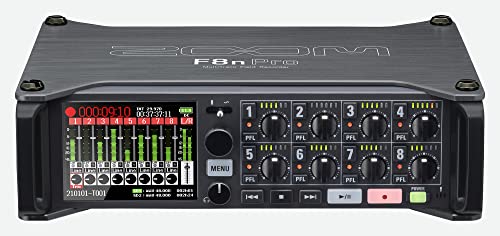
- 8-input, 10-track recorder with 32-bit float
- 0.2ppm timecode accuracy for tight sync
- Dual SD slots for redundant recording
Best For: Film crews needing dependable multitrack capture and precise sync
Portable Bundle for Field Sync

- 32-bit float recording with dual-path A/D converters
- Records up to 14 tracks with Ambisonics mode
- Bundle includes card, batteries, cables, and bag
Best For: Portable field recording with extra accessories included
Camera-Rig Timecode Mixer Recorder

- Built-in timecode generator with HDMI sync
- Four XLR/TRS inputs with Ultra HDDA preamps
- 32-bit float recording and built-in mixer
Best For: Camera-rig and video workflows needing sync and clean input handling
Compact Timecode Starter Kit
Zoom F3 2-Channel 32-Bit Float Recorder Bundle

- 32-bit float with dual A/D converters
- Includes TCA-1 timecode adapter
- Two locking XLR inputs; portable power options
Best For: Solo shooters and small crews needing compact sync-ready recording
All-in-One Video Sync Recorder
TASCAM FR-AV2 Compact 32-Bit Float Field Recorder

- Built-in timecode generation and sync I/O
- 32-bit float recording with dual ADCs
- Two XLR/TRS combo inputs plus 3.5 mm input
Best For: Videographers who want built-in sync and simple field capture
Multi-Track Production Bag Rig
Zoom F6 6-Input 32-Bit Float Field Recorder
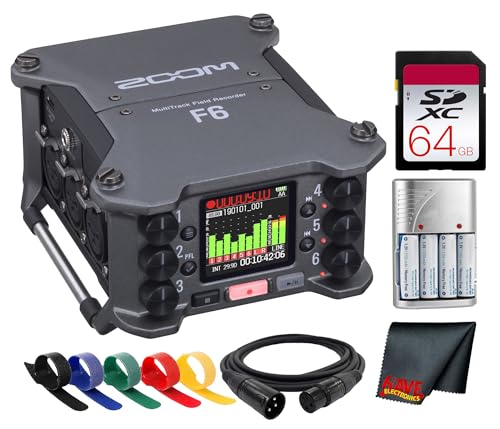
- Six-input recorder with 32-bit float capture
- Dedicated timecode I/O with TCXO accuracy
- USB interface plus SD card recording
Best For: Production sound and filmmaking with multi-input, sync-heavy workflows
Ultra-Portable Production Pick – Zoom F6 32-bit Float Field Recorder
If you need a field recorder with timecode for demanding film or location work, the Zoom F6 is built around no-clipping 32-bit float capture and practical production flexibility. Its six XLR inputs, up to 14 tracks, and timecode I/O make it a strong fit for small crews that still need frame-accurate sync and multi-mic recording.
Best For: Filmmakers, location recordists, and small crews that want timecode sync plus high headroom recording.
Pros:
- 32-bit float recording with dual AD converters helps prevent clipping across a wide dynamic range.
- Six XLR inputs and up to 14 tracks support more complex production setups.
- Timecode I/O keeps audio aligned with video for filmmaking and broadcast workflows.
- Rugged, portable design with multiple power options suits location use.
Cons:
- AA battery operation may be less convenient than built-in rechargeable power.
- More features may be than some simple run-and-gun users need.
Overall, the F6 stands out as a capable recorder when timecode, track count, and clipping resistance all matter in the same package. It is a practical choice if you want a compact unit that can handle serious production audio without sacrificing portability.
Wireless Sync Upgrade – TASCAM FR-AV2 + AK-BT2 Bundle
The TASCAM FR-AV2 bundle is a compact field recorder with timecode that leans hard into modern video workflows. Built-in timecode generation, 32-bit float recording, and Bluetooth-based monitoring, remote control, and timecode sync make it a practical option when you want to reduce cable clutter and speed up production.
Best For: Videographers and multi-camera shooters who want wireless control and timecode sync in a compact recorder.
Pros:
- Built-in timecode generation removes the need for an external timecode device.
- Bluetooth adapter enables wireless audio monitoring, remote control, and timecode sync with supported Atomos gear.
- 32-bit float recording adds extra headroom for unpredictable recording conditions.
- Free Recorder Connect app allows control from iOS, iPadOS, or Android.
Cons:
- Wireless timecode sync depends on supported Atomos products and the included adapter bundle.
- Best value is tied to workflows that actually use remote control and wireless monitoring.
This bundle makes sense when speed and integration matter as much as sound quality. If your shoots benefit from internal timecode plus wireless monitoring and app control, the FR-AV2 is a workflow-friendly choice.
Hidden Talent Pick – TASCAM DR-10L Pro Lavalier Recorder
If you want a field recorder with timecode for personal audio, the TASCAM DR-10L Pro is designed to stay small while handling serious production needs. Its lavalier microphone, 32-bit float recording, and LTC Jam Sync support make it especially useful for filmmakers and creators who need clean, discreet capture and streamlined syncing.
Best For: Wedding videographers, filmmakers, and creators who need a compact lavalier recorder with timecode sync.
Pros:
- 32-bit float recording helps capture everything from very quiet speech to louder moments without worrying about clipping.
- LTC Jam Sync support improves timecode synchronization for multi-device workflows.
- Included lavalier microphone provides a complete personal recording solution.
- Supports up to 512GB microSDXC cards for long recording sessions.
Cons:
- Only records mono audio, so it is built for personal mic capture rather than multi-input production.
- Supports Atomos wireless timecode only with the AK-BT1 adapter sold separately.
The DR-10L Pro is a smart pick when you want discreet bodypack-style recording and dependable sync support in a minimal setup. It is less about mixing multiple sources and more about giving one speaker clean, manageable audio.
Monitoring-Friendly Bundle – TASCAM FR-AV2 Recorder and Headphones
The TASCAM FR-AV2 bundle pairs a compact field recorder with timecode and monitoring headphones, making it a straightforward option for videographers who want both capture and playback in one package. With built-in timecode generation, 32-bit float recording, and timecode IN/OUT, it is aimed at workflows where fast setup and reliable sync are priorities.
Best For: Videographers who want a compact timecode recorder plus included monitoring headphones.
Pros:
- Built-in timecode generation simplifies integration with video gear.
- Dual ADCs and 32-bit float recording help with reliable capture.
- Includes TH-02-B closed-back headphones for monitoring recordings.
- 2 XLR/TRS combo inputs, a 3.5mm input, and timecode IN/OUT add setup flexibility.
Cons:
- The bundle is more appealing if you need the included headphones.
- Wireless monitoring requires the optional AK-BT2 adapter.
As a bundle, this package is convenient for users who want to monitor audio immediately after setup without sourcing separate headphones. It keeps the core FR-AV2 strengths intact while adding a practical monitoring accessory.
Professional Multitrack Timecode Recorder – Zoom F8n Pro
If you need a field recorder with timecode for demanding film and location work, the Zoom F8n Pro is built around reliability, clean gain, and sync accuracy. Its 8-input, 10-track design, 32-bit float recording, and 0.2ppm timecode accuracy make it a strong fit when you need clip-free capture and solid alignment to picture.
Best For: Film crews and location recordists who want high-channel-count recording with precise timecode sync.
Pros:
- 32-bit float with dual AD converters helps prevent clipping across wide dynamic ranges.
- Industry-leading 0.2ppm timecode accuracy keeps audio aligned with picture.
- Dual SD slots support redundant recording for added workflow security.
- Up to 75dB of gain and -127dBu EIN preamps support clean dialogue capture.
Cons:
- Designed for professional workflows, so it may be more recorder than casual users need.
- At 1.8 kg, it is not the lightest option for minimal kit setups.
The F8n Pro focuses on the essentials that matter most on set: clean inputs, dependable redundancy, and accurate sync. For productions that need a serious field recorder with timecode, it offers a very complete feature set.
Portable Bundle for Field Sync – Zoom F6 Bundle
The Zoom F6 is a compact field recorder with timecode-friendly production features and 32-bit float capture for situations where audio levels can change fast. It records up to 14 tracks, includes Ambisonics mode, and works as a USB audio interface, making it a flexible option for filmmakers, sound designers, and journalists.
Best For: Recordists who want portable 32-bit float capture with a bundled accessory kit.
Pros:
- 32-bit float technology and dual-path A/D converters help avoid clipping.
- Records up to 14 tracks, including a stereo mix, for multitrack work.
- Ambisonics mode adds support for immersive VR and 360-audio projects.
- Bundle includes useful extras like an SD card, batteries, cables, and a travel bag.
Cons:
- The notes emphasize timecode synchronization, but do not specify a built-in timecode generator.
- Accessory bundle adds value, but also makes the package less compact than the recorder alone.
As a portable production tool, the F6 stands out for dynamic-range handling and flexible track counts. If you want a field recorder with timecode-oriented workflow support plus a ready-to-go bundle, this is an easy one to consider.
Camera-Rig Timecode Mixer Recorder – TASCAM FR-AV4
The TASCAM FR-AV4 is a field recorder with timecode features aimed at camera-rig and video workflows. It combines four XLR/TRS inputs, 32-bit float recording, a built-in mixer, and a timecode generator with HDMI sync, making it a practical choice when audio and video need to stay locked together.
Best For: Video crews and rig-based setups that need timecode, HDMI sync, and four clean inputs.
Pros:
- Built-in timecode generator with HDMI sync supports video-oriented production workflows.
- Four Ultra HDDA preamps offer low-noise capture with an EIN of -127 dBu.
- 32-bit float recording with dual A/D converters provides wide dynamic-range handling.
- Built-in mixer can route up to four inputs to two outputs and record six tracks to SDXC.
Cons:
- Only four input channels, so it is less expandable than larger multitrack recorders.
- Some wireless sync and control features require the optional AK-BT2.
For camera-centric production, the FR-AV4 brings timecode, sync, and clean preamps into a compact package. It is especially appealing if you want a recorder that fits neatly into a rigged video workflow.
Compact Timecode Starter Kit – Zoom F3 2-Channel 32-Bit Float Recorder Bundle
If you want a field recorder with timecode in a small, easy-to-rig package, this Zoom F3 bundle pairs 32-bit float capture with the TCA-1 timecode adapter. It is built for field, set, music, and production work where levels can change fast and reliable sync matters.
Best For: Solo shooters and small crews who need a compact 2-channel recorder with straightforward timecode syncing.
Pros:
- 32-bit float recording with dual A/D converters helps handle changing sound levels.
- Included TCA-1 adds 3.5 mm TRS timecode input/output for sync workflows.
- Two locking XLR inputs with phantom power support mic or line sources.
- Portable power options include AA batteries, USB power, or AC adapter.
Cons:
- Only two channels, so it is not suited to larger multitrack setups.
- Timecode support depends on compatible firmware with the TCA-1.
This bundle keeps the core F3 workflow simple while adding the timecode hardware needed for video synchronization. It is a practical choice when you want no-nonsense recording and syncing without moving up to a larger recorder.
All-in-One Video Sync Recorder – TASCAM FR-AV2 Compact 32-Bit Float Field Recorder
The TASCAM FR-AV2 is a compact field recorder with timecode designed for videographers who want built-in sync tools and no-clip capture in one unit. Its 32-bit float recording, timecode generation, and dual combo inputs make it a practical setup for fast-moving production work.
Best For: Videographers who want internal timecode generation and compact, worry-free audio capture.
Pros:
- Built-in timecode generation and Timecode IN/OUT reduce the need for external gear.
- 32-bit float recording with dual ADCs helps capture unpredictable audio cleanly.
- Two XLR/TRS combo inputs plus a 3.5 mm input add flexible connection options.
- Optional AK-BT2 adapter enables wireless monitoring support.
Cons:
- Wireless monitoring requires the optional AK-BT2 adapter.
- Runs on 3 AA batteries, so battery planning still matters on longer shoots.
For crews that want fewer boxes in the bag, the FR-AV2 stands out by combining recorder and timecode generator functions. It is a clean, practical option when you need dependable syncing without adding an external timecode device.
Multi-Track Production Bag Rig – Zoom F6 6-Input 32-Bit Float Field Recorder
The Zoom F6 is a field recorder with timecode aimed at production sound, filmmaking, ENG, and location recording where multichannel flexibility matters. Its 32-bit float workflow, six locking XLR inputs, and dedicated timecode I/O make it a strong fit for more demanding audio-for-video setups.
Best For: Production sound mixers and filmmakers who need six inputs, reliable timecode, and wide dynamic range.
Pros:
- Six locking Neutrik XLR inputs support larger recording setups.
- 32-bit float recording helps prevent clipping on quiet and loud sources.
- Dedicated 3.5 mm TRS timecode I/O with TCXO accuracy supports stable sync.
- Can work as a USB audio interface while also recording to SD cards.
Cons:
- Larger and heavier than smaller 2-channel field recorders.
- More features may be more recorder than needed for simple interviews.
The F6 is the most capable option here for users who need more inputs and tighter production workflows. If your projects involve multi-mic scenes or multi-camera sync, it offers a strong balance of flexibility and timecode reliability.
How We Picked the Best Field Recorder with Timecode
We focused on recorders built for real production use: solid timecode support, dependable input options, 32-bit float recording where available, and practical features like Bluetooth control, mixer functions, and camera-friendly sync tools. We also favored models that make sense for different crew sizes, from solo shooters to multi-input documentary setups.
Quick Comparison
When comparing a Field Recorder with Timecode, start with channel count and sync workflow. Two-input units are usually best for small camera rigs and interviews, while 4- to 8-input models suit multi-mic shoots, run-and-gun production, and scripted scenes. Also look at whether timecode is built in, supported through an adapter, or handled via an external kit.
Key Buying Factors for a Field Recorder with Timecode
Timecode Workflow
Make sure the recorder matches your post-production process. Built-in timecode generator support is ideal if you want simpler jam sync and fewer accessories. If you already own timecode gear, a recorder with LTC input or adapter support may be the better value.
Recording Format and Headroom
32-bit float recording is a major advantage for unpredictable shoots because it helps preserve usable audio even when levels spike. For controlled studio work, standard high-resolution recording can still be fine, but field work usually benefits from extra safety.
Inputs and Expandability
Think about how many microphones or sources you routinely use. Dual XLR/TRS inputs are enough for interviews and compact rigs, while 4- and 8-input recorders are better for dialogue-heavy productions, ambience capture, and larger setups.
Monitoring and Control
Clear meters, easy access to transport controls, and remote app or Bluetooth control can make a big difference on set. Headphone monitoring and strong gain management are especially important if the recorder will live in a bag or on a camera rig.
Who Should Buy Which Field Recorder with Timecode?
Solo creators and documentary shooters should lean toward compact two-channel options with timecode support. Indie filmmakers and small crews will usually get the best balance from 4-channel models. If you need maximum routing flexibility, multiple mics, or more complex production workflows, an 8-input recorder is the smarter long-term pick.
For anyone building a dependable location sound kit, the right Field Recorder with Timecode is less about buying the most features and more about matching sync, inputs, and portability to your production style.