
The best condenser microphones can capture detailed vocals, instruments, podcasts, meetings, and streams—but the right model depends on your recording setup, connection type, and budget.
We selected 10 options ranging from simple USB microphones to versatile XLR/USB models and studio-focused condenser mics, making it easier to match features with your workflow.
Best 10 Condenser Microphones Picks for 2026
Project Studio Standard
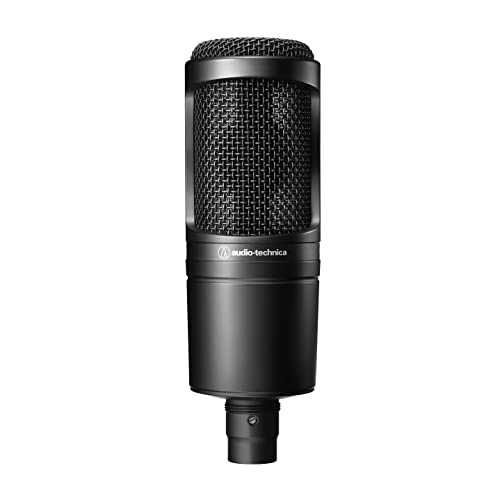
- Cardioid XLR condenser for home studios
- Handles high SPL and wide dynamics
- Requires phantom power and an audio interface
Best For: Home-studio vocals, instruments, and general recording
Budget Studio Workhorse

- Large-diaphragm XLR condenser
- Cardioid pattern reduces ambience
- Includes shock mount and XLR cable
Best For: Affordable vocal and instrument recording
Most Versatile Studio Option

- Offers both XLR and USB-C connectivity
- Ultra-low-noise capsule handles high SPL
- Includes shock mount, pop filter, and cables
Best For: Hybrid studio, podcasting, and computer recording
Best Plug-and-Play Pick

- USB setup works with computers and PS4/PS5
- Cardioid pattern supports clear voice capture
- Includes tripod stand and volume knob
Best For: Streaming, gaming, meetings, and beginner voice recording
Quiet Studio Favorite
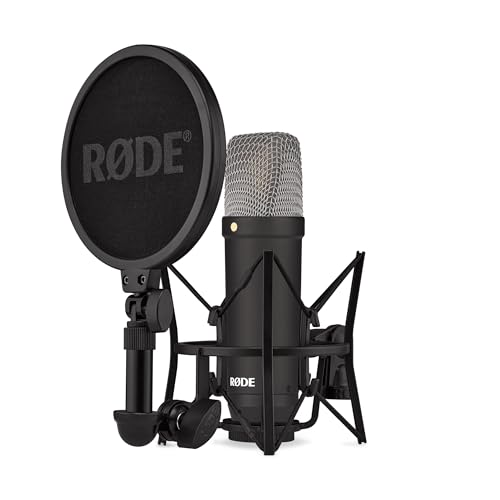
- Exceptionally low 4.5 dBA self-noise
- Cardioid design suits vocals and streams
- Includes shock mount, pop filter, and XLR cable
Best For: Quiet vocal recording and streaming setups
Versatile Project-Studio Pick

- Includes an 80 Hz high-pass filter
- 10 dB pad supports high-SPL sources
- Custom shock mount included
Best For: Flexible home-studio, podcasting, and live-use recording
Mix-Ready Shielded Choice

- RF shielding helps reduce electronic interference
- Integrated pop filter supports clean recordings
- Includes shock mount and carrying case
Best For: Vocal, instrument, podcast, and video recording
Best Budget USB Mic
Amazon Basics Condenser Microphone

- Plug-and-play USB setup
- Cardioid pickup for clearer voice capture
- Adjustable stand and one-tap mute
Best For: Budget PC streaming, calls, podcasting, and basic recording
Best Hybrid Recording Kit
MAONO A04 Gen2 Condenser Microphone

- USB and XLR connectivity
- 192kHz/24-bit USB recording
- Includes arm, shock mount, and pop filter
Best For: Podcasting and creators planning to expand into interface-based recording
Best Multi-Pattern USB Mic
Logitech Blue Yeti USB Microphone

- Four selectable pickup patterns
- Onboard gain, mute, and headphone controls
- Blue VO!CE software effects
Best For: Streaming, podcasting, and flexible desktop recording
Project Studio Standard – Audio-Technica AT2020
The Audio-Technica AT2020 is a practical starting point for anyone building a home or project studio around condenser microphones. Its cardioid pattern helps reduce sound from the sides and rear, while high SPL handling and a wide dynamic range support vocals and varied recording tasks.
Best For: Home-studio vocals, instruments, and general recording with an XLR audio interface.
Pros:
- Cardioid pickup pattern improves isolation of the desired source.
- High SPL handling and wide dynamic range add versatility.
- Low-mass diaphragm supports extended frequency and transient response.
- Solid metal enclosure and a two-year parts-and-labor warranty.
Cons:
- Requires phantom power and an XLR connection.
- Does not include a USB connection for direct computer recording.
The AT2020 remains a straightforward choice when you want a focused, wired studio microphone and already have compatible recording hardware. It is less convenient for plug-and-play computer setups, but its specifications suit a broad range of project-studio work.
Budget Studio Workhorse – Mackie EM-91C
The Mackie EM-91C is an affordable large-diaphragm option among condenser microphones, designed for studio-based vocals and instruments. Its cardioid pattern helps reduce ambience, and the package includes a shock mount and XLR cable to simplify setup.
Best For: Budget-conscious home or large-studio users recording vocals and instruments through an XLR-compatible mixer or interface.
Pros:
- Large-diaphragm condenser capsule suits vocals and instruments.
- Cardioid pattern helps reduce ambient pickup.
- Includes a shock mount and XLR cable.
- Rugged construction is designed for reliable use.
Cons:
- Uses XLR rather than direct USB connectivity.
- Requires compatible powered recording equipment.
The EM-91C focuses on the essentials: a large-diaphragm capsule, cardioid pickup, and useful included accessories. It is a sensible value pick for users who already record through an audio mixer or interface.
Most Versatile Studio Option – RØDE NT1 5th Gen
The RØDE NT1 5th Gen stands out among condenser microphones for combining traditional XLR output with USB-C connectivity. Its low-noise capsule, high SPL handling, and included shock mount, pop filter, and cables make it suitable for studio recording as well as direct computer-based production.
Best For: Creators who want one microphone for voiceovers, vocals, instruments, podcasting, and both interface-based and USB recording.
Pros:
- Supports both XLR and direct USB-C computer connection.
- Very low self-noise and high SPL handling suit varied sources.
- Includes shock mount, pop filter, XLR cable, and USB-C cable.
- USB recording supports high-resolution conversion and clip-proof 32-bit float.
Cons:
- More features may be unnecessary for a simple XLR-only setup.
- The supplied specifications identify a black finish, while the product title lists silver.
The NT1 5th Gen is the most flexible choice in this group. Its dual connectivity lets you start directly with a computer and later move to an interface, while the included accessories reduce the need for immediate add-on purchases.
Best Plug-and-Play Pick – FIFINE K669B USB Microphone
The FIFINE K669B is a convenient USB condenser microphone for computer recording, meetings, gaming, streaming, and voice work. It connects directly to compatible desktops, laptops, and PlayStation consoles, includes a tripod stand, and provides an onboard volume knob.
Best For: Beginners, streamers, gamers, and remote workers who need a simple desktop microphone without a 48V phantom-power setup.
Pros:
- Plug-and-play USB connection simplifies computer setup.
- Cardioid pickup focuses on the main voice source.
- Built-in volume control allows quick level adjustment or muting.
- Includes a metal microphone, tripod stand, and USB cable.
Cons:
- Not compatible with Xbox or phones according to the supplied notes.
- USB desktop format is less suited to traditional XLR studio systems.
- Application settings may need adjustment to prevent automatic volume changes.
The K669B is designed for convenience rather than a full studio signal chain. Choose it when direct USB operation, a compact desktop setup, and simple voice control matter more than XLR expansion.
Quiet Studio Favorite – RØDE NT1 Signature
The RØDE NT1 Signature is a practical choice among condenser microphones for vocal recording, streaming, and home-studio work. Its cardioid pattern focuses on the speaker while the included shock mount, pop filter, and XLR cable make the package close to recording-ready—though you will still need an audio interface.
Best For: Vocalists, streamers, and home-studio users who want a quiet large-diaphragm condenser microphone with useful accessories included.
Pros:
- Very low 4.5 dBA self-noise helps preserve quiet vocal details.
- Cardioid pickup helps reject room sound and focus on the voice.
- Includes an SM6 shock mount with pop filter, six-meter XLR cable, and dust cover.
- Backed by a 10-year warranty with registration.
Cons:
- Requires an audio interface and XLR connection.
- Designed as a single-channel microphone, not a multi-mic system.
Choose the NT1 Signature when low self-noise and a complete accessory bundle matter most. It offers a straightforward path into vocal recording without requiring separate purchases for basic isolation and cabling.
Versatile Project-Studio Pick – Audio-Technica AT2035
The Audio-Technica AT2035 is one of the more flexible condenser microphones for home studios, podcasting, streaming, and live performance. Its large diaphragm, cardioid pattern, switchable high-pass filter, and 10 dB pad give you useful control across voices and louder sources.
Best For: Home-studio creators and performers who need a versatile XLR microphone with practical recording controls.
Pros:
- Cardioid pattern reduces pickup from the sides and rear.
- Switchable 80 Hz high-pass filter helps manage low-frequency content.
- 10 dB pad and high SPL handling support louder sources.
- Includes a custom shock mount and protective pouch.
Cons:
- Requires an XLR-compatible audio interface or mixer.
- Its listed self-noise is higher than the RØDE NT1 Signature’s 4.5 dBA rating.
The AT2035 stands out for control and adaptability rather than an accessory-heavy bundle. It is a sensible option if one microphone needs to cover speech, vocals, instruments, and occasional high-volume recording.
Mix-Ready Shielded Choice – Shure SM4
The Shure SM4 is a feature-rich option among condenser microphones for vocals, instruments, podcasting, and video setups. It combines a uniform cardioid pattern with RF interference shielding, an integrated pop filter, and high-SPL handling for cleaner capture in demanding environments.
Best For: Creators who want a durable XLR condenser microphone with built-in plosive control and protection from common electronic interference.
Pros:
- Brass one-inch dual-diaphragm capsule is designed for smooth, controlled reproduction.
- RF shielding helps block interference from phones, laptops, and Wi-Fi routers.
- Integrated pop filter supports cleaner, mix-ready recordings.
- Handles sound levels up to 140 dB and includes a shock mount and carrying case.
Cons:
- Requires phantom power through an audio interface or compatible setup.
- At 2.5 pounds, it is heavier than the listed RØDE NT1 Signature.
- The integrated features may be more than a basic recording setup needs.
The SM4 is a strong fit when interference rejection, integrated pop protection, and rugged construction are priorities. Its broad feature set can reduce cleanup work, particularly for close-miked vocals, instruments, and camera-facing recordings.
Best Budget USB Mic – Amazon Basics Condenser Microphone
If you want a straightforward entry point into condenser microphones, this Amazon Basics USB model focuses on plug-and-play recording for computers. Its cardioid pickup pattern, 14mm diaphragm, adjustable stand, and one-tap mute function suit streaming, podcasting, calls, and basic voice recording.
Best For: Budget-conscious PC users who want an easy USB microphone for streaming, conferencing, podcasting, or solo recording.
Pros:
- USB plug-and-play setup requires no additional drivers on supported Windows and Mac systems.
- Cardioid pickup helps reduce background noise from behind the microphone.
- Includes a 360-degree adjustable stand and one-tap mute control.
- Built-in shock absorber and silicone boot help improve stability.
Cons:
- USB connectivity is less flexible than a microphone that also includes XLR.
- The single cardioid pattern is less versatile for multi-person or room recordings.
- The plastic enclosure may feel less substantial than metal-bodied alternatives.
This is a practical choice when simple computer connectivity matters more than advanced recording controls. It offers the core features needed for everyday voice capture without adding a complicated setup.
Best Hybrid Recording Kit – MAONO A04 Gen2 Condenser Microphone
The MAONO A04 Gen2 stands out among condenser microphones for its dual USB/XLR connectivity. It combines 192kHz/24-bit USB recording, software-based audio controls, a cardioid capsule, and a complete arm-mounted kit for podcasting, voiceover, streaming, and home recording.
Best For: Creators who want a ready-to-use USB setup now with the option to connect to an audio interface or mixer through XLR later.
Pros:
- USB and XLR outputs support both computer recording and interface-based setups.
- MAONO Link software offers gain, noise reduction, EQ presets, compression, and limiting in USB mode.
- Includes an adjustable arm stand, shock mount, pop filter, and foam windscreen.
- 16mm cardioid capsule is designed for clear front-facing voice capture.
Cons:
- XLR cable is not included.
- Software controls are available only in USB mode.
- XLR use requires phantom power.
With more connection flexibility and accessories than a basic USB microphone, the A04 Gen2 is well suited to creators building a more capable desk recording setup. Check your desk thickness and power requirements before buying.
Best Multi-Pattern USB Mic – Logitech Blue Yeti USB Microphone
The Logitech Blue Yeti is a versatile condenser microphone for PC and Mac users who need more than a single pickup pattern. Its three-capsule array offers cardioid, omnidirectional, bidirectional, and stereo modes, while onboard controls and Blue VO!CE software support streaming, podcasting, meetings, and recording.
Best For: Streamers, podcasters, and creators who need flexible pickup patterns and convenient controls in a desktop USB microphone.
Pros:
- Four pickup patterns accommodate solo voice, stereo, room, and two-person recording scenarios.
- Onboard controls provide headphone volume, gain, pattern selection, and instant mute.
- Blue VO!CE software adds vocal effects, modulation, and HD audio samples.
- Adjustable desktop stand supports positioning and no-latency monitoring.
Cons:
- USB connectivity does not provide an XLR output for traditional interfaces.
- Its 3.5-pound weight makes it less portable than lighter desktop microphones.
- Multiple patterns may be unnecessary for users who only record one speaker.
The Blue Yeti is a strong fit when versatility and accessible controls are priorities. Its multi-pattern design can cover several recording arrangements without requiring multiple microphones.
How We Picked the Best Condenser Microphones
We focused on microphones that offer useful performance for their intended audience, whether that means reliable plug-and-play USB recording, flexible XLR connectivity, or studio-quality vocal capture. We also considered pickup pattern, included accessories, monitoring options, compatibility, build quality, and the amount of setup required.
The lineup includes entry-level choices for calls and streaming, adaptable microphones for podcasting and content creation, and more capable studio models for vocals, instruments, and home recording. Since sound quality is influenced by room acoustics and microphone technique, we weighed practical usability alongside specifications.
Quick Comparison
| Best For | Recommended Type | Connection |
|---|---|---|
| First home studio | Audio-Technica AT2020 | XLR |
| Flexible studio and computer recording | RØDE NT1 5th Gen | XLR and USB-C |
| Podcasting and streaming | Audio-Technica AT2035 or MAONO A04 Gen2 | XLR, or XLR/USB |
| Simple USB recording | FIFINE K669B or Amazon Basics | USB |
| All-purpose desktop use | Blue Yeti | USB |
Key Buying Factors for Condenser Microphones
USB Vs. XLR Connectivity
USB microphones connect directly to a computer and are usually the easiest choice for streaming, meetings, and basic recording. XLR microphones require an audio interface or mixer, but they provide a more expandable setup and make it easier to upgrade other parts of the signal chain. Models with both USB and XLR offer a useful middle ground.
Pickup Pattern and Room Conditions
Cardioid microphones primarily capture sound from the front and reduce sound from behind, making them a practical choice for solo speakers and vocalists. Condenser capsules are sensitive and detailed, so untreated rooms may reveal echoes, computer fans, and background noise. A quiet space, close placement, and a pop filter can improve results significantly.
Accessories and Controls
Check whether the microphone includes a stand, shock mount, pop filter, cable, or headphone monitoring. Onboard gain, mute, and headphone-volume controls are especially useful for desktop recording. For XLR models, budget separately for an interface, cable, and suitable stand if they are not included.
Intended Use
Studio vocals and acoustic instruments may benefit from a more refined large-diaphragm microphone, while podcasts and streams may prioritize easy controls and consistent speech pickup. A basic USB model can be sufficient for calls and casual content, but serious recording usually benefits from better positioning and room treatment.
Who Should Buy Which Condenser Microphones?
Choose the FIFINE K669B or Amazon Basics USB microphone if you want an affordable, straightforward computer setup. The Blue Yeti is a practical desktop option for creators who want flexible USB recording and broad everyday usability.
For a traditional home-studio path, the Audio-Technica AT2020 is a sensible starting point, while the AT2035 adds useful studio and podcasting versatility. Choose the RØDE NT1 5th Gen if you want one microphone that can work with both an interface and a computer. The NT1 Signature Series, Shure SM4, and Mackie EM-91C are better suited to buyers prioritizing dedicated studio recording. The MAONO A04 Gen2 is a strong fit for creators who want both XLR upgrade potential and USB convenience.