
Compact studio monitors are the easiest way to get accurate, space-saving sound for a desk, bedroom studio, or small production setup.
Whether you want cleaner mixing, better detail, or a simple upgrade from consumer speakers, this roundup focuses on practical options that fit small spaces without sacrificing usefulness.
Best 10 Compact Studio Monitors Picks for 2026
Desktop Starter Choice
M-AUDIO BX3 3.5" Wired Studio Monitors

- Zero-latency wired monitoring
- 3.5-inch Kevlar woofers with silk dome tweeters
- RCA, 1/4-inch, and 1/8-inch inputs
Best For: Desktop users needing a simple wired monitor pair
Flexible Wireless Pick
Edifier MR3 Hi-Res Bluetooth Monitors

- Hi-Res Audio with flat response
- Bluetooth, TRS, RCA, AUX, and headphone out
- Music, Monitor, and Custom modes
Best For: Home studios that need Bluetooth and app control
Desk-Friendly Tweaker
Mackie CR3.5 3.5" Studio Monitors

- Tone knob for quick voicing changes
- Location switch helps with wall placement
- Includes isolation pads and cables
Best For: Small studios and desks needing simple tuning
White Wireless Monitor
Edifier MR3 Bluetooth Bookshelf Speakers

- Hi-Res Audio with flat 52Hz to 40kHz response
- Bluetooth plus TRS, RCA, AUX, and headphone out
- White MDF design helps reduce distortion
Best For: White desk and home-studio setups
Desktop Bluetooth Reference
JBL 104-BT Compact Desktop Reference Monitors
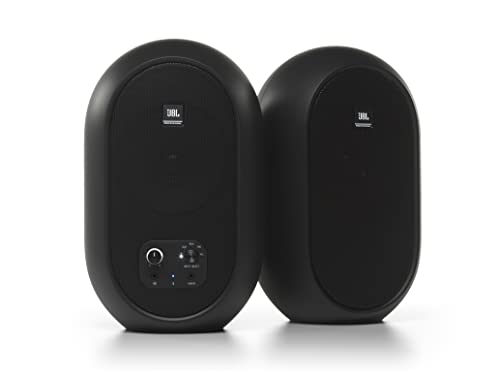
- Coaxial 4.5-inch + 0.75-inch driver layout
- Bluetooth 5.0 with Aux, RCA, and TRS inputs
- Front-panel volume, source select, and headphone jack
Best For: Small desks and flexible everyday studio listening
Ultra-Compact Wired Monitor
Yamaha HS3 Powered Studio Monitor Pair

- 3.5-inch woofer and 0.75-inch tweeter
- Room control and high trim tuning options
- XLR/TRS, RCA, and stereo mini inputs
Best For: Tiny desks and wired home studio setups
Bluetooth USB Compact Monitor
Ortizan C7 Powered Studio Monitors Pair

- Bluetooth 5.3 plus USB with 24-bit DAC
- 3.5-inch carbon fiber woofer and silk dome tweeter
- TRS balanced, RCA, and AUX input options
Best For: Small spaces that need wireless and wired flexibility
Desktop Reference Pick
Yamaha HS4 Powered Studio Monitor in Black, Pair

- 4.5-inch woofer with 1-inch tweeter
- Room control and high trim adjustments
- XLR/TRS, RCA, and stereo mini inputs
Best For: desktop creators who want a wired near-field monitor pair
Budget Desktop Pair
PreSonus Eris 3.5 Powered Studio Monitors

- 50 watts of built-in amplification
- High- and low-frequency tuning controls
- TRS, RCA, aux, and headphone jack
Best For: affordable desk setups for audio, gaming, and basic mixing
Wireless Value Pick
Ortizan C7 Powered Studio Monitors Pair with Bluetooth 5.3

- Bluetooth 5.3 with fast pairing
- USB input with built-in 24-bit DAC
- TRS, RCA, AUX, and headphone output
Best For: small-space buyers who want wireless flexibility and desktop connectivity
Desktop Starter Choice – M-AUDIO BX3 3.5" Wired Studio Monitors
If you want compact studio monitors for a desk setup, the M-AUDIO BX3 keeps things simple with a wired, zero-latency connection and a compact 3.5-inch format. It’s aimed at users who need clear stereo monitoring for streaming, gaming, podcasting, or basic production without taking up much space.
Best For: Desktop users who want an affordable, wired monitor pair for music production, streaming, and general multimedia.
Pros:
- Zero-latency wired monitoring for clean desktop audio
- 3.5-inch Kevlar woofers and silk dome tweeters for detailed sound
- Multiple inputs: 1/4-inch, 1/8-inch, and RCA
- Rear EQ controls plus a speaker position switch
Cons:
- No wireless or Bluetooth support
- Small drivers may not satisfy users wanting deeper bass
- Best suited to near-field listening rather than larger rooms
The BX3 is a practical pick if you need compact studio monitors that plug into a wide range of gear and stay easy to manage on a crowded desk. Its strength is straightforward wired performance with enough flexibility for everyday creative work.
Flexible Wireless Pick – Edifier MR3 Hi-Res Bluetooth Monitors
The Edifier MR3 fits the compact studio monitors category for buyers who want accurate near-field sound with more connection options. It offers Hi-Res Audio certification, Bluetooth with multi-point support, and a flat response that makes it useful for monitoring, editing, and casual listening.
Best For: Home studio users who want compact monitors with Bluetooth, app control, and strong input flexibility.
Pros:
- Hi-Res Audio certified with a flat 52Hz to 40kHz response
- Bluetooth plus balanced TRS, RCA, AUX, and headphone output
- Music, Monitor, and Custom modes for different use cases
- App-based EQ control for fine-tuning
Cons:
- Plastic enclosure rather than a wood cabinet on this model
- Not the most powerful option if you want room-filling volume
- Floor-standing spec may be less desk-friendly than some rivals
For mixed-use desks and small studios, the MR3 offers a strong balance of monitoring features and everyday convenience. It stands out if you want compact studio monitors that can move between production, editing, and casual playback without much hassle.
Desk-Friendly Tweaker – Mackie CR3.5 3.5" Studio Monitors
The Mackie CR3.5 is built for small desks and compact studio monitors buyers who want quick sound shaping without menu diving. With a tone knob and a location switch, it’s designed to help you match the speakers to the room and get a more accurate picture of your mix.
Best For: Small-studio and desktop users who want easy tuning and included accessories.
Pros:
- Tone knob lets you adjust voicing directly from the desk
- Location switch helps correct bass placement near walls or in open spaces
- Sold as a pair and includes isolation pads plus cables
- 3.5-inch woofers keep the footprint small for tight setups
Cons:
- Wired-only connectivity with RCA and TRS inputs
- Smaller size limits low-end extension compared with larger monitors
- Best for near-field use, not bigger listening spaces
If you want compact studio monitors that are easy to place and quick to adjust, the CR3.5 is a very practical option. It leans into convenience, with simple controls and a starter-friendly bundle that helps you get set up fast.
White Wireless Monitor – Edifier MR3 Bluetooth Bookshelf Speakers
The white Edifier MR3 is another strong entry in compact studio monitors, but with a cleaner bookshelf-style look. It keeps the same Hi-Res Audio tuning, Bluetooth support, and flexible inputs as the black version, making it a good choice when you want accurate monitoring in a lighter color scheme.
Best For: Buyers who want compact studio monitors in white for a home studio, editing desk, or multimedia setup.
Pros:
- Hi-Res Audio certified with a flat 52Hz to 40kHz response
- Balanced TRS, RCA, AUX, Bluetooth, and headphone output
- Music, Monitor, and Custom modes for different listening needs
- MDF cabinet helps reduce distortion
Cons:
- Still limited by 3.5-inch mid-low drivers for deep bass
- Only one color option in this listing
- Not the best fit if you need a more powerful studio setup
This version of the MR3 is mainly about matching the same feature set to a white finish. For compact studio monitors that need to look as clean as they sound, it’s a straightforward and capable pick.
Desktop Bluetooth Reference – JBL 104-BT Compact Desktop Reference Monitors
If you want compact studio monitors that fit neatly on a desk without losing useful connectivity, the JBL 104-BT is built around that use case. Its coaxial 4.5-inch woofer and 0.75-inch soft-dome tweeter are designed for a wide sweet spot and transparent playback, while Bluetooth 5.0 and multiple wired inputs make it easy to switch between monitoring and casual listening.
Best For: Desktop creators who want a small, flexible monitor pair with Bluetooth and simple front-panel control.
Pros:
- Coaxial driver design helps keep imaging and the listening sweet spot consistent.
- Bluetooth 5.0 plus Aux, RCA, and TRS inputs give you flexible source options.
- Front-panel volume, source selection, and headphone output make desk use convenient.
- Acoustically optimized for desktop placement with a compact ABS cabinet.
Cons:
- 4.5-inch woofer means limited low-end extension compared with larger monitors.
- Designed more for desktop reference use than for filling larger rooms.
- Bluetooth is convenient, but wired inputs are still the better choice for monitoring.
Overall, the JBL 104-BT is a practical pick if you want compact studio monitors that prioritize desk-friendly size, easy switching, and a clean reference-style presentation. It stands out most when space is tight and you still want multiple connection paths.
Ultra-Compact Wired Monitor – Yamaha HS3 Powered Studio Monitor Pair
The Yamaha HS3 is a strong choice if you need compact studio monitors for a tight workspace and want a straightforward, wired monitoring setup. With a 3.5-inch woofer, 0.75-inch dome tweeter, and room control/high trim adjustments, it is aimed at close-range studio use where accurate placement and easy input compatibility matter.
Best For: Small home studios, desks, and creators who want a simple pair of wired monitors with tuning controls.
Pros:
- Very compact cabinet size makes it easy to fit on a tabletop or desk.
- Room control and high trim controls help adapt the sound to your space.
- XLR/TRS combo, RCA, and stereo mini inputs cover common studio and consumer sources.
- Includes speaker cable, stereo mini to RCA cable, and anti-slip pads.
Cons:
- 3.5-inch woofer will not provide deep bass on its own.
- No wireless or Bluetooth connectivity.
- Best suited to close-range monitoring rather than larger rooms.
In practice, the HS3 is one of the most space-efficient compact studio monitors here, and its value comes from keeping the setup simple and wired. If your priority is a small footprint with practical control options, it fits well.
Bluetooth USB Compact Monitor – Ortizan C7 Powered Studio Monitors Pair
The Ortizan C7 is aimed at buyers who want compact studio monitors with a broader mix of modern input options. It combines Bluetooth 5.3, RCA, AUX, USB with a built-in 24-bit DAC, and balanced TRS input, so it can work as a monitor pair for small creative setups or as versatile desktop speakers.
Best For: Budget-conscious users who want compact monitors with Bluetooth, USB, and balanced input support.
Pros:
- Bluetooth 5.3 and USB connectivity add convenient modern source support.
- Built-in 24-bit DAC is designed to improve digital playback fidelity.
- 3.5-inch carbon fiber speaker and 0.75-inch silk dome tweeter are tuned for clear detail.
- TRS balanced input plus AUX and RCA give you multiple connection paths.
Cons:
- 3.5-inch driver size limits bass output compared with larger monitors.
- Best suited to small-space use rather than higher-volume monitoring.
- As a feature-rich compact pair, it may be more of a hybrid speaker than a pure studio tool.
For compact studio monitors in a small room or on a desktop, the C7 stands out for connectivity flexibility. If you want one pair that can handle music playback, basic production, and easy wireless use, it is a practical all-rounder.
Desktop Reference Pick – Yamaha HS4 Powered Studio Monitor in Black, Pair
The Yamaha HS4 is a compact studio monitor pair built for straightforward desktop monitoring, music production, and video editing. With a 4.5-inch woofer, 1-inch tweeter, and room control plus high trim response controls, it gives you a practical way to tune compact studio monitors to your space without adding extra gear.
Best For: Creators who want a small, wired monitor pair for accurate near-field work on a desk or workstation.
Pros:
- 4.5-inch woofer and 1-inch dome tweeter for near-field monitoring
- Room control and high trim response controls help adjust the sound
- Flexible inputs include XLR/TRS combo, RCA, and stereo mini
- Accessories included: speaker cable, mini-to-RCA cable, and anti-slip pads
Cons:
- Wired-only setup may be less convenient than Bluetooth options
- 26-watt maximum output is aimed at desk use, not larger rooms
- Smaller driver size limits low-end compared with bigger monitors
If you want a simple, honest desktop monitor setup, the HS4 fits the compact studio monitors category well. Its size, connectivity, and tuning controls make it a practical choice for focused editing and production work.
Budget Desktop Pair – PreSonus Eris 3.5 Powered Studio Monitors
The PreSonus Eris 3.5 is a compact studio monitor pair designed for desktop listening, gaming, streaming, and entry-level production work. It combines 50 watts of built-in amplification with 3.5-inch woven-composite woofers and 1-inch silk-dome tweeters, making it a practical small-speaker option when you need accurate sound on a tight desk.
Best For: Users who want an affordable, small monitor pair for everyday desktop audio and near-field mixing.
Pros:
- 50 watts of built-in amplification for clear, distortion-free output
- High- and low-frequency tuning controls help tailor the sound
- Front headphone jack adds convenient private listening
- Multiple inputs: TRS, RCA, and front aux
Cons:
- 3.5-inch drivers are best suited to smaller desks and rooms
- Not intended for very deep bass or large-room playback
- Wired setup only for the main audio inputs
For compact studio monitors at a lower price point, the Eris 3.5 offers a strong mix of tuning controls and flexible connectivity. It is especially appealing if you need desk-friendly monitors for mixed-use audio, not just music production.
Wireless Value Pick – Ortizan C7 Powered Studio Monitors Pair with Bluetooth 5.3
The Ortizan C7 is a compact studio monitor pair that blends wired and wireless convenience for desktop music, movies, and gaming. It includes Bluetooth 5.3, USB with a built-in 24-bit DAC, RCA, AUX, and balanced 6.35mm TRS input, so it works well when you want a flexible monitor setup in a small space.
Best For: Buyers who want compact monitors with Bluetooth and multiple input options for a flexible desktop setup.
Pros:
- Bluetooth 5.3 supports quick wireless pairing
- Built-in 24-bit DAC over USB for direct digital audio
- Balanced TRS input plus RCA, AUX, and headphone output
- 3.5-inch carbon fiber woofer and 0.75-inch silk dome tweeter
Cons:
- Listed with a gaming focus rather than a pure studio reference use case
- Smaller drivers are better for compact rooms than for deep bass
- Wireless convenience may matter more than strict monitor-first simplicity
Among compact studio monitors, the C7 stands out for connectivity breadth and wireless ease. If you need a versatile desktop pair that can handle more than one source without constant cable swaps, it is a practical pick.
How We Picked the Best Compact Studio Monitors
We focused on models that make sense for small rooms and desktop setups: compact footprints, powered designs, and features that help with everyday use. We also looked at speaker size, connectivity, tuning controls, and overall value for creators who need reliable nearfield monitoring.
Quick Comparison
In this category, the biggest differences usually come down to woofer size, bass extension, and connectivity. Smaller 3.5-inch models are ideal when desk space is limited, while 4- to 4.5-inch options often give a fuller low end and a little more headroom. Bluetooth is convenient for casual listening, but wired input is still the better choice for monitoring accuracy.
Key Buying Factors for Compact Studio Monitors
Driver Size and Bass Response
Smaller drivers keep cabinets compact, but they typically trade away some low-end reach. If you produce bass-heavy music, consider the largest driver size that still fits your space. If you mainly edit vocals, podcasts, or acoustic material, a smaller pair may be enough.
Room Size and Placement
Nearfield monitors work best when placed close to ear level and away from walls if possible. In very tight rooms, front-panel controls and tone adjustments can help fine-tune the sound when ideal placement is difficult.
Inputs and Connectivity
For studio work, balanced analog inputs are preferable when available. Bluetooth can be useful for reference listening, but it should be treated as a convenience feature rather than the main monitoring path.
Controls and Flexibility
Volume knobs, tone shaping, and acoustic compensation features can make a big difference in real-world use. These tools help the monitors adapt to your desk, room, and listening distance.
Who Should Buy Which Compact Studio Monitors?
If you need the smallest possible footprint, choose a 3.5-inch pair. If you want a more balanced everyday monitor for music production, a 4-inch or 4.5-inch option is often the sweet spot. Creators who want easy wireless playback should look for Bluetooth-equipped models, while buyers prioritizing accuracy over convenience should lean toward wired studio-focused designs.
For most shoppers, the best Compact Studio Monitors are the ones that fit the room first and the workflow second. Match the size, connectivity, and tuning options to how you actually use your desk, and you’ll get a far better long-term setup.