
The best soundbars for home studios can simplify monitoring, streaming, and everyday listening without taking up the space or complexity of a full speaker setup. The right model balances clear midrange detail, controlled bass, useful connectivity, and a soundstage that suits your room.
Our selection includes compact two-channel bars, systems with wireless subwoofers, and Dolby Atmos options for creators who want a more cinematic experience. Use the guide below to narrow the choices by room size, workflow, connections, and listening priorities.
Best 10 Soundbars for Home Studios Picks for 2026
Best Immersive Upgrade

- Wireless subwoofer adds deep bass
- Dolby Atmos and DTS Virtual:X support
- HDMI eARC/ARC, optical, Bluetooth, and AUX
Best For: Immersive listening and small-to-medium rooms
Best Compact Pick

- Slim 2.0-channel design saves space
- Voice enhancement improves spoken content
- Bluetooth and HDMI ARC connectivity
Best For: Small studios and clear everyday playback
Best Tuning Flexibility

- 10-band EQ and 121 app presets
- 5.1-channel Dolby Atmos sound
- 300W peak output with wired subwoofer
Best For: Customizable surround sound and bass-heavy listening
Best Simple Budget Setup

- Compact 24-inch 2.0-channel design
- DTS Virtual:X and Dolby Audio
- HDMI eARC/ARC and Bluetooth connectivity
Best For: Small workspaces and straightforward TV audio upgrades
Deep-Bass Studio Starter
Saiyin Sound Bar with Subwoofer
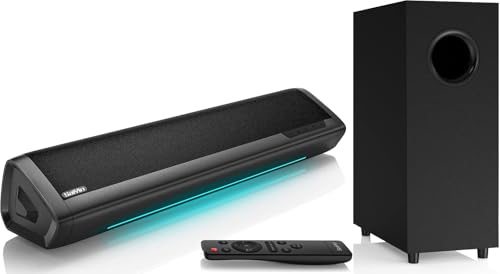
- Dedicated subwoofer for fuller bass
- Bluetooth, optical, and auxiliary inputs
- Three EQ modes and included cables
Best For: Listeners wanting an affordable sound bar system with dedicated bass
Immersive Smart Pick

- Dolby Atmos and TrueSpace processing
- A.I. Dialogue Mode for clearer voices
- Bluetooth, AirPlay, Spotify, and Chromecast
Best For: Creators who want immersive media playback and smart streaming features
Compact Desk Solution
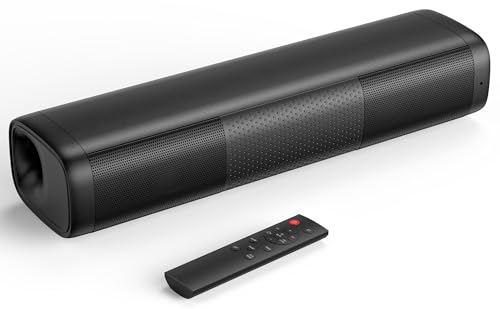
- Space-saving 11.7-inch stereo design
- Bluetooth 5.3, optical, and auxiliary inputs
- Dedicated sub-out for future expansion
Best For: Small desks and workstations needing simple stereo playback
Powerful Bass Pick

- 300W maximum output
- Wireless 6.5-inch subwoofer
- Bluetooth, HDMI, and optical inputs
Best For: Users wanting impactful bass and simple connectivity
Flexible Compact Option
Assistrust KY-8000 Detachable Soundbar

- Detachable 2-in-1 design
- 80W output with four drivers
- Bluetooth, ARC, optical, and AUX
Best For: Compact desktops and flexible small-room setups
Immersive Studio Entertainment Pick
JBL Bar 500MK2 Dolby Atmos Soundbar

- 750W output with a wireless 10-inch subwoofer
- Dolby Atmos and MultiBeam 3.0
- Room calibration and app-based EQ
Best For: Larger studios needing powerful cinematic playback
Best Immersive Upgrade – TCL S55H 2.1 Soundbar
For soundbars for home studios that also need to handle movies, music, and gaming, the TCL S55H combines Dolby Atmos and DTS Virtual:X with a wireless subwoofer. Its room calibration and multiple inputs make it a flexible choice for small-to-medium rooms.
Best For: Home studio users who want powerful bass, immersive TV audio, and straightforward room setup.
Pros:
- Wireless subwoofer delivers deep, room-filling bass.
- Dolby Atmos, DTS Virtual:X, and AI Sonic room calibration support an immersive presentation.
- HDMI eARC/ARC, optical, Bluetooth, and AUX provide flexible connectivity.
- Includes a remote, HDMI cable, and wall-mount kit.
Cons:
- The subwoofer adds another component to place and power.
- Its cinematic surround features may be more than needed for basic two-channel monitoring.
The S55H is a feature-rich option when you want a compact soundbar system with substantial low-end impact. For critical studio mixing, use it alongside more neutral reference monitors, but it is well suited to casual listening and entertainment.
Best Compact Pick – Sony S100F Slim Soundbar
The Sony S100F is a simple, compact choice among soundbars for home studios, especially where desk or room space is limited. Its two-channel design, Bluetooth, HDMI ARC, and voice enhancement focus on clear everyday playback without a separate subwoofer.
Best For: Small studio spaces, spoken-word content, conference calls, and uncomplicated TV or music playback.
Pros:
- Slim design suits small living or studio spaces.
- Voice enhancement helps make dialogue and conference calls easier to hear.
- Bluetooth and HDMI ARC simplify connections to compatible devices.
- Wall-mountable and supplied with an optical cable and mounting template.
Cons:
- Its 2.0-channel configuration does not include a wireless subwoofer.
- It offers less low-frequency impact than the larger systems in this roundup.
The S100F prioritizes ease of use and space efficiency over expansive bass or advanced equalization. It is a sensible fit for a compact workstation or secondary room where clear, direct sound matters most.
Best Tuning Flexibility – ULTIMEA Poseidon M60 5.1
For buyers comparing soundbars for home studios, the ULTIMEA Poseidon M60 stands out for its 10-band graphic EQ, numerous presets, and adjustable surround levels. It pairs a 5.1-channel soundbar with a wired wooden subwoofer for an expansive, bass-forward setup.
Best For: Users who want extensive app-based tuning for movies, music, gaming, and party listening.
Pros:
- Five built-in speakers and side-firing drivers create wide surround sound without rear speakers.
- 300W peak output and a dedicated subwoofer provide room-filling bass.
- App offers a 10-band EQ, 121 presets, and adjustable surround levels.
- HDMI eARC supports Dolby Atmos, while Bluetooth 5.4 supports wireless streaming.
Cons:
- The wired subwoofer requires a cable and a suitable placement location.
- The extensive surround and bass features may require careful tuning for more balanced studio listening.
The Poseidon M60 is the most adjustable option here, making it appealing when room placement and listening preferences vary. Its emphasis is immersive entertainment rather than inherently neutral reference monitoring.
Best Simple Budget Setup – Amazon Fire TV Soundbar
Amazon Fire TV Soundbar, 2.0 speaker with DTS Virtual:X and Dolby Audio, Bluetooth connectivity
Check Price On AmazonThe Amazon Fire TV Soundbar is a compact option for soundbars for home studios where simple setup and modest size are priorities. Its dual speakers add fuller sound and clearer dialogue, while DTS Virtual:X, Dolby Audio, and Bluetooth cover everyday entertainment needs.
Best For: Compact workspaces, Fire TV users, and listeners who want improved TV audio without a separate subwoofer.
Pros:
- Compact 24-inch length and 2.5-inch height fit many stands and consoles.
- DTS Virtual:X and Dolby Audio provide virtual surround and added detail.
- HDMI eARC/ARC setup is designed for synchronized TV audio.
- Bluetooth supports music streaming from a phone or tablet.
Cons:
- The 2.0 design does not include a dedicated subwoofer.
- Power adapter and cable are not included.
- It is especially optimized for Fire TV control, which may matter less with other setups.
This Fire TV Soundbar is a practical entry-level solution when desk or console space is limited. It improves dialogue and general playback, though users seeking strong bass or detailed studio adjustment should consider a larger system.
Deep-Bass Studio Starter – Saiyin Sound Bar with Subwoofer
For soundbars for home studios, the Saiyin sound bar with dedicated subwoofer is a practical choice when you want fuller low end without assembling a separate speaker system. Its optical, Bluetooth, and auxiliary connections support TVs, computers, and mobile devices, while three EQ modes make it easier to tailor playback for music, movies, or general listening.
Best For: Home studio users who want an included subwoofer, flexible wired and wireless connectivity, and adjustable listening modes.
Pros:
- Dedicated subwoofer adds deeper, more substantial bass.
- Supports Bluetooth, optical, and auxiliary connections.
- Includes optical and auxiliary cables, remote, and wall-mount hardware.
- Three EQ modes accommodate music, movies, and news.
Cons:
- The subwoofer must be connected to the labeled SUB OUT port rather than AUX IN.
- Its stereo output is less suited to users seeking a true multichannel studio-monitor setup.
- The supplied remote is not compatible with universal or TV remotes.
This Saiyin system stands out when bass impact and included accessories matter more than a compact, all-in-one design. Check the connection labels during setup, then use the EQ modes to find a sound that works for your room and listening material.
Immersive Smart Pick – Bose Dolby Atmos Soundbar
Among soundbars for home studios, the Bose Smart Dolby Atmos Soundbar is a polished option for creators who also watch films and stream music. Dolby Atmos, upward-firing transducers, and Bose TrueSpace processing are designed to create a spacious presentation, while its compact frame and broad streaming support keep the setup simple.
Best For: Home studio and media-room users who prioritize clear dialogue, immersive playback, and app or voice-controlled streaming.
Pros:
- Dolby Atmos and TrueSpace processing create an immersive sound field.
- A.I. Dialogue Mode helps emphasize voices.
- Supports Bluetooth, AirPlay 2, Spotify Connect, and Chromecast built-in.
- Built-in Alexa and Voice4Video provide voice-control options.
Cons:
- It is an all-in-one soundbar, so a separate subwoofer is not included.
- Its surround-focused processing may not suit users seeking a strictly neutral monitoring setup.
- Additional Bose Ultra Open Earbuds for personal surround sound are sold separately.
The Bose is the strongest fit here for a compact, feature-rich entertainment and production space rather than critical mixing. Its dialogue tools and streaming flexibility are useful for everyday work, reference listening, and relaxed playback.
Compact Desk Solution – Saiyin 11.7-Inch Sound Bar
For small workstations, this compact Saiyin model is one of the more space-conscious soundbars for home studios. Measuring 11.7 inches wide, it delivers 48W of peak power and connects to a computer, TV, gaming console, or mobile device through Bluetooth 5.3, optical, or auxiliary input. A dedicated sub-out also leaves room for a future bass upgrade.
Best For: Desktop listeners and small-room users who need a compact stereo soundbar with flexible inputs and optional subwoofer expansion.
Pros:
- Compact 11.7-by-3.5-by-2.5-inch design fits tight shelves and desks.
- Offers Bluetooth 5.3, optical, and 3.5mm auxiliary connectivity.
- Dedicated sub-out supports adding a powered subwoofer later.
- Includes a power adapter, cables, remote, and wall-mounting kit.
Cons:
- It provides two-channel stereo rather than surround sound.
- Connected sources should use PCM, stereo, or non-surround output to avoid cracking or silence.
- The compact enclosure may offer less bass impact without an added subwoofer.
This is a sensible choice when desk space is limited and straightforward stereo playback is the priority. Its sub-out gives the system useful flexibility, but users should configure digital sources correctly and treat it as a compact listening speaker rather than a full studio-monitor replacement.
Powerful Bass Pick – JBL Bar 2.1 Deep Bass (MK2)
For soundbars for home studios that also need to handle movies, music, and gaming, the JBL Bar 2.1 Deep Bass (MK2) offers a straightforward 2.1-channel setup with 300W of maximum output and a wireless subwoofer. Bluetooth, HDMI, and optical connectivity make it practical for computers, TVs, projectors, and mobile devices.
Best For: Home studio users who want strong low-end impact and simple wireless music streaming.
Pros:
- 300W maximum system output helps fill a room with sound.
- Wireless 6.5-inch subwoofer delivers deeper bass without a subwoofer cable.
- Supports Bluetooth, HDMI, and optical connections.
- Built-in Dolby Digital and JBL Surround Sound add an immersive presentation.
Cons:
- The 2.1-channel design is less flexible than a larger multichannel system.
- The wireless subwoofer still requires placement and a separate power connection.
- Its emphasis on powerful bass may not suit users seeking a neutral reference setup.
The JBL Bar 2.1 Deep Bass (MK2) is a practical choice when room-filling sound and pronounced bass matter more than studio-style neutrality. Its simple connections and included wireless subwoofer make it easy to integrate into a compact entertainment or creative workspace.
Flexible Compact Option – Assistrust KY-8000 Detachable Soundbar
Among soundbars for home studios, the Assistrust KY-8000 stands out for its compact, adaptable design. Its 2-in-1 detachable construction supports horizontal, vertical, tabletop, or wall-mounted placement, while Bluetooth 5.0, ARC, optical, and AUX connections cover common studio and entertainment sources.
Best For: Desktop, gaming, and small-room setups that benefit from flexible placement and multiple inputs.
Pros:
- Detachable design provides multiple placement options.
- Four dynamic drivers provide up to 80W of output.
- Three equalizer modes tailor the sound for movies, music, or news.
- Includes Bluetooth, ARC, optical, and AUX connectivity.
Cons:
- Its 80W output is lower than the JBL systems in this roundup.
- The supplied remote does not include batteries.
- It is a stereo, two-channel soundbar rather than a surround system.
The KY-8000 is a sensible space-saving pick for a desktop or compact home studio. Its detachable configuration and broad input selection are useful when equipment placement changes, though listeners seeking especially powerful bass or a wider surround field may prefer a larger system.
Immersive Studio Entertainment Pick – JBL Bar 500MK2 Dolby Atmos Soundbar
For users seeking premium-style soundbars for home studios, the JBL Bar 500MK2 combines a 5.1-channel system with Dolby Atmos, MultiBeam 3.0, and a wireless 10-inch subwoofer. Its 750W maximum output, room calibration, HDMI eARC, and app-based equalizer make it well suited to larger creative spaces used for both media production and entertainment.
Best For: Larger home studios where immersive playback, powerful bass, and room-tuning features are priorities.
Pros:
- 750W maximum output and a wireless 10-inch subwoofer provide substantial low-end impact.
- Dolby Atmos and MultiBeam 3.0 create a wider, more immersive sound field.
- Easy sound calibration adapts playback to room reflections and furniture.
- HDMI eARC supports uncompressed Dolby Atmos, while the JBL ONE app provides equalizer controls.
Cons:
- The larger 10-inch subwoofer requires more space than compact alternatives.
- Its feature-rich design may be more than needed for a simple desktop setup.
- Immersive surround features are primarily oriented toward cinematic playback rather than neutral monitoring.
The Bar 500MK2 is the most capable option here for a home studio that doubles as a theater or gaming room. Room calibration and adjustable EQ improve flexibility, but its high output and cinematic voicing make it better for immersive enjoyment than critical, flat mixing decisions.
How We Picked the Best Soundbars for Home Studios
We compared these soundbars by looking at the features that matter most in a compact studio or multipurpose listening room: dialogue and vocal clarity, stereo width, bass control, connection options, room-calibration tools, wireless-subwoofer integration, and ease of setup. We also considered whether each model fits a particular use case, from desktop listening and small rooms to TV-based production spaces and entertainment systems.
A soundbar is not a replacement for accurate nearfield monitors when you are making critical mix decisions. However, it can be a practical secondary reference and an efficient all-in-one solution for editing, video work, casual production, gaming, and media playback.
Quick Comparison
- Best for immersive sound: Choose a Dolby Atmos system such as the Bose, JBL Bar 500MK2, TCL, or ULTIMEA models.
- Best for compact spaces: The Sony S100F, Saiyin 11.7-inch bar, and detachable soundbar are easier to place on a desk or narrow shelf.
- Best for deeper bass: A wireless-subwoofer package, including the JBL Bar 2.1 Deep Bass, TCL S55H, or Saiyin system, adds low-end impact.
- Best for simple TV connectivity: Look for HDMI ARC/eARC, optical input, Bluetooth, or Fire TV integration, depending on your equipment.
Key Buying Factors for Soundbars for Home Studios
Soundstage and Tonal Balance
For editing and general monitoring, prioritize intelligible vocals, controlled bass, and a broad stereo image over maximum volume. Virtual surround and Atmos processing can add spaciousness, but they may not provide the neutral presentation required for final mastering.
Connections and Compatibility
HDMI ARC or eARC is convenient for TVs, while optical and AUX inputs help connect older displays, interfaces, computers, or media players. Bluetooth is useful for casual playback, but wired connections are generally preferable for latency-sensitive work.
Bass Management and Room Size
Subwoofers are valuable for films and music, but excessive low-end energy can make a small room sound boomy. Room calibration, adjustable bass, and sensible placement can help. Compact two-channel bars may be the better choice for a desk, bedroom, or untreated room.
Controls, Modes, and Smart Features
Dialogue enhancement, equalizer presets, auto-volume functions, voice control, and app-based calibration can improve convenience. Make sure these features can be bypassed or adjusted when you need a more consistent reference.
Who Should Buy Which Soundbars for Home Studios?
Choose a compact Sony or Saiyin bar if you need a straightforward upgrade for a desk, bedroom, or small editing setup. Pick the TCL, ULTIMEA, or Saiyin subwoofer package if you want stronger cinematic impact at a moderate price. The JBL Bar 2.1 Deep Bass is suited to listeners who want pronounced bass without moving to a full surround system.
For larger rooms and the widest feature set, consider the Bose Smart Soundbar or JBL Bar 500MK2. These are better fits for immersive video work, streaming, and shared entertainment spaces. The Amazon Fire TV Soundbar is a practical choice for Fire TV users who value easy integration and a compact footprint. Whichever model you choose, place it centrally, keep the front speakers unobstructed, and use a separate pair of neutral monitors or headphones for final mix judgments.