
Choosing the right lavalier microphone for interviews can make a bigger difference than upgrading your camera. Clean voice capture helps your questions, responses, and edits sound more professional right away.
Below, we focus on compact, easy-to-use options that suit interviews, mobile recording, streaming, and everyday content creation.
Best 10 Lavalier Microphone for Interviews Picks for 2026
Ultralight Wireless Pick

- 10 g transmitter stays discreet on camera
- 300 m range supports stable wireless recording
- Noise cancellation and plug-and-play setup
Best For: Mobile interviewers and creators who want a compact wireless lavalier setup
Wired Two-Person Value

- Records two speakers at once with dual mics
- No batteries or charging needed
- Works with phones, cameras, laptops, and PCs
Best For: Affordable two-person interviews and simple plug-in recording
Long-Run Wireless Option
DJI Mic Mini with Charging Case

- Up to 48 hours of battery life with case
- 400 m range for stable wireless recording
- Noise cancellation and automatic limiting
Best For: Long interview days, travel, and extended wireless recording
USB Desk Recording Choice
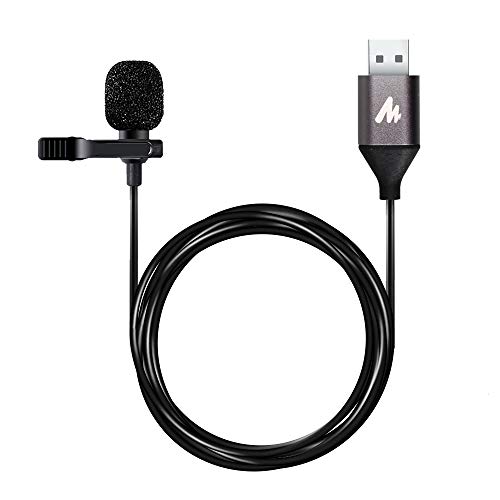
- 192 kHz/24-bit recording for detailed audio
- USB plug-and-play setup for computers
- Lightweight clip-on design with broad PC/Mac support
Best For: Computer-based interviews, streaming, and voice recording
Editor’s Pick
Mini Mic Pro Wireless Lavalier for Interviews

- USB-C and Lightning adapters included
- Up to 6 hours per charge
- Includes wind protection for outdoor use
Best For: Creators who want fast plug-and-play interview audio
Value Choice
Ecomxia Dual Wireless Lavalier Mic Kit

- Two transmitters for interview pairs
- Charging case with battery indicators
- 3 noise reduction modes included
Best For: Buyers wanting an affordable two-person interview kit
Runner-Up
Mini Mic Pro With Charging Case

- Adds a charging case for portability
- USB-C and Lightning adapters included
- Wind protection for outdoor interviews
Best For: Mobile interviewers who want a carry-friendly mic kit
Ultra-Portable Interview Pick
Wireless Lavalier for iPhone, Android, and Computers

- Automatic 2.4GHz pairing
- Lightning and USB-C support
- Up to 12 hours with both mics
Best For: Quick interview recordings on phones, tablets, and computers
Long-Haul Dual Mic Choice
NPTCL Wireless Lavalier with Charging Case
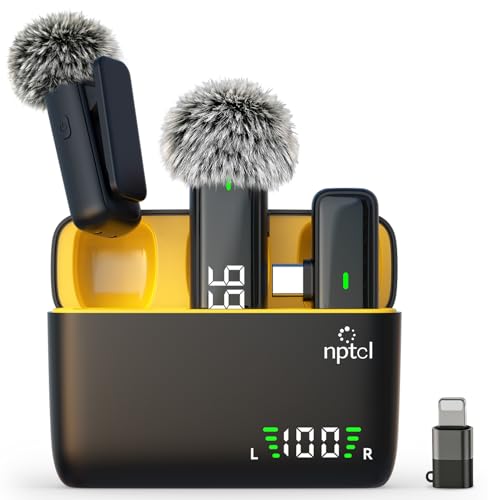
- Two mics for two speakers
- 24-hour runtime with case
- Up to 70 feet wireless range
Best For: Long interview sessions and two-person conversations
Simple Two-Pack Interview Mic
KUKIHO Wireless Lavalier for Phone Recording

- No app or Bluetooth needed
- Two mics included
- Receiver can charge your phone
Best For: Short interview setups and two-person mobile recording
Ultralight Wireless Pick – DJI Mic Mini for Interviews
If you want a lavalier microphone for interviews that stays discreet on camera but still delivers dependable wireless audio, the DJI Mic Mini is built for that job. Its 10 g transmitter is easy to wear, while the 300 m transmission range and dual noise-canceling modes help keep voices clear in everything from quiet rooms to busy streets.
Best For: Interviewers, creators, and mobile shooters who need a lightweight wireless setup with simple plug-and-play use.
Pros:
- Ultralight 10 g transmitter is comfortable and discreet for on-camera interviews.
- 300 m transmission range supports stable recording in outdoor and crowded settings.
- Two noise cancellation levels help tailor voice clarity for different environments.
- Plug-and-play compatibility with iPhone, Android, PCs, and tablets via USB-C receiver.
Cons:
- Wireless setup is more involved than a basic wired lavalier mic.
- Best features depend on using the included receiver or supported DJI ecosystem devices.
For interview work where mobility matters, this model balances convenience, clear sound, and a very low-profile design. It is a strong fit if you want a wireless lavalier microphone for interviews without dragging around a bulky kit.
Wired Two-Person Value – PowerDeWise Dual Lavalier Kit
For a straightforward lavalier microphone for interviews, the PowerDeWise dual set focuses on two-speaker recording without batteries or charging. It plugs into a 3.5 mm jack and includes extension cables, adapters, and windshields, making it a practical wired option for interviews, teaching, and everyday video recording.
Best For: Budget-minded users who need a simple dual-mic setup for interviews and content with two speakers.
Pros:
- Dual lavalier design records two people at the same time with balanced sound.
- No batteries or charging required, so it is ready for plug-and-play use.
- Compatible with phones, DSLR cameras, laptops, tablets, and PCs through a 3.5 mm connection.
- Includes clips, windshields, extension cables, adapter, and carrying pouch.
Cons:
- Requires a Lightning adapter for iPhone use.
- Wired design limits movement compared with wireless interview mics.
This is a strong pick if your interviews are mostly seated, indoors, or shot on a tight budget. It gives you a clean dual-mic setup without the extra complexity of wireless gear.
Long-Run Wireless Option – DJI Mic Mini with Charging Case
If your interview sessions run long, this DJI Mic Mini bundle adds the kind of battery life that matters in the field. The ultralight transmitters stay discreet, the charging case extends use up to 48 hours, and the 400 m range plus noise cancellation help keep dialogue usable in tougher environments.
Best For: Interviewers and creators who need a wireless lavalier microphone for long recording days and travel.
Pros:
- Up to 48 hours of battery life with the charging case supports extended shooting days.
- 400 m transmission range is designed for stable outdoor recording.
- 48 kHz sampling and 120 dB SPL support clear, detailed audio capture.
- Noise cancellation and automatic limiting help protect vocal clarity and reduce clipping.
Cons:
- More expensive and more complex than a basic wired lavalier mic.
- Best suited to users who will benefit from wireless range and charging-case convenience.
This bundle makes sense when interviews happen all day, on location, or across multiple setups. It is built for users who value battery endurance and wireless freedom as much as audio quality.
USB Desk Recording Choice – MAONO UL10 for Interviews
The MAONO UL10 is a practical lavalier microphone for interviews when you are recording at a desk or workstation and want a simple USB connection. It is a wired, plug-and-play lavalier with a high sampling rate, lightweight clip-on design, and broad computer compatibility, which makes it easy to use for interviews, meetings, and voice capture.
Best For: PC and Mac users who want a simple USB lavalier mic for interviews, streaming, and voice recording.
Pros:
- 192 kHz/24-bit recording is geared toward more detailed audio capture.
- USB plug-and-play design keeps setup simple for computers and laptops.
- Lightweight clip-on build is easy to wear on a collar, tie, or pocket.
- Compatible with Windows PCs, Macs, notebooks, and other USB 2.0 devices.
Cons:
- USB-only design is best for computers rather than phones or cameras.
- Single-mic wired setup is less flexible for multi-person interviews.
If your interviews happen mostly on a computer, this model offers a simple path to clean audio without a wireless system. It is best viewed as a dependable desktop lavalier microphone for interviews and online recording tasks.
Editor’s Pick – Mini Mic Pro Wireless Lavalier for Interviews
If you want a lavalier microphone for interviews that’s simple to set up and easy to carry, the Mini Mic Pro is built around plug-and-play use. It includes both USB-C and Lightning adapters, so it can connect quickly to iPhone, Android, tablets, and laptops without apps or Bluetooth.
Best For: Creators and interviewers who want a compact wireless mic with broad device compatibility and included wind protection.
Pros:
- Works right out of the box with iPhone, Android, tablet, and laptop setups.
- Includes USB-C and Lightning adapters for flexible connection options.
- Comes with foam and dead cat wind protection for clearer outdoor recording.
- Lightweight design and up to 6 hours of battery life per charge.
Cons:
- Single-channel setup may not suit more complex multi-mic interview workflows.
- No app-based controls or advanced customization features are listed.
Overall, this is a practical choice if you want a small, creator-friendly wireless interview mic that prioritizes speed, portability, and straightforward recording.
Value Choice – Ecomxia Dual Wireless Lavalier Mic Kit
The Ecomxia WM300 is a wireless lavalier microphone for interviews that stands out for its included charging case, dual transmitters, and built-in noise reduction options. It plugs directly into compatible devices and is positioned for quick use in video recording, Zoom calls, interviews, and live content.
Best For: Budget-conscious buyers who need a two-person interview mic kit with charging case convenience.
Pros:
- Includes two transmitters, making it useful for two-person interviews.
- Charging case provides portable storage and battery status indicators.
- Offers 3 noise reduction modes, including AI noise cancellation and reverberation mode.
- Claims up to 70 feet of stable range and up to 8 hours of battery life.
Cons:
- Uses a Lightning connector in the supplied details, so compatibility may be more limited than USB-C kits.
- One-channel design may be less flexible for more advanced recording setups.
For interviewers who want a practical dual-mic bundle with charging case support and multiple denoise settings, this is a strong budget-oriented option.
Runner-Up – Mini Mic Pro With Charging Case
This version of Mini Mic Pro is another lavalier microphone for interviews, but it adds a charging case for easier storage and transport. It keeps the same plug-and-play approach with USB-C and Lightning adapters, plus the included wind protection that can help when recording outdoors.
Best For: Mobile creators and interviewers who want the Mini Mic Pro experience with a charging case included.
Pros:
- Includes a charging case along with the mic kit and accessories.
- USB-C and Lightning adapters support iPhone, Android, tablet, and laptop use.
- Comes with foam and dead cat covers for outdoor recording protection.
- Lightweight design and up to 6 hours of battery life per charge.
Cons:
- Single-channel setup may be limiting for some interview formats.
- Supplied details do not list advanced app controls or extra recording modes.
If you want the Mini Mic Pro formula with more convenient carry-and-store packaging, this version is a sensible pick for on-the-go interviews and content capture.
Ultra-Portable Interview Pick – Wireless Lavalier for iPhone, Android, and Computers
If you want a lavalier microphone for interviews that keeps setup simple, this wireless clip-on option is built for quick plug-and-play recording. It supports Lightning and USB-C devices, pairs automatically, and is meant for interview, vlog, live streaming, and video recording use indoors or outdoors.
Best For: Creators who need a lightweight wireless mic for fast interview setups across phones, tablets, and computers.
Pros:
- 2.4GHz digital transmission with automatic pairing for easy use
- Compatible with iPhone, Android, iPad, Windows, and Mac devices
- Up to 6 hours per mic, or 12 hours total with both microphones
- Includes windproof covers, foam heads, and multiple adapters
Cons:
- Single-channel design
- Requires USB-C users to enable OTG before pairing
- Runtime depends on charging and how many mics you use
This is a practical pick if you value convenience and broad compatibility over advanced multi-channel control. It’s especially useful for interviews where you want to clip on, connect, and start recording without extra steps.
Long-Haul Dual Mic Choice – NPTCL Wireless Lavalier with Charging Case
For a lavalier microphone for interviews that needs long battery life and two-person coverage, this NPTCL wireless set stands out. It offers plug-and-play setup, noise reduction, and a charging case designed to keep the mics ready for extended recording sessions.
Best For: Interviewers, creators, and podcasters who need two mics and long runtime for mobile recording.
Pros:
- Up to 24 hours of use with the charging case
- Two microphones can capture two speakers at once
- Auto-pairing setup with no app or Bluetooth needed
- Up to 70 feet of wireless range for longer-distance recording
Cons:
- Use with iPhone 14/13/12 requires the included lightning adapter
- Single mic runtime is 6 hours per full charge
- Designed mainly for phone, tablet, and laptop workflows
Its mix of dual-mic recording and charging-case endurance makes it a strong fit for interviews that run longer than a typical quick clip. If you often record two people or need room to move, this set keeps the process straightforward.
Simple Two-Pack Interview Mic – KUKIHO Wireless Lavalier for Phone Recording
If you’re shopping for a lavalier microphone for interviews and want an easy two-pack option, this KUKIHO set is built around plug-and-play use. It connects without Bluetooth or an app, adds noise reduction, and is compatible with iPhone, iPad, Android phones, and computers through the listed adapters and ports.
Best For: Budget-conscious interview and video recording setups that need two clip-on microphones.
Pros:
- Automatic pairing with no app or Bluetooth required
- Two microphones included for two-person recording
- Built-in noise reduction chip for clearer vocals
- Receiver can charge your phone while in use
Cons:
- Battery life is listed at up to 4 hours per charge
- Single-channel design
- Range is listed at 66 feet in unobstructed conditions
This model makes sense if your interviews are short, mobile, and straightforward. It covers the essentials well, especially when you want an uncomplicated wireless setup for two speakers without paying for extra features you may not need.
How We Picked the Best Lavalier Microphone for Interviews
For a Lavalier Microphone for Interviews, we prioritized clear voice pickup, reliable wireless or wired performance, device compatibility, and fast setup. We also looked for practical extras such as charging cases, noise reduction, dual-mic support, and flexible use with phones, cameras, and computers.
Because interview work often happens in unpredictable environments, portability and stable connection mattered as much as raw audio specs.
Quick Comparison
Wireless models are usually best for moving subjects, on-the-go reporting, and creators who want minimal cable clutter. Wired clip-on options can be a smart choice if you want simple plug-and-play use and fewer batteries to manage. If you record long sessions, prioritize battery life and included charging cases. If you work across devices, check for iPhone, Android, USB-C, Lightning, and camera support before buying.
Key Buying Factors for Lavalier Microphone for Interviews
Audio Clarity
Look for strong speech intelligibility first. Features like noise reduction and active noise cancelling can help, but they should support natural-sounding voices rather than over-process them.
Compatibility
Make sure the mic works with your main device. Some models are built for smartphones, while others include adapters or receiver connections for computers and cameras.
Battery Life and Charging
Battery life matters if you record multiple interviews in a row or shoot away from power. Charging cases can be especially useful for field work and travel.
Range and Stability
If your subject will move around, choose a wireless system with a dependable connection. For static interviews, a simpler setup may be enough.
Portability and Mounting
A compact clip-on design is easier to place discreetly and keeps your interview setup looking clean on camera. Dual-mic kits are helpful when you need two speakers recorded at once.
Who Should Buy Which Lavalier Microphone for Interviews?
If you want the easiest all-around option, choose a wireless kit with broad device support and a charging case. If you mainly interview one person at a time and want a lighter setup, a single or dual wired lavalier can be a cost-effective fit. For creators who record short-form video, livestreams, or social content, a compact mini mic with strong voice pickup is often the most convenient choice. If you work in mixed environments, look for the best balance of noise handling, battery life, and compatibility rather than chasing the highest spec sheet number.