
Choosing the right DJ controller can make learning faster, mixing smoother, and live sets more creative. The best option depends on your skill level, software preference, and whether you want portability or pro-level features.
In this roundup, we focus on standout dj controllers for beginners, scratch DJs, mobile performers, and advanced users who want more channels, stems, and standalone flexibility.
Best 10 Dj Controllers Picks for 2026
Easy Starter Pick
Pioneer DJ DDJ-FLX4 2-Channel DJ Controller
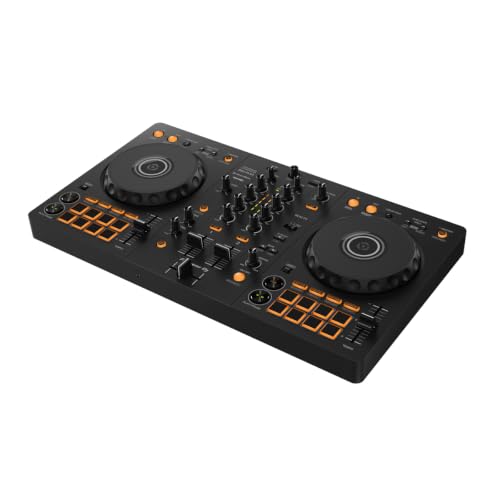
- Smart Fader simplifies blends and transitions.
- 16 pads and 2-deck control give room to practice.
- Works with multiple devices and streaming services.
Best For: Beginners who want a simple, streaming-ready controller
Serato Value Pick
Numark Mixtrack Platinum FX DJ Controller

- 6-inch jog wheels include color displays for mix info.
- Comes with Serato DJ Lite and 4-deck control.
- Includes FX, loop controls, and a built-in audio interface.
Best For: Serato users who want visual feedback and performance tools
Flagship Performance Pick
Pioneer DJ DDJ-FLX10 4-Channel Controller

- Track Separation enables live vocals, drums, and instruments remixing.
- 4-channel, club-style workflow suits advanced sets.
- Works with rekordbox, Serato DJ Pro, and DMX lighting.
Best For: Serious DJs who want advanced, open-format performance features
Durable Practice Pick
Hercules DJControl Inpulse 500 2-Deck Controller

- Built-in audio interface and hardware input mixer.
- 16 RGB pads, loop controls, and touch-detect jog wheels.
- Retractable feet add a more protective, raised design.
Best For: Beginners and home DJs who want a sturdy practice controller
Battle-Style Scratch Controller
Pioneer DJ DDJ-REV5 2-Channel Scratch Controller

- Battle-style 2-channel layout
- On-jog displays for playback position
- Works with rekordbox and Serato DJ Pro
Best For: Scratch DJs and open-format performers
Standalone 4-Deck Hub
Denon DJ SC LIVE 4 Standalone 4-Deck Controller
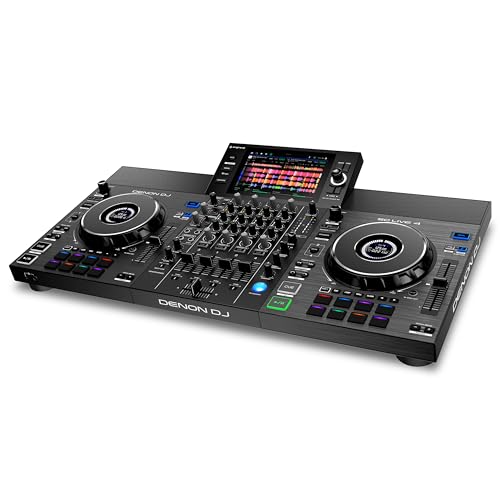
- Standalone Engine DJ OS operation
- 7-inch touchscreen with Wi-Fi streaming
- Built-in speakers and 4-deck control
Best For: DJs who want a laptop-free 4-deck setup
Beginner-Friendly All-Rounder
Pioneer DJ DDJ-FLX4 White 2-Channel Controller

- Simple 2-channel layout for learning
- Smart Fader and Smart CFX tools
- Works with PC, Mac, and mobile devices
Best For: Beginners and improvers
Beginner-Friendly Portable Mixer
Hercules DJControl Inpulse 200 MK3
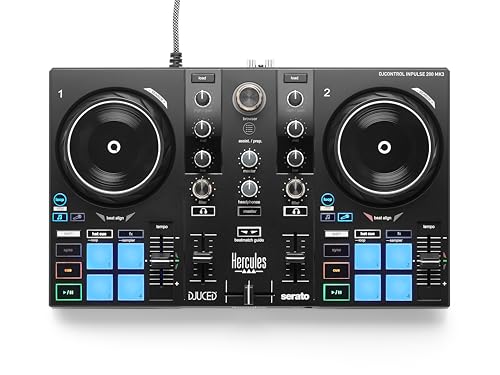
- Serato Lite and DJ Academy tutorials
- Compact 2-channel controller for travel
- Beatmatch LEDs and stem separation
Best For: New DJs learning on a portable, guided controller
Club-Style Performance Controller

- CDJ-3000 and DJM-A9 inspired layout
- Groove Circuit and Serato Stems FX
- Works with rekordbox and Serato DJ Pro
Best For: DJs seeking a club-style layout with live remix features
Ultra-Portable Bluetooth Starter Deck

- Bluetooth MIDI and USB-C power
- Includes Serato DJ Lite and djay
- Stems buttons plus touch jog wheels
Best For: Travel-friendly DJing, practice, and casual mobile sets
Easy Starter Pick – Pioneer DJ DDJ-FLX4 2-Channel DJ Controller
If you are looking at dj controllers for your first setup, the Pioneer DJ DDJ-FLX4 keeps things approachable without feeling stripped down. Its simple, pro-style layout, Smart Fader, and 2-deck control make it easy to learn basics now and still have room to grow later.
Best For: Beginners who want an easy, modern controller with streaming support and room to develop skills.
Pros:
- Smart Fader helps blend genres by adjusting volume, bass, and BPM automatically.
- 2-channel, 2-deck layout with 16 performance pads for Hot Cues, Pad FX, Beat Jump, and Sampler.
- Works with PC, Mac, iPhone, iPad, and Android, and includes a built-in sound card.
- Supports mixing from Apple Music, Tidal, and Beatport, plus live-streaming from one device.
Cons:
- Only offers 2-channel control, so it is less expansive than larger performance controllers.
- Focused on learning and convenience rather than advanced club-style features.
This is a strong entry point if you want dj controllers that are easy to plug in and start using. It balances beginner-friendly tools with enough flexibility to stay useful as your skills improve.
Serato Value Pick – Numark Mixtrack Platinum FX DJ Controller
The Numark Mixtrack Platinum FX is a practical choice if you want dj controllers with Serato support, visual feedback, and a straightforward plug-and-play setup. Its 6-inch jog wheels with color displays make it easier to keep track of BPM, platter position, pitch, and key while you mix.
Best For: Serato users who want helpful visual tools, effects controls, and easy access to streaming services.
Pros:
- Includes Serato DJ Lite and offers 4 decks of control.
- Large 6-inch capacitive-touch jog wheels include high-resolution color displays.
- Six quick-launch FX, dual paddle triggers, and dedicated loop controls add performance options.
- Built-in 24-bit audio interface with mic input, headphone output, and RCA output.
Cons:
- Heavier than some entry-level options at 5.29 pounds.
- Designed around Serato DJ Lite included, so advanced users may want to check software fit.
For buyers comparing dj controllers on feature set and value, this model stands out for its display-equipped jog wheels and useful performance tools. It is a solid all-around controller for mixing, practicing, and connecting to a home setup.
Flagship Performance Pick – Pioneer DJ DDJ-FLX10 4-Channel Controller
The Pioneer DJ DDJ-FLX10 is aimed at buyers who want dj controllers with a more advanced, club-style workflow. Its 4-channel layout, large jog wheels, and track separation feature make it well suited to live mashups, open-format sets, and serious practice.
Best For: Serious hobbyists, mobile DJs, and pros who want an open-format controller with advanced performance features.
Pros:
- Track Separation splits songs into vocals, drums, and instruments for live remixing.
- 4-channel layout mirrors a club-standard workflow.
- Large jog wheels with multicolor on-jog displays show waveforms, artwork, and track parts.
- Works with rekordbox and Serato DJ Pro, and includes DMX output for lighting control.
Cons:
- At 14.8 pounds, it is less portable than smaller controllers.
- Its advanced feature set is better matched to experienced users than absolute beginners.
If you want a more future-proof controller, this one brings advanced tools without losing familiar booth-style structure. It is a strong pick for DJs who need flexibility, visual feedback, and performance-driven mixing.
Durable Practice Pick – Hercules DJControl Inpulse 500 2-Deck Controller
The Hercules DJControl Inpulse 500 is built for DJs who want a sturdy, practical option among dj controllers. Its built-in audio interface, hardware input mixer, large touch-detection jog wheels, and retractable feet make it a useful fit for practice and small setups.
Best For: Beginners and home DJs who want a solid 2-deck controller with useful learning and setup features.
Pros:
- 2-deck USB controller with built-in audio interface and hardware input mixer.
- 16 backlit RGB pads plus Vinyl and Loop In/Out controls.
- Large jog wheels with touch detection support scratching.
- Retractable feet help lift the controller and keep it safer from spills.
Cons:
- Offers 2 channels rather than the wider control of larger controllers.
- Heavier than some compact starter models at 11.6 pounds.
This controller makes sense if you value durability and hands-on practice features over extra deck count. It gives you the basics needed to build skills while adding a few thoughtful hardware touches.
Battle-Style Scratch Controller – Pioneer DJ DDJ-REV5 2-Channel Scratch Controller
If you want dj controllers built for scratch-heavy open-format sets, the Pioneer DJ DDJ-REV5 is aimed squarely at that lane. Its battle-style 2-channel layout, full-size jog wheels, and on-jog displays make it easier to stay focused on timing and track position while you perform.
Best For: Scratch DJs and open-format performers who want a battle-style layout with Serato or rekordbox support.
Pros:
- Battle-style 2-channel layout with full-size jog wheels for scratch and open-format play
- On-jog displays show playback position so you can keep track of where you are in the song
- Ships with rekordbox and Serato DJ Pro, so you can choose the software you prefer
- DJM-style controls and effects create a more pro-oriented workflow
Cons:
- At 14 pounds, it is less convenient for ultra-light travel setups
- Two-channel design may feel limiting if you want a 4-deck workflow
As a focused performance controller, the DDJ-REV5 stands out for DJs who care more about feel and control than extra deck count. It is a strong fit if your priority is scratching, hot cues, and club-style handling in a familiar layout.
Standalone 4-Deck Hub – Denon DJ SC LIVE 4 Standalone 4-Deck Controller
Among dj controllers, the Denon DJ SC LIVE 4 is built for players who want to perform without a laptop and still keep a flexible, modern workflow. With Engine DJ OS, Wi-Fi streaming, a touchscreen, and built-in speakers, it is designed for mobile sets, streaming, and practice alike.
Best For: DJs who want a standalone 4-deck controller with streaming, stems, and onboard speakers.
Pros:
- Standalone operation with Engine DJ OS and no computer required
- 7-inch touchscreen plus SD and dual USB inputs for library access
- Wi-Fi streaming supports multiple services, including Amazon Music Unlimited, Apple Music, TIDAL, Beatport, and more
- Built-in speakers and multiple outputs make it practical for mobile use
Cons:
- More feature-heavy than a basic beginner controller
- At 13.6 pounds, it is not the lightest option for constant carry
The SC LIVE 4 is a strong choice if you want a self-contained setup with performance tools that go beyond the basics. It suits DJs who value standalone convenience, streaming access, and a 4-deck workflow in one unit.
Beginner-Friendly All-Rounder – Pioneer DJ DDJ-FLX4 White 2-Channel Controller
If you are comparing dj controllers for learning, the white Pioneer DJ DDJ-FLX4 is built around a simple layout that makes it easier to start and grow. It keeps the focus on two-channel control, smart mixing tools, and broad device compatibility for everyday practice or casual streaming.
Best For: Beginners and improvers who want an easy-to-use controller with smart mixing features and wide device support.
Pros:
- User-friendly 2-channel, 2-deck layout inspired by pro Pioneer DJ gear
- Smart Fader helps blend tracks by adjusting volume, bass, and BPM automatically
- 16 Performance Pads cover Hot Cues, Pad FX, Beat Jump, and Sampler functions
- Connects to PC, Mac, iPhone, iPad, or Android, with built-in sound card support
Cons:
- Two-channel design is better for learning than for more advanced multi-deck mixing
- Lightweight feature set may not satisfy DJs seeking deeper club-style hardware
The DDJ-FLX4 is a practical starter pick because it balances simplicity with enough room to develop real mixing skills. If you want an approachable controller that works across multiple devices, it is one of the easiest places to begin.
Beginner-Friendly Portable Mixer – Hercules DJControl Inpulse 200 MK3
If you want dj controllers that help you learn fast without feeling overwhelmed, the Hercules DJControl Inpulse 200 MK3 is built around first-set success. It comes with Serato Lite, DJ Academy tutorials, and an intuitive layout, while the beatmatch guides and track-suggesting assistant make practice sessions more approachable.
Best For: New DJs who want a compact, tutorial-driven controller with guided beatmatching and stems.
Pros:
- Preloaded with Serato Lite and step-by-step DJ Academy tutorials
- Compact, lightweight 2-channel design that fits in a backpack
- Beatmatch Guide LEDs and Intelligent Music Assistant help keep transitions aligned
- Stem separation supports live mashups and creative mixing
Cons:
- Built as a beginner-focused 2-channel controller rather than a larger club-style unit
- Portable design means fewer controls than bigger dj controllers
Overall, this is a practical entry point if you value guided learning and portability over advanced booth-style features. It gives you useful tools for developing timing, blending, and remix skills from day one.
Club-Style Performance Controller – AlphaTheta DDJ-GRV6
Among dj controllers, the AlphaTheta DDJ-GRV6 is aimed at users who want a more club-like layout and hands-on performance tools. Its CDJ-3000 and DJM-A9 inspired design is meant to build transferable muscle memory, while Groove Circuit and Serato Stems FX add live remix options for more expressive sets.
Best For: DJs who want a club-standard feel with creative remix tools and support for rekordbox and Serato.
Pros:
- Club-standard-inspired layout designed to transfer to the booth
- Groove Circuit enables live drum-part swapping and remixing
- Serato Stems FX support adds vocal, drum, and melody isolation effects
- Full-size jog wheels and 8 pads per deck support hands-on performance
Cons:
- Larger 4-channel design is less compact than entry-level dj controllers
- Best suited to users who want a more advanced, performance-oriented layout
This controller makes sense if you want a setup that feels closer to the club while still offering flexible software support. It balances familiar booth-style controls with enough creative features to keep performances dynamic.
Ultra-Portable Bluetooth Starter Deck – Numark MixTrack Go
If portability is your top priority, this Numark option stands out among dj controllers for being easy to carry and easy to power. The MixTrack Go is a lightweight 2-deck controller with Bluetooth MIDI, USB-C power, and included software support, so you can mix with a laptop or compatible mobile device without much setup.
Best For: DJs who want a travel-friendly controller for mobile, casual, or practice use.
Pros:
- Very compact and lightweight design that fits in a backpack
- Bluetooth MIDI and USB-C power support flexible cable-free use
- Includes Serato DJ Lite and Algoriddim djay support
- Stems control, touch jog wheels, and performance pads add creative options
Cons:
- Miniature format is less suited to large, club-style hands-on control
- Main output and headphone output are both 1/8-inch connections
For buyers who need an ultra-portable controller rather than a full-size rig, this model is easy to justify. It covers the essentials for cueing, blending, and stem-based remixing in a lightweight package.
How We Picked These Dj Controllers
We looked for controllers that balance layout quality, software compatibility, portability, and real-world performance features. Priority went to models with responsive jog wheels, useful pad controls, dependable mixer sections, and clear value at each price tier. We also considered whether a controller is better suited to learning, scratching, or more advanced performance workflows.
Quick Comparison
At a glance, the list covers entry-level 2-deck units, compact travel-friendly options, and advanced 4-channel Dj Controllers with more creative control. Beginner models tend to be simpler and lighter, while premium picks add track separation, onboard displays, extra inputs, or standalone playback features.
Key Buying Factors for Dj Controllers
Channel Count and Layout
Most new DJs can start with 2-channel controllers, which are easier to learn and plenty capable for club-style mixing. If you want to blend more layers, add acapellas, or prepare for more complex sets, a 4-channel model offers more flexibility.
Software and Compatibility
Check whether the controller works with your preferred platform, such as Serato, rekordbox, or DJUCED. Software support can matter as much as hardware because it affects library management, stems, effects, and upgrade options.
Portability and Build
If you plan to travel or practice in tight spaces, compact Dj Controllers are easier to carry and set up. If you perform often, look for a sturdier chassis, reliable pads, and controls that feel good during longer sessions.
Creative Features
Useful extras include performance pads, loop controls, jog displays, stems separation, and scratch-oriented decks. Beginners may not need every feature on day one, but creative tools can help a controller grow with you.
Who Should Buy Which Dj Controllers?
Beginners usually do best with straightforward, affordable controllers that keep the learning curve low. Scratch-focused DJs should prioritize platter feel, precision controls, and performance layouts. Mobile performers and aspiring open-format DJs may want 4-channel options or standalone features for more versatility. If you want something compact for practice or casual use, a smaller controller can be the smartest choice.
For the best long-term value, choose the controller that matches how you mix now, while leaving room for the style you want to develop next.